
Under the Palms — History & Facts
What draws the eye first in Under the Palms is not the plant itself, but the way two women lean toward it, faces lit with the kind of gentle wonder usually reserved for rarities or secrets. The painter, Alexander Hugo Bakker Korff, sets the scene in a parlor dense with the textures of middle-class comfort—plush carpet, carved wood, and the heavy folds of dresses that seem to rustle even in paint. The women’s bonnets, lavishly trimmed, frame their expressions: one points, the other gazes upward, both caught in a moment of shared admiration or perhaps gentle amusement.
The palm, perched on its pedestal, becomes a small marvel, elevated both literally and figuratively by their attention. Light falls from the left, catching the porcelain skin and lace, while the darkened background draws the viewer’s focus to this quiet tableau of domestic curiosity. Painted in 1880, this work belongs to a world where the drawing room was both stage and sanctuary, and where the appearance of an exotic plant could spark conversation or pride. The late nineteenth century in the Netherlands saw a fascination with the rituals and interiors of bourgeois life, often rendered with a touch of humor or irony.
Artists like Bakker Korff specialized in these intimate genre scenes, which were prized for their wit and meticulous detail by collectors eager to see their own world reflected back to them. Now in the Rijksmuseum’s collection, the painting stands as a record of a society both self-assured and quietly playful, inviting us to linger over the small dramas that unfold beneath the fronds.
More Artworks by Alexander Hugo Bakker Korff
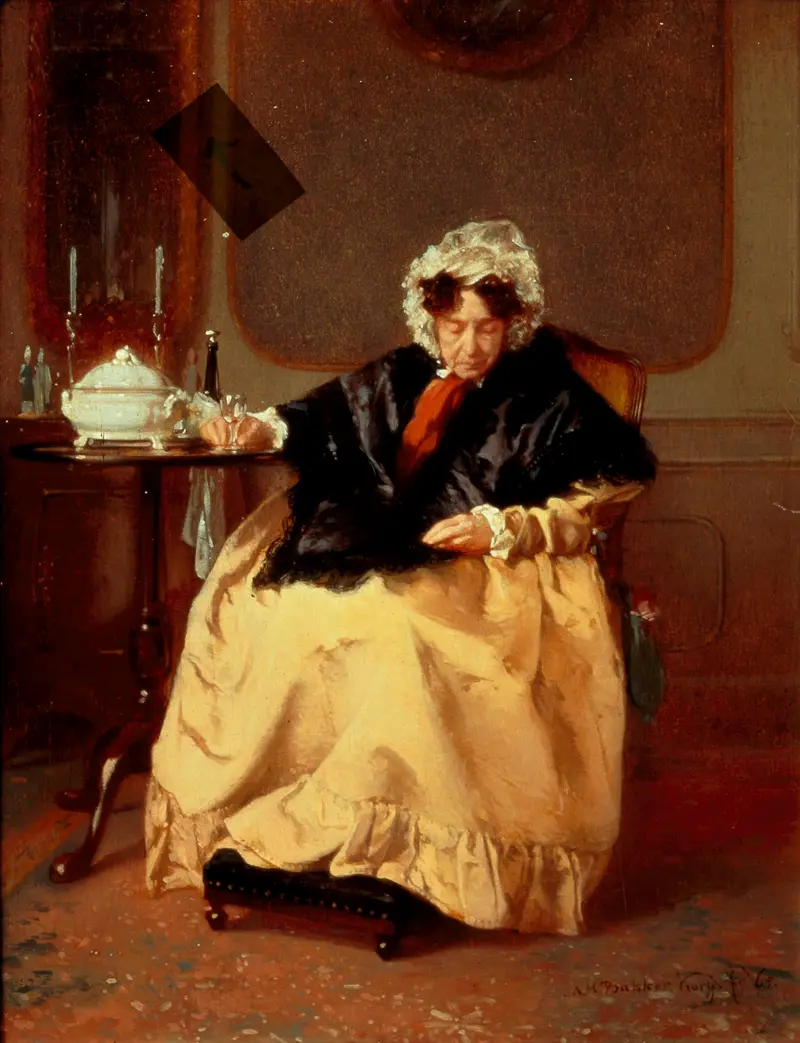
Bouillon en een glas port
Alexander Hugo Bakker Korff
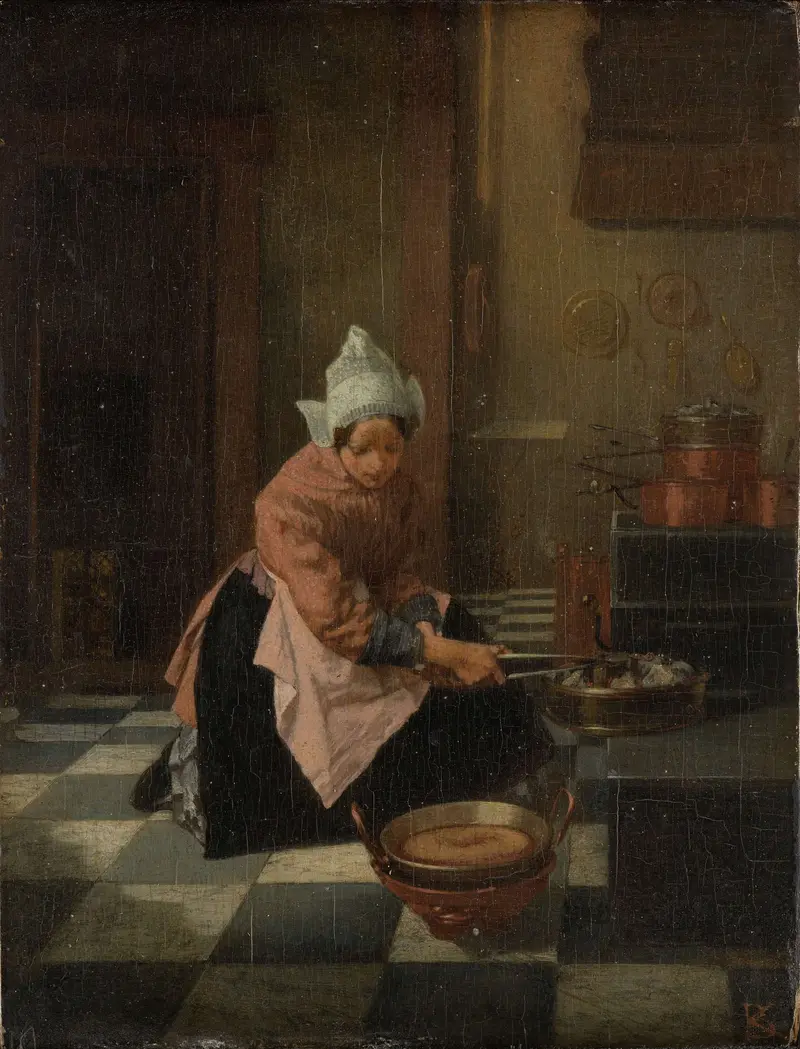
The Waffle Maker
Alexander Hugo Bakker Korff
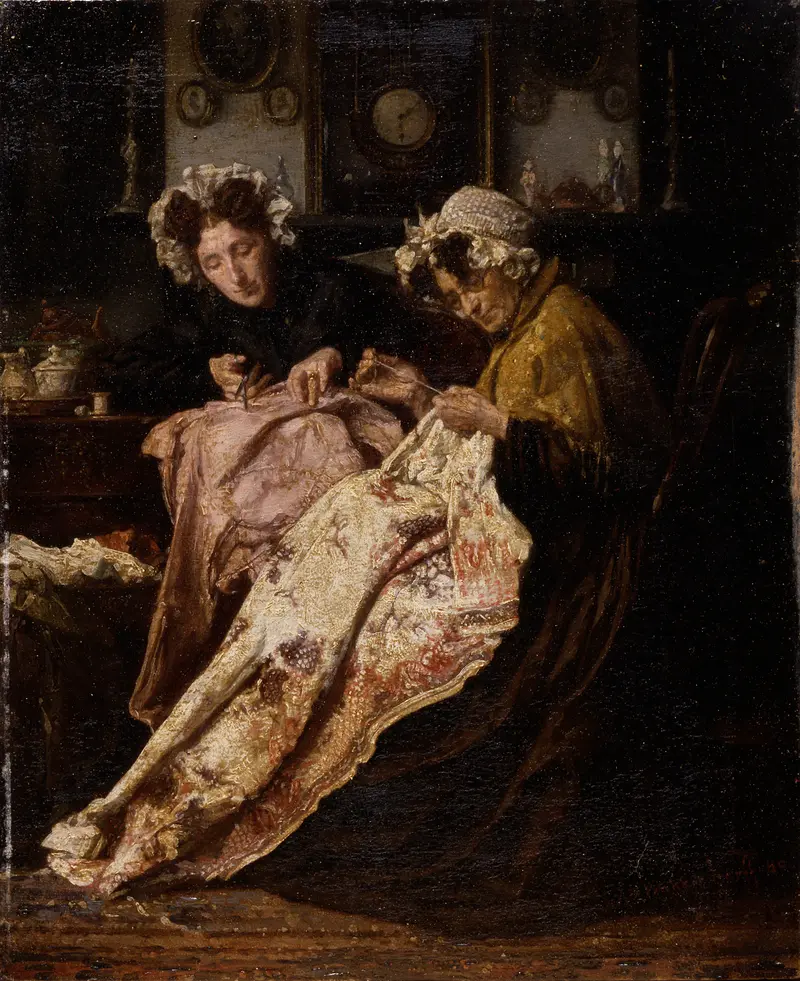
The Seamstress
Alexander Hugo Bakker Korff
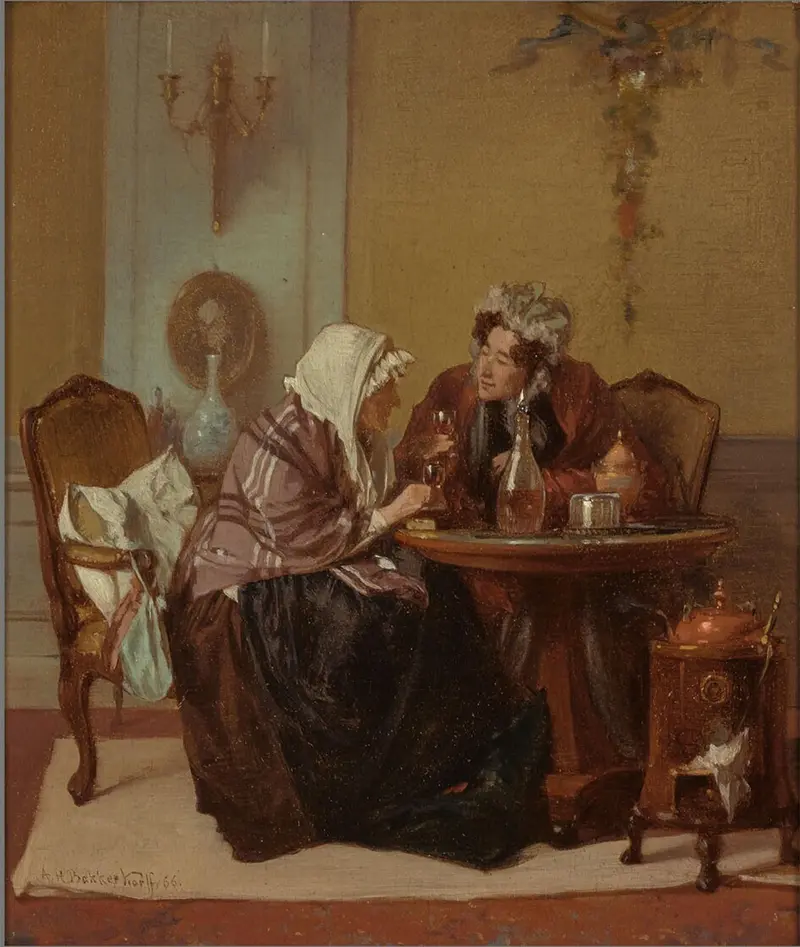
La convalescente
Alexander Hugo Bakker Korff
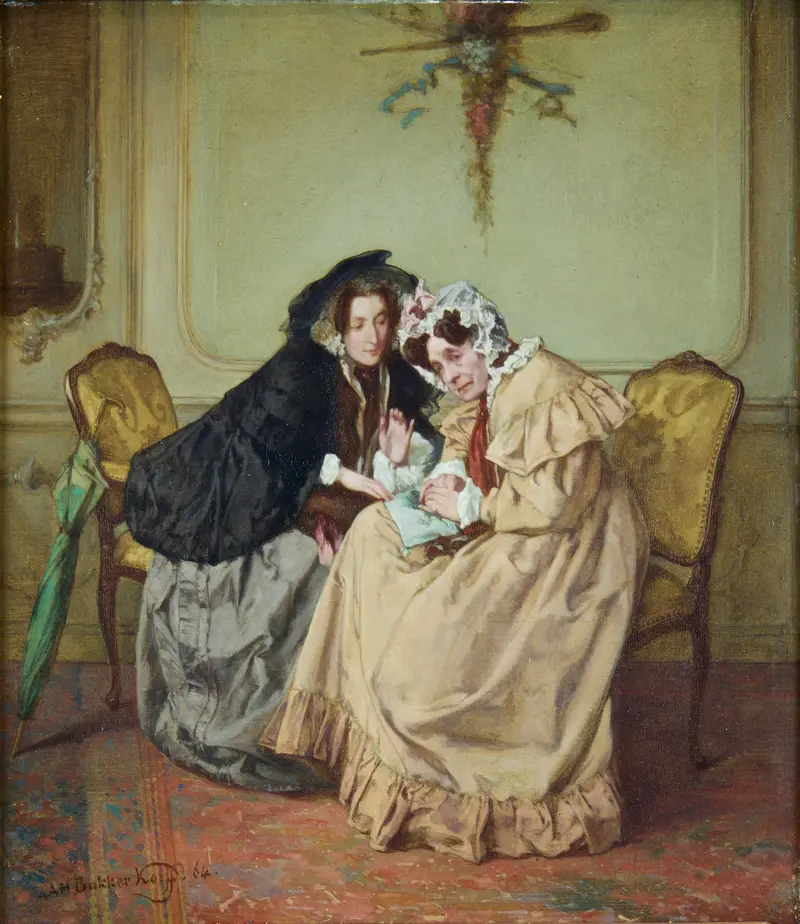
Het geheim DM 916 47 Dordrechts Museum
Alexander Hugo Bakker Korff
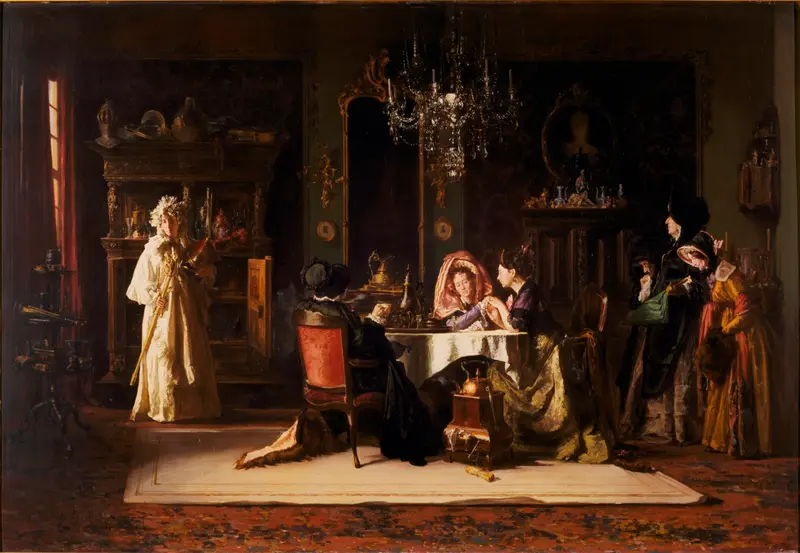
'La Fille du Héros' (The Hero's Daughter)
Alexander Hugo Bakker Korff
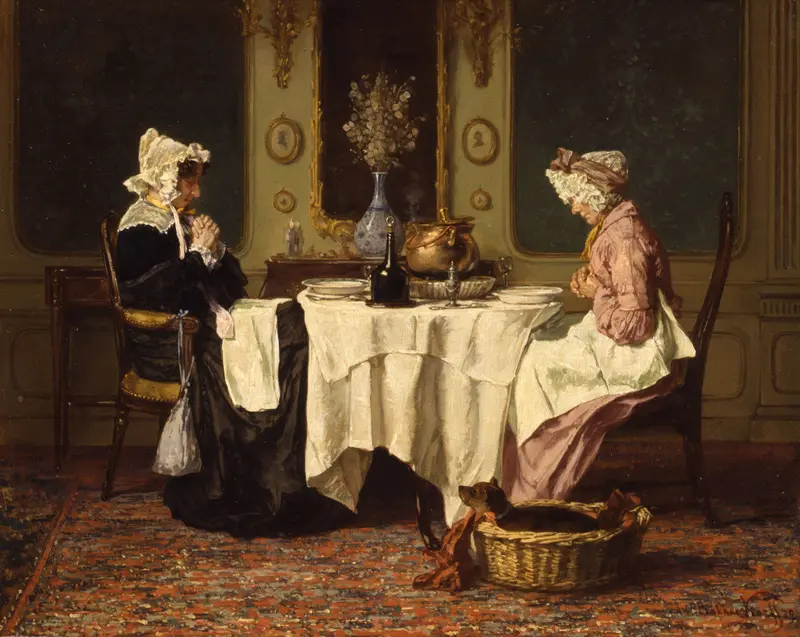
Drie oktober feest DM 938 48 Dordrechts Museum
Alexander Hugo Bakker Korff
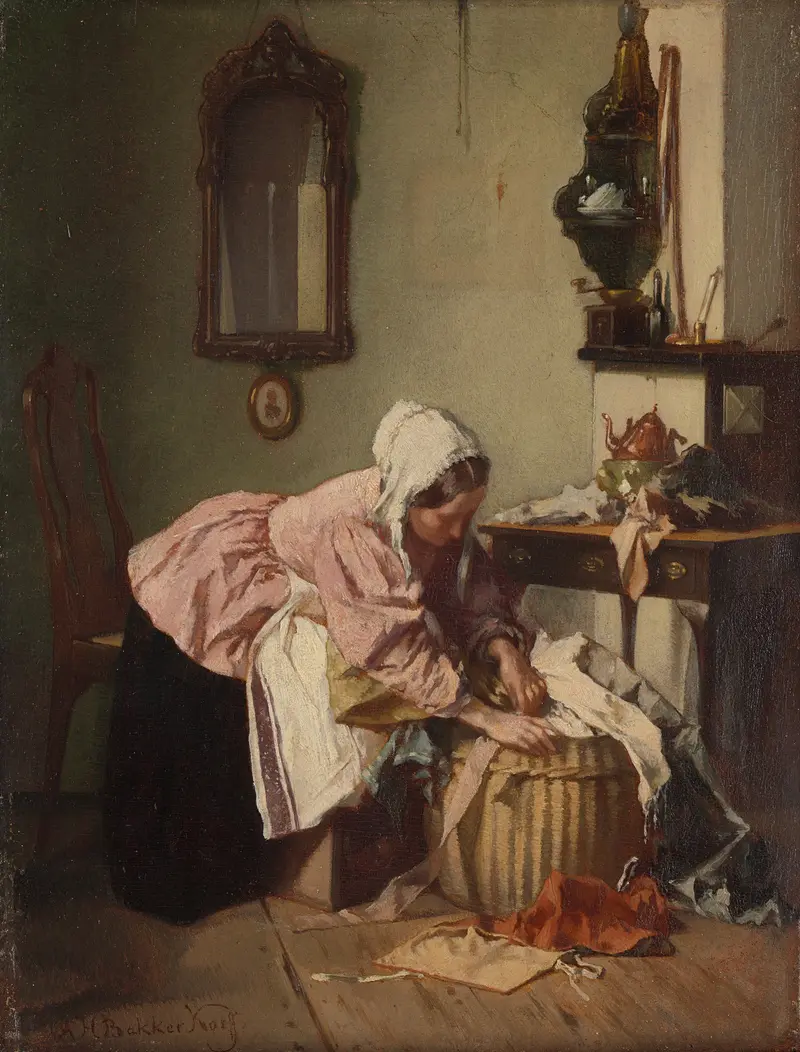
The Rag Basket
Alexander Hugo Bakker Korff
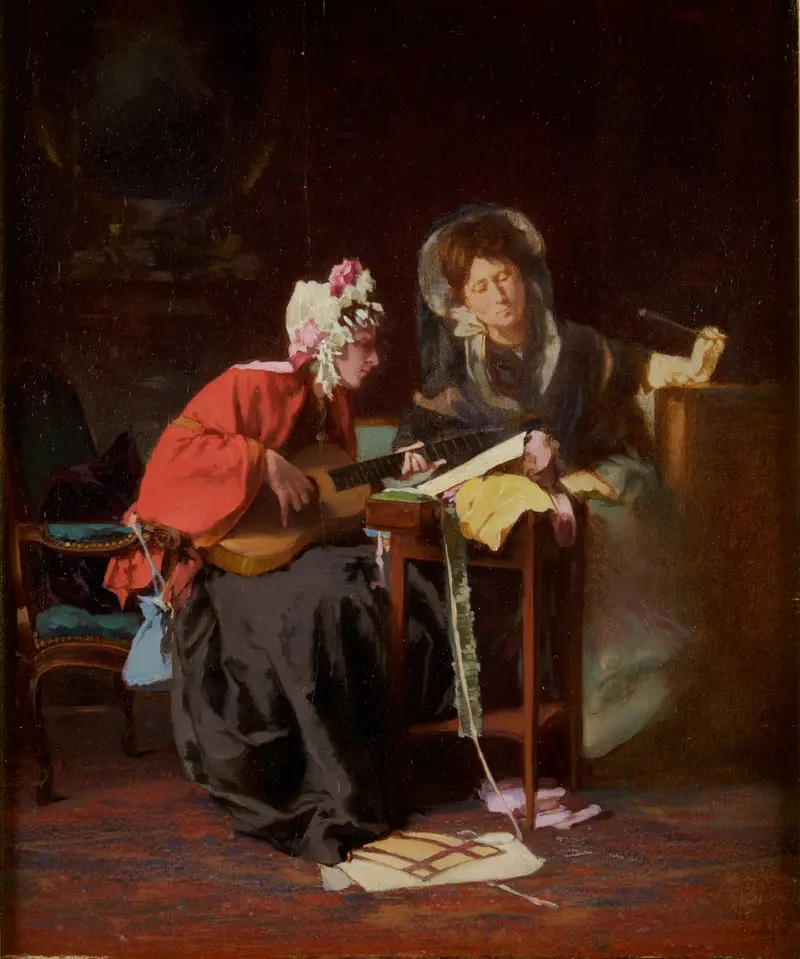
Gitaarles VBL 8 Dordrechts Museum
Alexander Hugo Bakker Korff
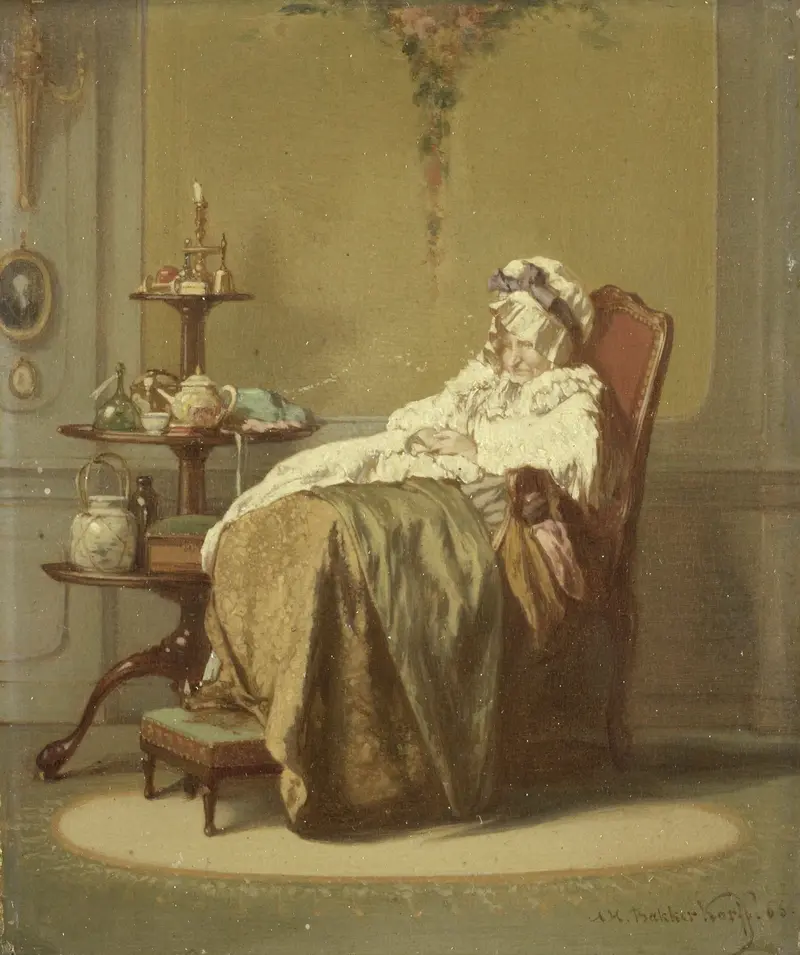
Taking a Nap
Alexander Hugo Bakker Korff
More Genre Scene Art

Banquet of the Officers of the St George Civic Guard
Frans Hals

Rembrandt and Saskia in the Scene of the Prodigal Son
Rembrandt van Rijn

Bal du moulin de la Galette
Pierre-Auguste Renoir

Quadrille at the Moulin Rouge
Henri de Toulouse-Lautrec

A Burial at Ornans
Gustave Courbet

When Will You Marry?
Paul Gauguin