
Boy Sitting in a Meadow — History & Facts
When Georges Seurat painted Boy Sitting in a Meadow in 1882, he was still years away from inventing the pointillist technique that would make his name. This work belongs to a brief, formative period when Seurat was searching for his own artistic language, experimenting with light and color in ways that quietly anticipated the radical innovations of Post-Impressionism. Unlike his later, meticulously planned canvases, this painting is spontaneous, almost intimate—a rare glimpse of Seurat before the theories and the fame. The scene unfolds on a sunlit patch of grass, where a solitary boy sits, knees drawn up, lost in his own world.
Seurat captures the hush of a summer afternoon: the boy’s relaxed posture, the dappled shadows on the ground, and the wildflowers that dot the meadow all suggest a moment of quiet escape. The loose, flickering brushwork gives the grass and foliage a sense of movement, while the boy’s form is rendered with a softness that blurs the line between figure and landscape. Unlike the formal, symbolic children in Pierre-Auguste Renoir’s portraits, Seurat’s boy is anonymous, absorbed in nature rather than society, inviting viewers to share in his solitude. The exact provenance of Boy Sitting in a Meadow is uncertain, as is its original medium—oil or pastel have both been suggested, but no definitive record survives.
What is clear is that the painting stands as an early marker in Seurat’s career, bridging his academic training and his later, more scientific approach to art. Today, the work is prized for its glimpse into Seurat’s evolving vision, a testament to the quiet beginnings of an artist who would soon change the course of modern painting.
More Artworks by Georges Seurat
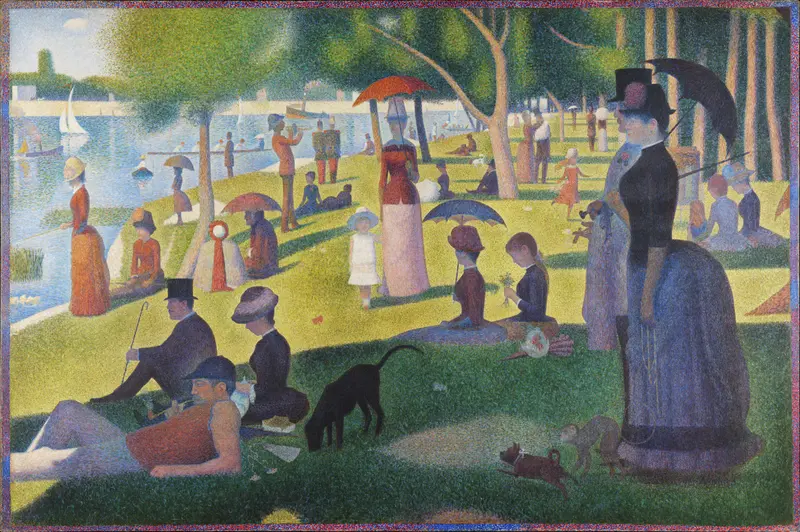
A Sunday Afternoon on the Island of La Grande Jatte
Georges Seurat
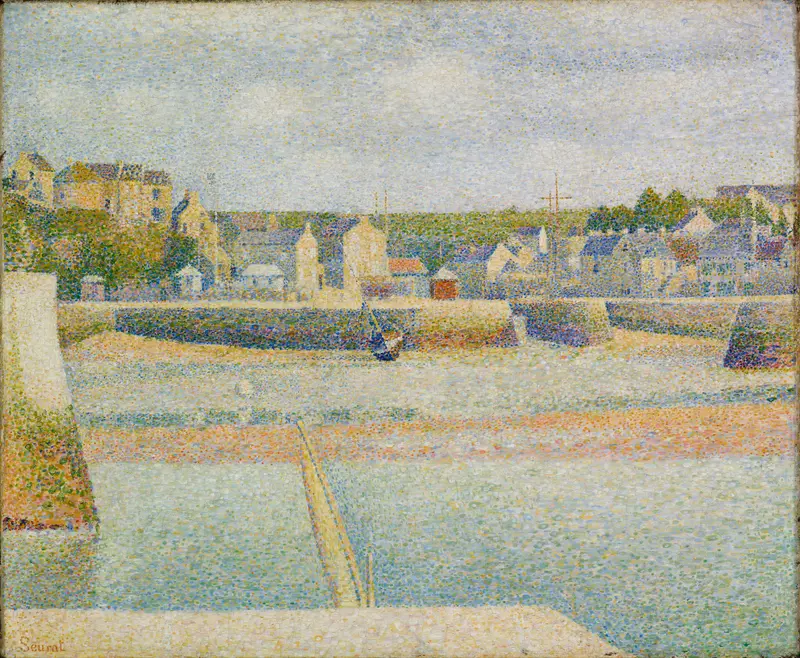
Port-en-Bessin, The Outer Harbor (Low Tide)
Georges Seurat
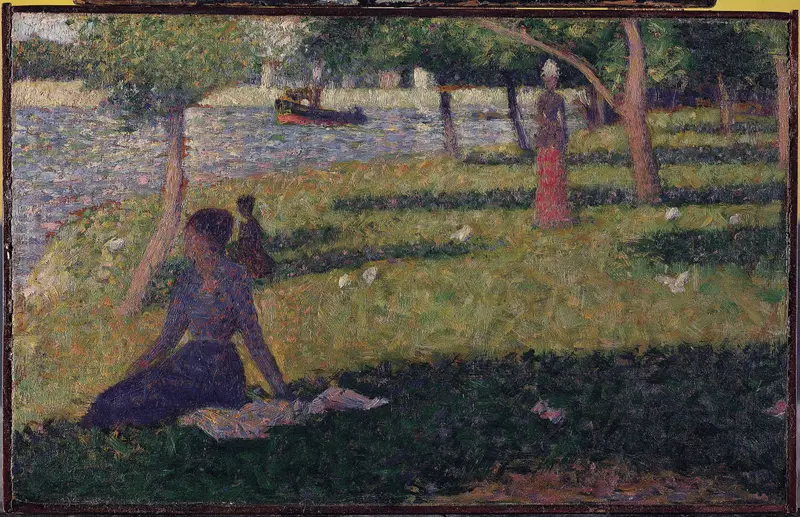
Étude pour ‘La Grande Jatte’ (Study for ‘La Grande Jatte’)
Georges Seurat
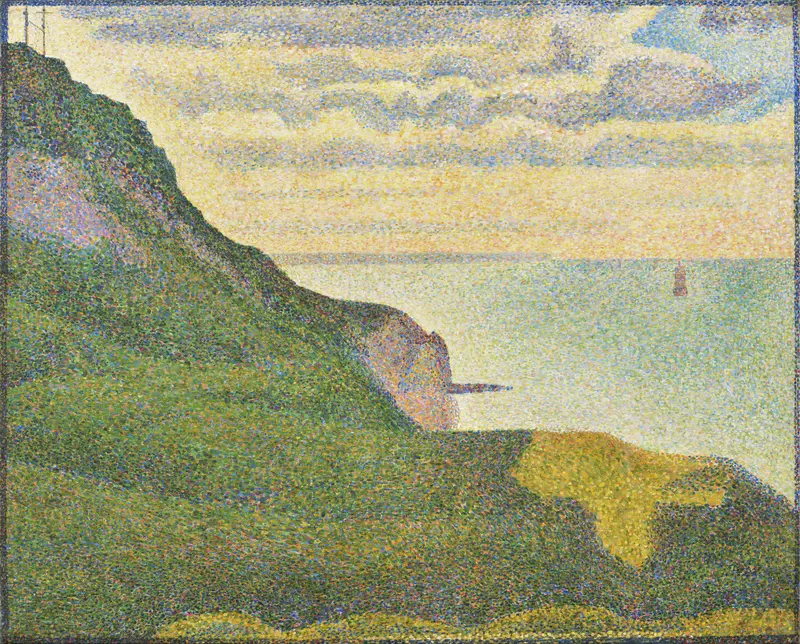
Seascape at Port-en-Bessin,Normandy
Georges Seurat
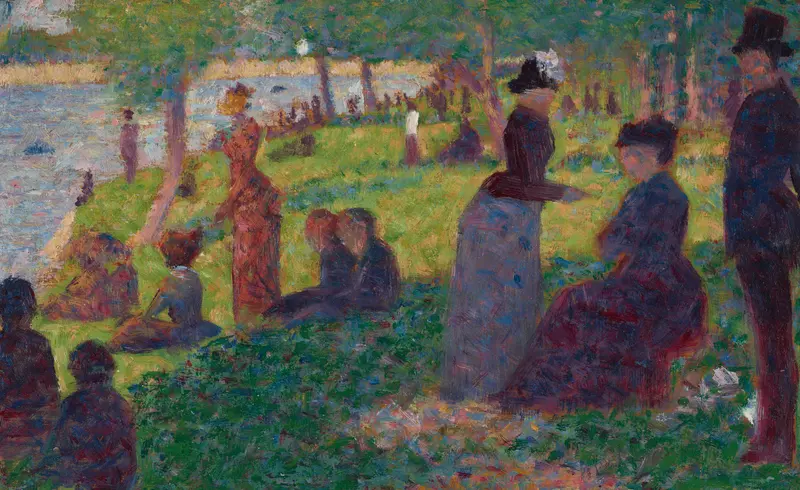
Oil Sketch for "A Sunday on La Grande Jatte — 1884"
Georges Seurat
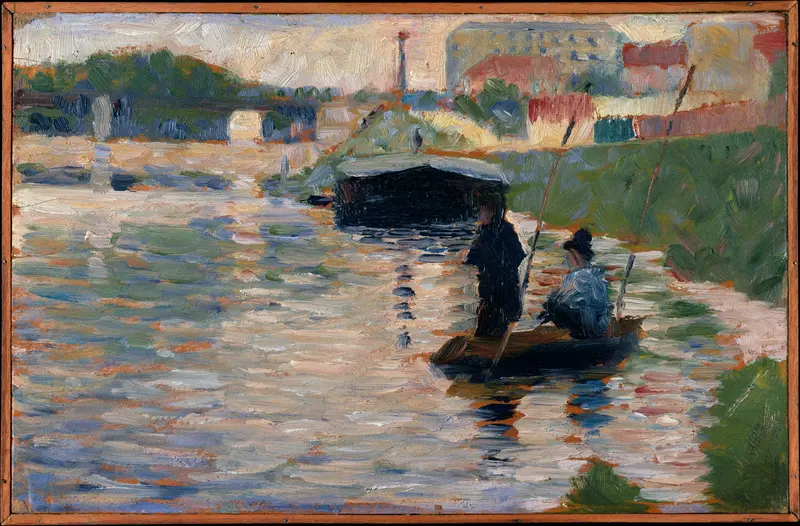
View of the Seine
Georges Seurat
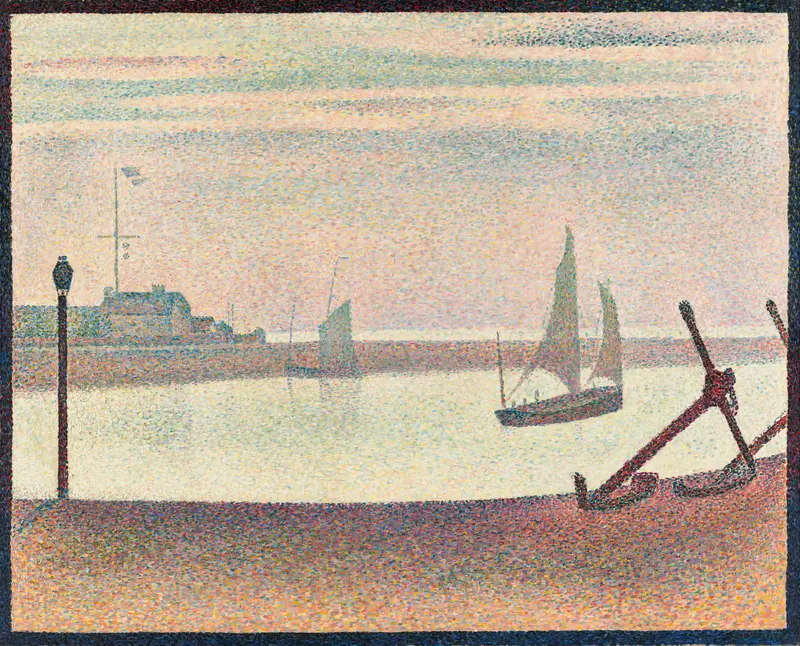
The Channel at Gravelines, Evening
Georges Seurat
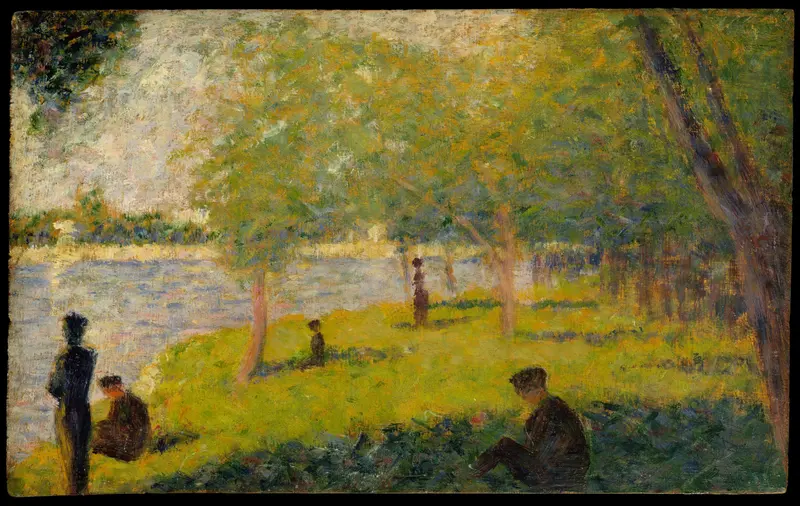
Study for ‘A Sunday on La Grande Jatte’
Georges Seurat
Study for A Sunday on La Grande Jatte
Georges Seurat
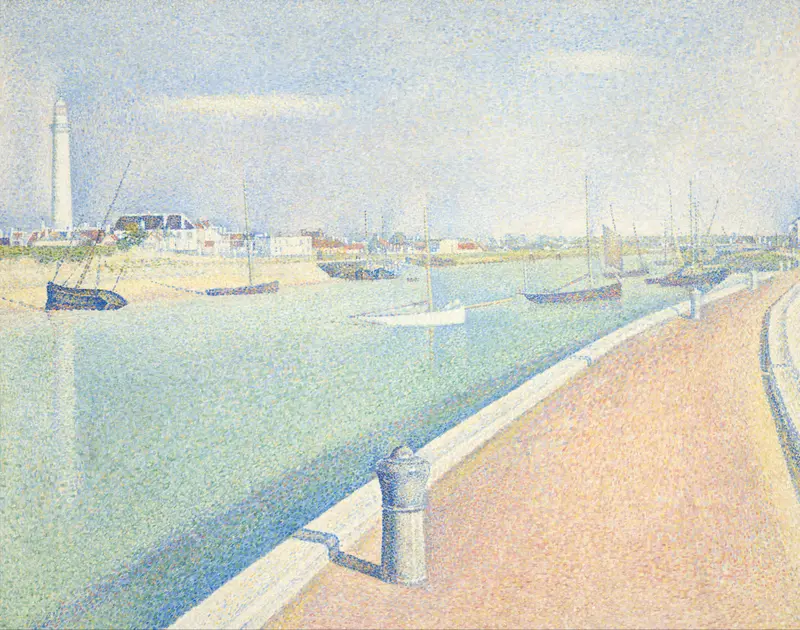
The Channel of Gravelines, Petit Fort Philippe
Georges Seurat
More Genre Scene Art

Banquet of the Officers of the St George Civic Guard
Frans Hals

Rembrandt and Saskia in the Scene of the Prodigal Son
Rembrandt van Rijn

Bal du moulin de la Galette
Pierre-Auguste Renoir

Quadrille at the Moulin Rouge
Henri de Toulouse-Lautrec

A Burial at Ornans
Gustave Courbet

When Will You Marry?
Paul Gauguin