
Breton Peasant Woman Holding a Taper — History & Facts
When Jules Breton exhibited Breton Peasant Woman Holding a Taper at the Salon of 1869, critics immediately recognized it as a defining example of his deep engagement with rural France. Breton, himself the son of a small-town mayor, had spent years in the villages of Brittany, sketching and conversing with local peasants. This painting stands out among his works for its focus on a single figure, stripped of the harvest scenes and communal rituals that often populate his canvases.
It was widely discussed in contemporary reviews for the dignity and gravity Breton bestowed on his humble subject, a quality that set him apart from other Realist painters of the era. The scene captures a moment of quiet devotion: a young Breton woman stands in profile, holding a slender taper candle. Her traditional lace headdress and dark dress root her firmly in the customs of Brittany, while the gentle illumination from the taper softens her features, suggesting both humility and resolve. The candle is not mere ornament—it signals her participation in a religious ritual, perhaps a procession or vigil, common in the Catholic villages of western France.
Breton’s careful modeling of her hands and the subtle play of light on her face recall the reverence of Jean-François Millet’s peasant figures, yet here, the focus is more intimate and personal. Unlike Millet’s communal scenes, Breton isolates his subject, inviting viewers to contemplate her inner world. The precise early history of this painting is not fully documented, but it is typical of Breton’s works from the late 1860s, many of which were acquired by French and British collectors eager for images of rural piety and tradition. Throughout his career, Jules Breton was celebrated for elevating the everyday life of peasants to the realm of high art, and Breton Peasant Woman Holding a Taper remains a testament to this mission.
Today, the painting is recognized as a key example of the Realist movement’s empathy for ordinary people, and it continues to be studied for its blend of documentary detail and quiet lyricism. Its current location is not widely published, but it is frequently reproduced in surveys of nineteenth-century French painting.
More Artworks by Jules Breton

The Song of the Lark
Jules Breton
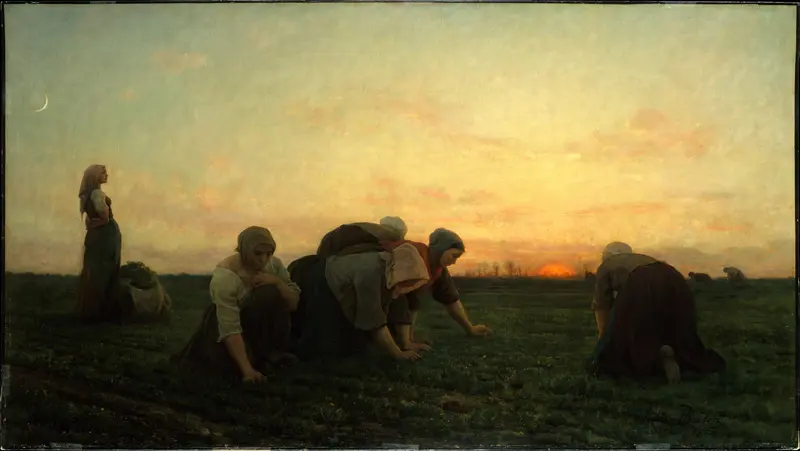
The Weeders
Jules Breton
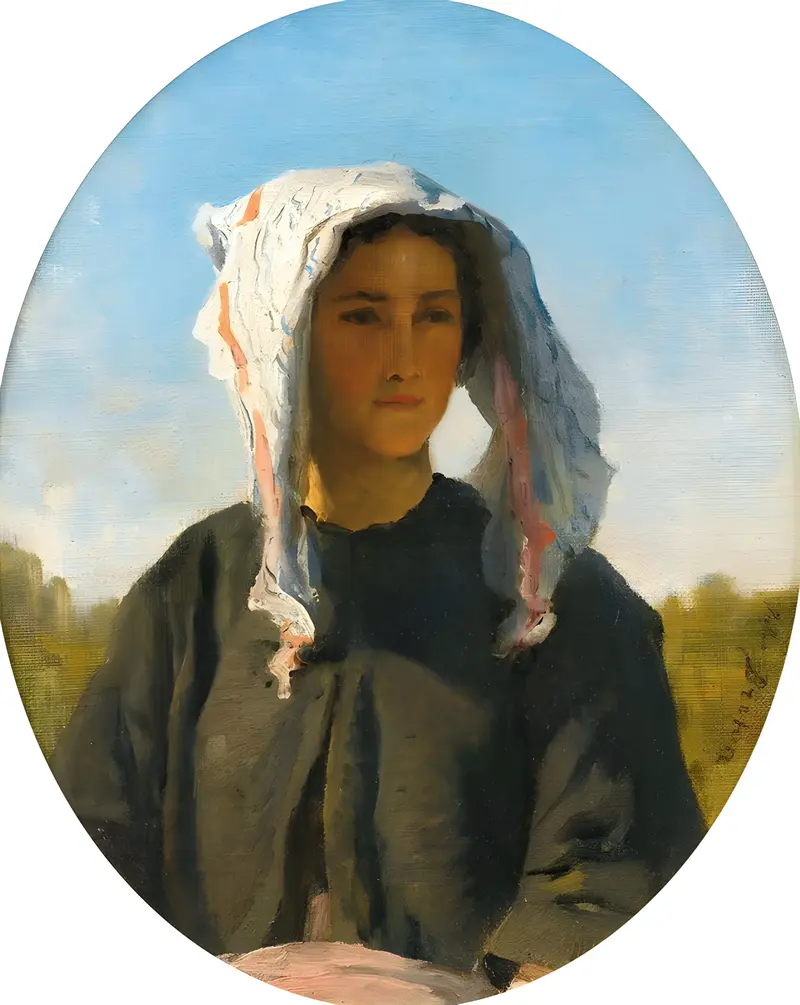
Portrait de jeune Paysanne Bordelaise
Jules Breton
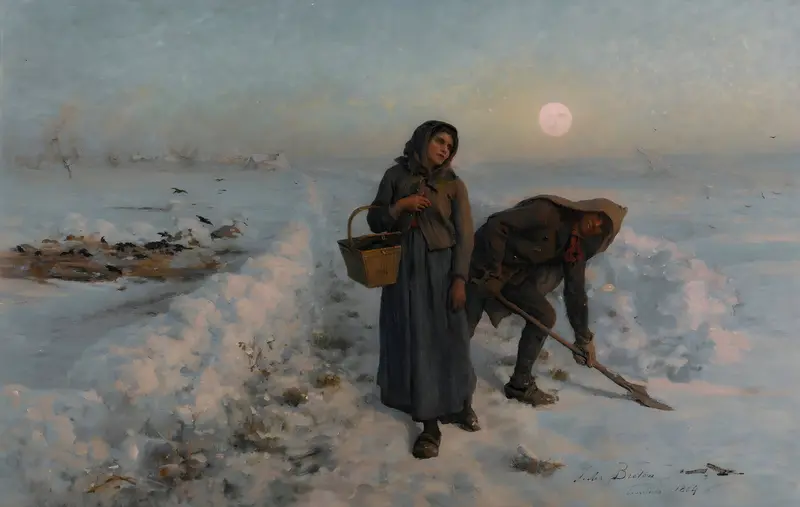
Sur la route en hiver; artois
Jules Breton
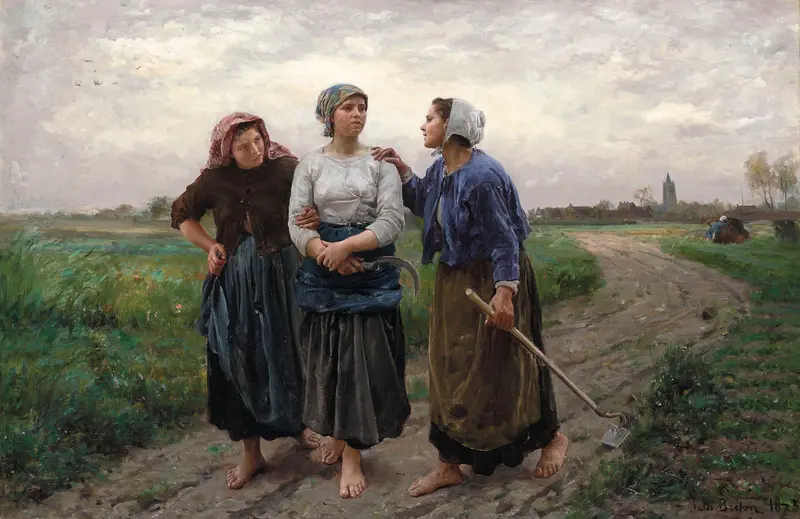
Les amies
Jules Breton
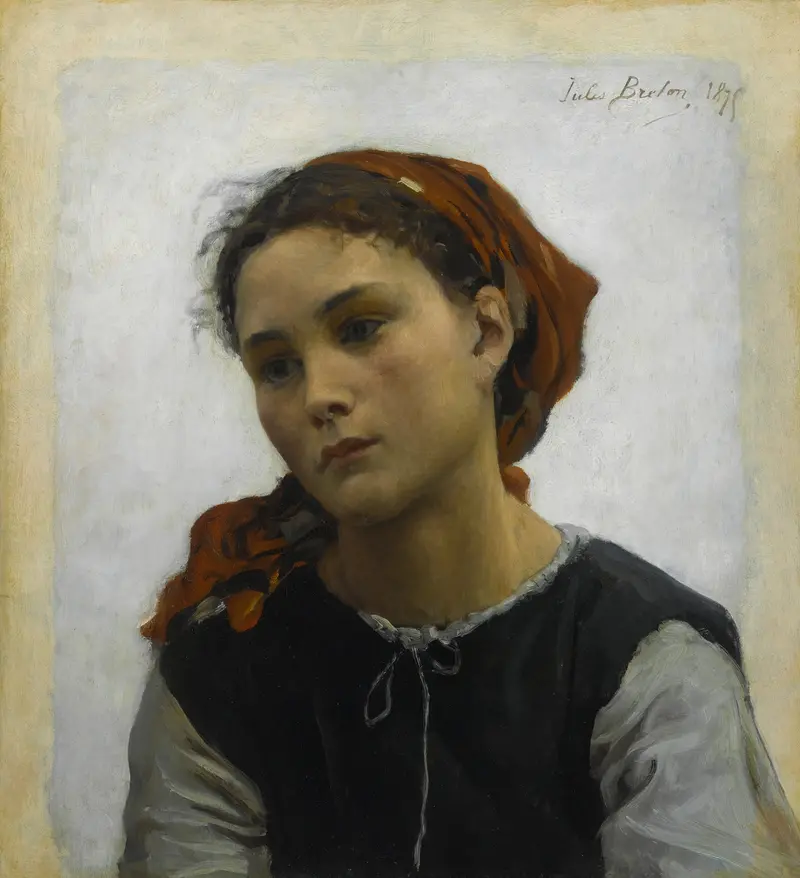
Innocente
Jules Breton
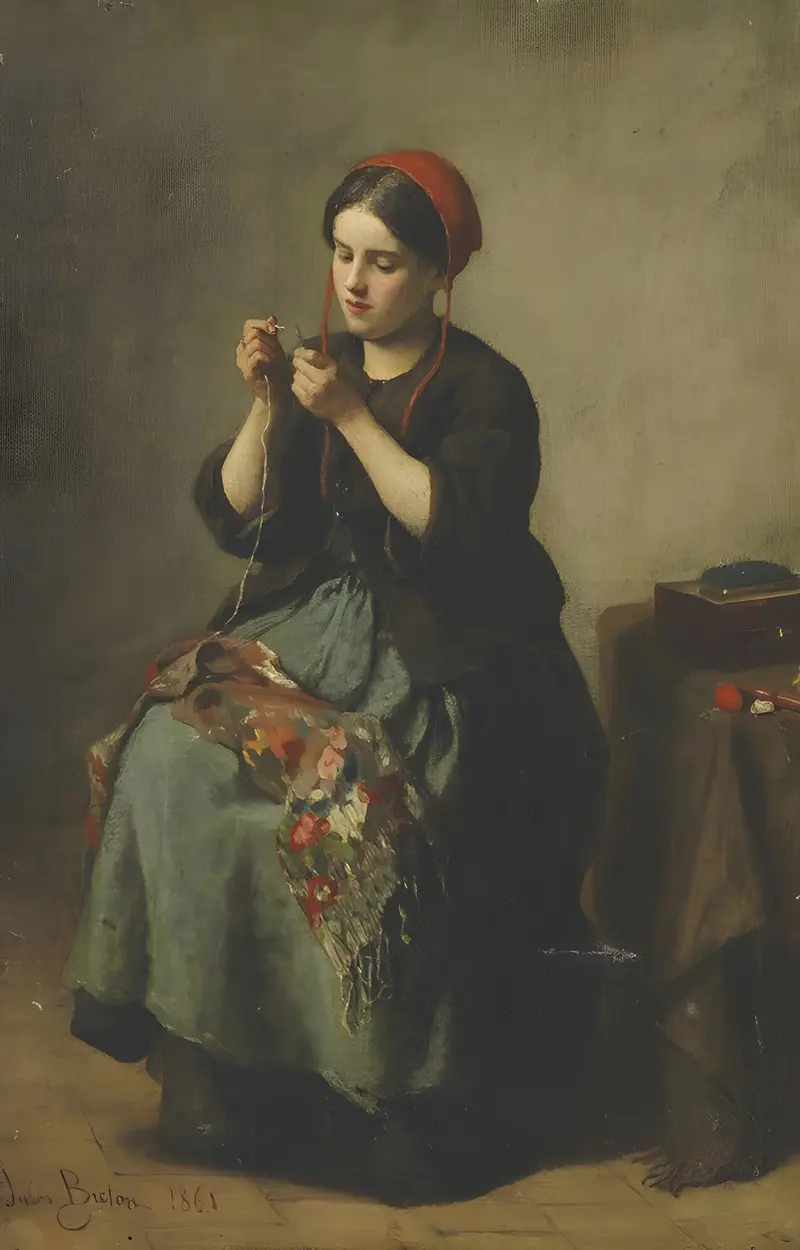
Peasant woman threading a needle
Jules Breton
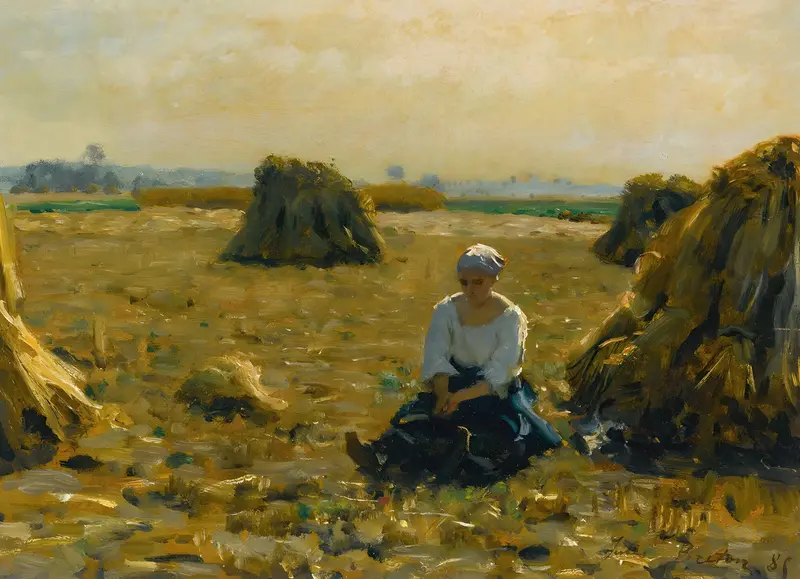
Jeune femme dans les champs
Jules Breton
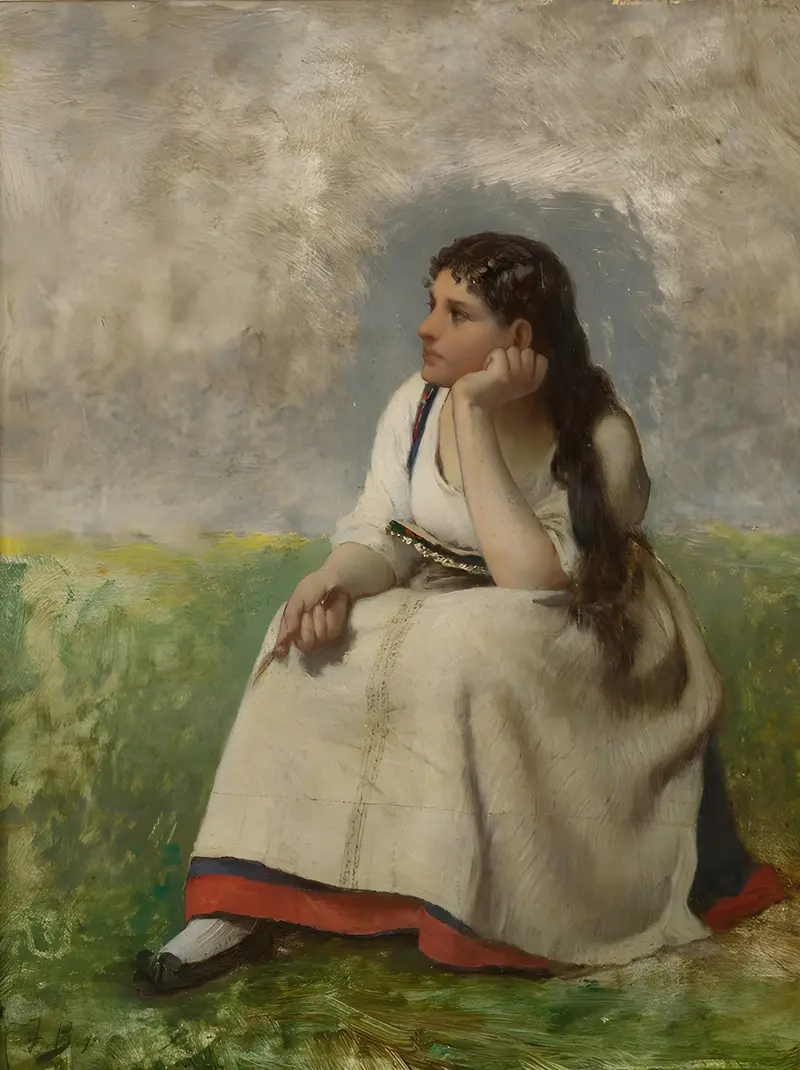
Jeune Fille Pensive
Jules Breton
Returning from the Fields
Jules Breton
More Genre Scene Art

Banquet of the Officers of the St George Civic Guard
Frans Hals

Rembrandt and Saskia in the Scene of the Prodigal Son
Rembrandt van Rijn

Bal du moulin de la Galette
Pierre-Auguste Renoir

Quadrille at the Moulin Rouge
Henri de Toulouse-Lautrec

A Burial at Ornans
Gustave Courbet

When Will You Marry?
Paul Gauguin