
Capriccio: A Sluice on a River with a Chapel — History & Facts
No Venetian scene by Canaletto is quite as puzzling as Capriccio: A Sluice on a River with a Chapel, painted in 1754, for here the artist turns away from the familiar canals and monuments of his native city to conjure a landscape that never truly existed. This work belongs to the genre of "capricci"—invented architectural fantasies—where elements from reality are rearranged to form an imagined place. Collectors of the 18th century, especially in England, clamored for such scenes, delighting in the blend of the recognizable and the fanciful.
The painting’s precise origins and patron remain unknown, adding to its intrigue, but it stands as a testament to the period’s taste for the picturesque and the imaginative. A sluice gate dominates the foreground, its wooden beams and rushing water rendered with Canaletto’s meticulous eye for detail. To the right, a small chapel perches on the riverbank, its bell tower catching the golden light that filters through a sky heavy with clouds. Figures go about their daily business—some tending boats, others pausing in conversation—suggesting a moment of tranquil industry.
The juxtaposition of rustic labor with the serene chapel invites the viewer to reflect on the harmony between human endeavor, faith, and nature. Unlike the bustling urban scenes of Canaletto’s Grand Canal views, here the mood is quieter, closer in spirit to the capricci of Guardi, yet with a clarity and order all his own. The painting’s subsequent history is less well-documented than many of Canaletto’s Venetian vedute. Works like this, often produced for the British market, traveled widely in the 18th and 19th centuries, passing through private collections and country houses.
The medium is uncertain, though oil on canvas is likely, given the artist’s usual practice. Today, Capriccio: A Sluice on a River with a Chapel is recognized as a fine example of Canaletto’s late capricci, revealing his enduring fascination with the interplay of imagination and reality. Its survival, despite the vagaries of taste and time, speaks to the lasting appeal of invented landscapes in the age of the Grand Tour.
More Artworks by Canaletto

The Grand Canal, Venice, looking north-west from the Ca' Corner to the Ca' Contarini degli Scrigni, with the campanile of Santa Maria della Carità
Canaletto

Venice, Bacino di San Marco on Ascension Day
Canaletto

Windsor Castle
Canaletto

The Grand Canal looking North-East from the Palazzo Dolfin-Manin to the Rialto Bridge
Canaletto

Venice: The Campo SS. Giovanni e Paolo
Canaletto

Venice: The Grand Canal from the Rialto to the Palazzo Foscari
Canaletto
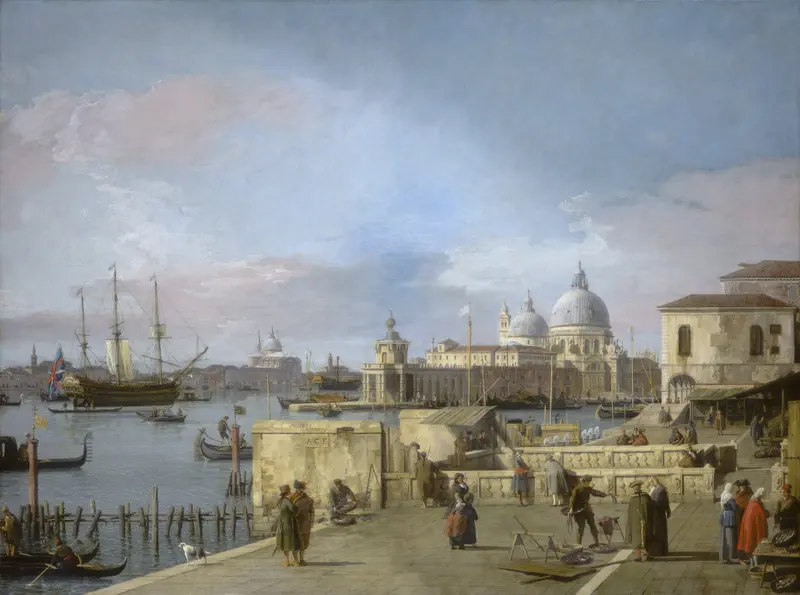
Venice: The Molo towards the Dogana and Santa Maria della Salute
Canaletto

Venice: The Piazzetta
Canaletto
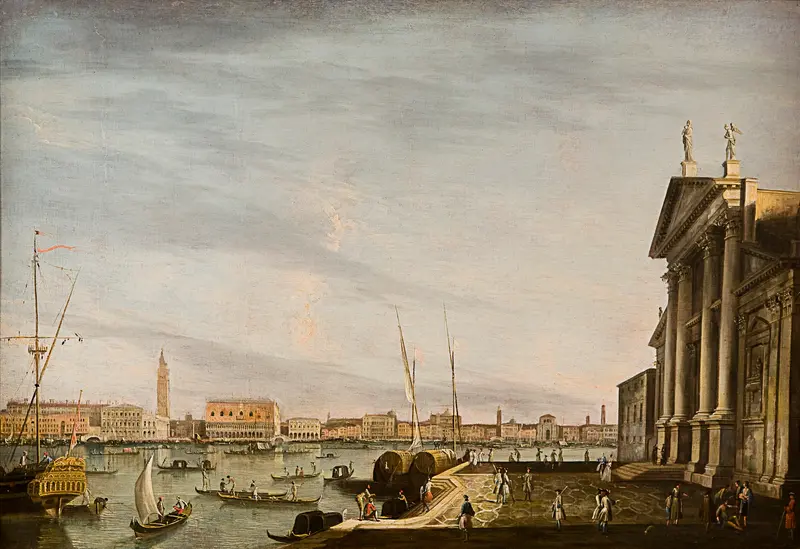
Venice, View of San Giorgio Maggiore
Canaletto

London: The Thames from Somerset House Terrace towards Westminster
Canaletto
More Landscape Art

The Starry Night
Vincent van Gogh

View of Delft
Johannes Vermeer

Water Lilies
Claude Monet
The Grand Canal, Venice, looking north-west from the Ca' Corner to the Ca' Contarini degli Scrigni, with the campanile of Santa Maria della Carità
Canaletto
Windsor Castle
Canaletto
The Grand Canal looking North-East from the Palazzo Dolfin-Manin to the Rialto Bridge
Canaletto