
Château de Larderole — History & Facts
Who listens when art speaks of silence? In Château de Larderole, the stillness of a distant landscape pulls the viewer into a moment of quiet introspection, suggesting an obsession that lingers long after the image fades. Look to the left at the intricate details of the château, its elegant silhouette rising against a muted sky. The delicate brushstrokes recreate the texture of the stone, hinting at a rich history that seems to resonate through the faded light. Notice how the gentle gradients of blue and gray wash over the canvas, creating a sense of depth that invites you to explore the tranquility of this forgotten place.
The composition is balanced and serene, guiding your gaze through the landscape as though walking the grounds of this majestic yet melancholic estate. Beneath the surface, hidden narratives unfold. The contrast between the lush, vibrant foreground and the shadowy, enigmatic background hints at the duality of nature and man’s creations. The château, a symbol of human ambition, stands resilient yet isolated, suggesting a haunting obsession with permanence in a world destined for change.
This tension between beauty and decay speaks to a longing that transcends time, a desire to capture what inevitably slips away. In 1832, Eugène Isabey painted this scene during a period of personal and artistic evolution, marked by a burgeoning interest in Romanticism. Living in Paris, he was influenced by the changing tides of society and the shifting perspectives of the landscape genre. The world around him was in flux, and this work reflects both the serenity of nature and the complexity of human emotion, encapsulating a moment of quiet reflection amid chaos.
More Artworks by Eugène Isabey
Browse all →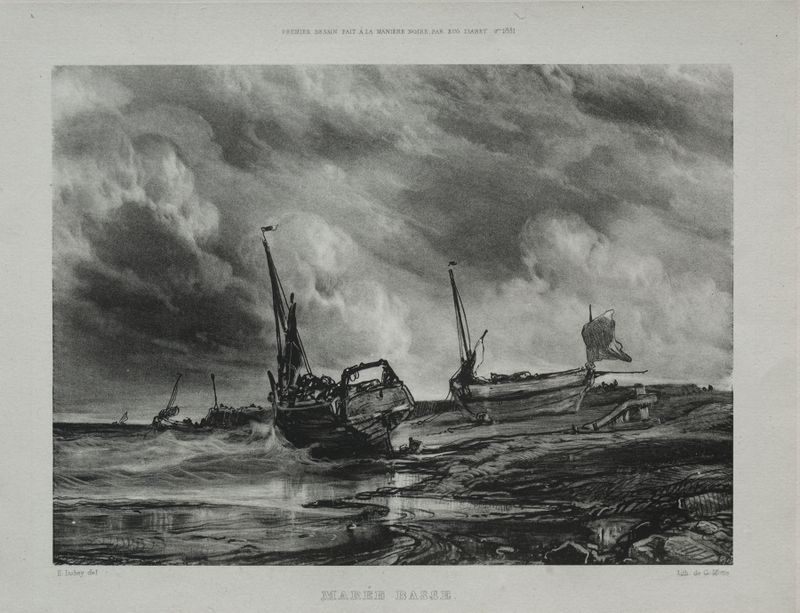
Marée basse
Eugène Isabey

Shipwreck
Eugène Isabey

Shipwreck
Eugène Isabey

The Wreck
Eugène Isabey
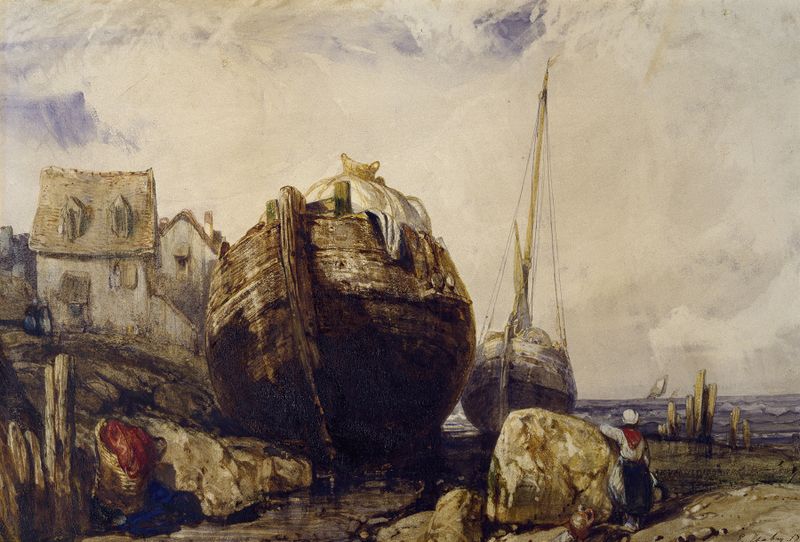
Fishing Boats
Eugène Isabey
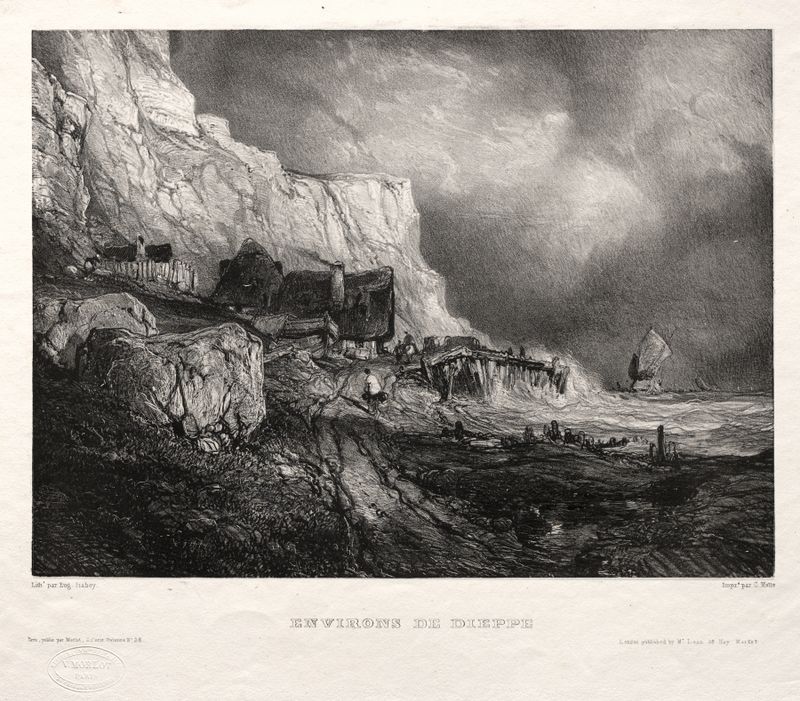
Environs de Dieppe
Eugène Isabey
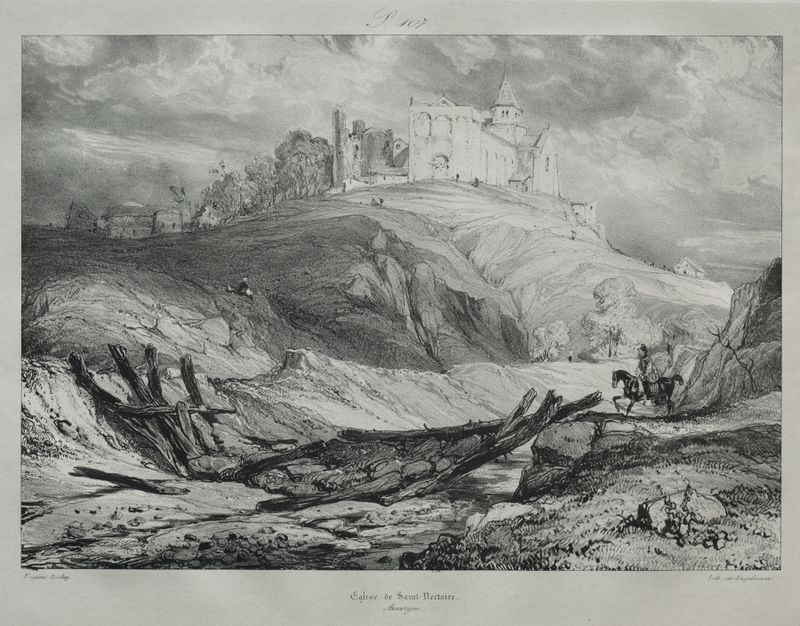
Église de St. Nectaire
Eugène Isabey

Fishing boat at the seaside
Eugène Isabey

Sunset on the Normandy Coast
Eugène Isabey
Fishing Boats Tossed before a Storm
Eugène Isabey





