Church on a Bank above a River — History & Facts
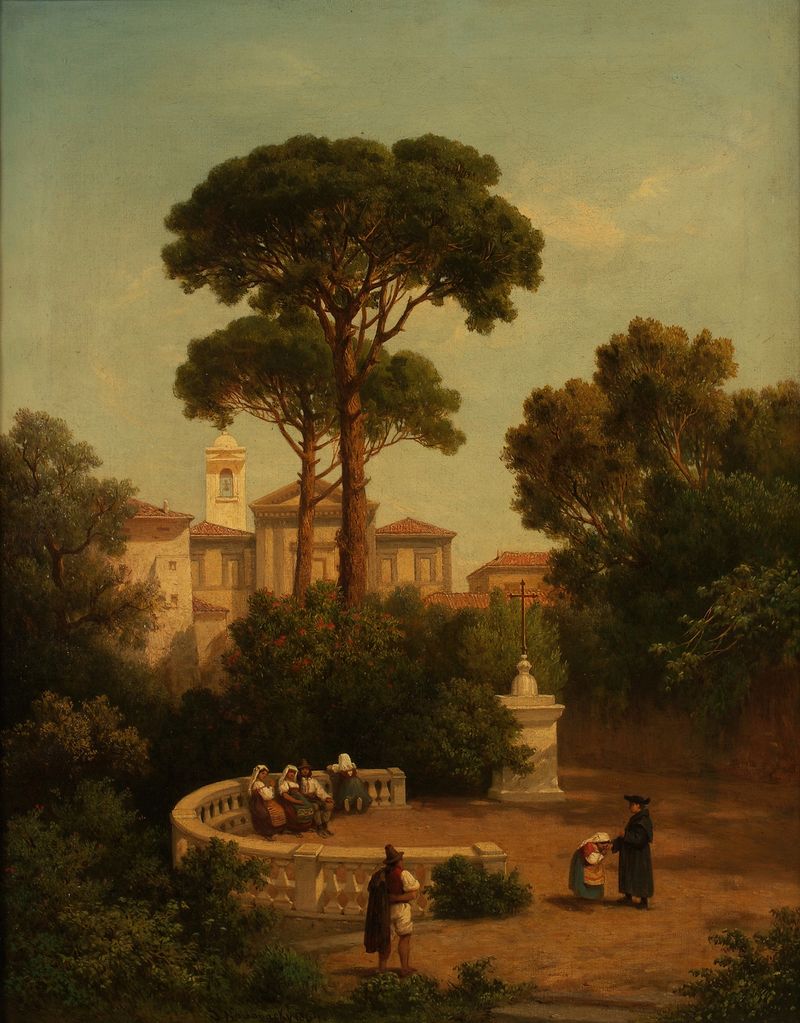
What if beauty was never meant to be finished? This thought echoes through the serene landscape captured in Church on a Bank above a River. Here, desire permeates the air, inviting the viewer to linger and reflect on the perpetual yearning for transcendence. Look to the left at the church, its steeple stretching skyward, almost whispering secrets to the clouds above. The vibrant greens of the surrounding foliage contrast with the soft blues of the river below, creating a harmony that draws the eye.
Notice how the light dances on the water’s surface, a delicate interplay between sun and shadow that instills a sense of peace, yet stirs the undercurrents of longing. Delve deeper into the scene and you'll find layers of emotional tension. The church stands steadfast against the flowing river, symbolizing the constant struggle between permanence and change. The river, with its gentle currents, represents life's fleeting moments, while the church embodies an unyielding hope—a desire for sanctuary amidst the chaos.
Each brushstroke evokes a sense of stillness juxtaposed with the movement of the water, a reminder that beauty can exist in both stasis and flux. In 1860, during a time of great artistic exploration, Jan Nowopacký painted this work while immersed in the burgeoning Romantic movement. He sought to capture the emotional landscapes of the soul, merging the external world with internal feelings. This period marked a shift toward a deeper appreciation for nature and human emotion, reflecting the artist's own journey as he navigated the complexities of life and art.