Scrub Hill — History & Facts
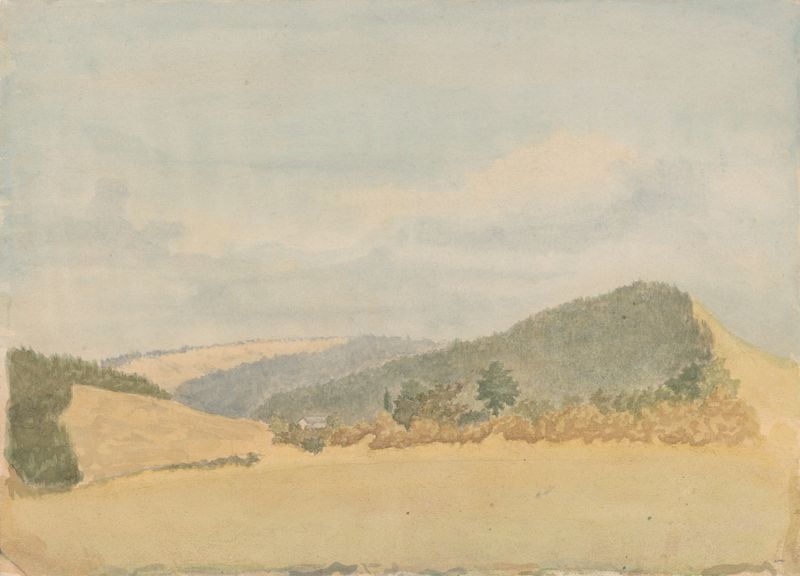
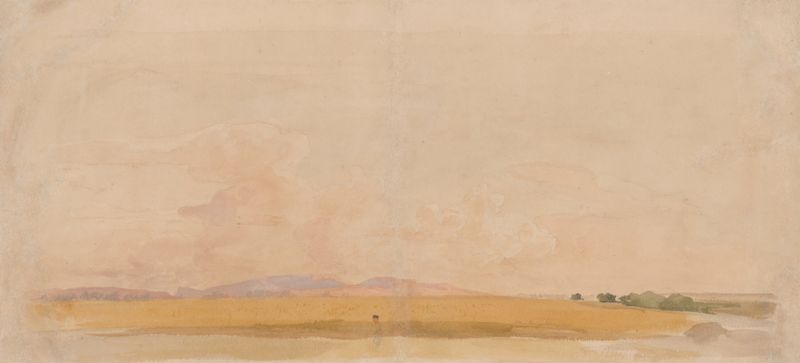
In the stillness of creation, it invites a dialogue, fostering a connection to that which is seen and that which remains unseen, echoing the existential void we often confront. Look to the expansive horizon in Scrub Hill, where muted earth tones coalesce with a delicate interplay of light and shadow. The brushstrokes reveal a gentle undulation of the land, accentuated by dappled sunlight filtering through the foliage. Notice how the foreground is anchored by resilient scrub, its texture rendered with care, guiding the viewer's eye to the distant hills, where the sky embraces the earth in an almost ethereal manner. Beyond the serene landscape lies a palpable tension between the known and the unknown.
The soft edges of the scrub evoke a sense of fragility, hinting at life's persistence in the face of the void. Meanwhile, the expansive sky alludes to infinite possibilities, a reminder of the duality of existence — beauty and desolation, hope and despair intertwined in the vast tapestry of life. Jan Nowopacký painted Scrub Hill in 1850 during a period marked by a growing interest in naturalism and the effects of light in landscape painting. At this time, he was immersed in the artistic currents of Europe, responding to Romanticism's influence while forging his own path.
The work reflects not only his technical skill but also a philosophical engagement with the world around him, resonating with the evolving dialogues of the era.