Mountain Landscape with Coniferous Trees — History & Facts
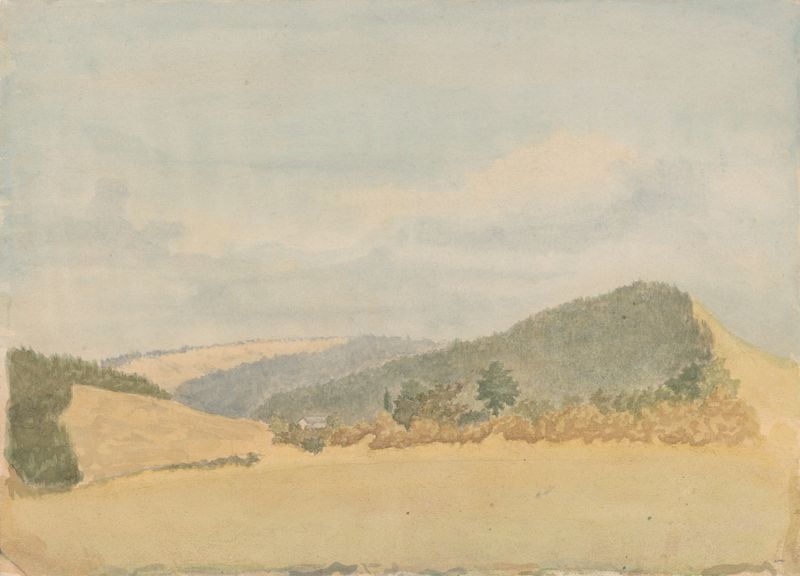
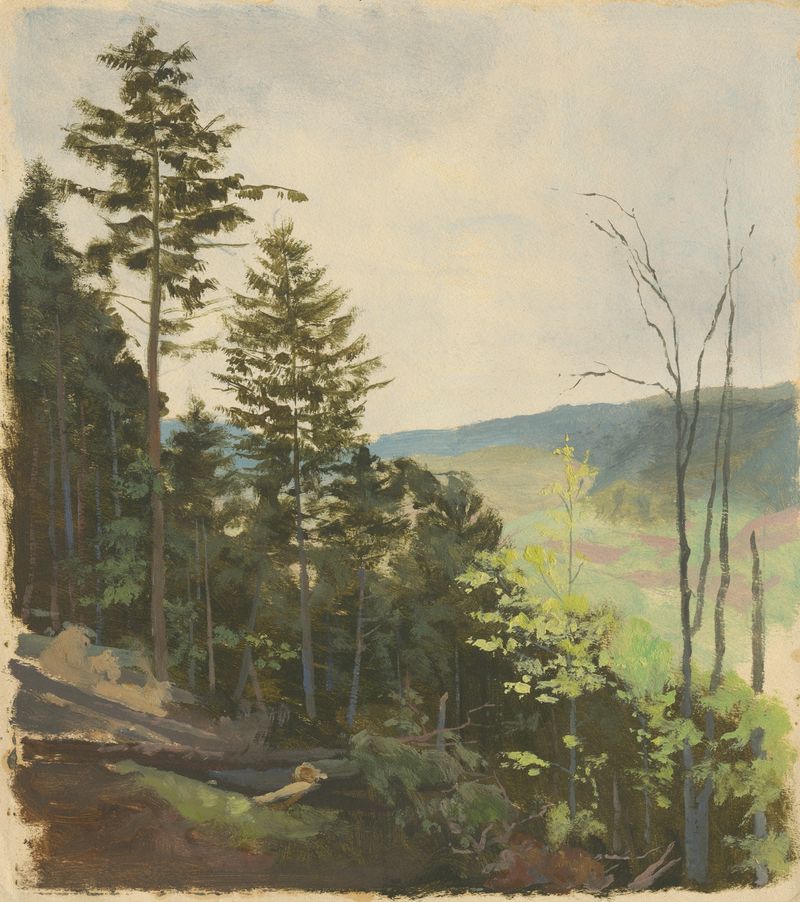
Can paint confess what words never could? The innocence of nature breathes life into the canvas, inviting the viewer to explore its tranquil depths. Look to the left at the majestic coniferous trees, their emerald hues standing tall against the expansive backdrop of craggy mountains. The artist employs rich greens and earthy browns, contrasting with the soft blues of the sky, which fade into warm sunlight. Notice how the brushstrokes create a sense of movement in the foliage, as if a gentle breeze whispers through the branches, while the defined peaks of the mountains loom in silent watchfulness. The interplay between light and shadow reveals the duality of serenity and solitude within the landscape.
Each tree, a sentinel of the forest, suggests both strength and vulnerability against the rugged terrain. The distant mountains, though grand, invoke a sense of isolation, prompting reflections on human existence amid nature's grandeur. The innocence of the scene belies deeper themes of both resilience and fragility found within the natural world. During the 1850s, as Mountain Landscape with Coniferous Trees came to life, Jan Nowopacký was deeply influenced by the Romantic movement and its reverence for nature.
Working in Bohemia, he captured the era's growing appreciation for landscape painting, mirroring the societal shifts toward a more introspective relationship with the environment. This period marked an artistic departure aimed at expressing profound emotions through the beauty and complexity of the natural world.