
Clothes on the Grass — History & Facts
No figure appears in Clothes on the Grass, yet this modest painting marks a turning point in Georges Seurat's career. It is among the earliest surviving works where Seurat began to experiment with the division of color, a technique that would later define his signature style. Painted in 1883, just a year before he embarked on A Sunday Afternoon on the Island of La Grande Jatte, this canvas signals his move away from academic conventions and toward the radical methods of the Neo-Impressionist movement.
The absence of human presence is striking, inviting speculation about what—or who—has just left the scene. A patchwork of garments lies scattered on a sun-drenched lawn, their forms rendered in careful, almost scientific dabs of pigment. The eye is drawn to the interplay of light and shadow across the cloth, suggesting not only the time of day but also the warmth of the sun and the softness of the grass. Seurat captures a moment just after an unseen gathering: perhaps bathers have left their clothes behind as they slip into the water nearby, echoing motifs found in his later Bathers at Asnières.
Unlike the lively scenes of Pierre-Auguste Renoir, who often depicted figures in the midst of leisure, Seurat’s focus here is on absence, the quiet aftermath that hints at human stories without showing a single face. The provenance of Clothes on the Grass is less dramatic than some of Seurat’s larger works; its early history is not well documented, and the original patron remains unknown. It was likely painted during Seurat’s formative years in Paris, as he honed his technique through plein air studies along the Seine. Today, the painting is recognized as a key step in the artist’s evolution toward Pointillism, its restrained subject and experimental brushwork offering a glimpse of the innovations to come.
Though not as famous as his monumental canvases, this work holds a quiet importance in the story of modern art, bridging the gap between tradition and the bold new language Seurat would soon invent.
More Artworks by Georges Seurat
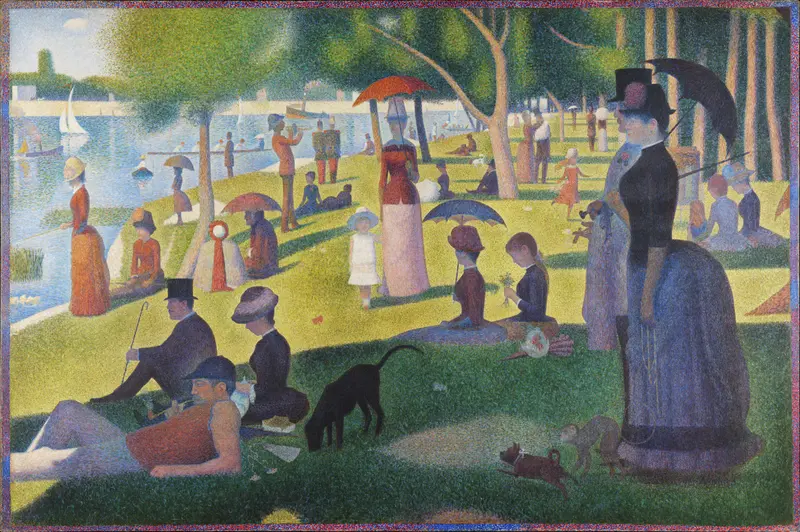
A Sunday Afternoon on the Island of La Grande Jatte
Georges Seurat
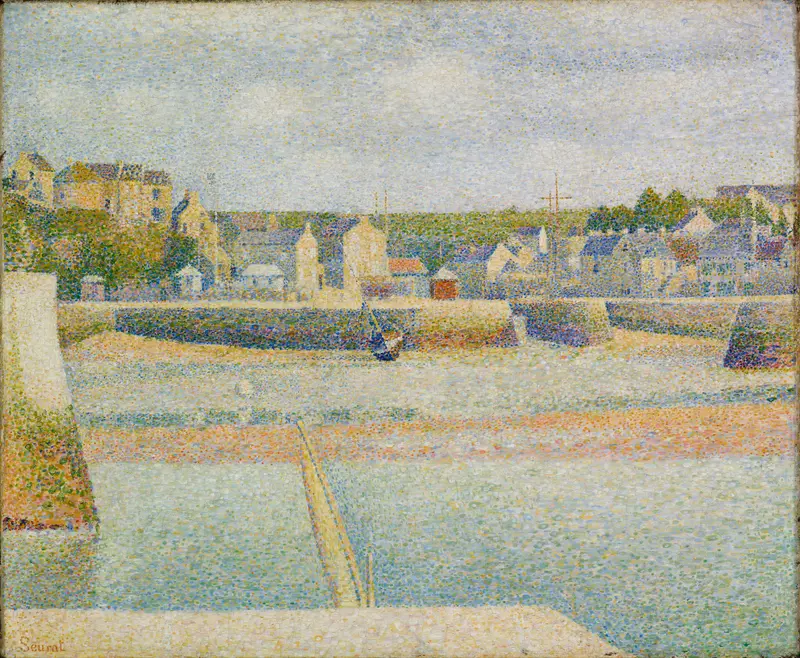
Port-en-Bessin, The Outer Harbor (Low Tide)
Georges Seurat
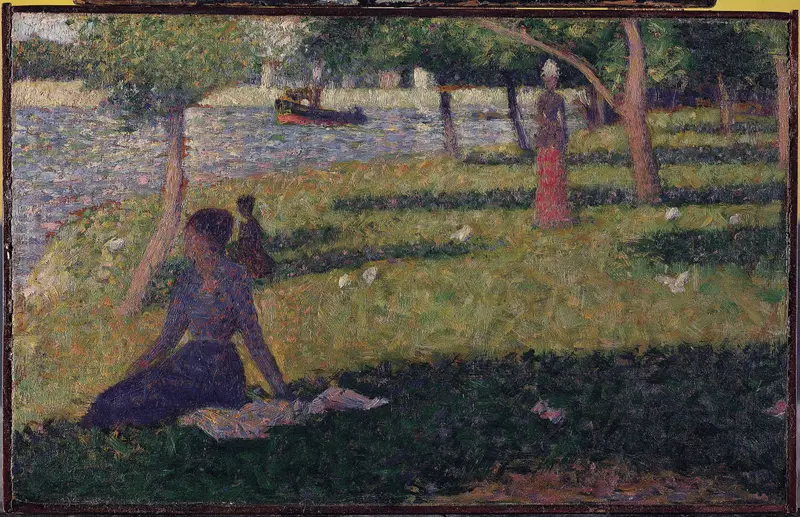
Étude pour ‘La Grande Jatte’ (Study for ‘La Grande Jatte’)
Georges Seurat
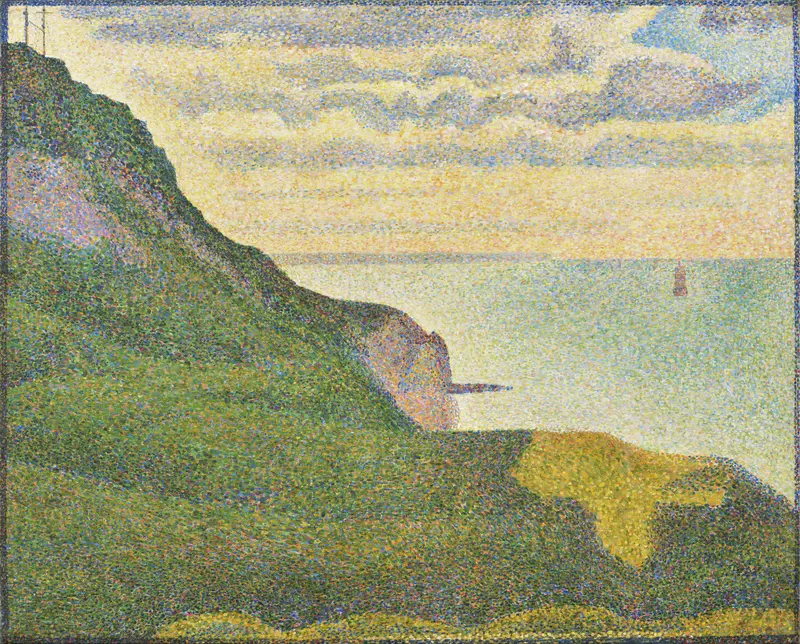
Seascape at Port-en-Bessin,Normandy
Georges Seurat
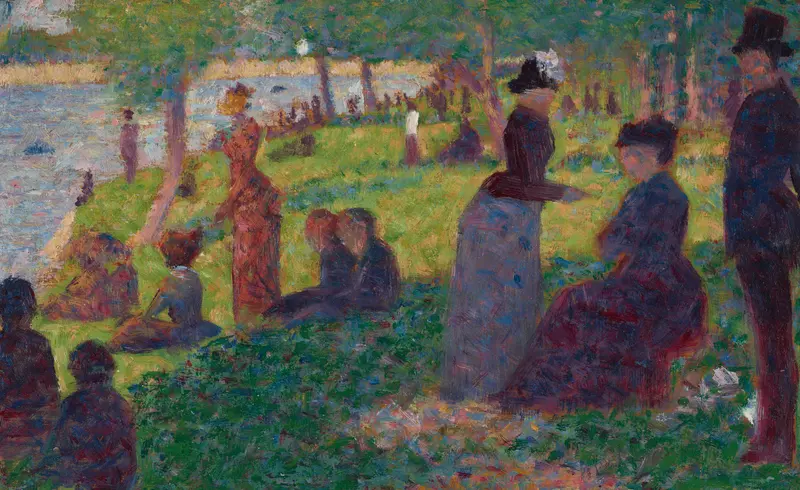
Oil Sketch for "A Sunday on La Grande Jatte — 1884"
Georges Seurat
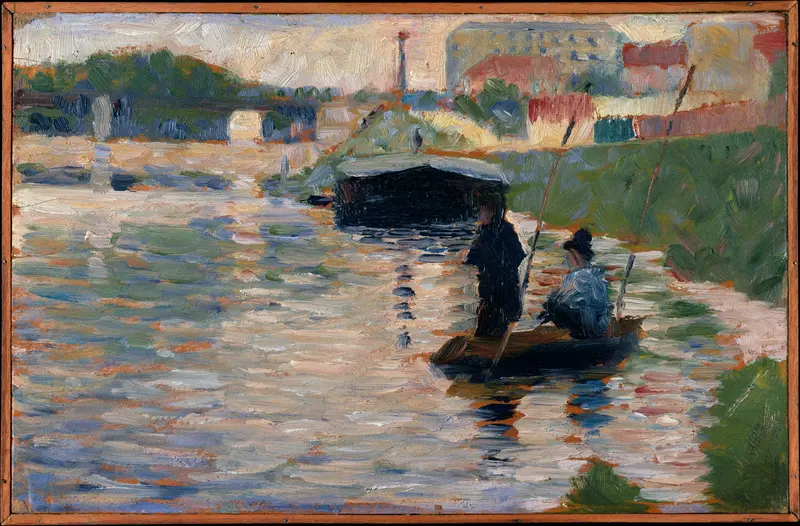
View of the Seine
Georges Seurat
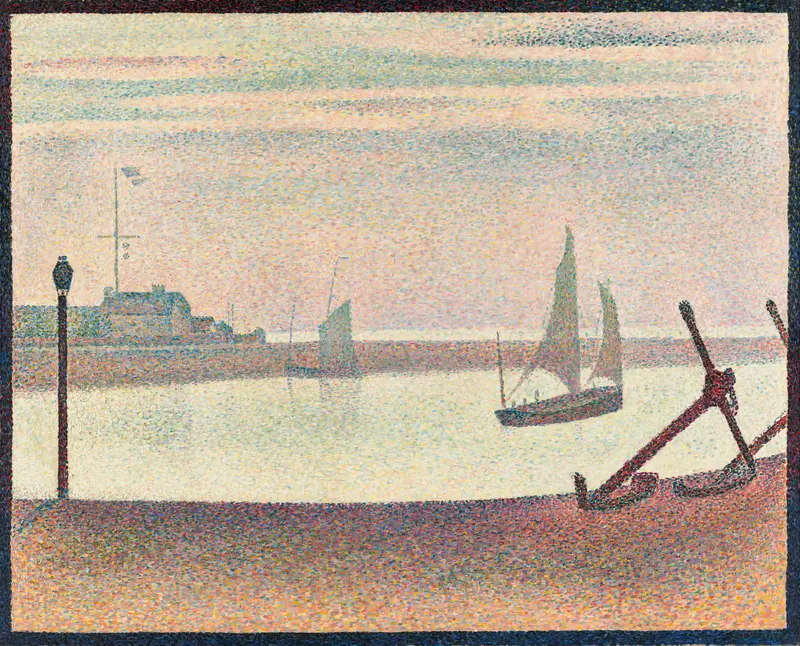
The Channel at Gravelines, Evening
Georges Seurat
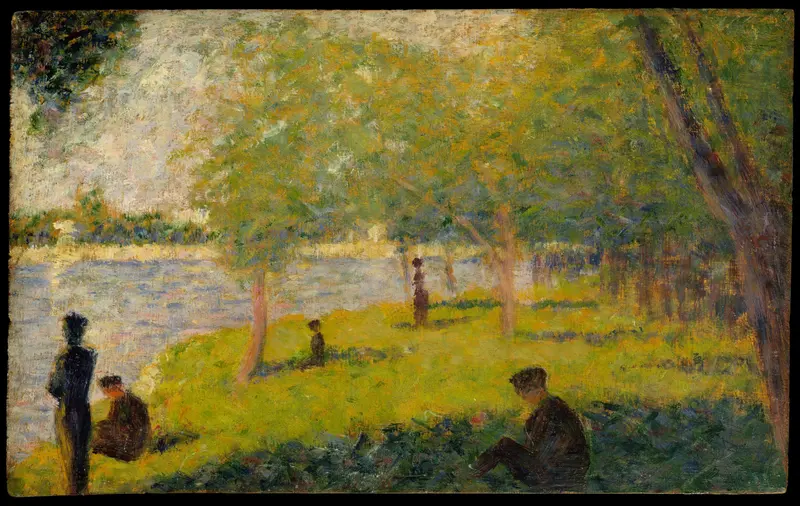
Study for ‘A Sunday on La Grande Jatte’
Georges Seurat
Study for A Sunday on La Grande Jatte
Georges Seurat
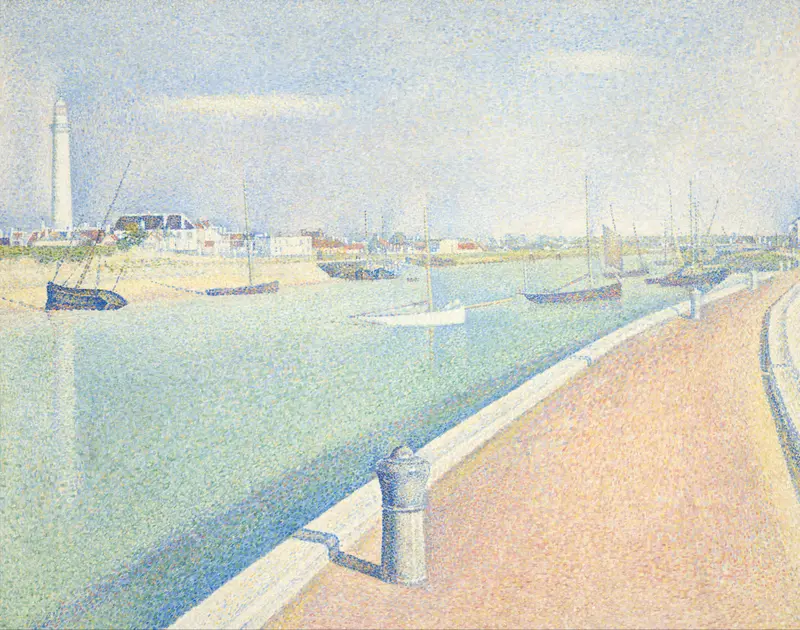
The Channel of Gravelines, Petit Fort Philippe
Georges Seurat
More Genre Scene Art

Banquet of the Officers of the St George Civic Guard
Frans Hals

Rembrandt and Saskia in the Scene of the Prodigal Son
Rembrandt van Rijn

Bal du moulin de la Galette
Pierre-Auguste Renoir

Quadrille at the Moulin Rouge
Henri de Toulouse-Lautrec

A Burial at Ornans
Gustave Courbet

When Will You Marry?
Paul Gauguin