
Dance on the Shore — History & Facts
A path of moonlight slices across the water, drawing the eye to two figures—one in white, one in yellow—locked in a whirling dance at the edge of the shore. Their hair streams in the wind, echoing the wild curves of the trees that frame them, while a trio of shadowy forms stands nearby, watching or perhaps remembering. The palette is restless: the blue of the water pulses with streaks of orange, the ground beneath the dancers seems to ripple, and a cat sprawls in the foreground, half in shadow, half in the pinkish light that stains the earth.
Every line and color in Dance on the Shore seems to move, as if the world itself is caught up in the rhythm of the dance. Painted around 1900, this work by Edvard Munch belongs to a moment when artists across Europe were searching for new ways to express the inner life—what the Symbolists called “the music of the soul.” Munch, whose career was defined by his exploration of love, anxiety, and memory, often set his figures in landscapes that feel both real and dreamlike. The source lists Tumblr as its collection, a reminder that history has kept few traces of this particular canvas’s journey. Yet the painting’s swirling forms and charged color place it firmly in the era when the boundaries between the seen and the felt were being redrawn—inviting us to join the dance, if only with our eyes.
More Artworks by Edvard Munch

The Scream
Edvard Munch

The Scream (1910 version)
Edvard Munch

Despair
Edvard Munch

The Day After
Edvard Munch
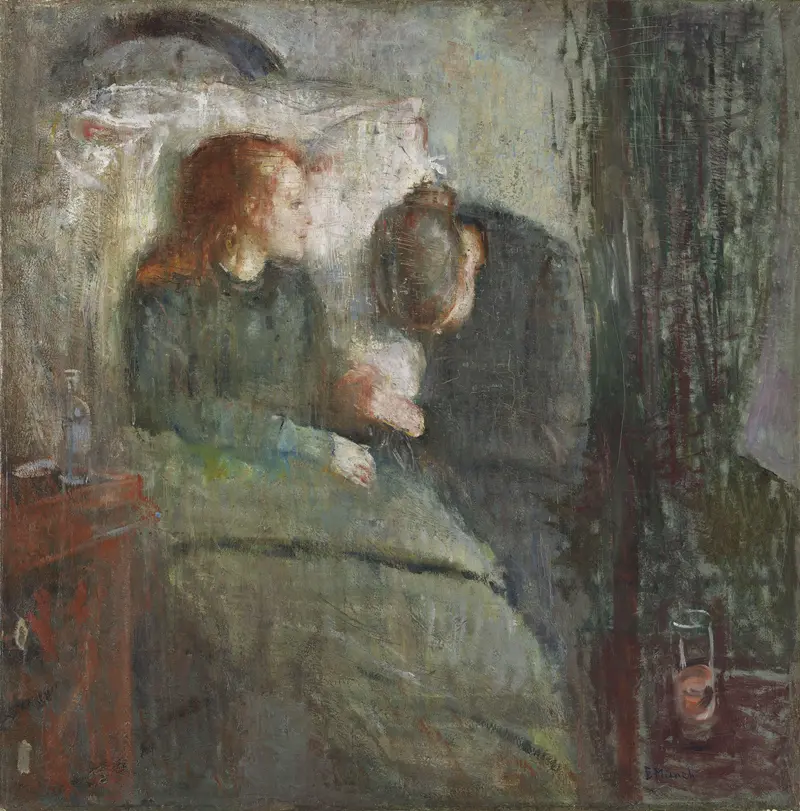
The Sick Child
Edvard Munch
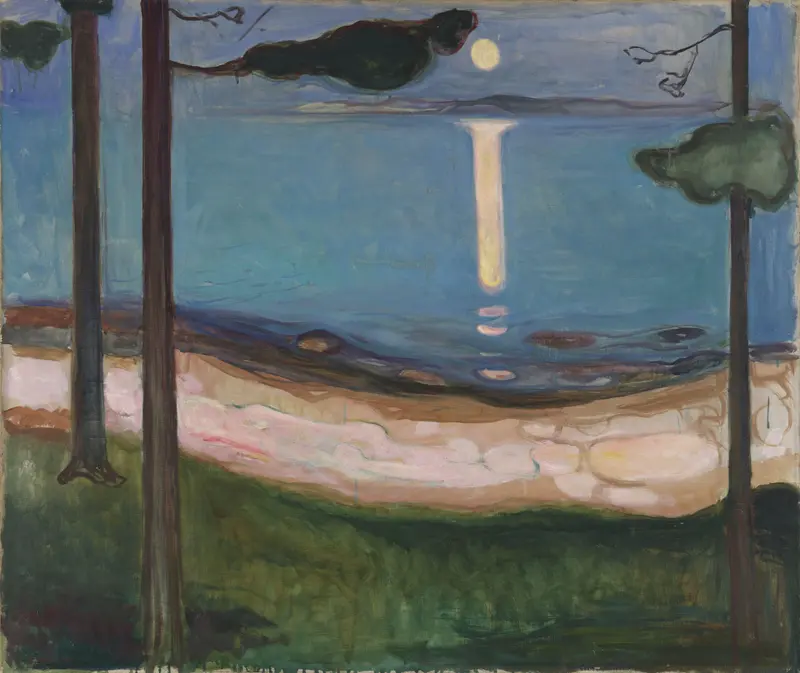
Moonlight
Edvard Munch
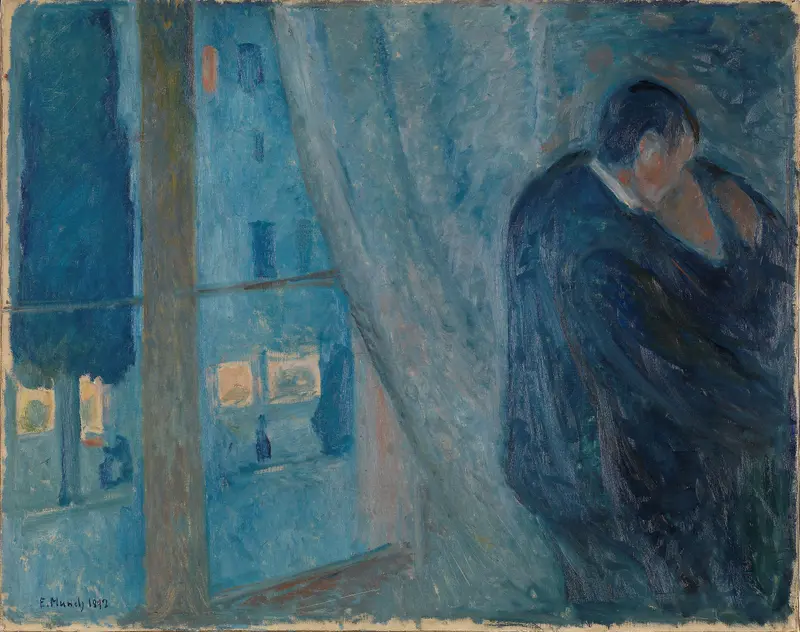
The Kiss
Edvard Munch
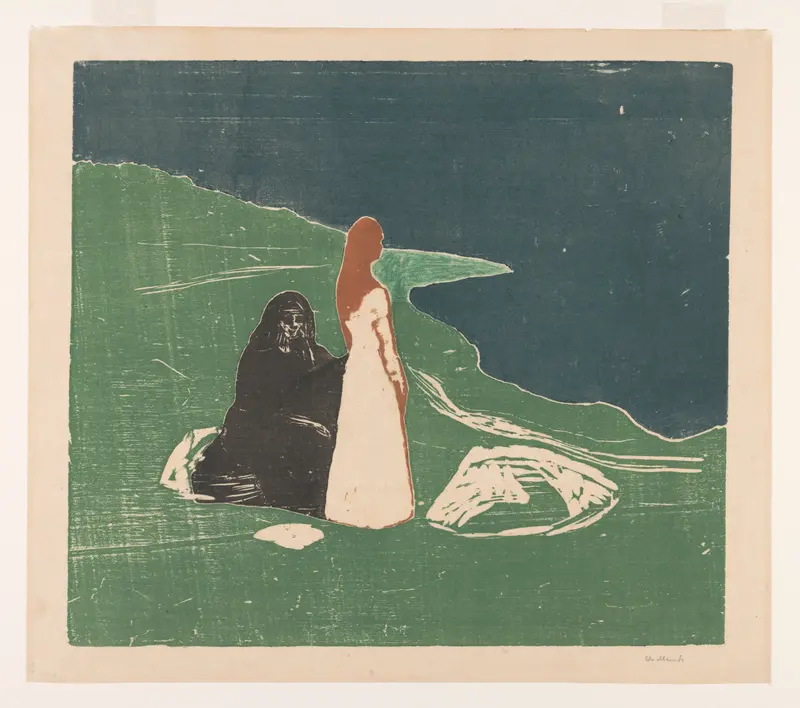
Two Women on the Shore
Edvard Munch
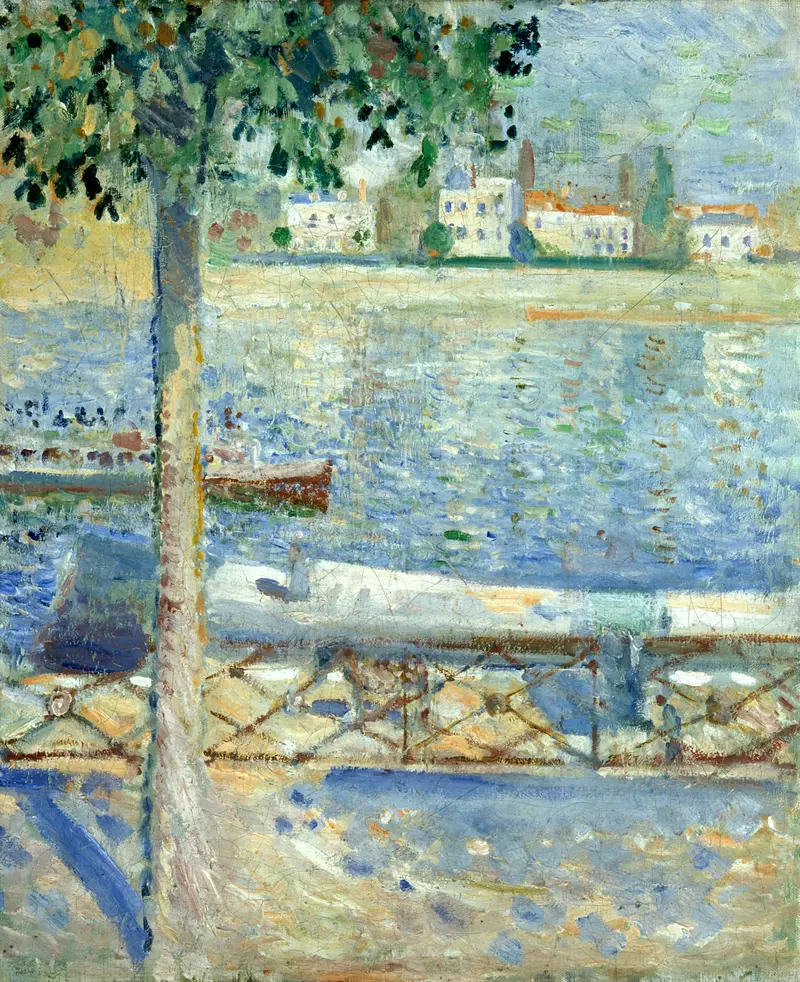
The Seine At Saint-Cloud
Edvard Munch
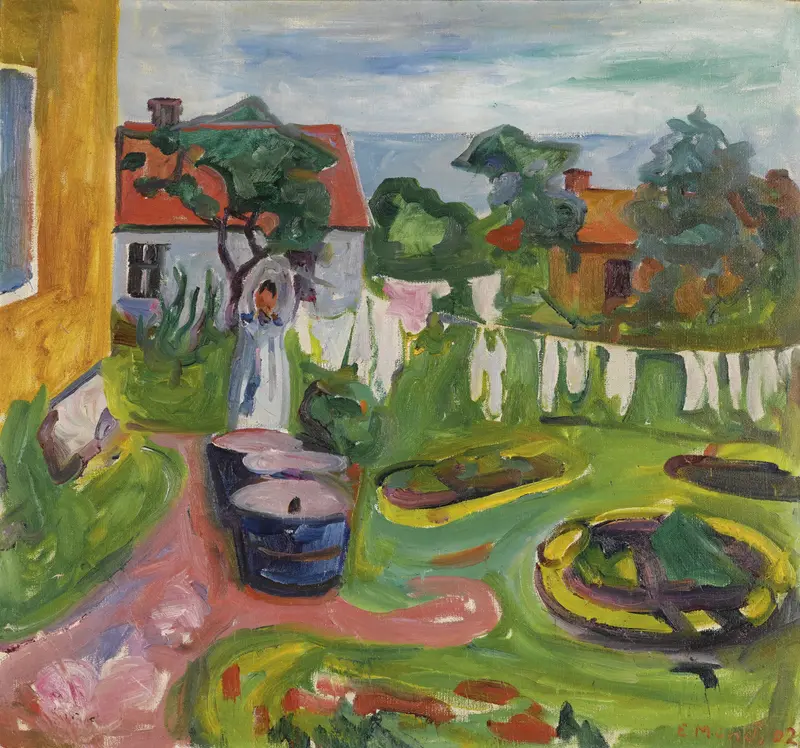
Klestørk I Åsgårdstrand (Clothes On A Line In Åsgårdstrand)
Edvard Munch
More Genre Scene Art

Banquet of the Officers of the St George Civic Guard
Frans Hals

Rembrandt and Saskia in the Scene of the Prodigal Son
Rembrandt van Rijn

Bal du moulin de la Galette
Pierre-Auguste Renoir

Quadrille at the Moulin Rouge
Henri de Toulouse-Lautrec

A Burial at Ornans
Gustave Courbet

When Will You Marry?
Paul Gauguin