
Dans la rue — History & Facts
When did color learn to lie? In the hands of a master, it dances not just on canvas but in the heart, conjuring feelings that blur the lines between reality and imagination. Look to the left—there, vibrant strokes of cobalt blue and sunlit yellows compete for your attention, a bustling street alive with energy and movement. Dufy's palette bursts with hues that seem to pulse and breathe, each brushstroke reminiscent of the laughter and chatter that spill through an urban landscape. The overlapping figures, frozen mid-stride, suggest a fleeting moment captured in time, while the sweeping curves of the architecture guide your gaze through an enchanting labyrinth of vibrant life. Yet, hidden amid this joyous chaos lies an intriguing contrast: the juxtaposition of anonymity against vibrant individuality.
Each figure, although lively, drifts through the street without a name, embodying both the thrill of city life and the solitude of the crowd. The brilliant colors can be seen as a façade, an invitation to dive deeper into the interconnectedness that both unites and divides us in the hustle of urban existence. In 1901, Raoul Dufy created this piece during his formative years in the vibrant art scene of Paris, a time when Post-Impressionism and Fauvism began to redefine the boundaries of color and form. Immersed in the artistic fervor of the city, he was exploring the expressive potential of color, influenced by contemporaries like Matisse and Monet, while establishing his own distinct voice.
More Artworks by Raoul Dufy
Browse all →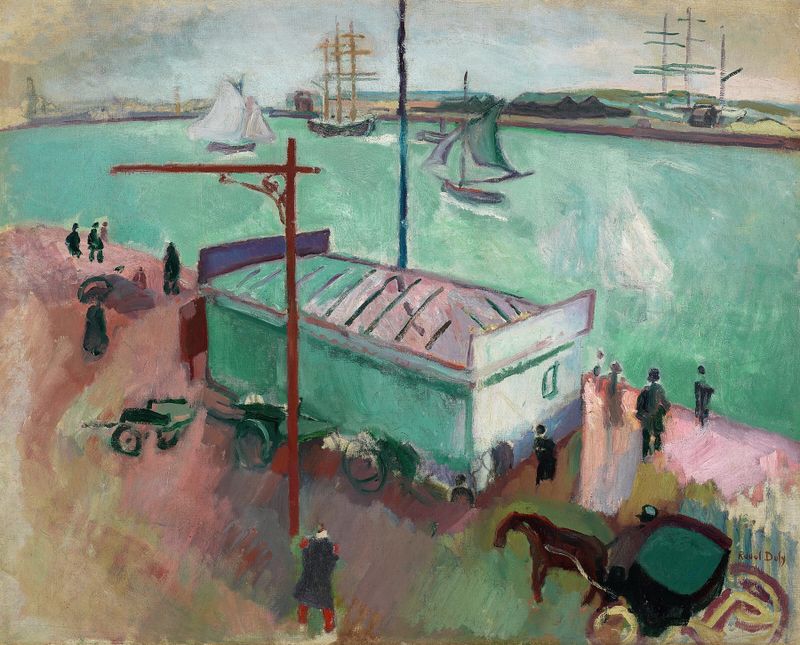
Le Port du Havre
Raoul Dufy
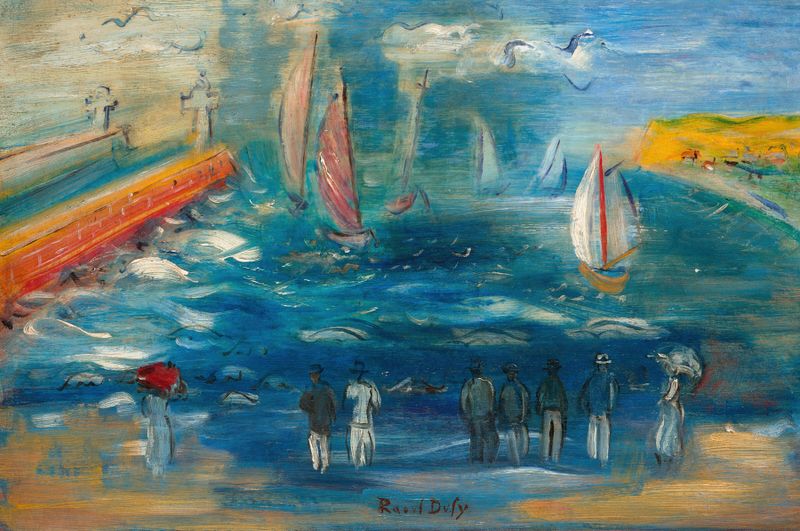
Départ des régates
Raoul Dufy

Les canotiers sur la Marne
Raoul Dufy
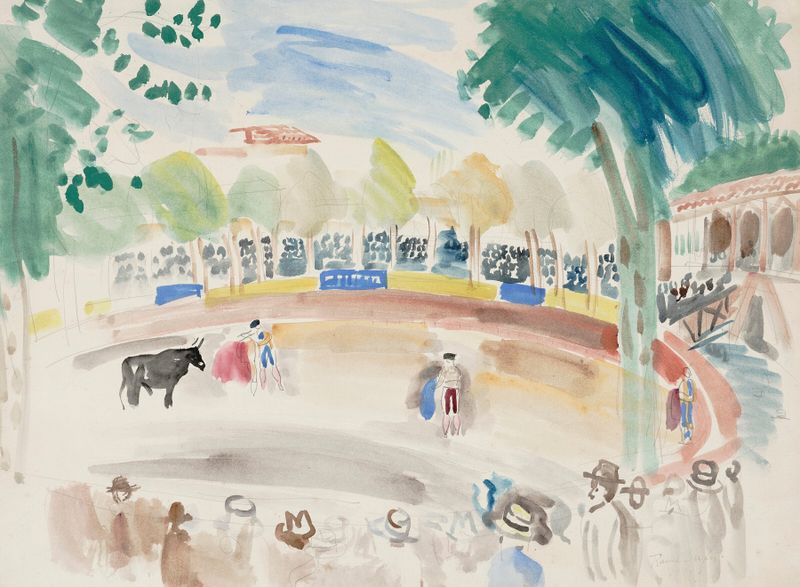
La corrida
Raoul Dufy

Composition au port et à la fontaine
Raoul Dufy
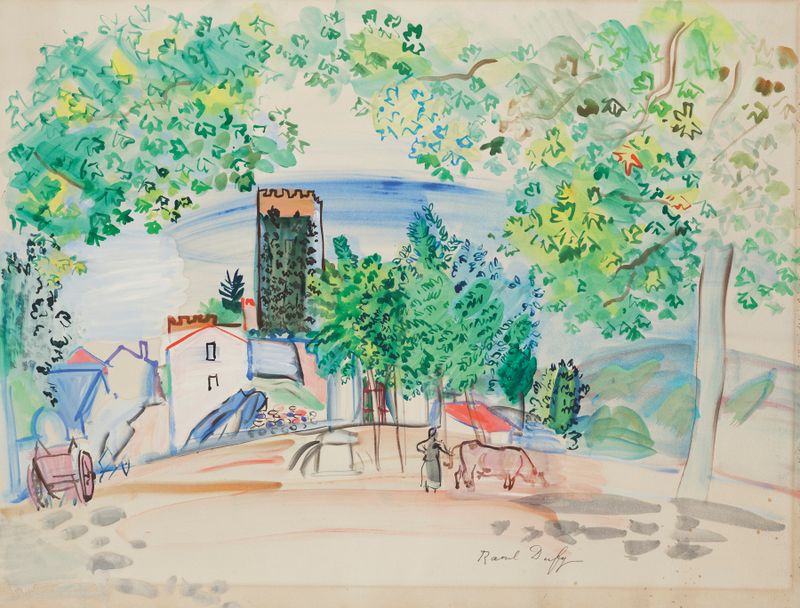
Vue de la Tour de Vernet-les-Bains
Raoul Dufy
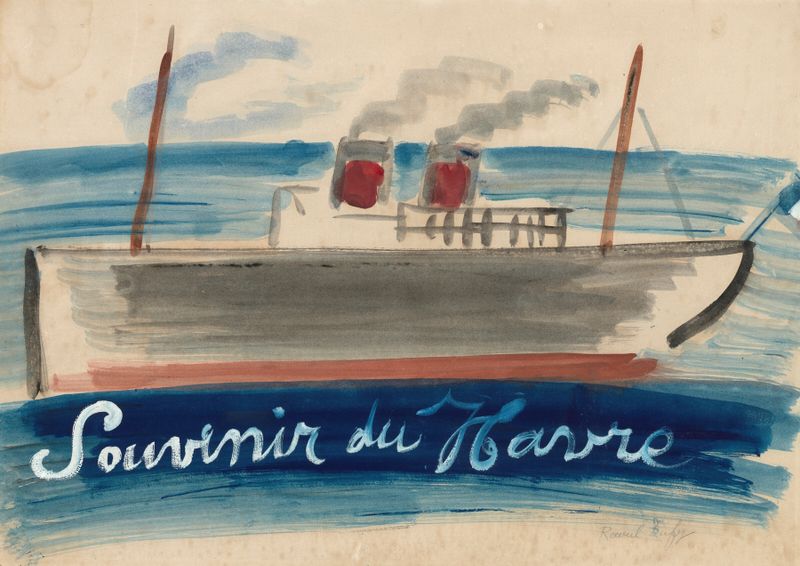
Souvenir du Havre
Raoul Dufy

Les Barques
Raoul Dufy
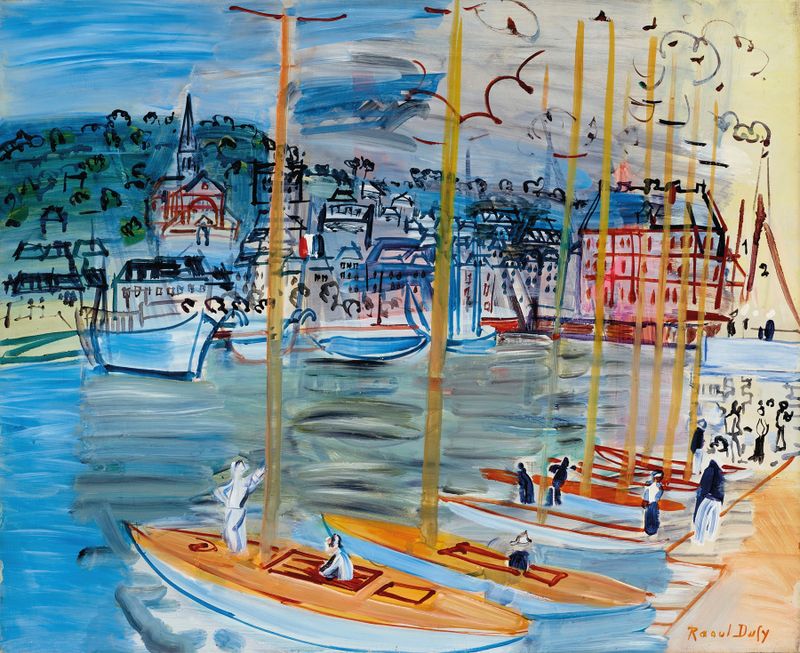
Le bassin de Deauville
Raoul Dufy

Régates à Deauville
Raoul Dufy





