
De naaister — History & Facts
What draws the eye first in De naaister is not the act of sewing itself, but the hush that fills the room around it—a quiet so complete you can almost hear the thread pull through the fabric. The woman, absorbed in her work, sits enveloped in a voluminous pink dress, her hands precise and steady as she tends to a richly patterned cloth. Light falls softly on her cap and face, carving out a gentle intimacy from the shadows that gather in the corners.
Every object—a glinting mirror, a cluttered table, bottles and jars on the mantel—seems to pause in respect for her concentration. The palette, warm and muted, turns this simple interior into a sanctuary of routine and care, inviting the viewer to linger over each detail as if time itself has slowed. Painted in 1870 by Alexander Hugo Bakker Korff, this work belongs to a Dutch tradition that cherished scenes of domestic life, often celebrating the quiet dignity of everyday labor. In the 19th century, such paintings found eager audiences among the rising middle class, who saw their own values of industry and order reflected on canvas.
The artist’s meticulous attention to texture and light echoes the legacy of Dutch Golden Age interiors, yet the mood here is distinctly Victorian in its sentimentality and focus on the private sphere. Now housed in the collection of Rijksmuseum Twenthe, De naaister is a window onto a world where history has kept few traces of individual lives, but where the ordinary act of sewing becomes a lasting testament to patience and care. Look again, and notice how the painting rewards every moment of attention with another quiet discovery.
More Artworks by Alexander Hugo Bakker Korff
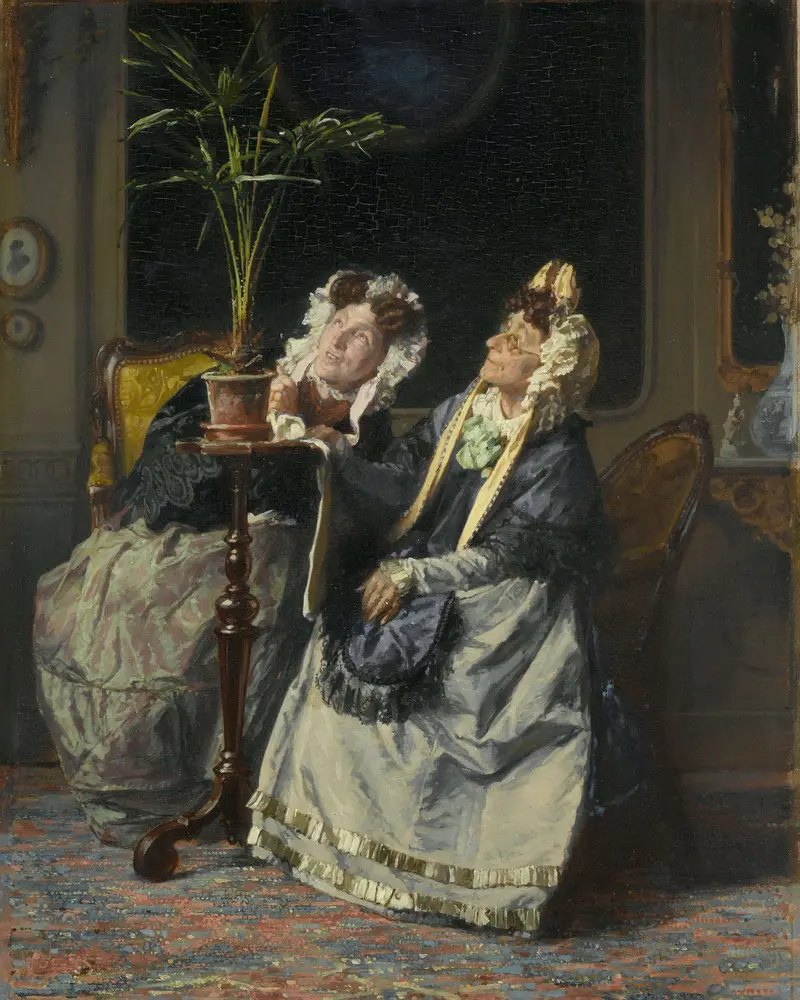
Under the Palms
Alexander Hugo Bakker Korff
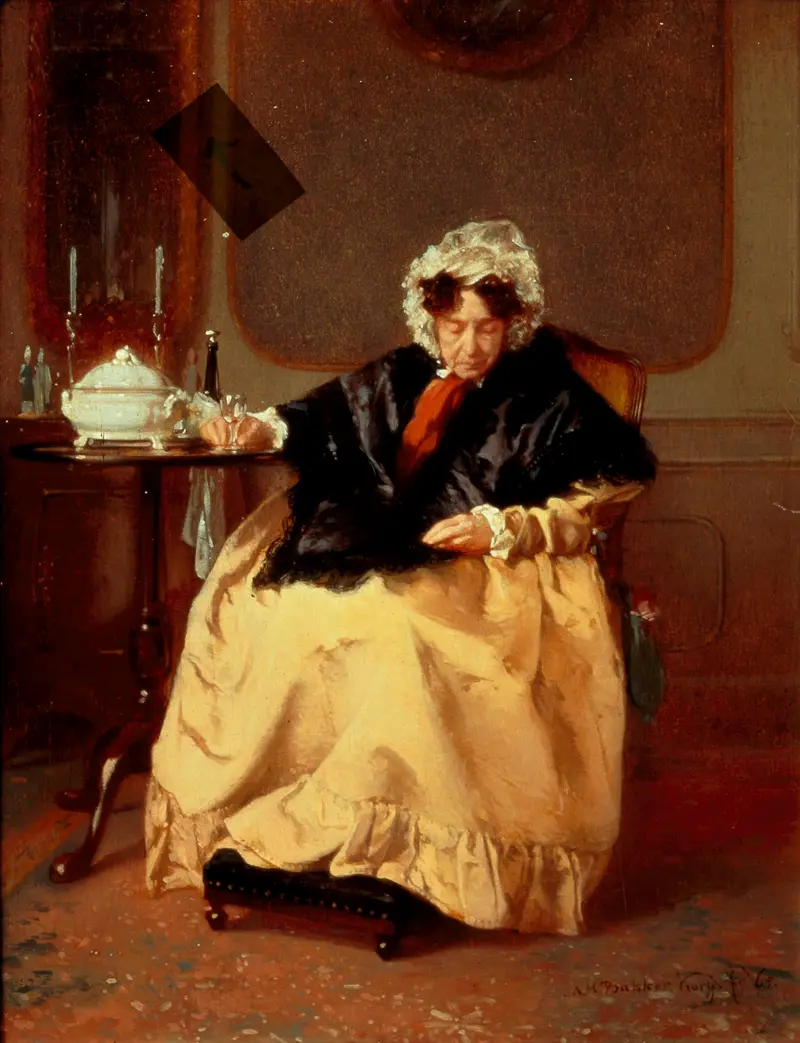
Bouillon en een glas port
Alexander Hugo Bakker Korff
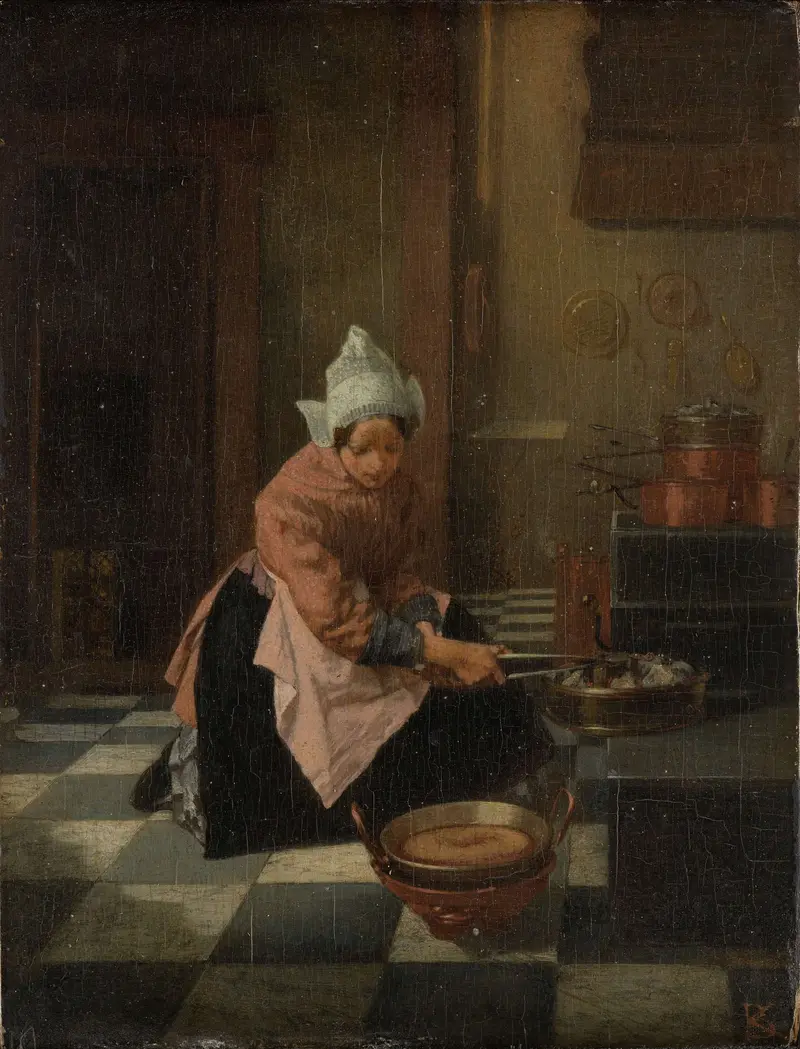
The Waffle Maker
Alexander Hugo Bakker Korff
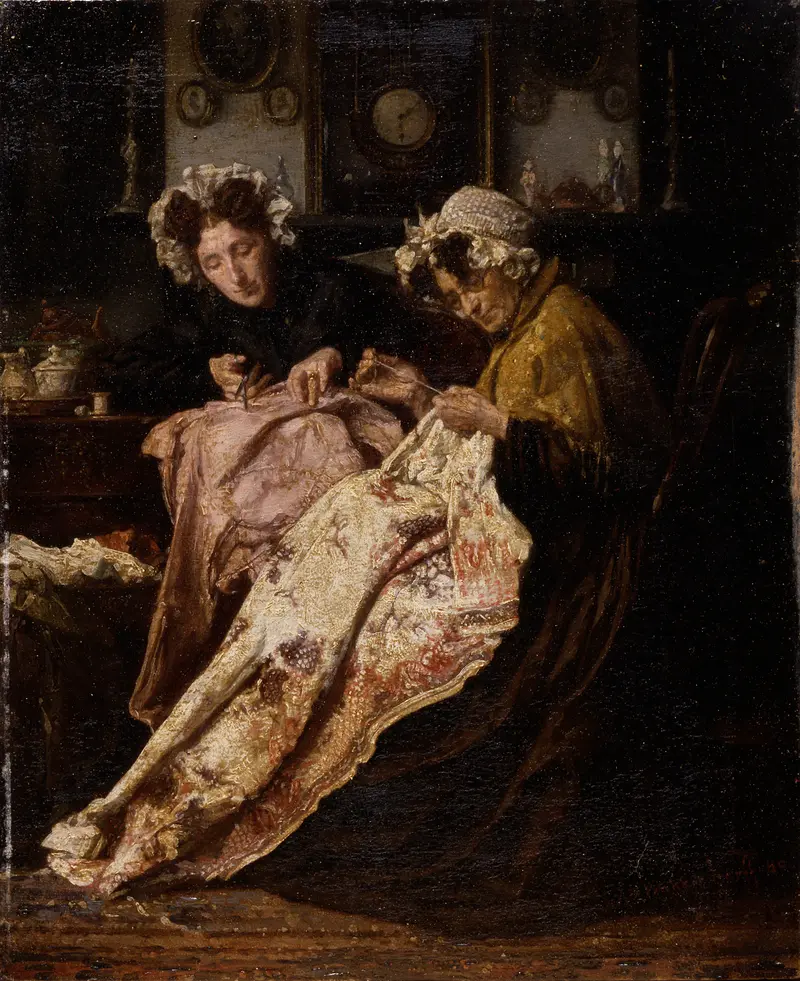
The Seamstress
Alexander Hugo Bakker Korff
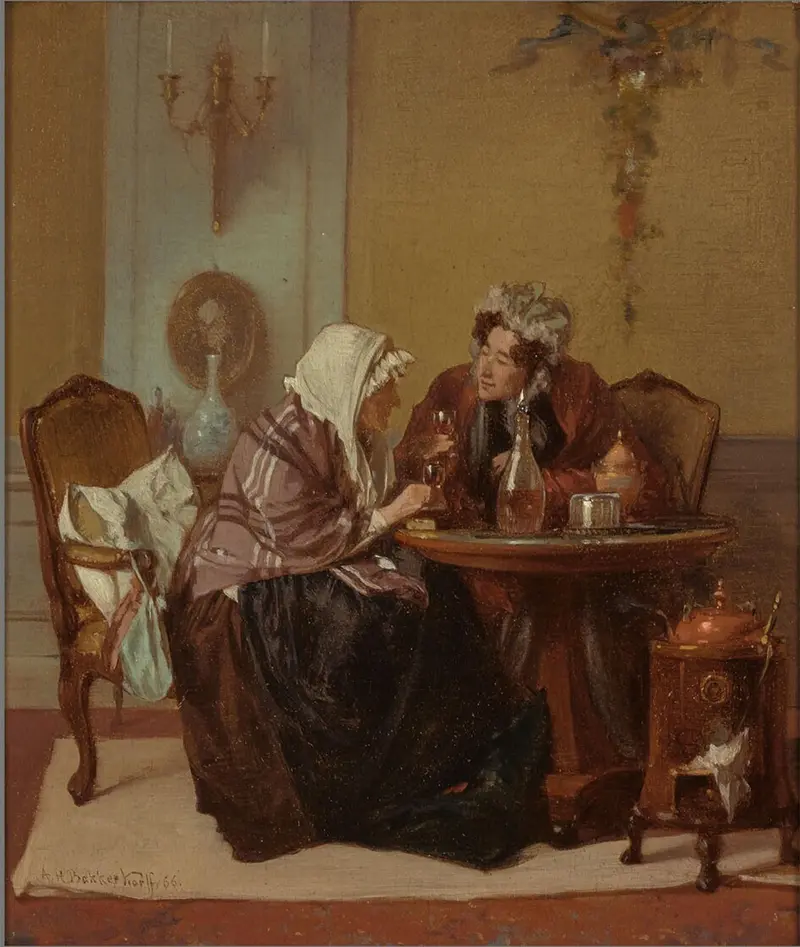
La convalescente
Alexander Hugo Bakker Korff
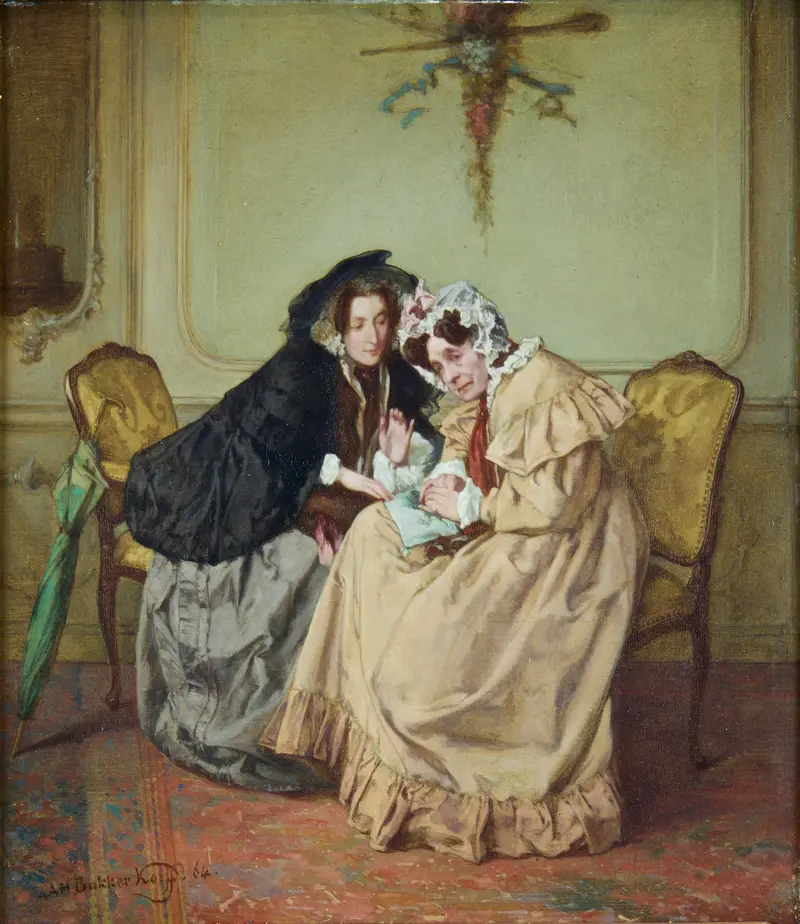
Het geheim DM 916 47 Dordrechts Museum
Alexander Hugo Bakker Korff
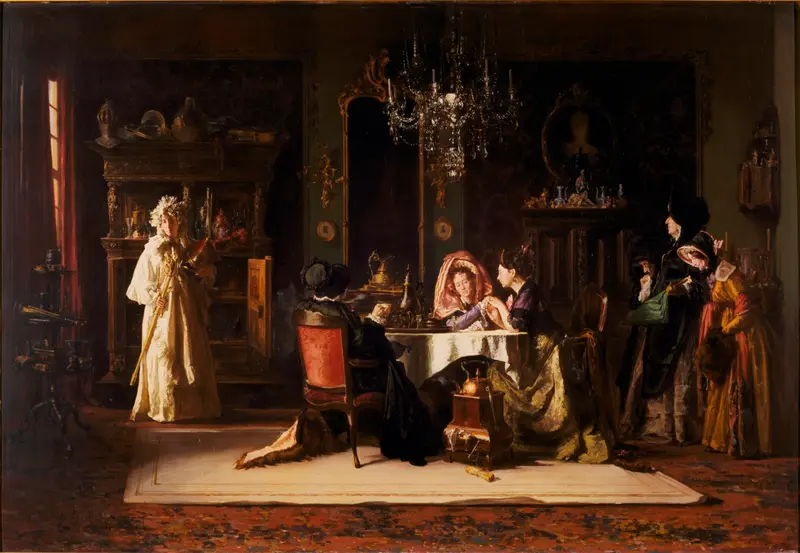
'La Fille du Héros' (The Hero's Daughter)
Alexander Hugo Bakker Korff
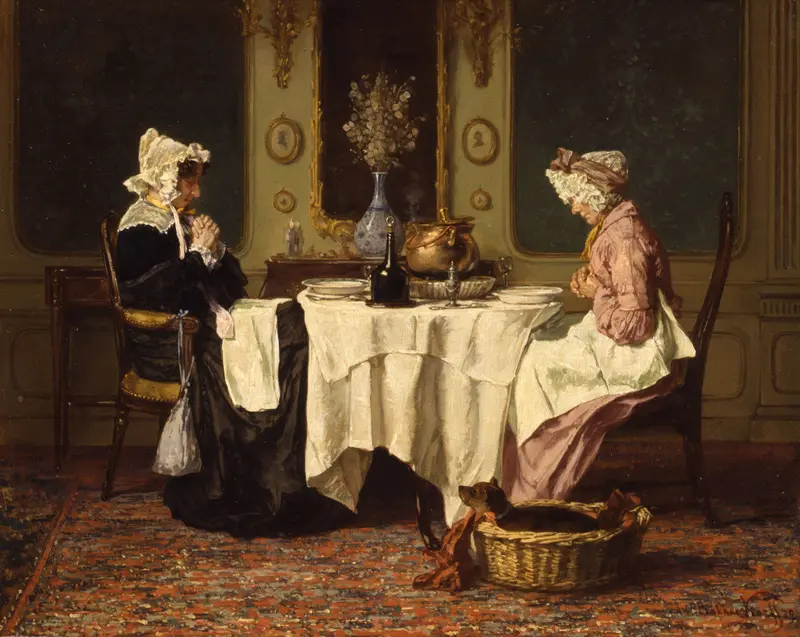
Drie oktober feest DM 938 48 Dordrechts Museum
Alexander Hugo Bakker Korff
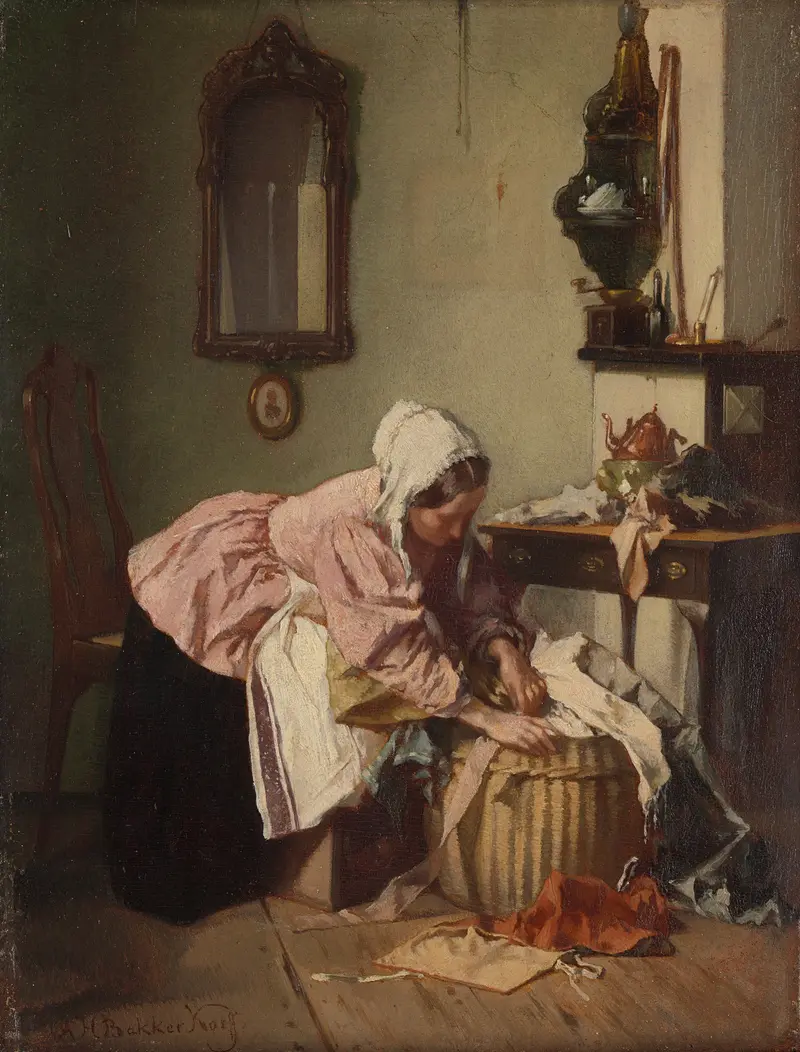
The Rag Basket
Alexander Hugo Bakker Korff
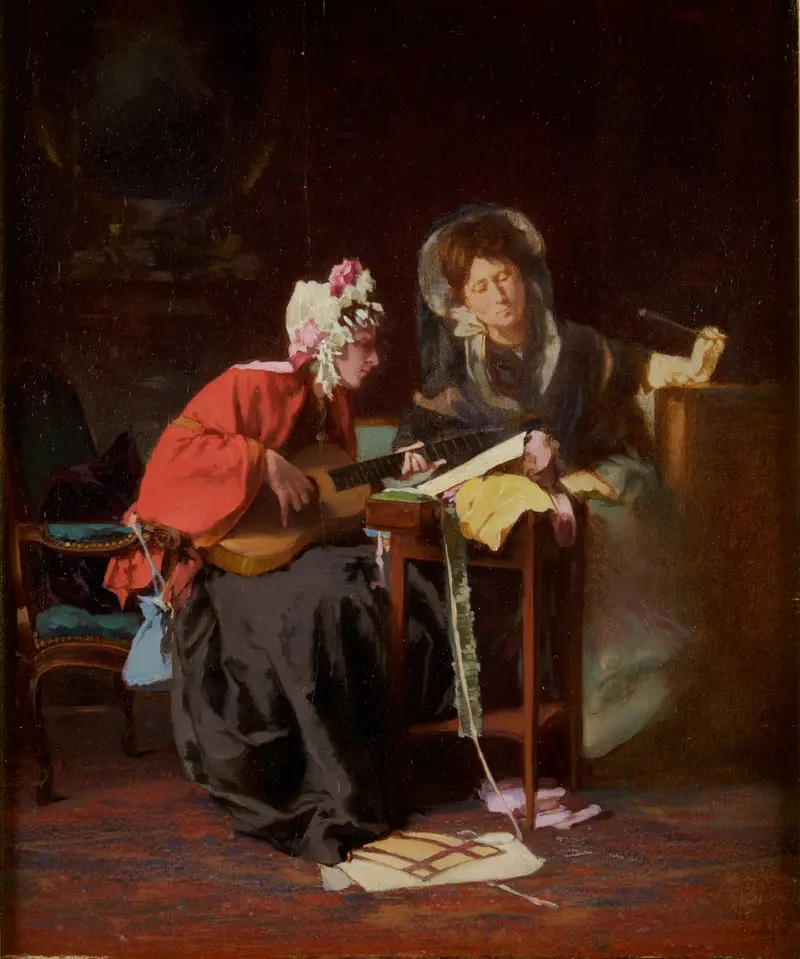
Gitaarles VBL 8 Dordrechts Museum
Alexander Hugo Bakker Korff
More Genre Scene Art

Banquet of the Officers of the St George Civic Guard
Frans Hals

Rembrandt and Saskia in the Scene of the Prodigal Son
Rembrandt van Rijn

Bal du moulin de la Galette
Pierre-Auguste Renoir

Quadrille at the Moulin Rouge
Henri de Toulouse-Lautrec

A Burial at Ornans
Gustave Courbet

When Will You Marry?
Paul Gauguin