
De tantes gaan op reis — History & Facts
The first thing to catch the eye in De tantes gaan op reis is the sense of bustling, almost comic anticipation: three women, each absorbed in her own world, are caught in the throes of travel preparations. The golden clock presides over the scene like a silent taskmaster, its rays echoing the urgency of the moment. Light pools on the striped skirts and bonnets, drawing attention to the central figure, who burrows into a basket with single-minded determination, her dog perched beside her as if supervising.
To her left, another aunt stands with bottles in hand, perhaps weighing the merits of what to bring, while the third slumps in her chair, already exhausted by the ordeal, her arms draped over a basket brimming with fabric and hats. Every object—parasol, walking stick, tea service—contributes to the gentle chaos, and the palette of warm golds and deep greens wraps the scene in a comfortable, lived-in air. Painted in 1876, this work by Alexander Hugo Bakker Korff belongs to a tradition of Dutch genre painting that delighted in the small dramas of domestic life. By the late nineteenth century, such scenes were both a nod to the Golden Age and a wry commentary on contemporary manners.
These paintings were often commissioned by the rising bourgeoisie, eager to see their own rituals—however mundane—transformed into art. History has kept few traces of this specific canvas beyond its date and its current home in the Rijksmuseum Twenthe, but its humor and detail speak to the enduring appeal of everyday spectacle. Look again, and you might catch a glimpse of yourself in the flurry before a journey, the clock always ticking above.
More Artworks by Alexander Hugo Bakker Korff
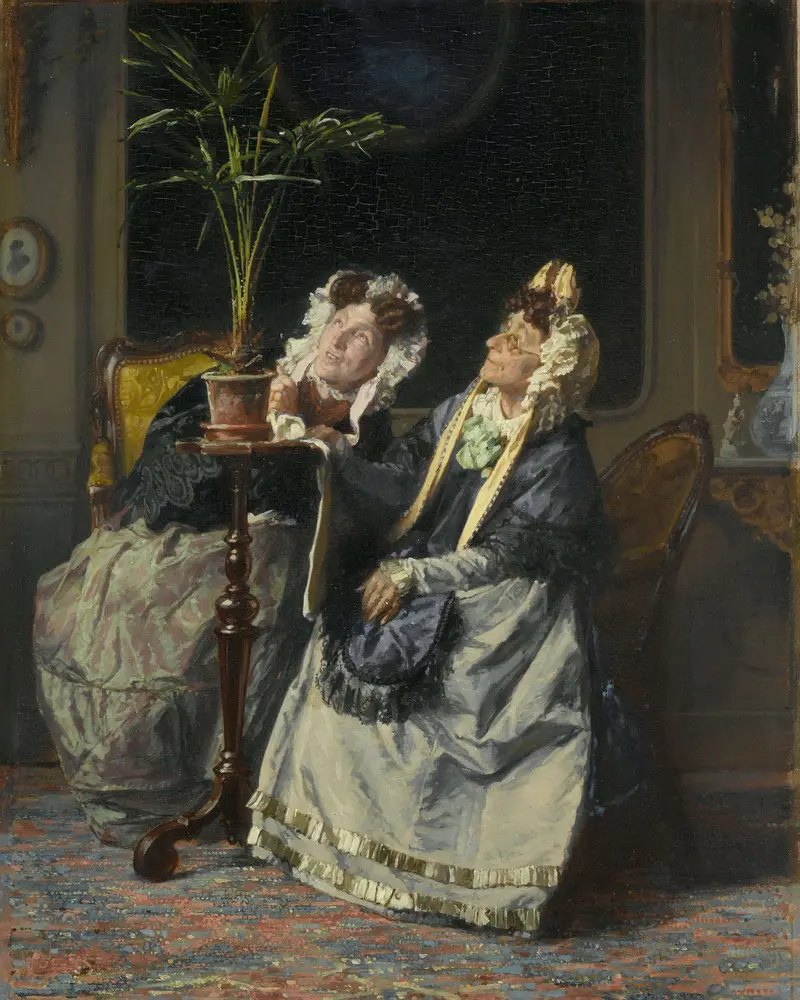
Under the Palms
Alexander Hugo Bakker Korff
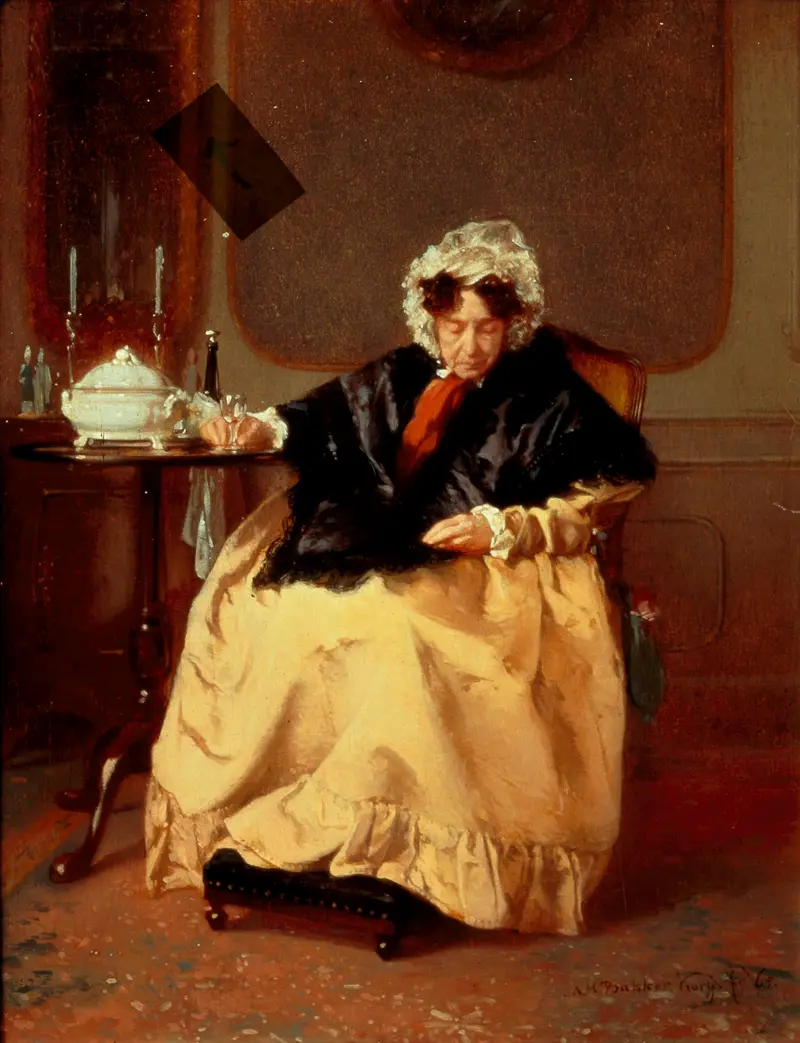
Bouillon en een glas port
Alexander Hugo Bakker Korff
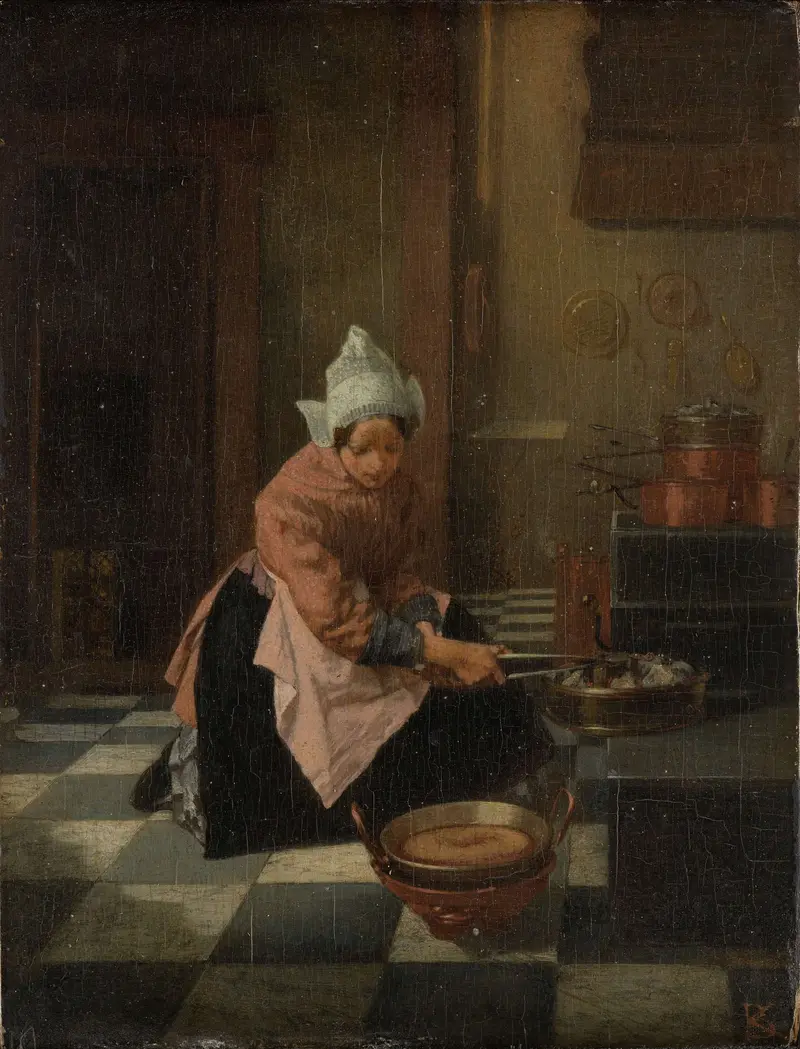
The Waffle Maker
Alexander Hugo Bakker Korff
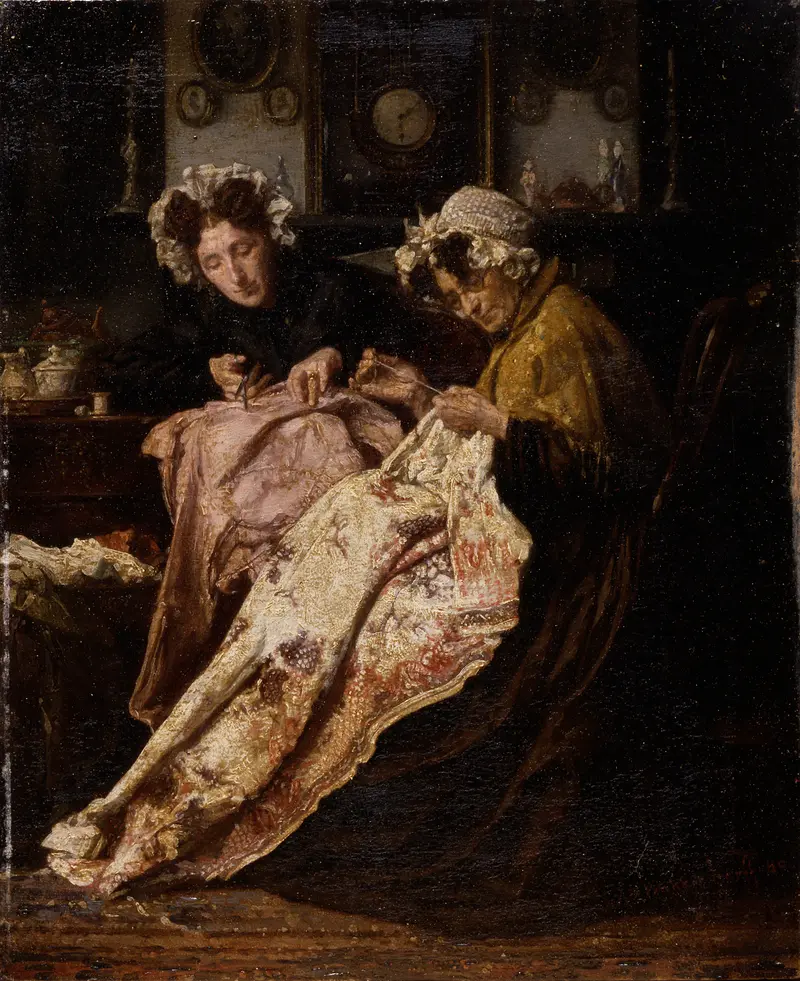
The Seamstress
Alexander Hugo Bakker Korff
La convalescente
Alexander Hugo Bakker Korff
Het geheim DM 916 47 Dordrechts Museum
Alexander Hugo Bakker Korff
'La Fille du Héros' (The Hero's Daughter)
Alexander Hugo Bakker Korff
Drie oktober feest DM 938 48 Dordrechts Museum
Alexander Hugo Bakker Korff
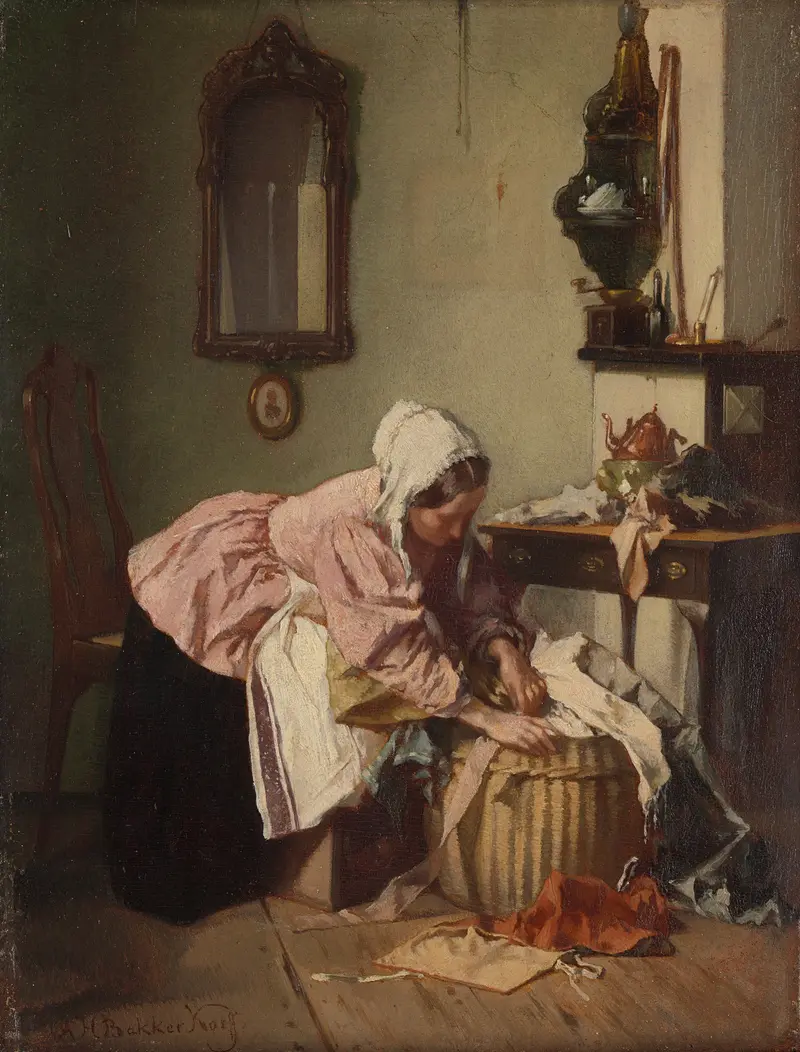
The Rag Basket
Alexander Hugo Bakker Korff
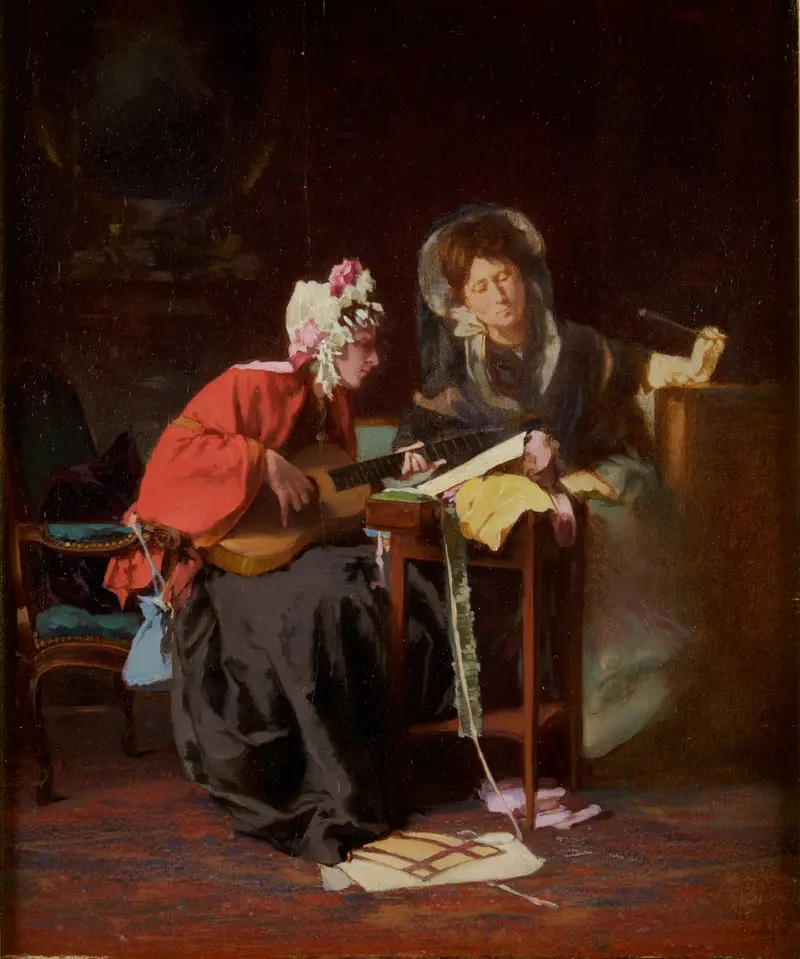
Gitaarles VBL 8 Dordrechts Museum
Alexander Hugo Bakker Korff
More Genre Scene Art

Banquet of the Officers of the St George Civic Guard
Frans Hals

Rembrandt and Saskia in the Scene of the Prodigal Son
Rembrandt van Rijn

Bal du moulin de la Galette
Pierre-Auguste Renoir

Quadrille at the Moulin Rouge
Henri de Toulouse-Lautrec

A Burial at Ornans
Gustave Courbet

When Will You Marry?
Paul Gauguin