
Diana and Actaeon — History & Facts
A shaft of golden light pours into the cavern, catching on bare skin and startled gestures—a moment frozen at the very edge of myth. The gaze is drawn first to the commanding figure at the center, her arm raised in a gesture of warning or command, while her companions whirl around her, caught between surprise and alarm. The drama is heightened by the contrast between the shadowed grotto and the sunlit landscape beyond, a visual boundary that marks the intrusion of the outside world into this hidden sanctuary.
The presence of the small dog, alert and tense, hints at an imminent disruption, while the distant figure creeping through the water draws the eye outward, suggesting a story that is just about to unfold. Every detail, from the silken drapery to the cool stone of the fountain, is designed to heighten the sense of secrecy and vulnerability. Painted in 1644, this work by Abraham van Cuylenborch belongs to a world where artists and patrons alike were enthralled by the stories of antiquity, especially those that played with the boundaries of the seen and unseen. Scenes from Ovid’s Metamorphoses—like the tale of Diana and Actaeon—were a favorite subject in the Dutch Golden Age, offering painters a chance to display both their skill with the nude and their command of dramatic narrative.
Such paintings were often destined for private collections, where their blend of mythology, sensuality, and moral warning could be savored in intimate settings. Today, this painting resides in the National Museum of Art, Architecture and Design, a testament to the enduring fascination with moments where the ordinary world brushes up against the divine. Look again at the interplay of light and shadow, and consider what secrets still linger in the cool recesses of the cave.
More Artworks by Abraham van Cuylenborch

Inneres einer Ruine mit einer Staffage von Orientalen
Abraham van Cuylenborch
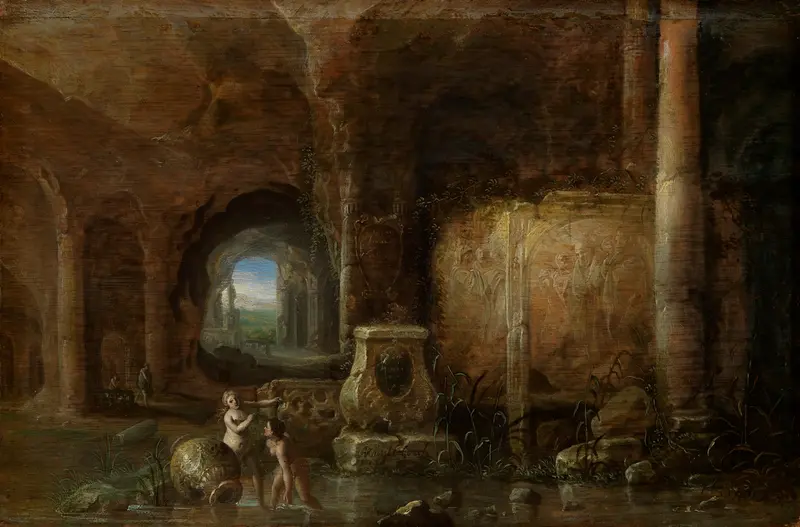
Grotto with ancient sculptures and bathing women
Abraham van Cuylenborch
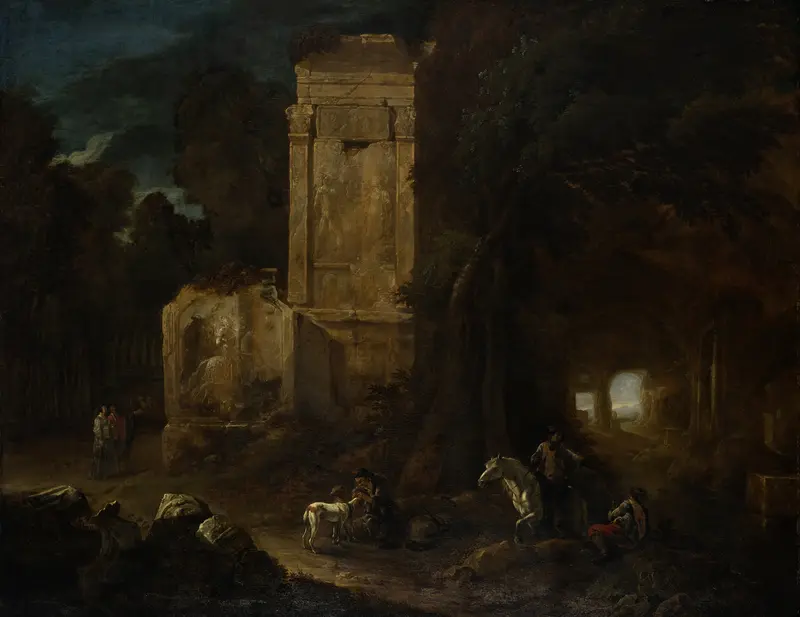
Landscape with Ancient Ruins
Abraham van Cuylenborch
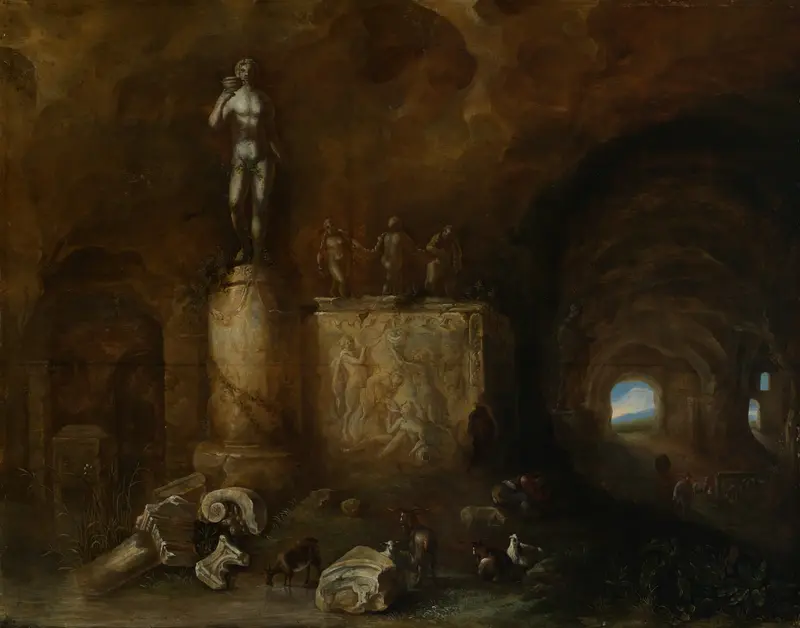
Interior of a grotto with sculptures and a sleeping shepherd
Abraham van Cuylenborch
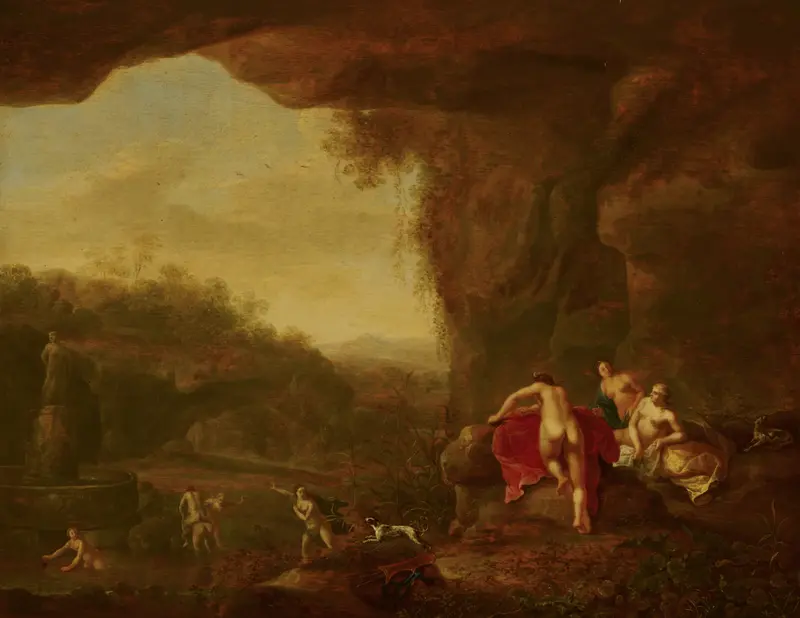
Diana and her Companions
Abraham van Cuylenborch
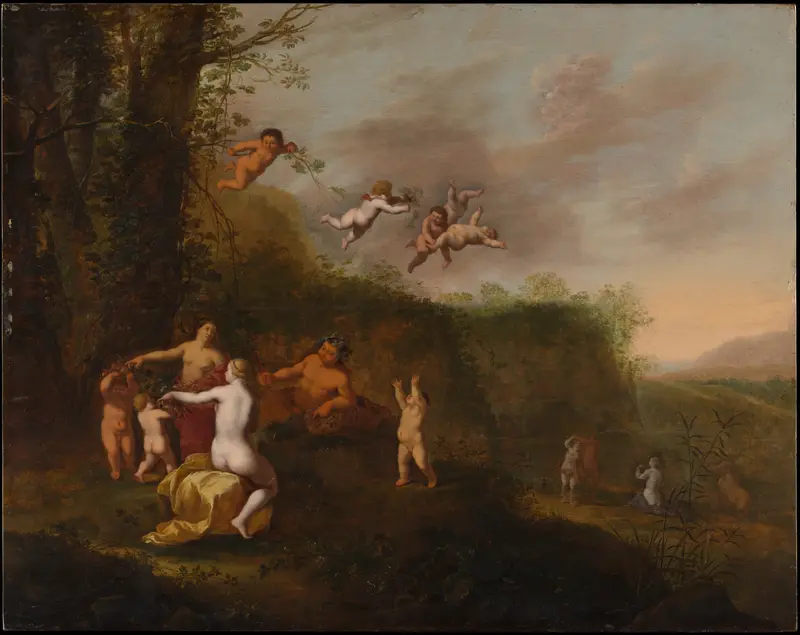
Bacchus and Nymphs in a Landscape
Abraham van Cuylenborch
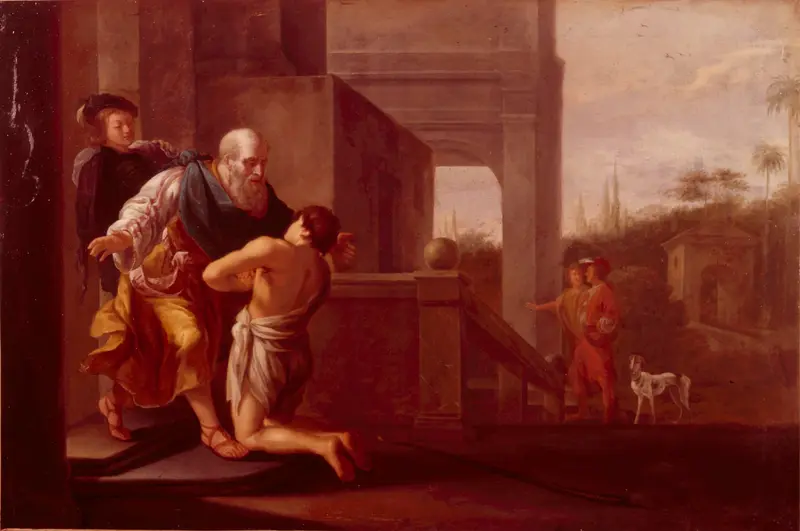
The Return of the Prodigal Son
Abraham van Cuylenborch





