
Diana and her Companions — History & Facts
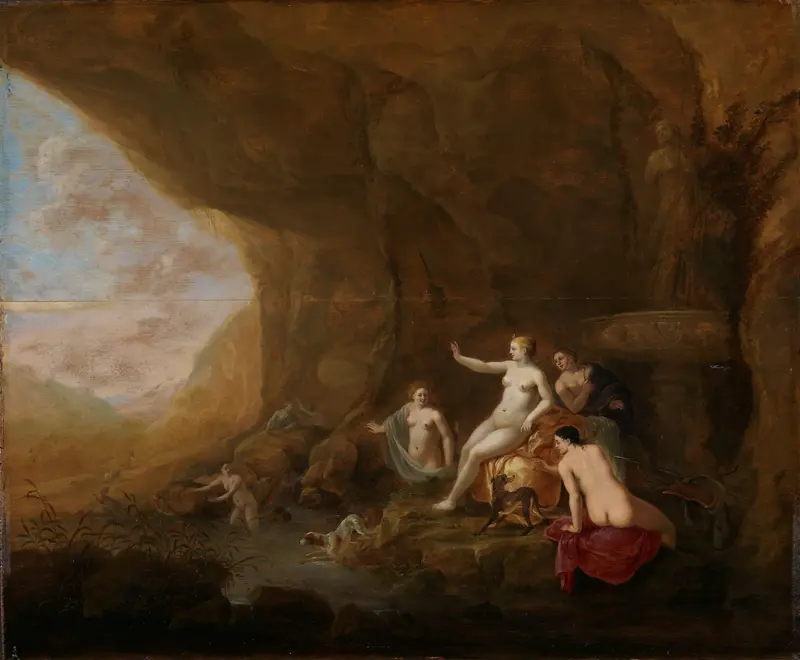
A cavernous overhang frames a secret world: here, the goddess Diana and her companions pause in their ritual, caught between shadow and the honeyed light of a distant sky. The painter draws your attention to the play of bodies and glances—some nymphs recline on rocky ledges, draped in vivid cloth, while others wade in the cool water below, their gestures full of quiet conversation. The eye is led from the rich, earthy foreground to the luminous landscape beyond, where a statue of the goddess stands sentinel over the spring, and a small white dog waits at the edge, a silent witness to this moment of mythic leisure.
The palette is warm, suffused with the gold of late afternoon, and the composition invites the viewer to linger, as if they too have stumbled upon this hidden grove. Painted between 1625 and 1658 by Abraham van Cuylenborch, this scene belongs to a long tradition of mythological bathing pictures that flourished in the Dutch Golden Age. Such works, often destined for private collectors, offered a blend of classical learning and sensual delight—Diana, the chaste huntress, became a favored subject for artists exploring the boundaries between nature, myth, and the human form. The painting now resides in the Mauritshuis, a reminder of an era when patrons sought not only moral lessons but also the pleasures of storytelling and escapism.
History has kept few traces of this particular canvas's journey, but its quiet drama and lush setting still invite us to imagine the world just beyond the painted stone and water.
More Artworks by Abraham van Cuylenborch

Inneres einer Ruine mit einer Staffage von Orientalen
Abraham van Cuylenborch
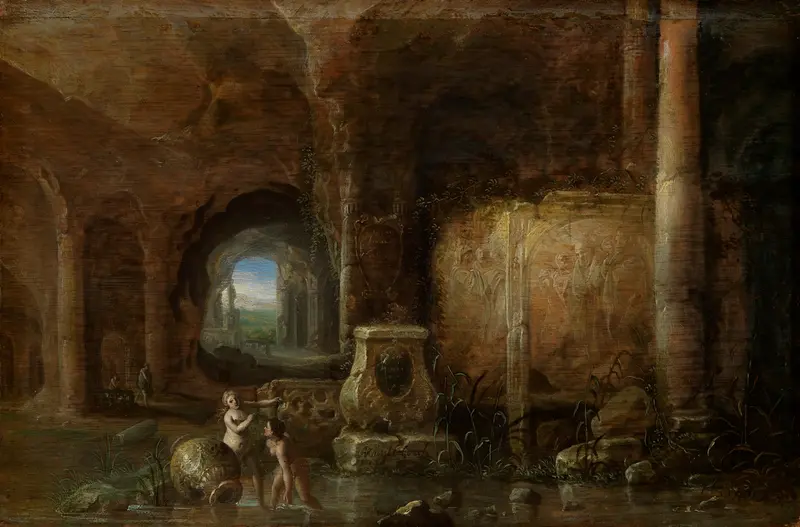
Grotto with ancient sculptures and bathing women
Abraham van Cuylenborch
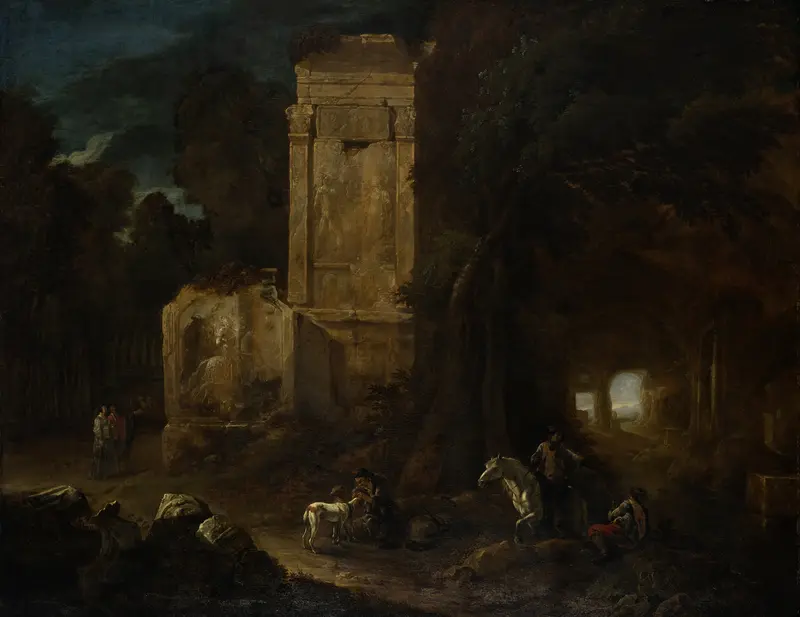
Landscape with Ancient Ruins
Abraham van Cuylenborch
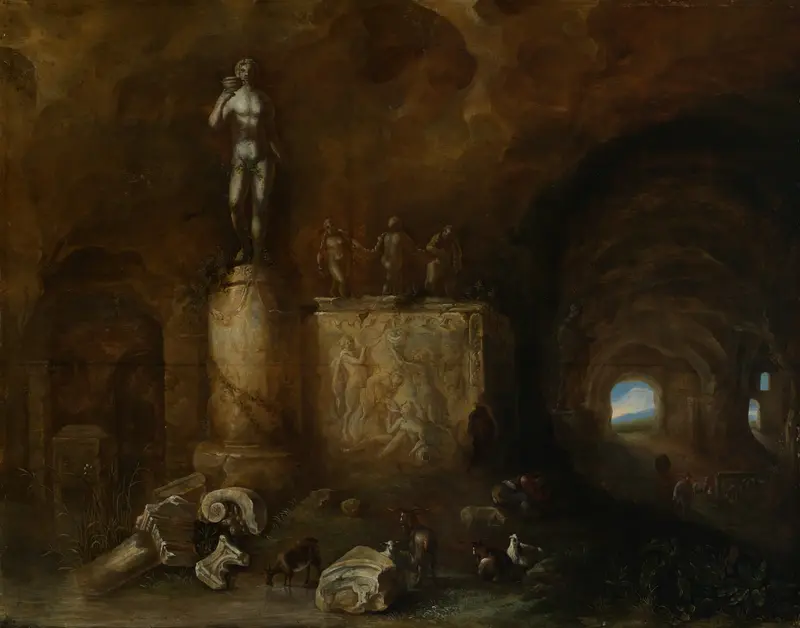
Interior of a grotto with sculptures and a sleeping shepherd
Abraham van Cuylenborch
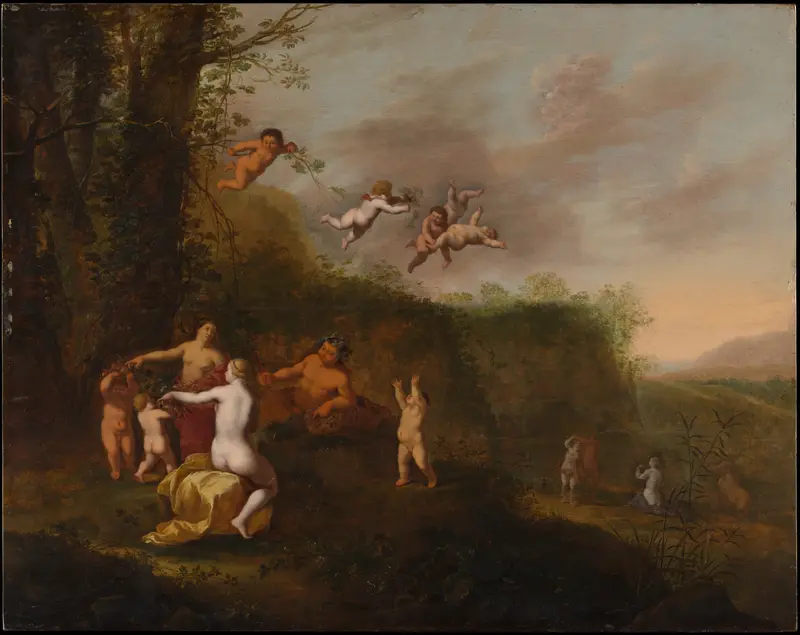
Bacchus and Nymphs in a Landscape
Abraham van Cuylenborch
Diana and Actaeon
Abraham van Cuylenborch
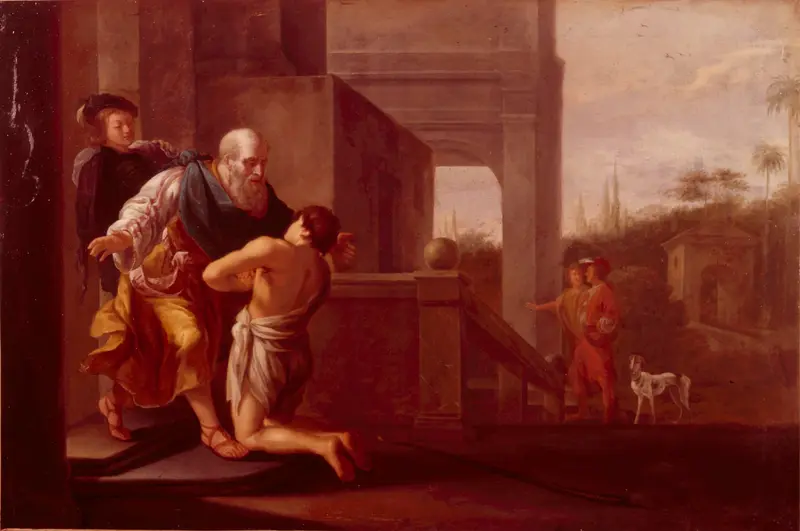
The Return of the Prodigal Son
Abraham van Cuylenborch





