
Bacchus and Nymphs in a Landscape — History & Facts
The eye is first caught by a swirl of movement and flesh at the forest’s edge, where a cluster of nymphs and putti tumble in a sunlit clearing. The painter, Abraham van Cuylenborch, draws us into a world of myth, setting Bacchus—the god of wine—at ease among his playful companions. The figures are not arranged for solemnity or grandeur, but for a sense of lively abandon: arms outstretched, bodies twisting, laughter almost audible.
Light pours in from the right, picking out the curves of skin and the folds of drapery, then fading into the cool shadows beneath the trees. The scene feels both staged and spontaneous, as if we have stumbled upon a private revel just as it reaches its peak. This kind of mythological landscape flourished in the Dutch Republic of the 1640s, when artists and their patrons delighted in scenes that blended classical fantasy with the lushness of northern nature. Works like this, probably painted in the 1640s and now part of the Metropolitan Museum of Art’s collection, were often destined for private homes—conversation pieces that signaled learning and taste, and perhaps a sense of humor about the pleasures of life.
History has kept few traces of the journey this particular painting took before reaching its current home, but its spirit is unmistakable: a celebration of myth, beauty, and the artist’s own delight in the world he conjured. Let your gaze wander from the lively foreground to the distant hills, and the painting’s invitation to linger becomes clear.
More Artworks by Abraham van Cuylenborch

Inneres einer Ruine mit einer Staffage von Orientalen
Abraham van Cuylenborch
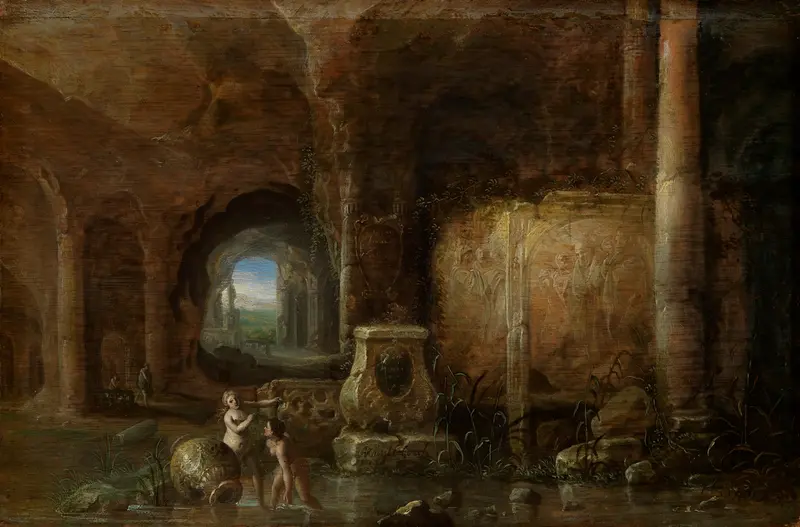
Grotto with ancient sculptures and bathing women
Abraham van Cuylenborch
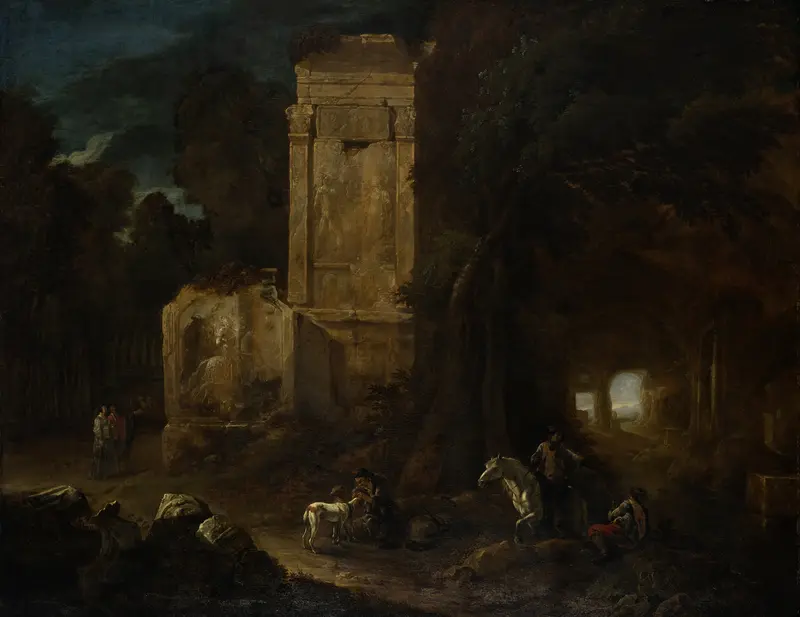
Landscape with Ancient Ruins
Abraham van Cuylenborch
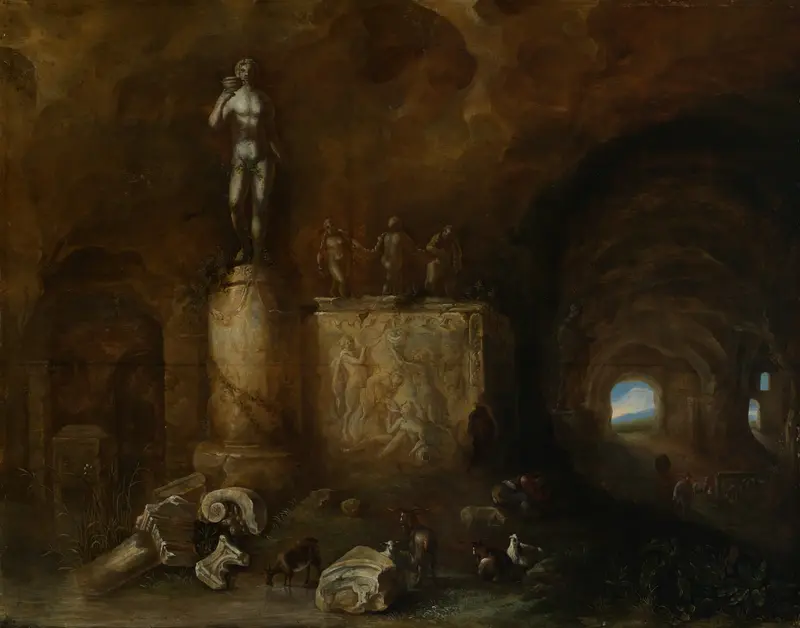
Interior of a grotto with sculptures and a sleeping shepherd
Abraham van Cuylenborch
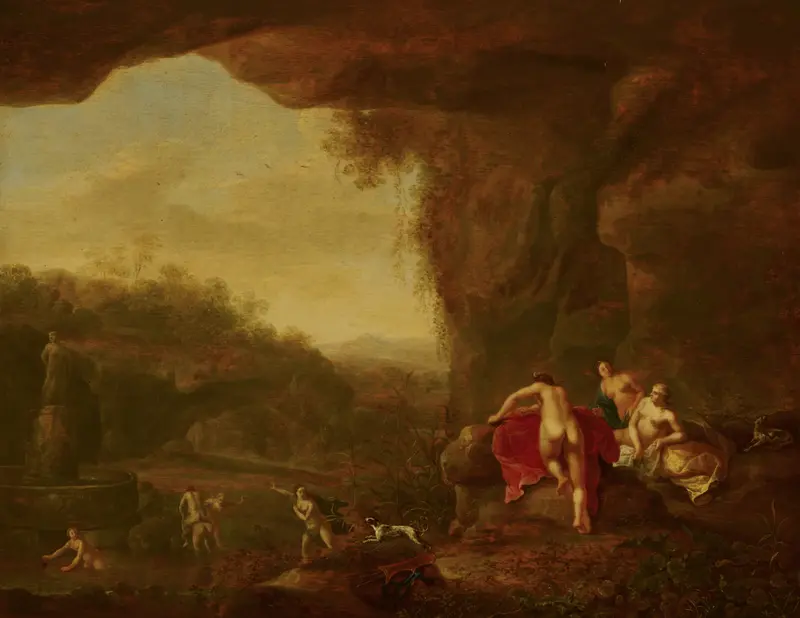
Diana and her Companions
Abraham van Cuylenborch
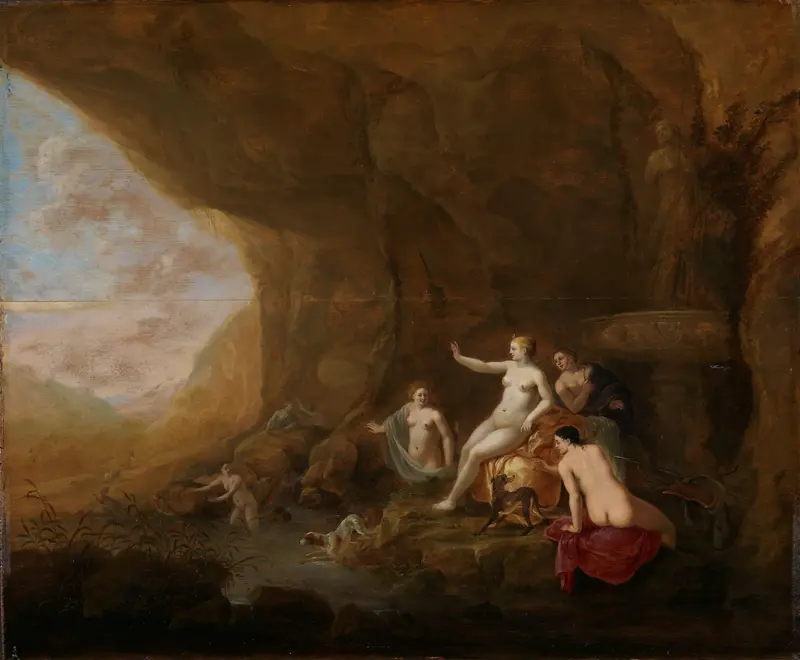
Diana and Actaeon
Abraham van Cuylenborch
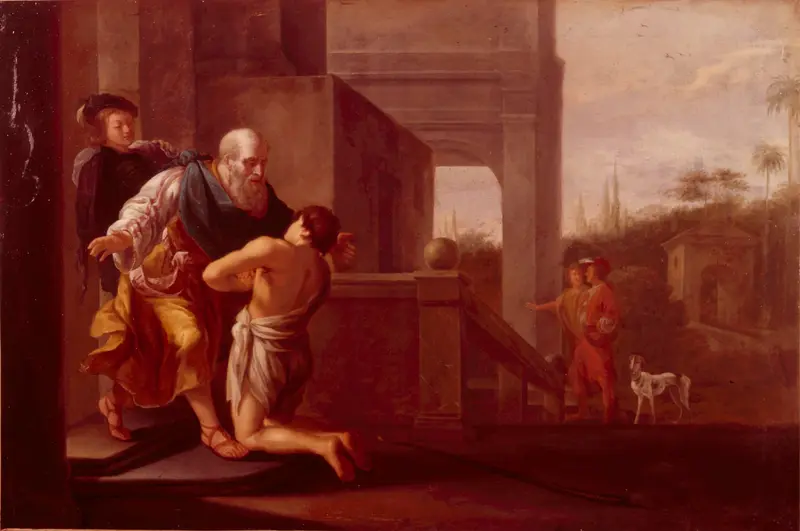
The Return of the Prodigal Son
Abraham van Cuylenborch





