
Dix lithographies au lavis (08) : Vase de fleurs devant un miroir — History & Facts
What first catches the eye in Dix lithographies au lavis (08) : Vase de fleurs devant un miroir is the way the bouquet seems to multiply, blooming twice—once in the real world, and again in the dark, liquid depths of the mirror. The flowers are rendered with a loose, almost urgent energy, their forms dissolving into shadow and light, as if the artist wanted to capture the fleeting fullness of life before it slips away. The mirror does not simply reflect; it doubles the mystery, making the viewer question which is more real—the tangible vase or its ghostly twin.
The heavy, inky blacks and soft washes blur the boundary between object and reflection, drawing the gaze into a play of surface and depth. Works like this, produced in the early twentieth century, belong to a period when artists across Europe were reimagining the still life. Lithography, with its freedom and immediacy, allowed artists like Armand Apol to experiment with gesture and mood, rather than mere description. The Royal Library of Belgium, where this piece is held, preserves such prints as records of a restless era—when tradition met innovation, and artists sought new ways to see the everyday.
History has kept few traces of the private lives behind these vases and mirrors, but the print itself invites us to linger, to look again, and to wonder what lies just beyond the surface.
More Artworks by Armand Apol
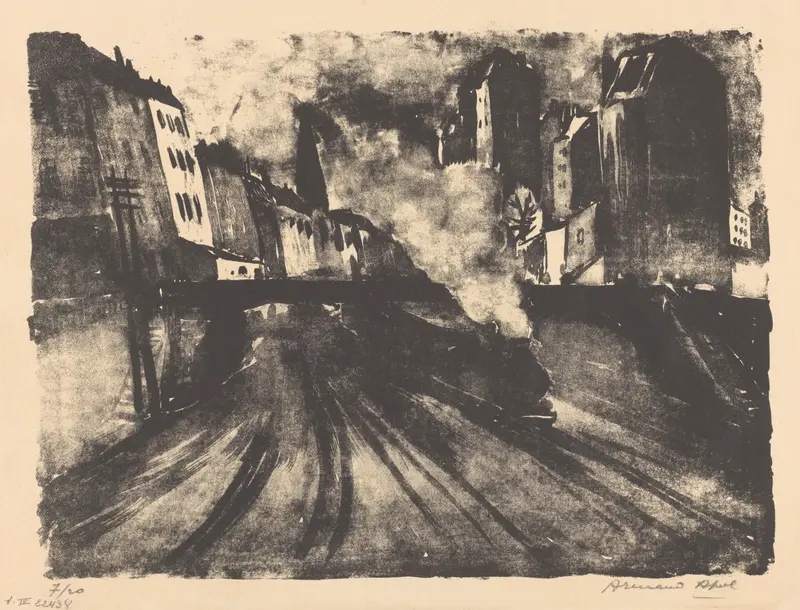
Chemin de fer de ceinture à Paris
Armand Apol
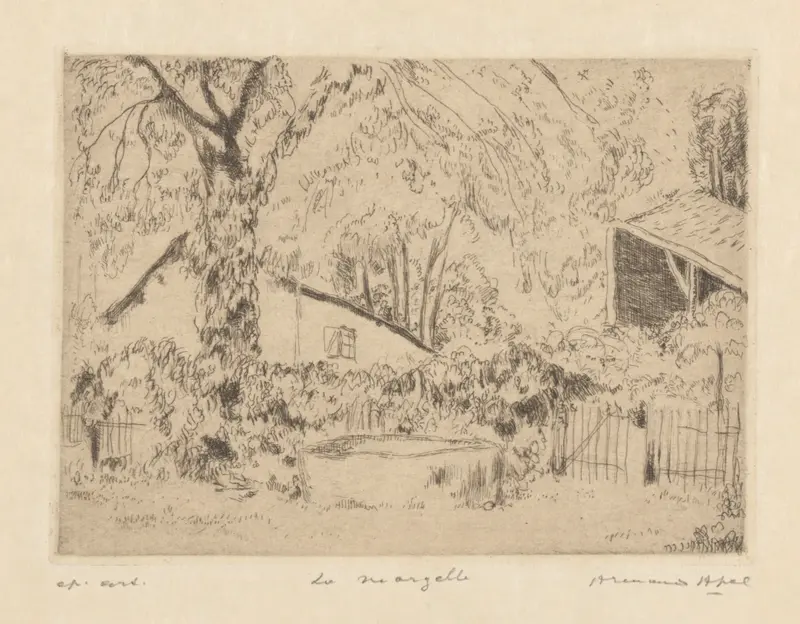
La margelle
Armand Apol
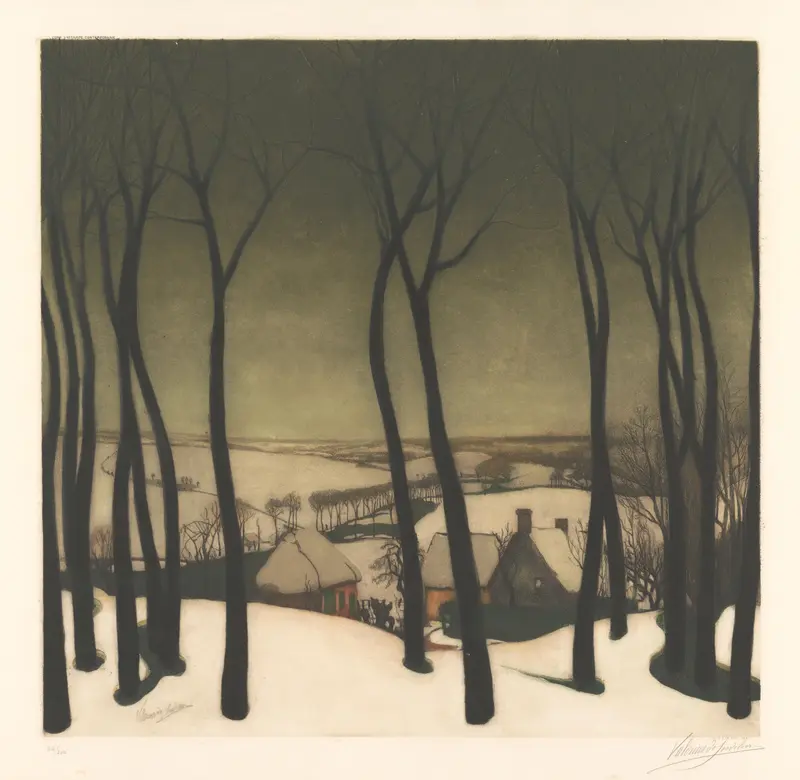
Album 8 estampes (en couleurs) (05) : Paysage
Armand Apol
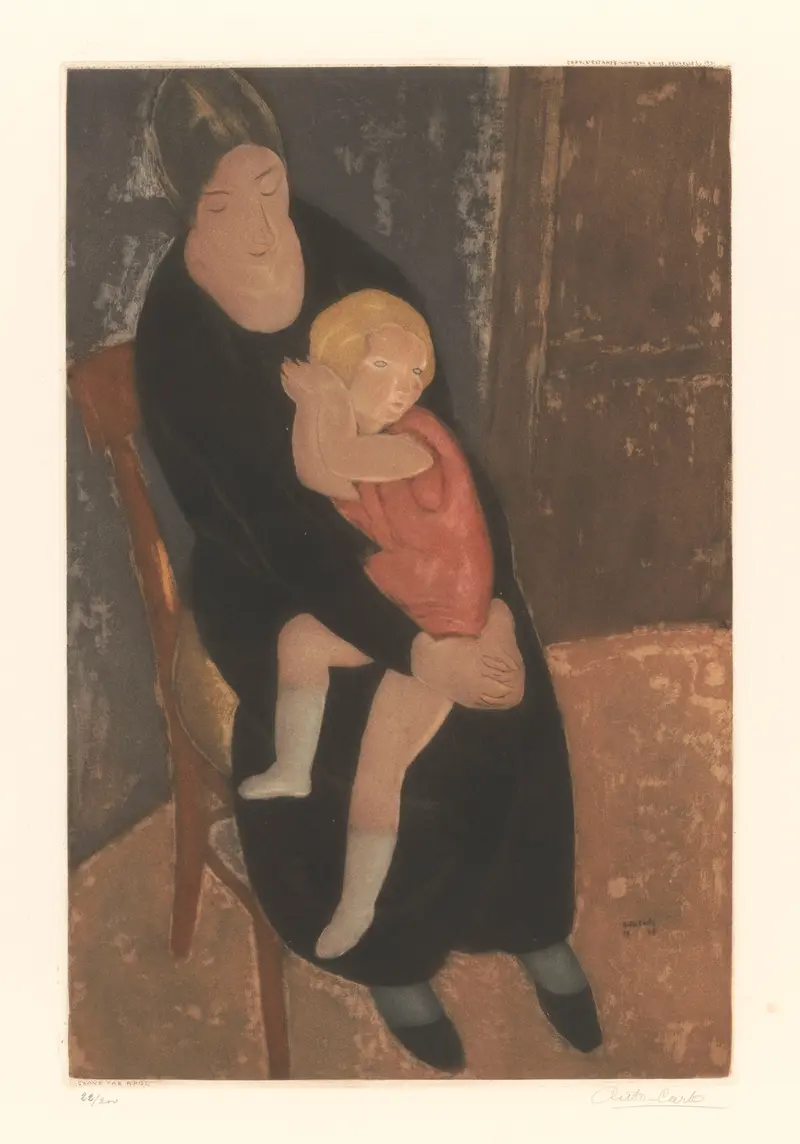
Album 8 estampes (en couleurs) (08) : Mère et enfant
Armand Apol
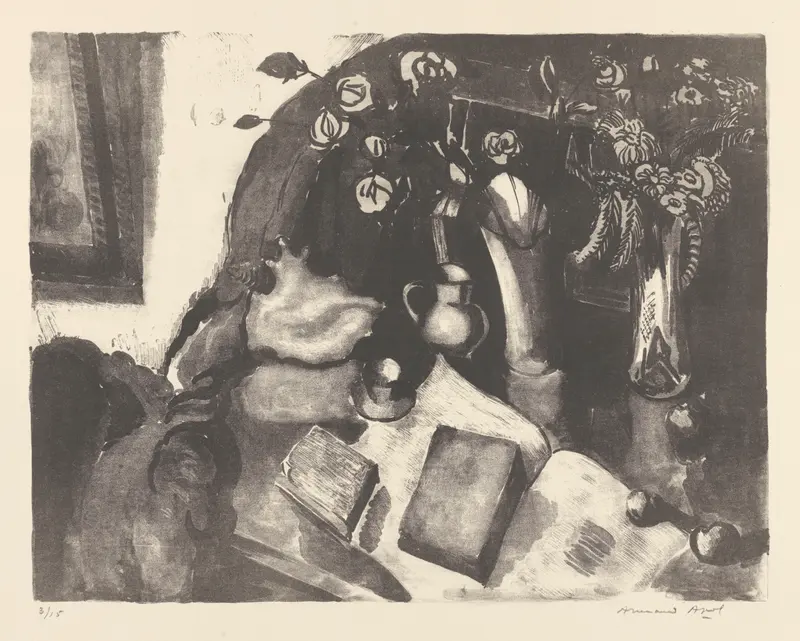
Dix lithographies au lavis (02) : Nature morte
Armand Apol

Dix planches (06) : La loge
Armand Apol
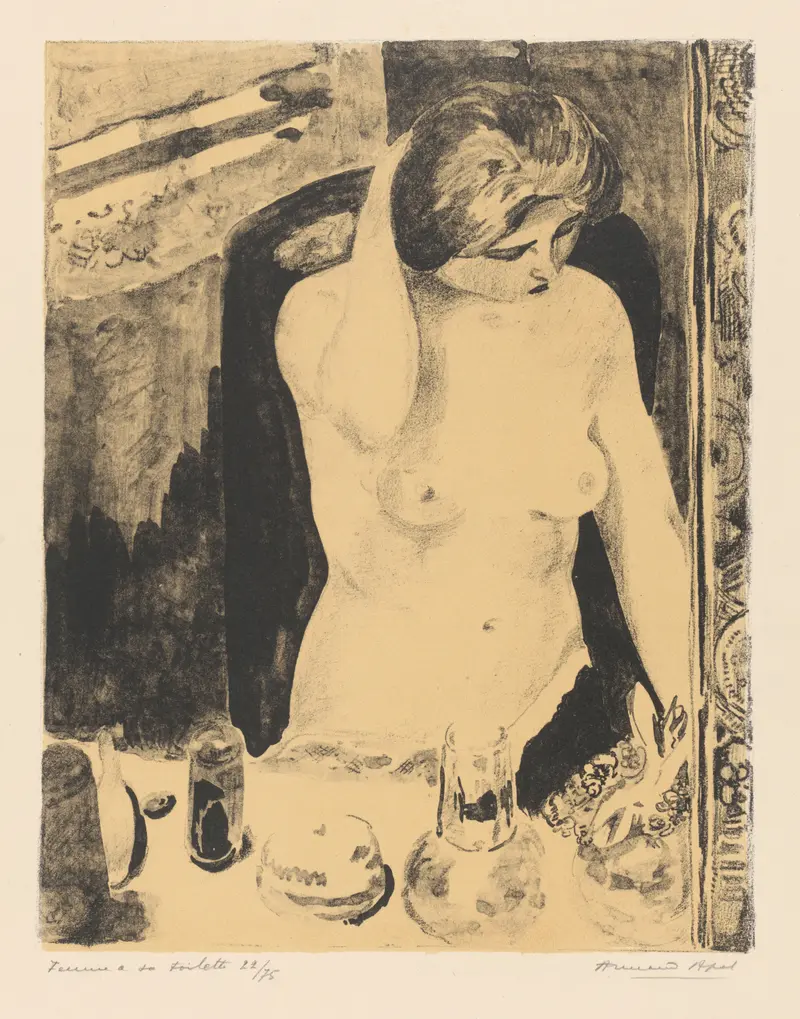
Dix planches (10) : Femme à sa toilette
Armand Apol
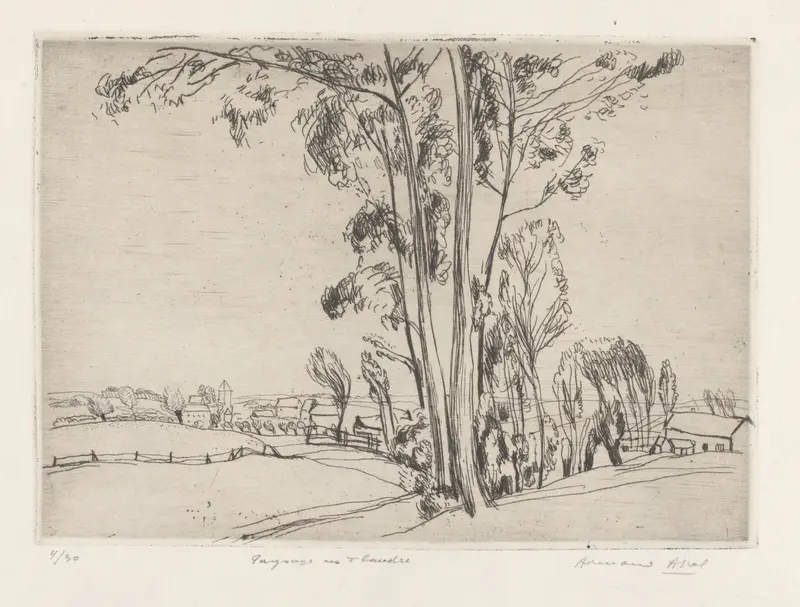
Paysage en Flandre (Etichove)
Armand Apol
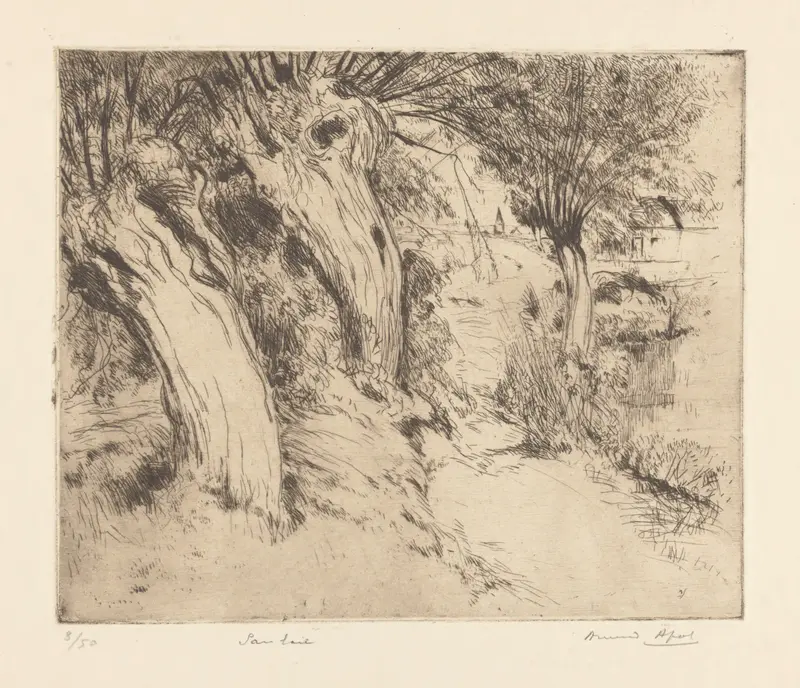
Saulaie
Armand Apol
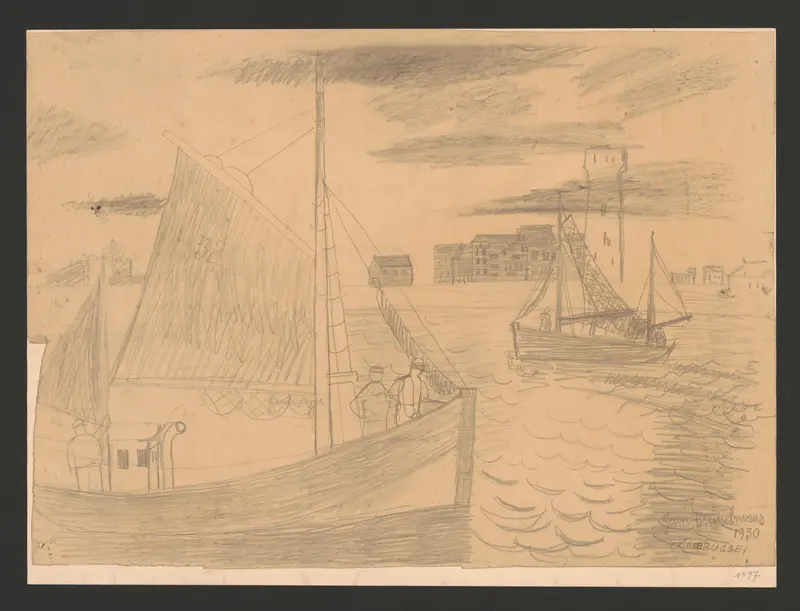
Zeebrugge
Armand Apol





