
Dix planches (09) : Femme assise — History & Facts
What first draws the eye in Dix planches (09) : Femme assise is the direct, unflinching gaze of the sitter—a woman rendered in bold, confident lines, her presence filling the space with a quiet force. The artist, Armand Apol, chooses a moment of stillness, but there is nothing passive about her posture: one arm drapes protectively across her knee, while her other hand anchors her body, suggesting both vulnerability and self-possession. The interplay of shadow and light, achieved with broad, expressive strokes, carves out her form against a backdrop that hints at drapery or perhaps a window, but never distracts from her commanding presence.
The palette, limited to warm ochres and deep blacks, heightens the sense of intimacy and immediacy, drawing the viewer into a private world. Works like this emerged from a period when artists across Europe were reimagining the nude, shifting from classical ideals toward more personal, psychological portrayals. Armand Apol was active in the early twentieth century, a time when printmaking allowed for both experimentation and wider dissemination of art. The Royal Library of Belgium, which now holds this piece, preserves it as part of a broader movement that valued the expressive potential of line and tone over strict realism.
History has kept few traces of this particular work’s origins, but its quiet confidence invites us to linger, to search the sitter’s face for the life behind the pose.
More Artworks by Armand Apol
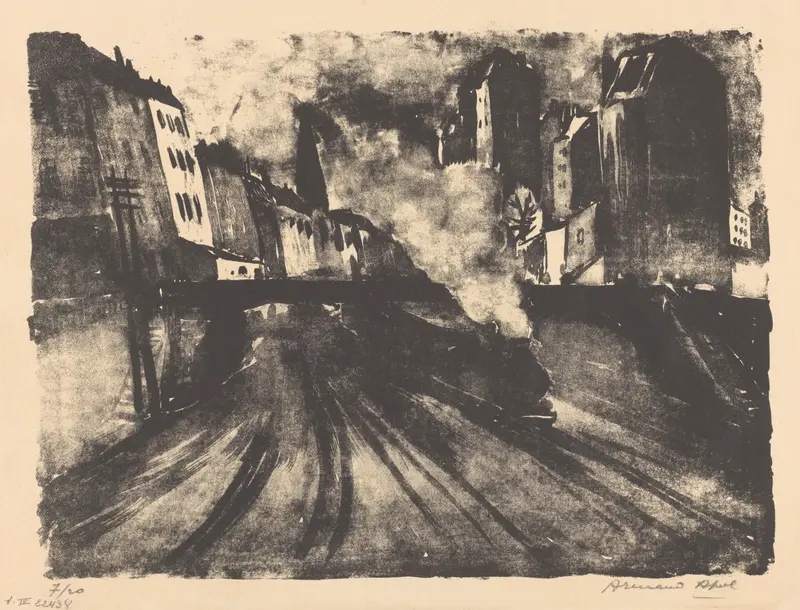
Chemin de fer de ceinture à Paris
Armand Apol
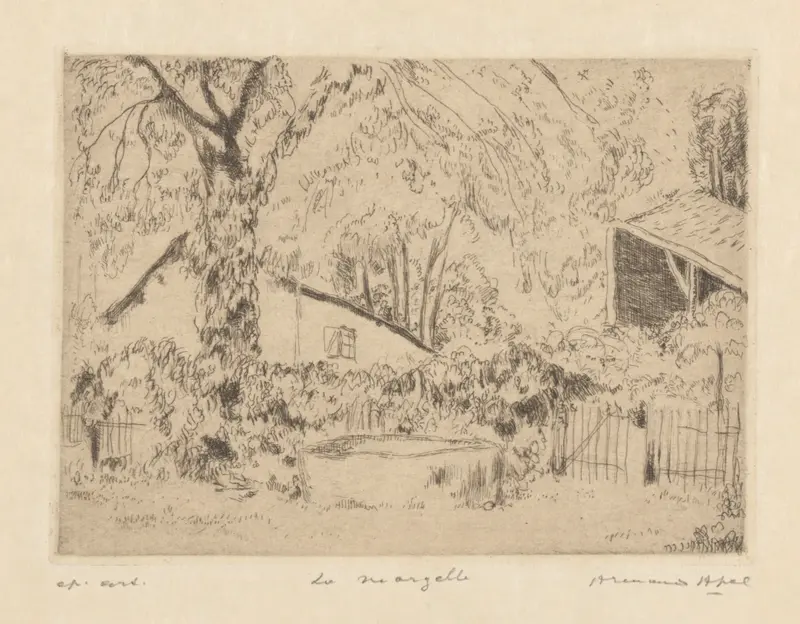
La margelle
Armand Apol
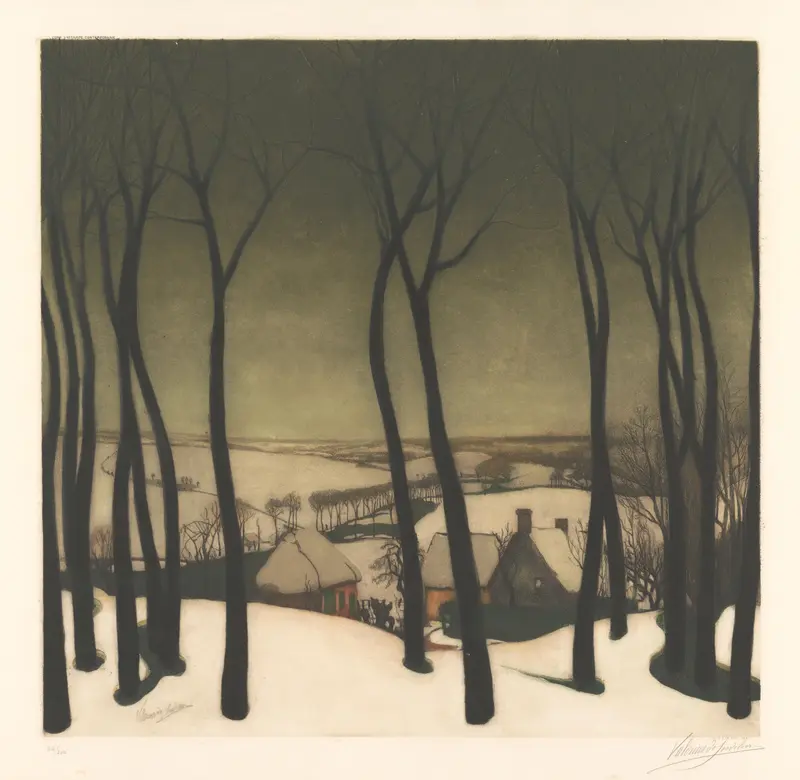
Album 8 estampes (en couleurs) (05) : Paysage
Armand Apol
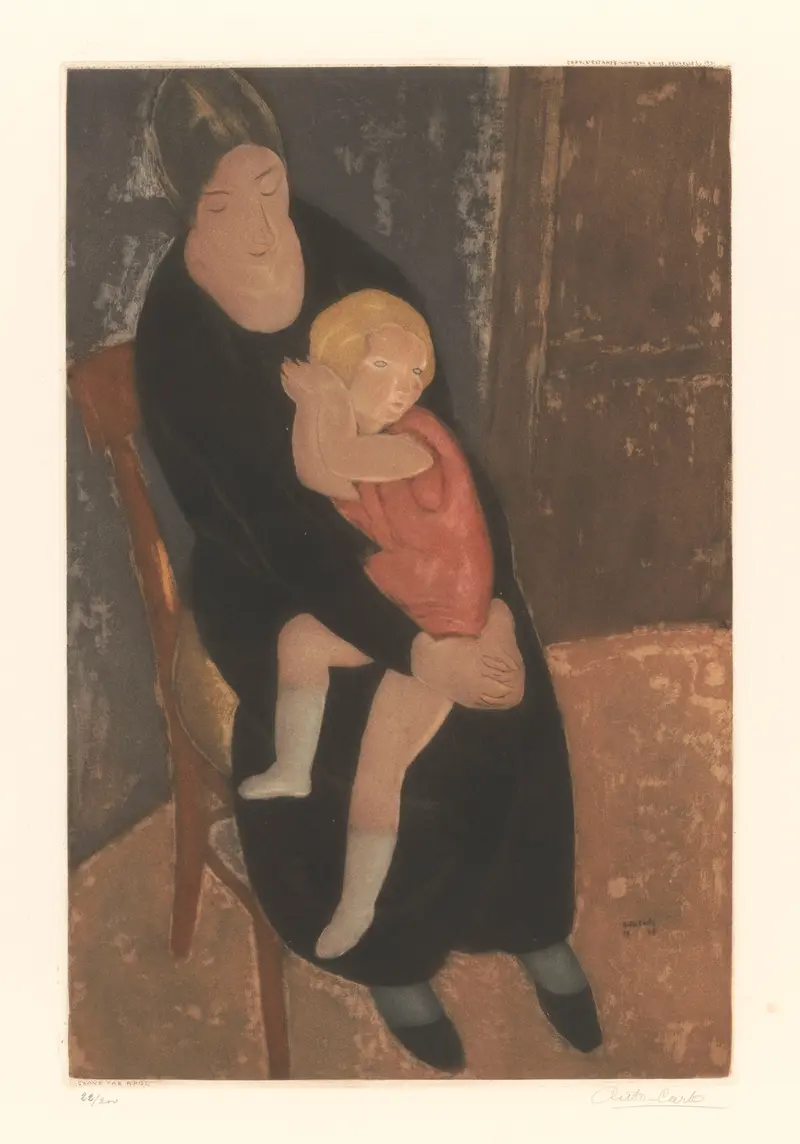
Album 8 estampes (en couleurs) (08) : Mère et enfant
Armand Apol
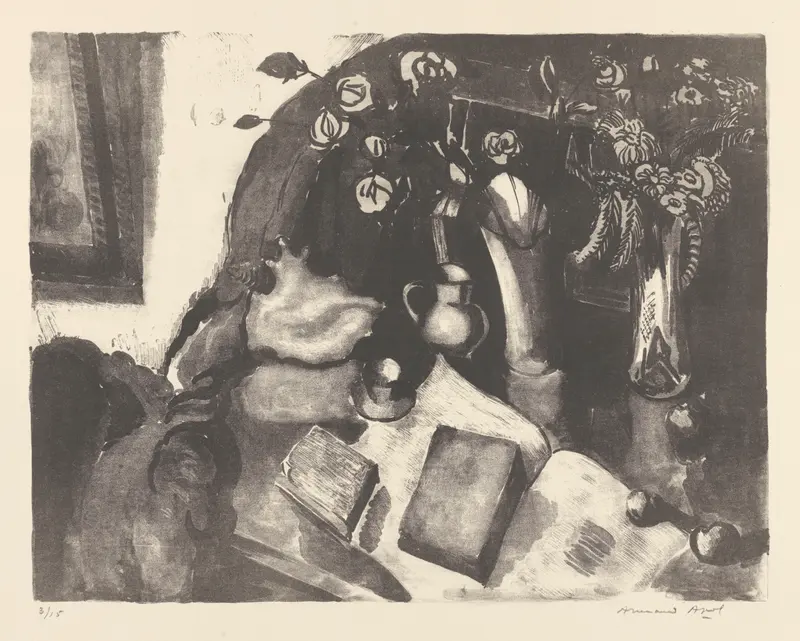
Dix lithographies au lavis (02) : Nature morte
Armand Apol

Dix planches (06) : La loge
Armand Apol
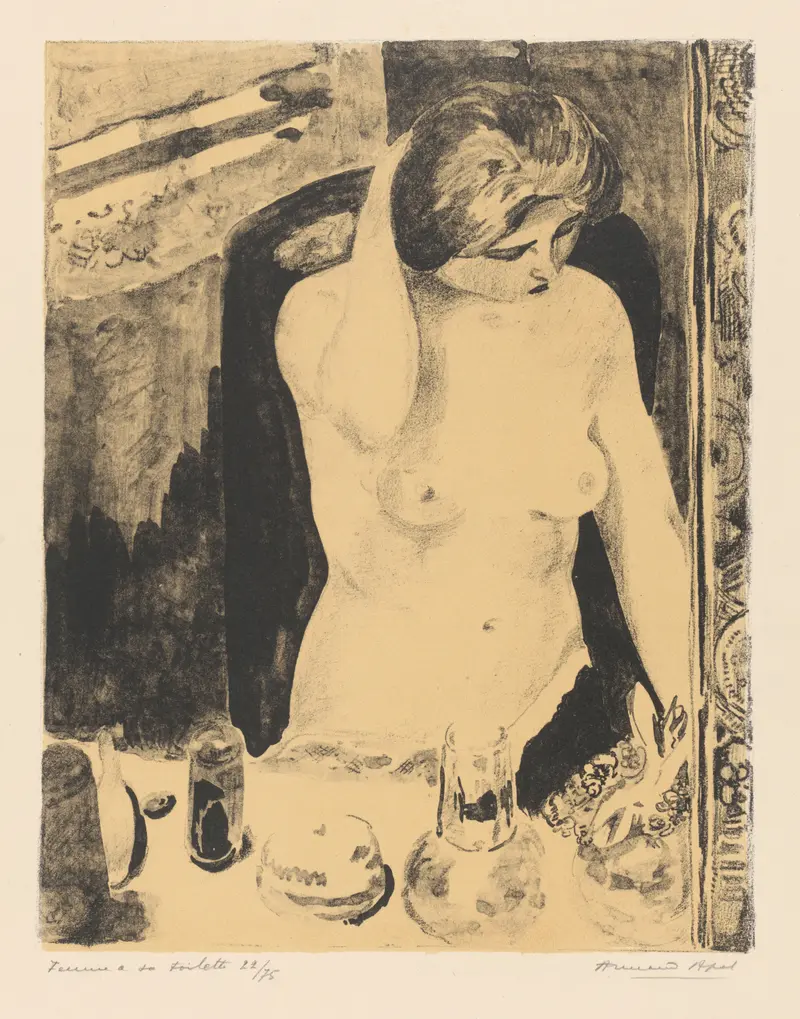
Dix planches (10) : Femme à sa toilette
Armand Apol
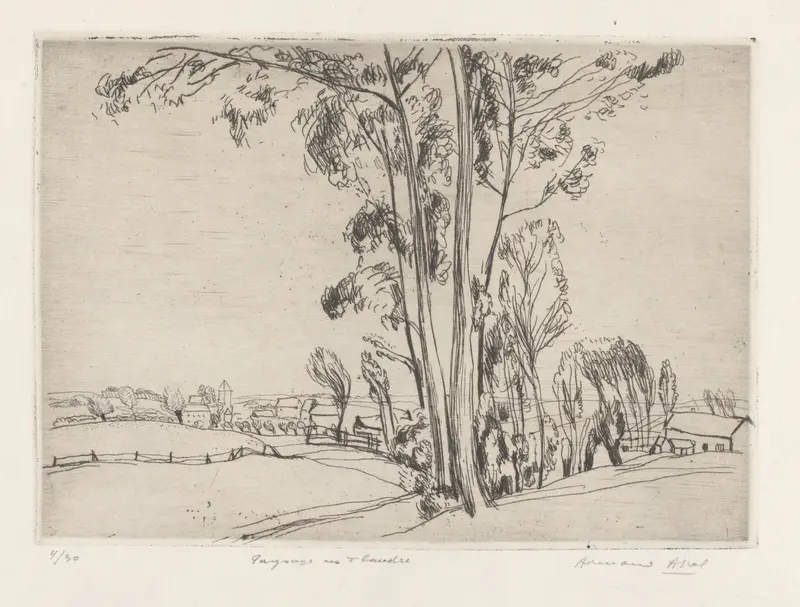
Paysage en Flandre (Etichove)
Armand Apol
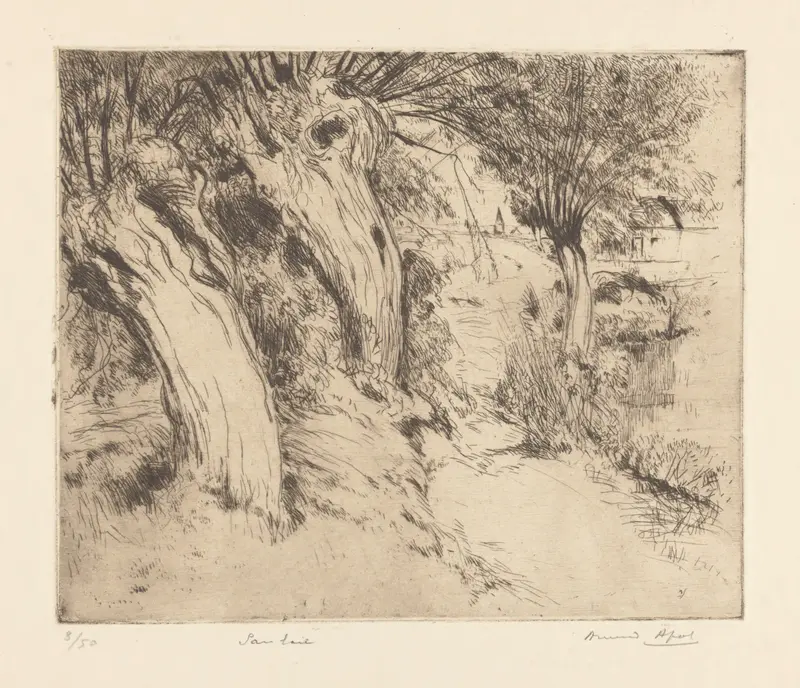
Saulaie
Armand Apol
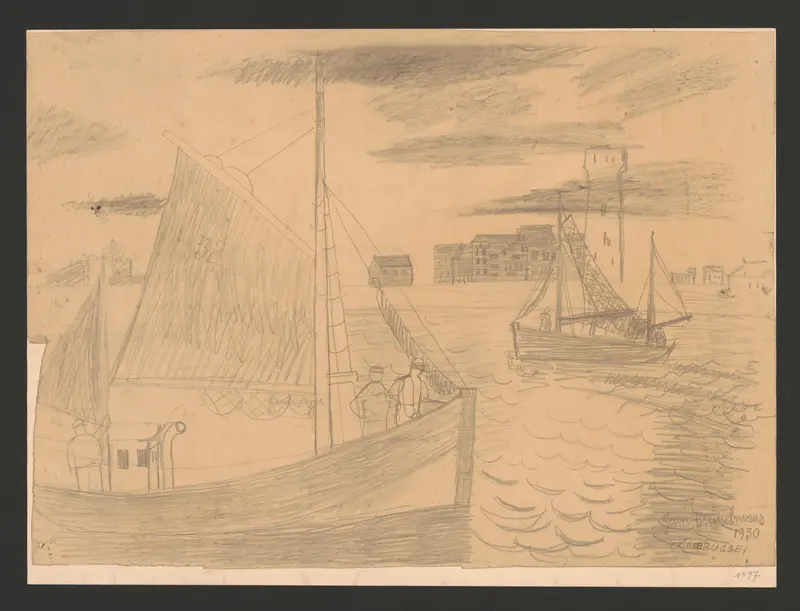
Zeebrugge
Armand Apol





