
Englewood, New Jersey — History & Facts
In the quiet stillness of Englewood, New Jersey, a whisper of mortality intertwines with the beauty of the landscape, inviting us to pause and reflect. Look to the left, where soft, dappled light breaks through the canopy of gentle trees, illuminating a serene path that meanders into the distance. The palette is a symphony of muted greens and warm earth tones, expertly layered to create depth and a sense of tranquility. Notice how the brush strokes breathe life into the scene, each one a delicate caress that holds both the weight of existence and the promise of renewal. Delve deeper into the composition, where the interplay between light and shadow evokes a tension between the ephemeral and the eternal.
The winding path suggests a journey, perhaps a metaphor for life itself, leading us toward an unseen destination. Inness infuses the landscape with a sense of longing, as if it is a cherished memory, while the looming, shadowy trees remind us of the inevitable passage of time and what lies beyond. Innes painted Englewood, New Jersey in 1868, during a period of artistic exploration and personal transition. Having recently moved to the area, he was grappling with the influences of the American Romantic movement and the evolving landscape of art in America.
The work reflects his deepening connection to nature, as well as a burgeoning awareness of life’s fragility, a theme that would resonate throughout his later works.
More Artworks by George Inness
Browse all →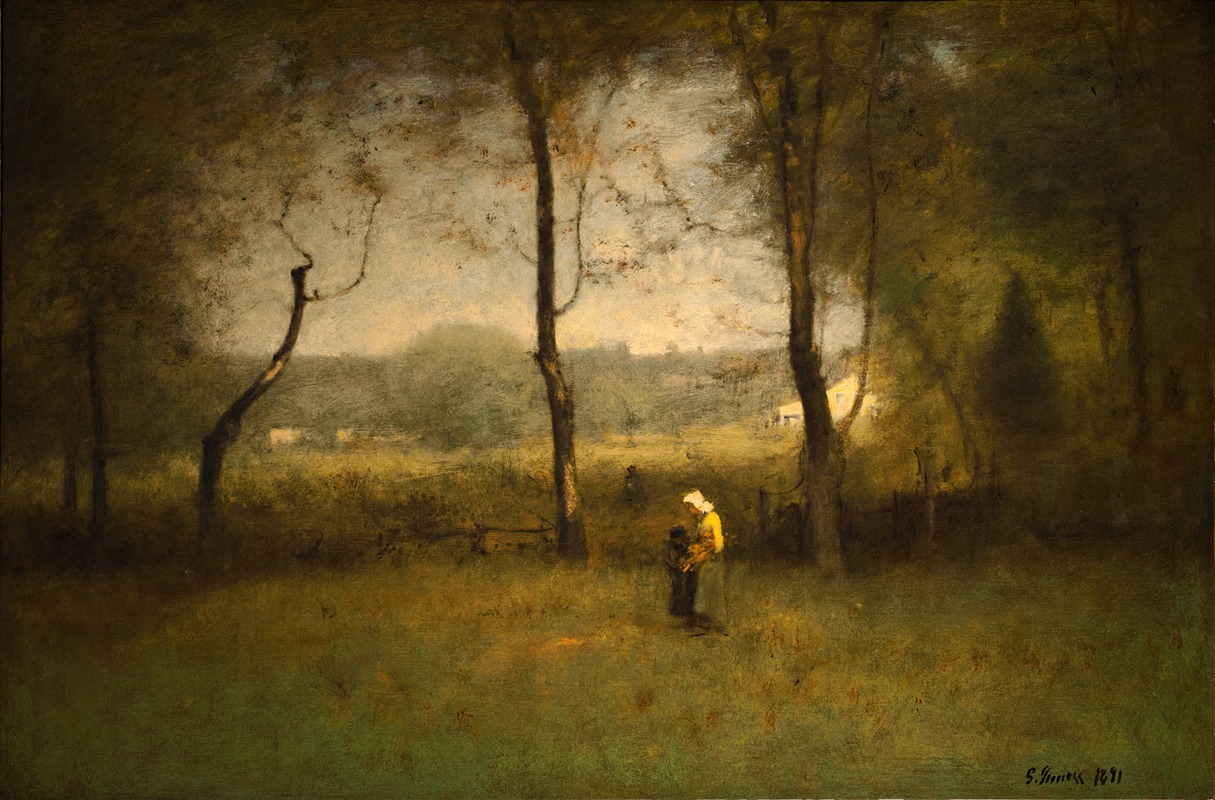
Autumn Woods
George Inness
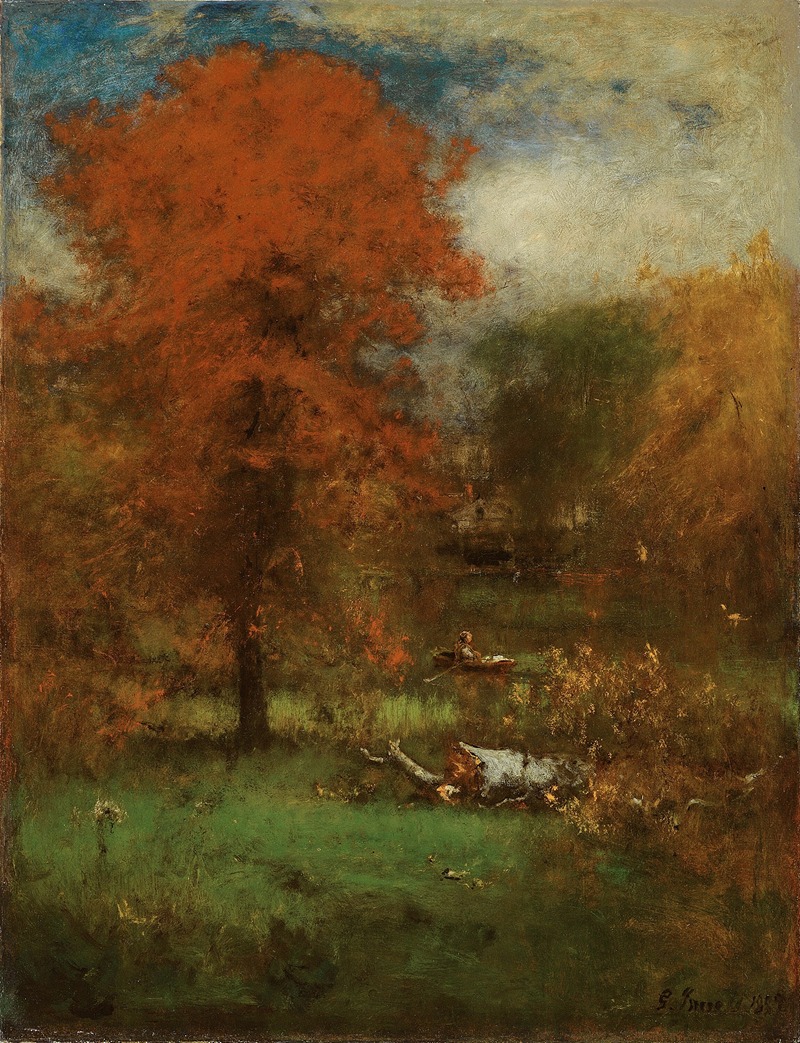
The Mill Pond
George Inness
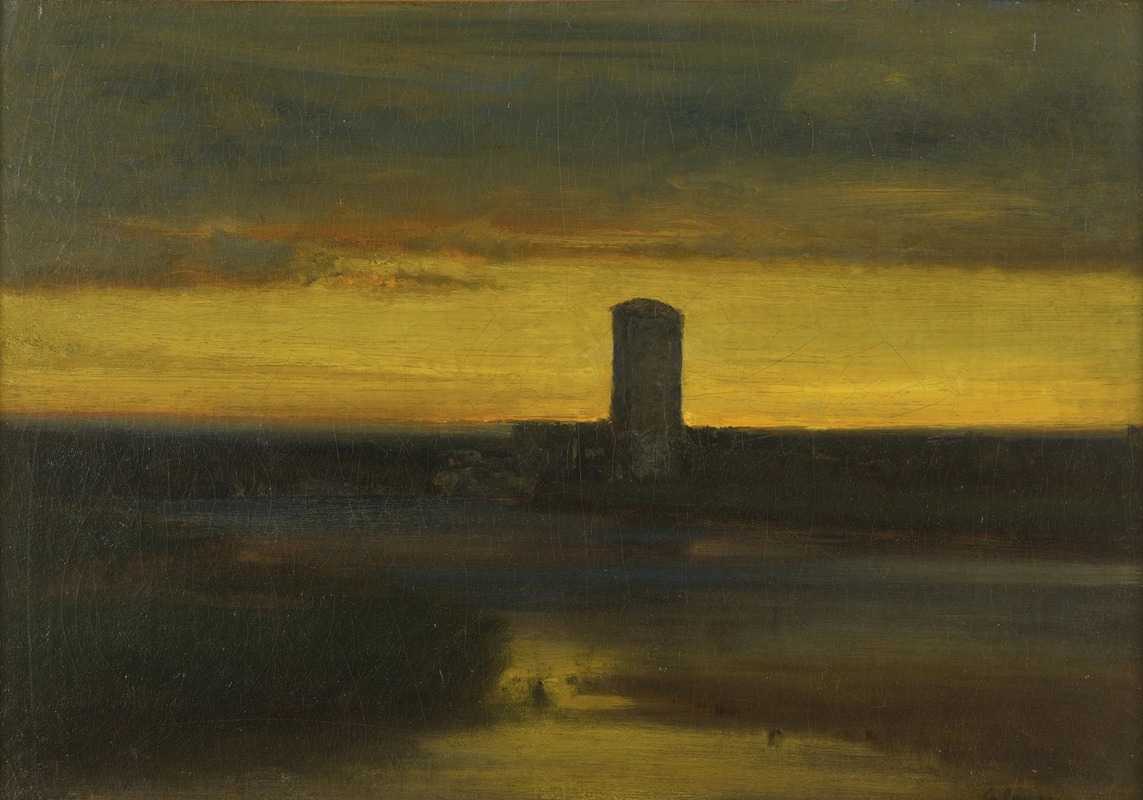
Afterglow
George Inness

Landscape (Evening Landscape)
George Inness

Montclair
George Inness

View in Berkshire County, Massachusetts, Clearing Off after a September Storm
George Inness

October
George Inness
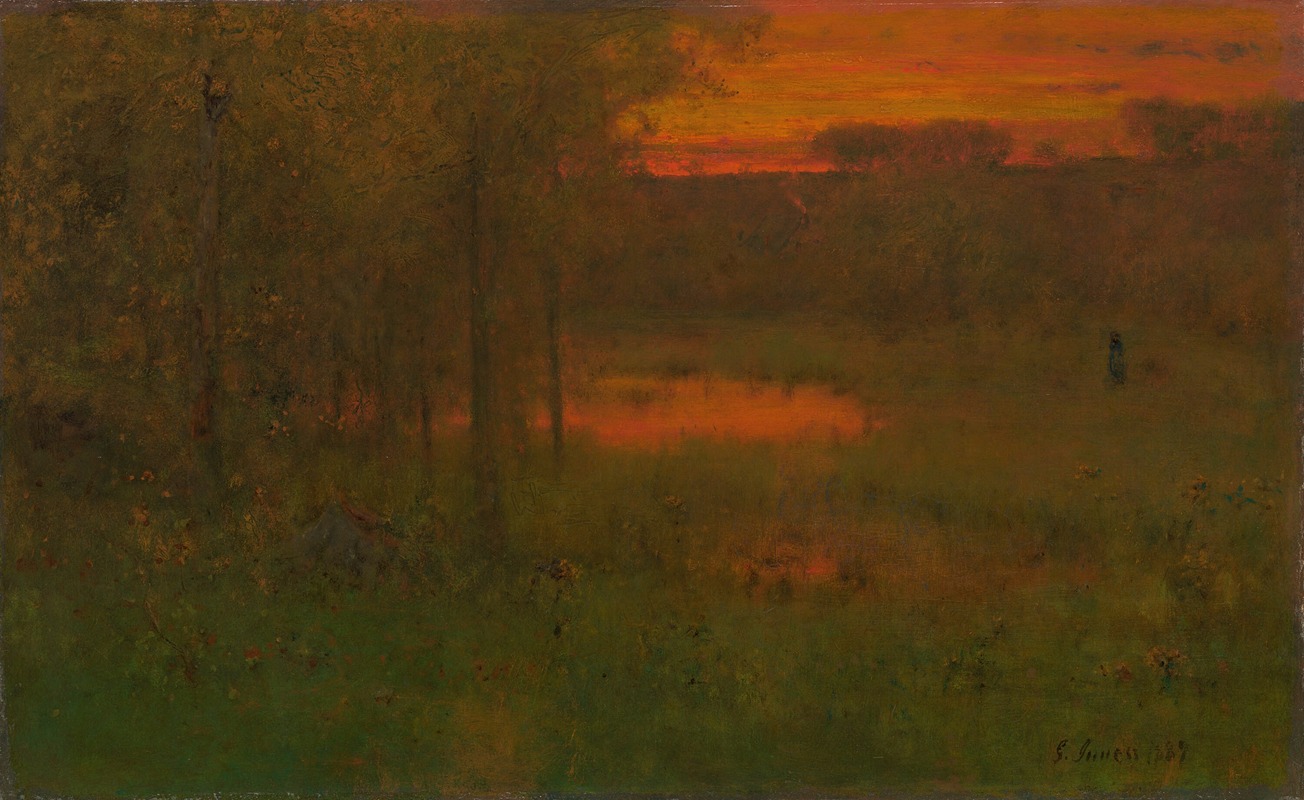
Landscape, Sunset
George Inness
Afterglow
George Inness
Catskill Mountains
George Inness





