
Eugène Manet on Isle of Wight — History & Facts
The first thing that catches the eye is the way the scene is framed—almost as if we are peering through a veil, catching a private moment. The man in the straw boater stands slightly turned, his gaze directed out past the potted geraniums, through a sunlit window, toward two figures and a scatter of boats beyond. The brushwork is quick, light, and restless, letting the garden’s reds and greens pulse against the cool, luminous air.
The window is both barrier and invitation: it separates inside from out, yet the transparency of the curtains and the open stance of the figure make us feel as if we could step through. The painting’s mood is one of gentle observation, the palette fresh and summery, the light diffused as if caught just after a passing cloud. Created in 1875, this work belongs to a world on the cusp of change—when artists like Berthe Morisot were redefining what painting could do, and what moments were worth capturing. In the era of Impressionism, such scenes of leisure, domesticity, and fleeting light became prized subjects, often commissioned or cherished by the rising bourgeoisie who recognized their own lives in these intimate glimpses.
The painting’s presence in The Yorck Project’s 2002 collection speaks to its enduring interest, even if history has kept few traces of its early journey. As you look again, notice how the scene resists closure: the figures outside are half-glimpsed, the boats seem ready to slip away, and the moment itself feels suspended—an invitation to linger in the hush between inside and out.
More Artworks by Berthe Morisot

The Harbor at Lorient
Berthe Morisot
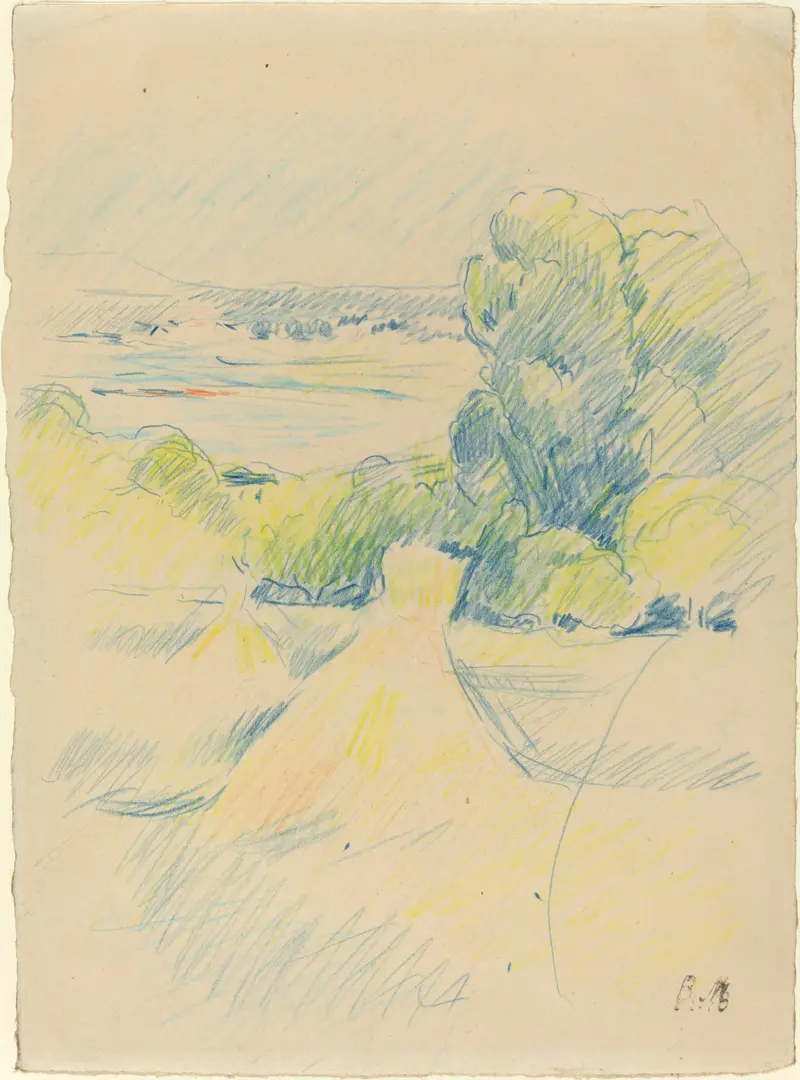
Landscape
Berthe Morisot

Hanging the Laundry out to Dry
Berthe Morisot

Woman in a Garden
Berthe Morisot

Young Girl with Hat
Berthe Morisot
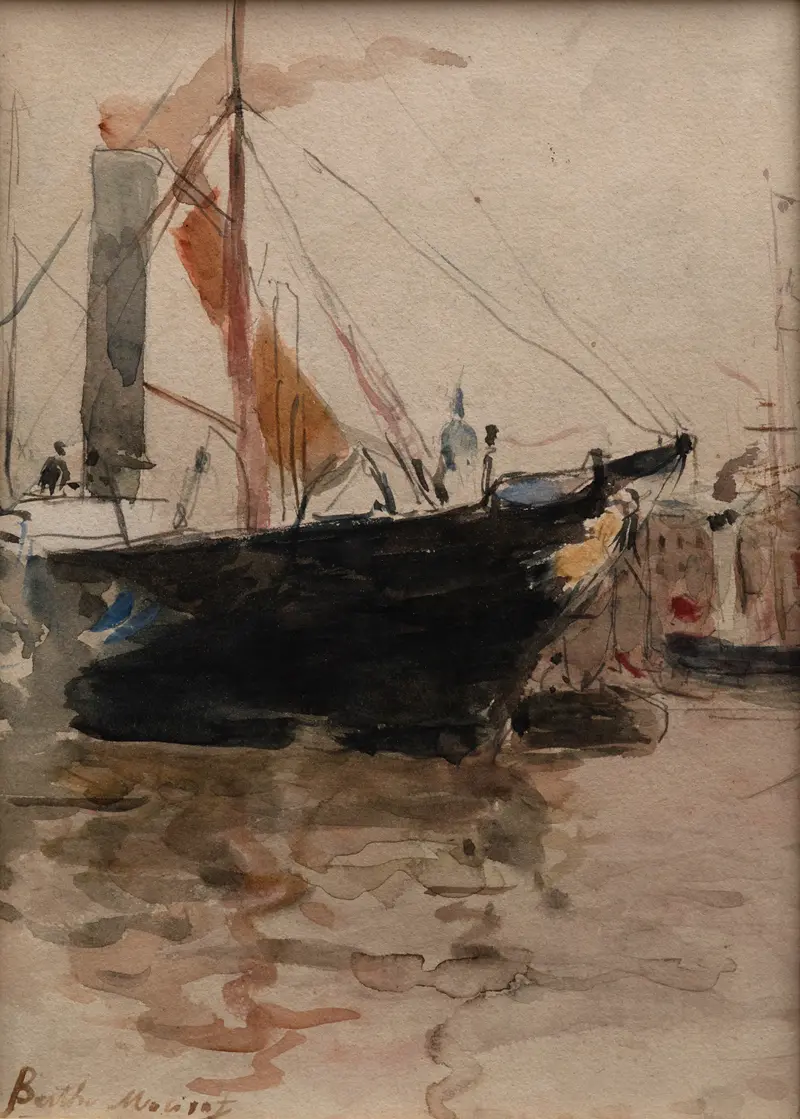
Harbor Scene, Isle of Wight
Berthe Morisot
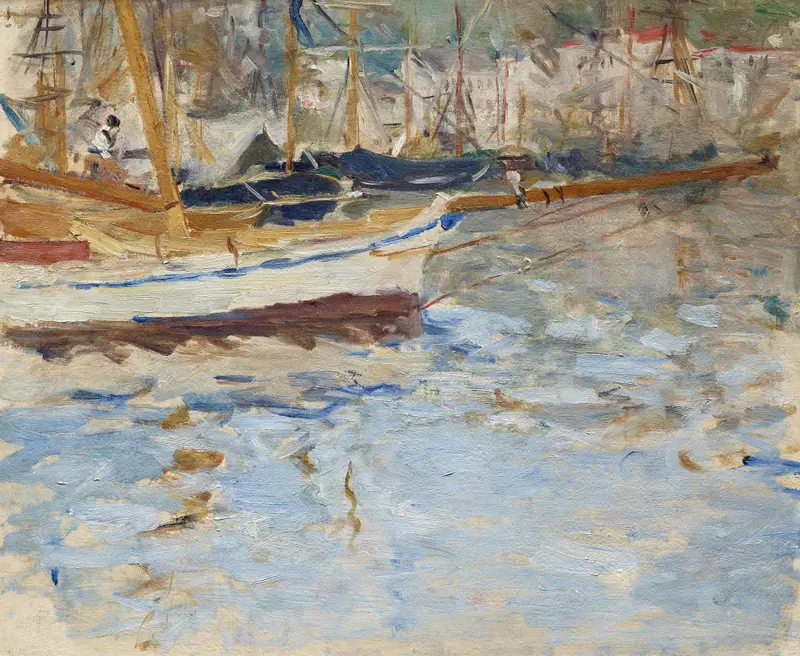
The Port of Nice
Berthe Morisot
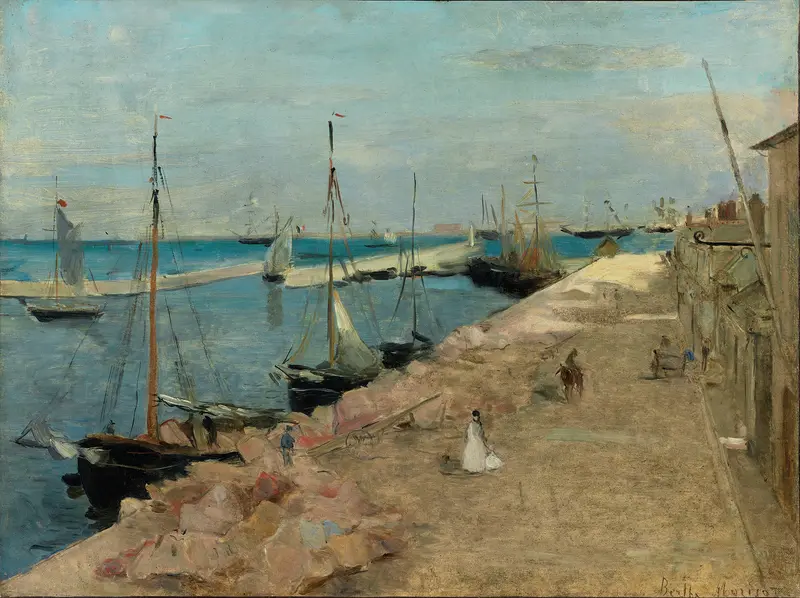
The Harbor at Cherbourg
Berthe Morisot

The Mother and Sister of the Artist
Berthe Morisot
Les Poires
Berthe Morisot





