
Eve Naming the Birds — History & Facts
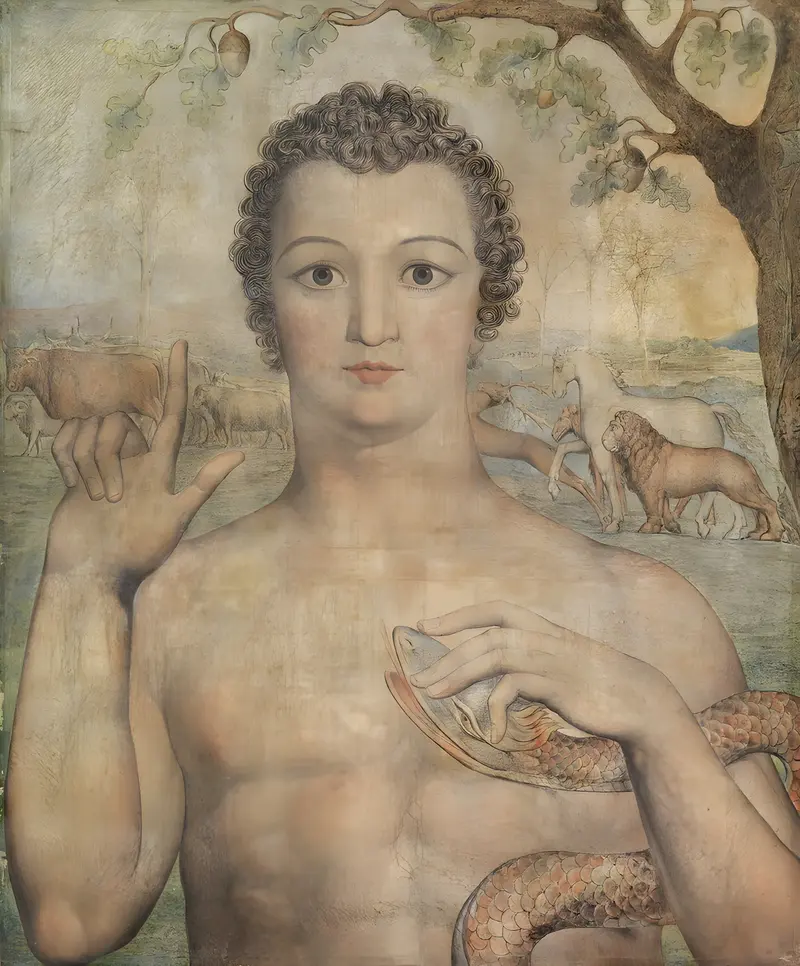
No other artist in early 19th-century Britain painted the Book of Genesis with the visionary intensity of William Blake. Eve Naming the Birds stands out as one of the few works where Blake, a poet and printmaker as well as a painter, turned to the dawn of language itself as his subject. The painting’s origins are shrouded in some mystery: it was never publicly exhibited in Blake’s lifetime, and its commission, if there was one, remains undocumented.
Yet it is a rare example of Blake’s engagement with the theme of innocence and creation, a theme he would return to in both his poetry and his art. The scene captures the moment described in Genesis 2:19-20, when Eve, newly created and alone in Eden, is tasked with naming the birds. Blake chooses a gentle, almost private instant: Eve sits or kneels, her hand raised in blessing or greeting, surrounded by birds of various species. The birds, rendered with delicate attention, gather close, as if eager for her words.
Light suffuses the scene, not from a clear source, but as if Eden itself glows with possibility. Unlike Adam Naming the Animals by Jacopo Bassano, which emphasizes dominion, Blake’s Eve is a figure of harmony and tenderness, her act of naming a quiet miracle rather than an assertion of power. The painting’s physical journey is less well documented than many of Blake’s works, and its medium is still debated—some suggest watercolor, others tempera, but no consensus has been reached. It forms part of a small group of biblical subjects Blake painted around 1810, a period when he was largely out of favor with the art establishment and working for a handful of devoted patrons.
Today, Eve Naming the Birds is recognized as a testament to Blake’s singular vision, blending poetry, theology, and art. Its current home is not universally agreed upon, but it is typically associated with collections that champion Blake’s unique contribution to Romanticism.
More Artworks by William Blake
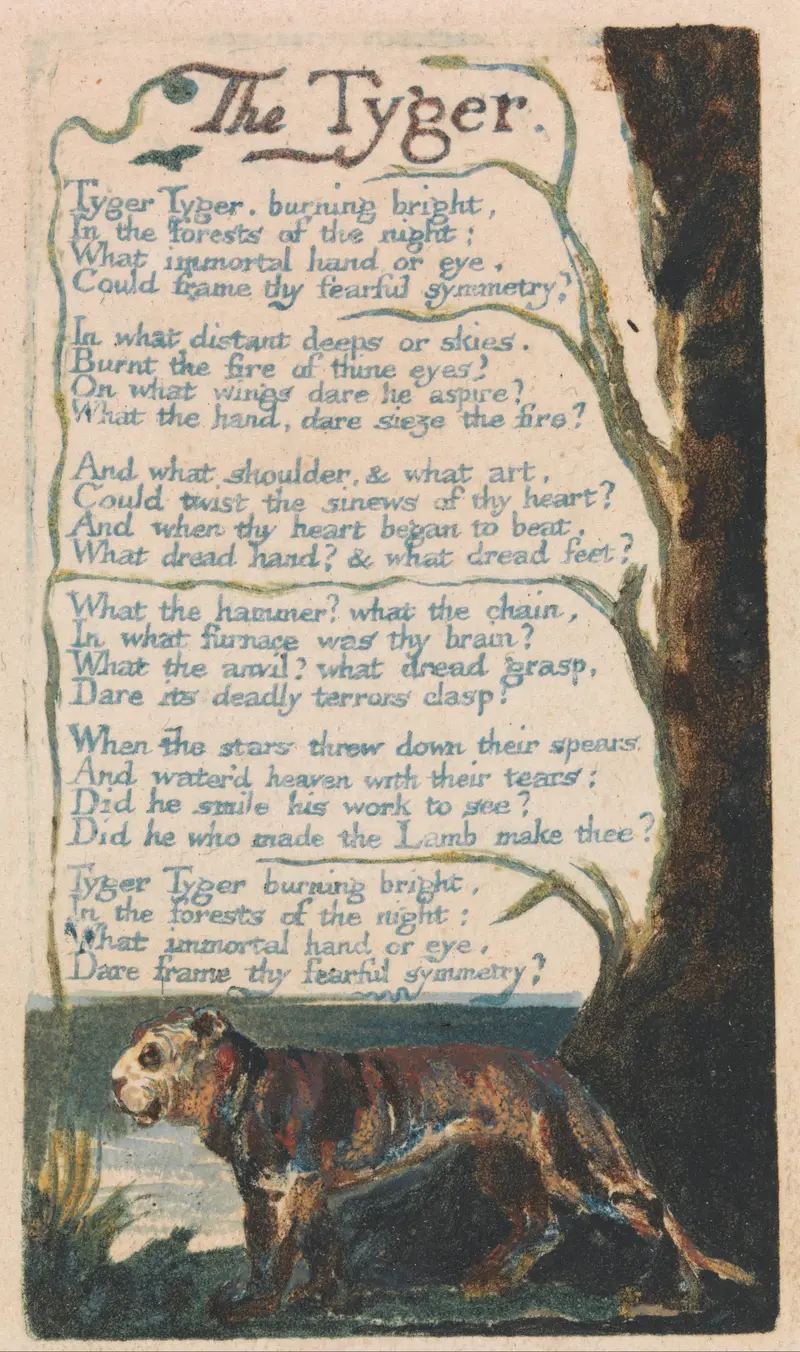
The Tyger
William Blake

Christ Blessing
William Blake
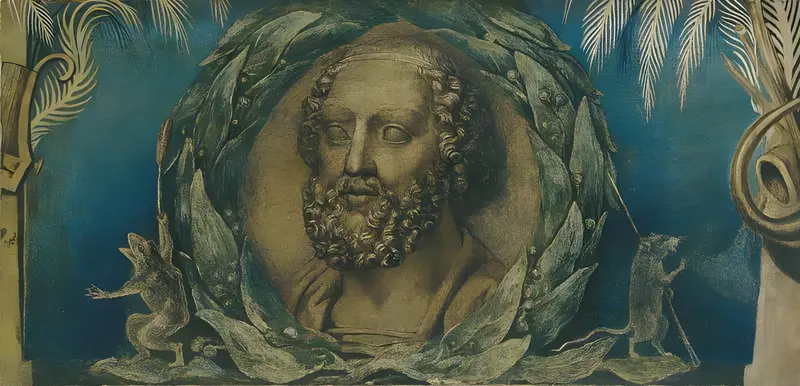
Homer
William Blake
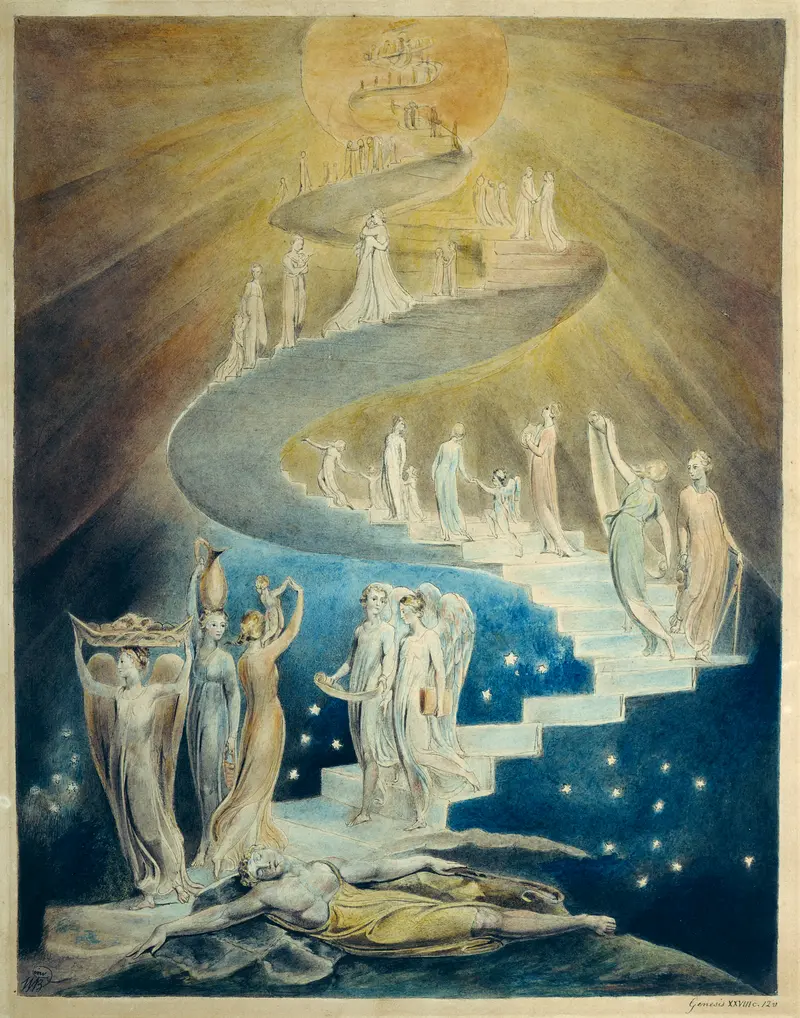
Jacob's Ladder
William Blake
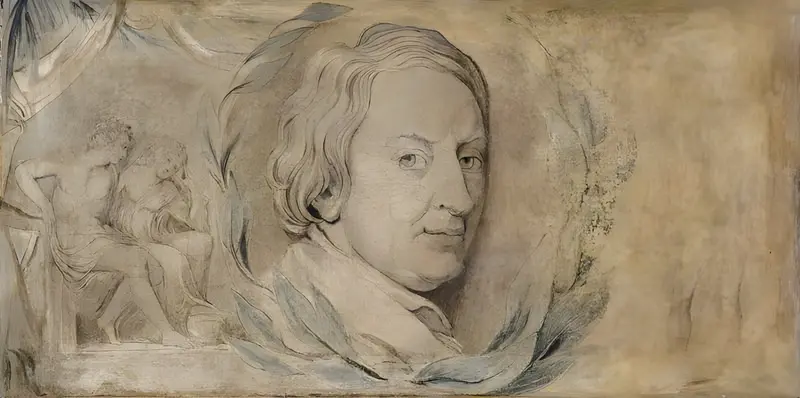
John Dryden (1631–1700)
William Blake
Landscape near Felpham
William Blake
Sacrifice of Job
William Blake
Christ's Entry into Jerusalem
William Blake
The Ancient of Days
William Blake
Adam Naming the Beasts
William Blake





