
Ferme avec paysanne et animaux — History & Facts
What draws the eye first is the quiet choreography of daily life, caught in a moment of unhurried routine. The sun, filtered through a restless sky, picks out the rough textures of stone and wood, guiding us to a woman seated at a trough, her hands busy with work. Around her, animals wander freely—goats, chickens, ducks—each absorbed in its own small world.
The trees, twisted and leafing, lean into the scene as if listening to the sounds of the courtyard. There is no grand drama here, but rather an invitation to linger over the ordinary: the play of light on a weathered wall, the muddy path winding between buildings, the sense of a place shaped by time and use. Painted between 1833 and 1836, this work by Alexandre Calame belongs to a moment when artists across Europe turned their gaze to the countryside, seeking authenticity and solace in rural life. In the early nineteenth century, such scenes were not just records of place, but statements—celebrations of the honest labor and humble settings that industrialization threatened to erase.
While little is recorded about the specific journey of this painting, its presence in the Christie's collection today is a reminder of how these images once answered a longing for rootedness and simplicity. Look again at the woman by the trough: she is both an individual and an emblem, her world rendered with a care that asks us to see its quiet dignity.
More Artworks by Alexandre Calame

By the Lake of Thun
Alexandre Calame
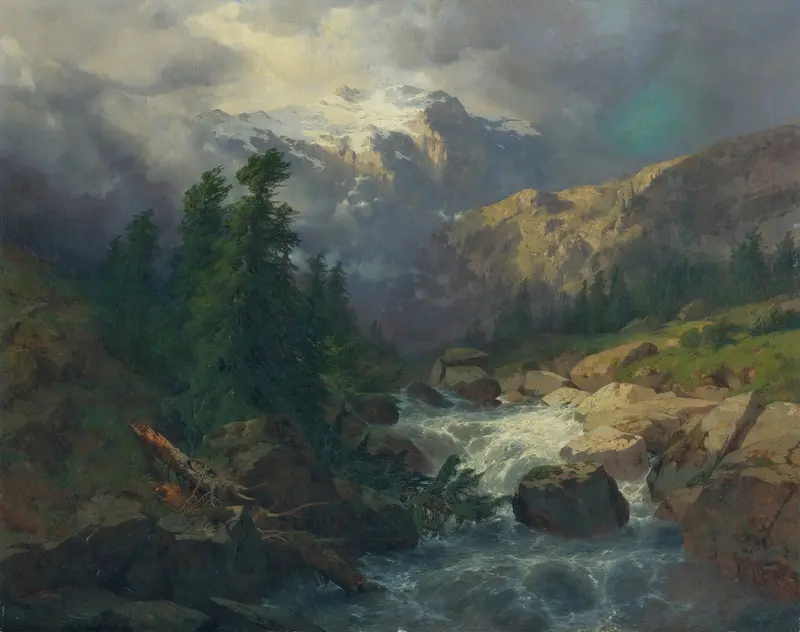
Souvenir Handeck, Stormy Weather
Alexandre Calame
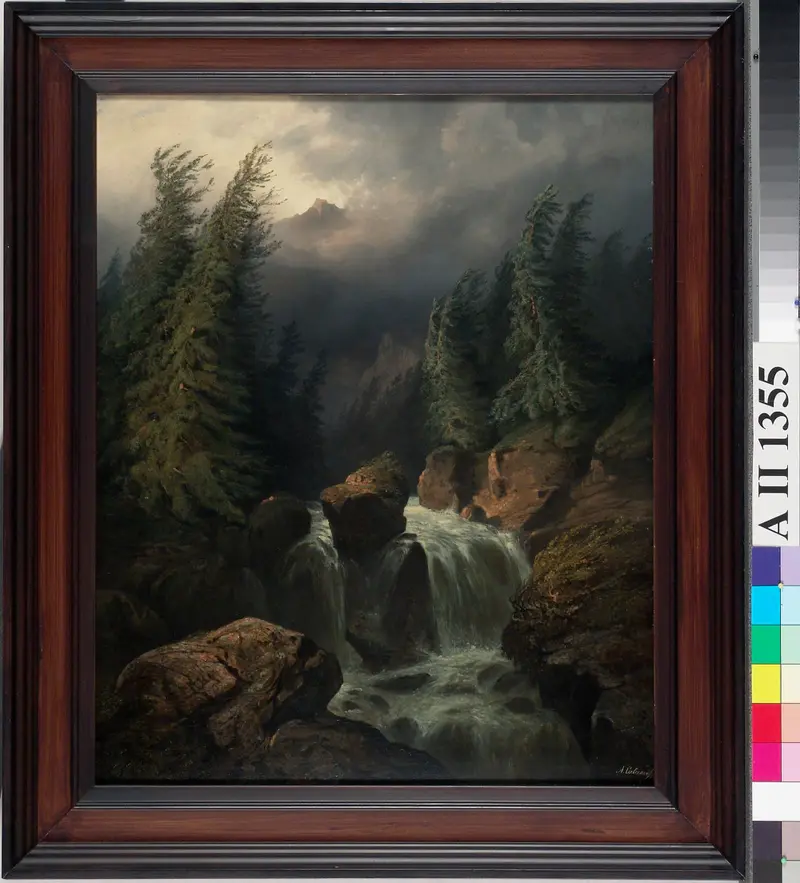
Alppikoski
Alexandre Calame
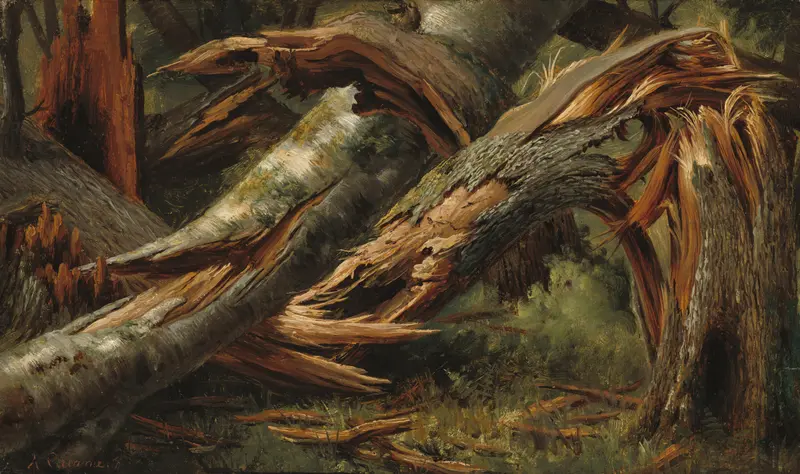
Fallen Tree
Alexandre Calame
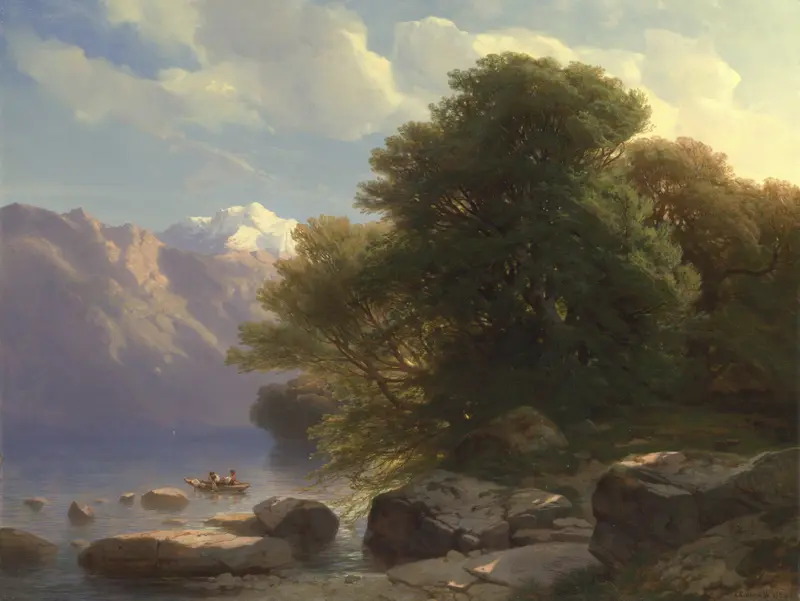
The Lake of Thun
Alexandre Calame
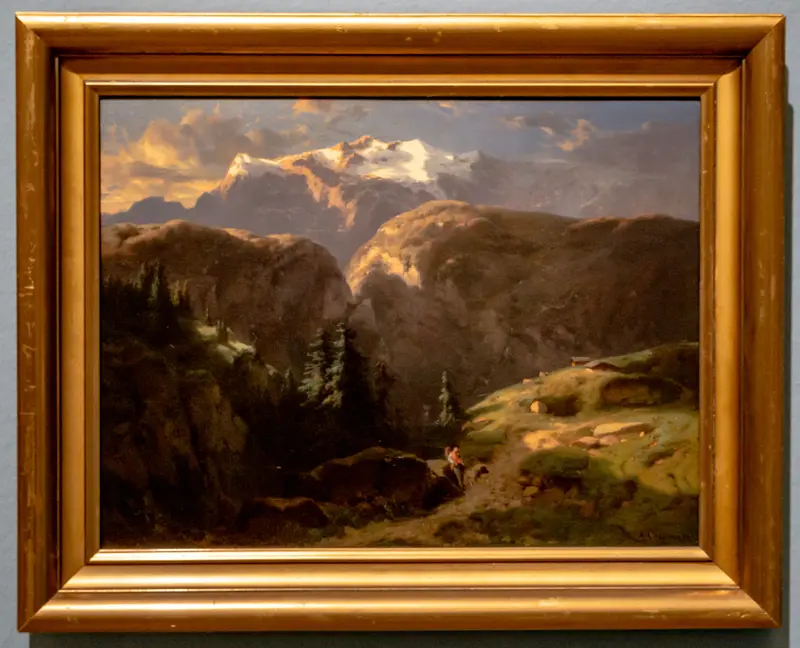
The Weatherhorn
Alexandre Calame
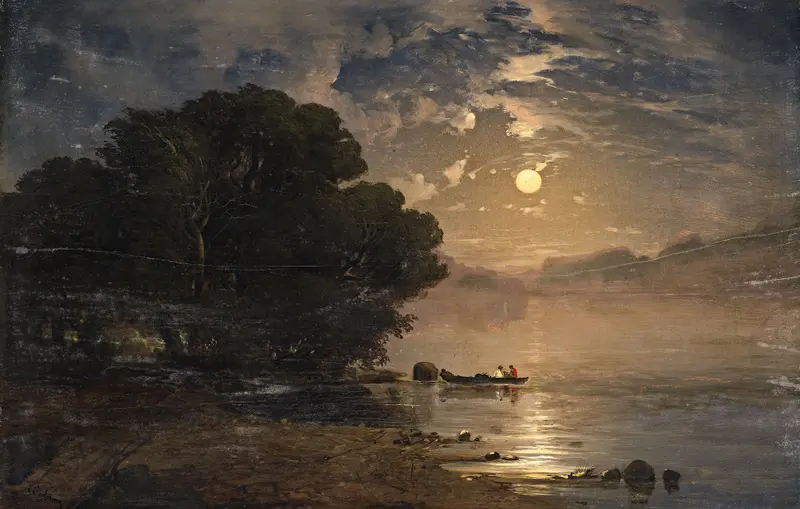
Evening Landscape with a Lake
Alexandre Calame
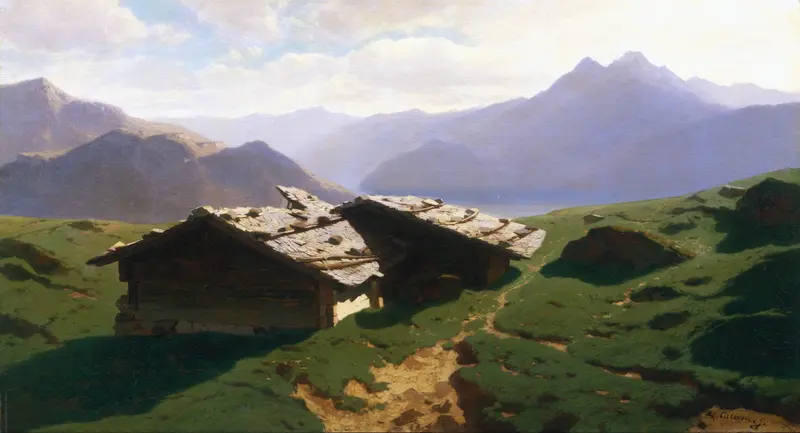
Chalets at Rigi
Alexandre Calame

View of the Wetterhorn and the Reichenbach from Meiringen
Alexandre Calame
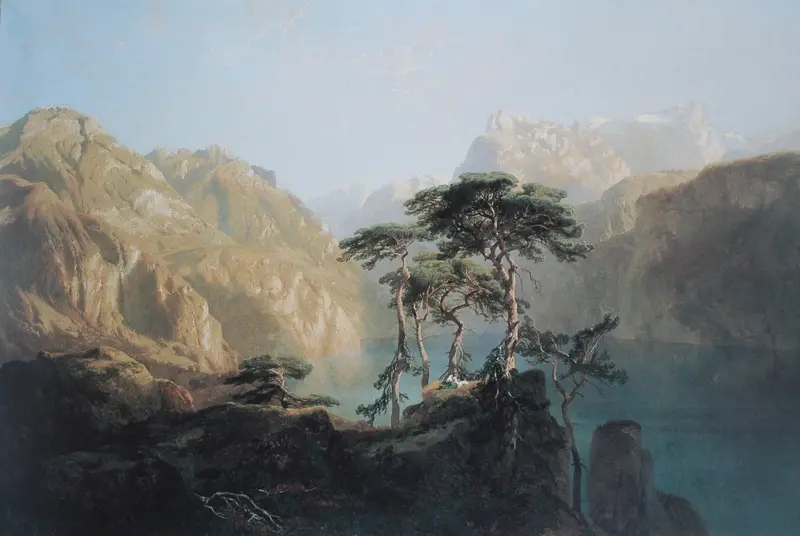
Calame Der Vierwaldstättersee
Alexandre Calame
More Genre Scene Art

Banquet of the Officers of the St George Civic Guard
Frans Hals

Rembrandt and Saskia in the Scene of the Prodigal Son
Rembrandt van Rijn

Bal du moulin de la Galette
Pierre-Auguste Renoir

Quadrille at the Moulin Rouge
Henri de Toulouse-Lautrec

A Burial at Ornans
Gustave Courbet

When Will You Marry?
Paul Gauguin