
Fisherman Carrying His Net in the Snow — History & Facts
When Fisherman Carrying His Net in the Snow appeared in 1821, it marked one of the rare moments when Katsushika Hokusai—famed for his views of Mount Fuji—turned his gaze to the quiet endurance of rural life in winter. Unlike his celebrated landscapes, this work is notable for its intimate focus on a solitary figure, and for its unusual depiction of snow, a motif less common in Hokusai’s oeuvre at the time. Scholars have long discussed whether this piece was intended as part of a now-lost series on the seasons, as no companion images have survived.
The painting’s understated mood and subject have led some to speculate that it was a personal work, rather than a commissioned piece. At the heart of the image, a lone fisherman trudges through thick, falling snow, his body bent under the weight of a bundled net slung over his shoulder. The moment Hokusai selects is one of perseverance: the fisherman’s path is barely visible, his feet half-buried, and his face turned away from the wind. The broad, calligraphic brushwork of the snowflakes contrasts with the delicate rendering of the net, emphasizing both the harshness of the environment and the resilience of the figure.
Unlike the heroic fishermen in Utagawa Hiroshige’s later prints, who are often shown at work or in dramatic struggle with nature, Hokusai’s fisherman is caught in a quiet, almost meditative journey home. The sparse landscape, with only a hint of distant trees, draws the eye to the man’s solitary form, making his endurance the true subject. The exact provenance of Fisherman Carrying His Net in the Snow is unclear, as is its original medium—some sources suggest ink and color on paper, others propose silk. It is generally agreed, however, that the work dates from Hokusai’s prolific middle period, when he was experimenting with new themes and techniques outside his commercial print series.
The painting has passed through several private collections in Japan and Europe, surfacing occasionally in exhibitions dedicated to Edo period art. Today, it is recognized as a rare example of Hokusai’s sensitivity to the everyday hardships of common people, and it stands apart from his more famous woodblock prints for its quiet dignity and directness.
More Artworks by Katsushika Hokusai

The Great Wave off Kanagawa
Katsushika Hokusai
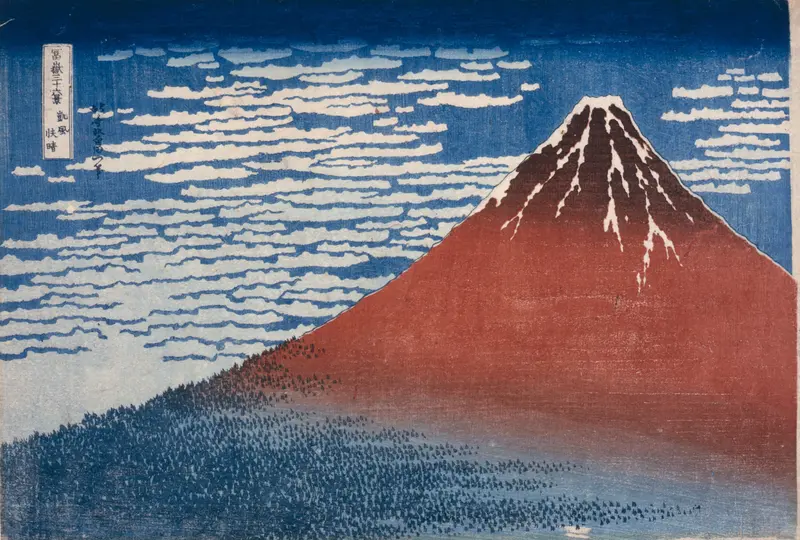
Fine Wind, Clear Morning (Red Fuji)
Katsushika Hokusai
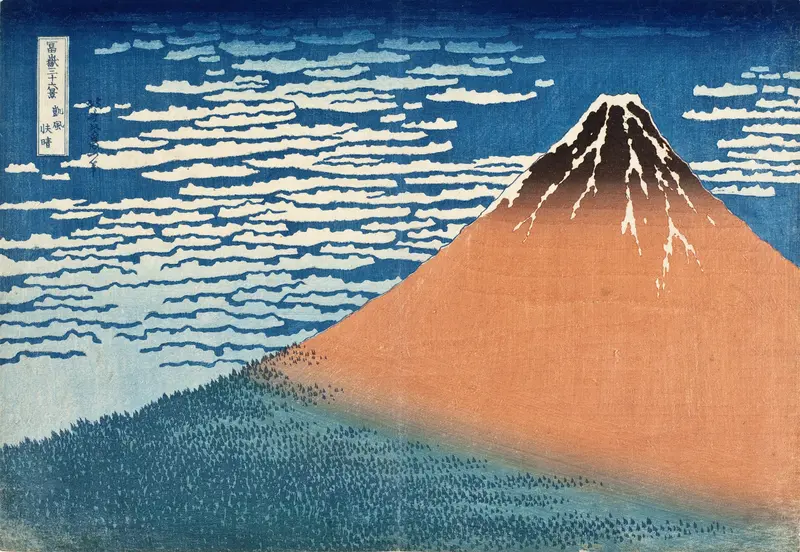
South Wind, Clear Dawn
Katsushika Hokusai
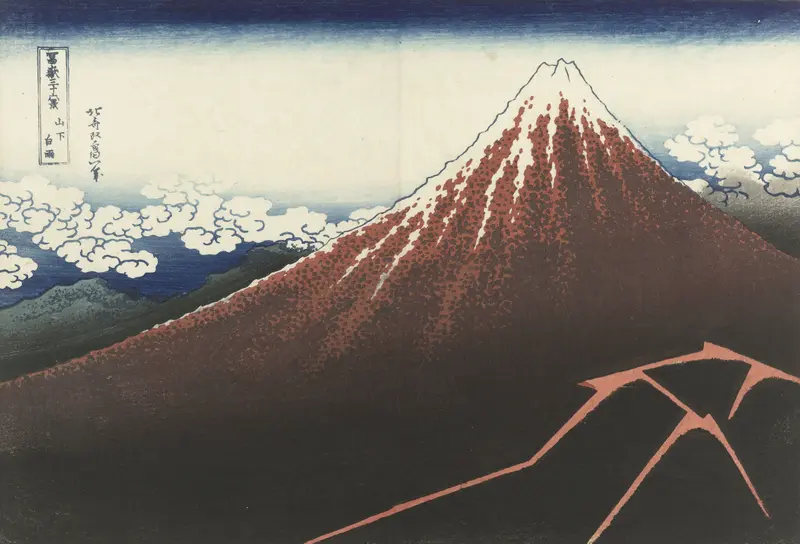
Rainstorm Beneath the Summit
Katsushika Hokusai
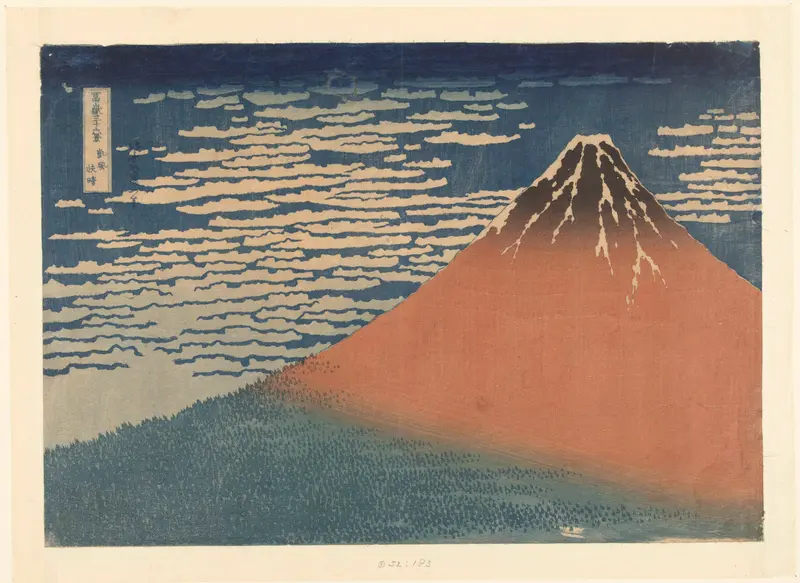
Clear Weather with a Southerly Wind
Katsushika Hokusai
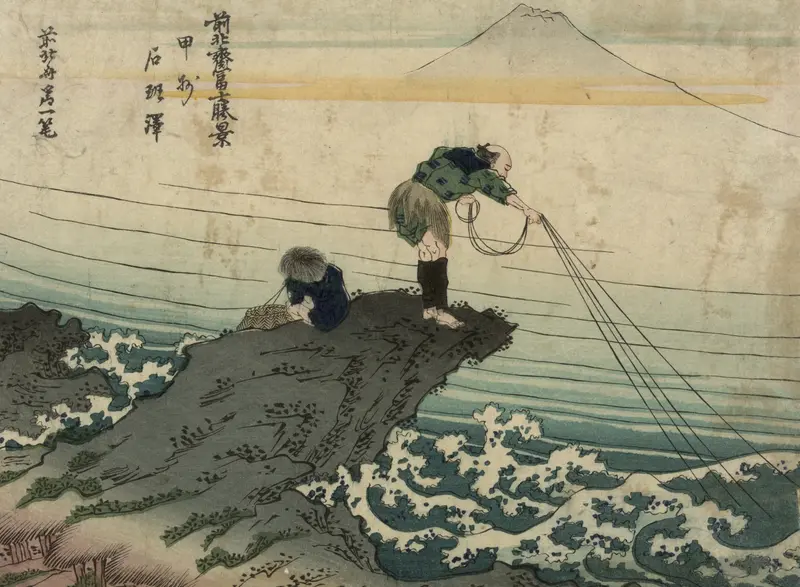
Kōshū kajikazawa
Katsushika Hokusai
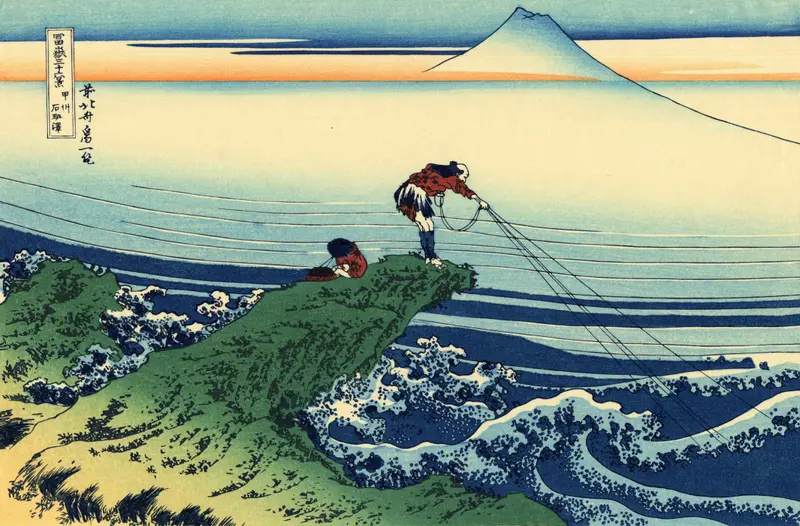
Kōshū kajikazawa 2
Katsushika Hokusai
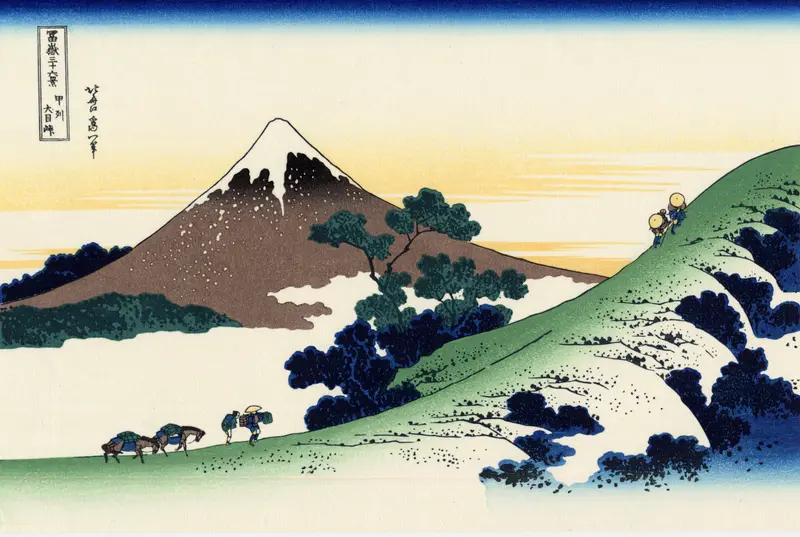
Inume Pass in Kai Province (Kôshû inume-tôge)
Katsushika Hokusai

Yoro Falls in Mino Province (Mino no Yoro no taki), from the series "A Tour of Waterfalls in Various Provinces (Shokoku taki meguri)"
Katsushika Hokusai
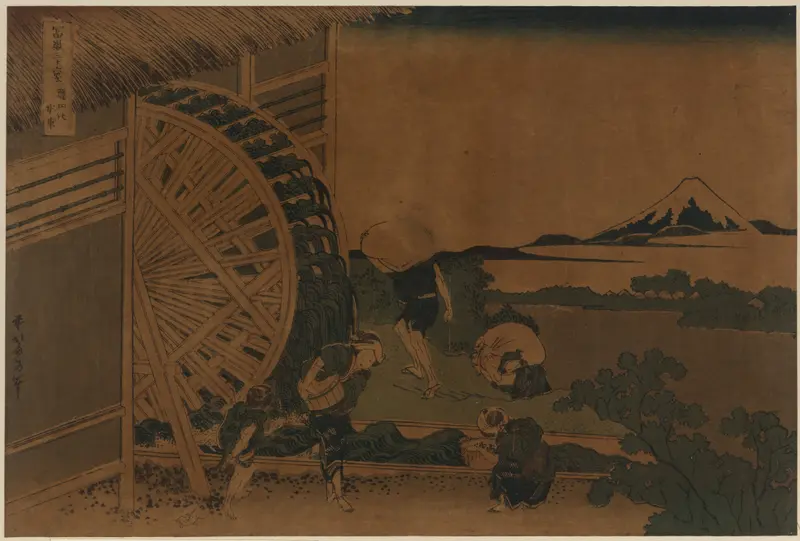
Onden no suisha
Katsushika Hokusai
More Genre Scene Art

Banquet of the Officers of the St George Civic Guard
Frans Hals

Rembrandt and Saskia in the Scene of the Prodigal Son
Rembrandt van Rijn

Bal du moulin de la Galette
Pierre-Auguste Renoir

Quadrille at the Moulin Rouge
Henri de Toulouse-Lautrec

A Burial at Ornans
Gustave Courbet

When Will You Marry?
Paul Gauguin