
Fishing Under the Ice on the Maas — History & Facts
A hush of winter morning hangs over the Maas, yet the scene is anything but still. Aelbert Cuyp draws the viewer into a gathering of fishermen, clustered at the river’s edge, their faces intent, bodies braced against the cold as they haul a heavy net from beneath the ice. The eye is pulled first to the group’s collective effort, then to the luminous expanse of sky that stretches above them, painted in delicate shades of rose and gold that suggest the first light of day.
Every gesture is purposeful: the man at the center plants his pole with authority, a silent leader, while others lean in, sleeves rolled, muscles tensed, their task illuminated by a shaft of sunlight that picks out the glint of ice and the red of a cap. Cuyp’s mastery lies in these contrasts: the warmth of human activity set against the vast, cool quiet of the Dutch landscape. The distant windmills and church towers anchor the scene in the familiar world of the seventeenth-century Netherlands, while the bare trees and scattered baskets hint at the season’s hardships and communal resilience. The low horizon gives the sky an almost theatrical presence, dwarfing the figures and lending their labor a sense of both humility and importance.
This is not a story of heroic individuals, but of a village bound together by necessity and the rhythms of nature—one that invites the viewer to step closer, to feel the crunch of ice, the anticipation of the catch, and the fleeting warmth of shared endeavor. Painted in the mid-1650s, Fishing Under the Ice on the Maas belongs to a world where such winter scenes were both a record of daily life and a quiet celebration of the Dutch relationship with water and landscape. Works like this were often commissioned by prosperous burghers or local guilds, eager to display their connection to the land and the industriousness of their communities. The genre flourished as the Dutch Republic reached its economic and artistic zenith, with painters like Cuyp capturing the changing seasons and the interplay of light with unmatched sensitivity.
Though history has kept few traces of this particular canvas beyond its survival in a modern collection, its spirit remains immediate—inviting us to look again, and to find ourselves among the figures on the ice.
More Artworks by Aelbert Cuyp

The Maas at Dordrecht
Aelbert Cuyp
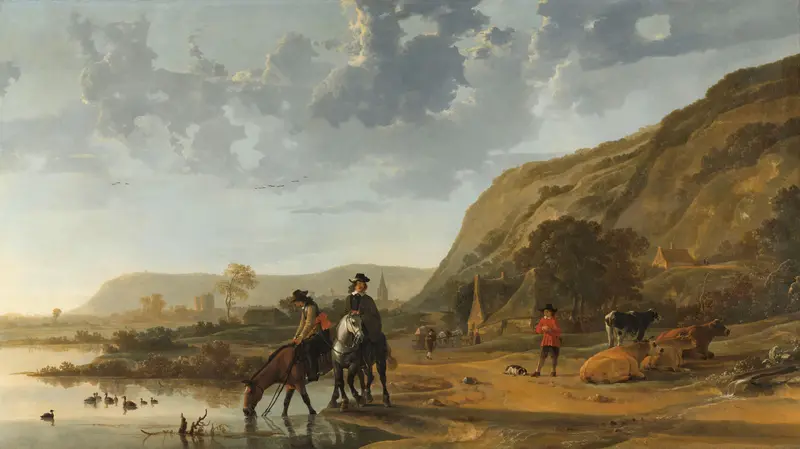
River Landscape with Riders
Aelbert Cuyp

The Maas at Dordrecht
Aelbert Cuyp
Gezicht op Dordrecht
Aelbert Cuyp
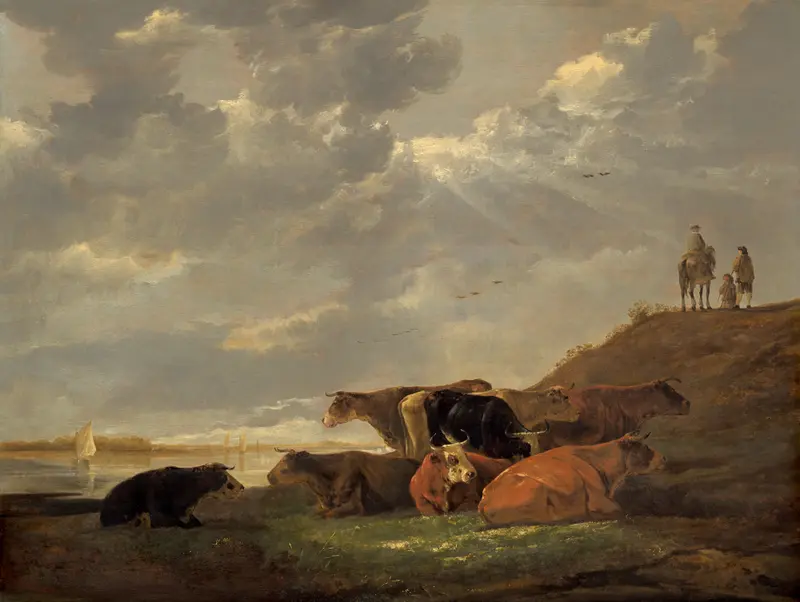
River Landscape with Cows
Aelbert Cuyp
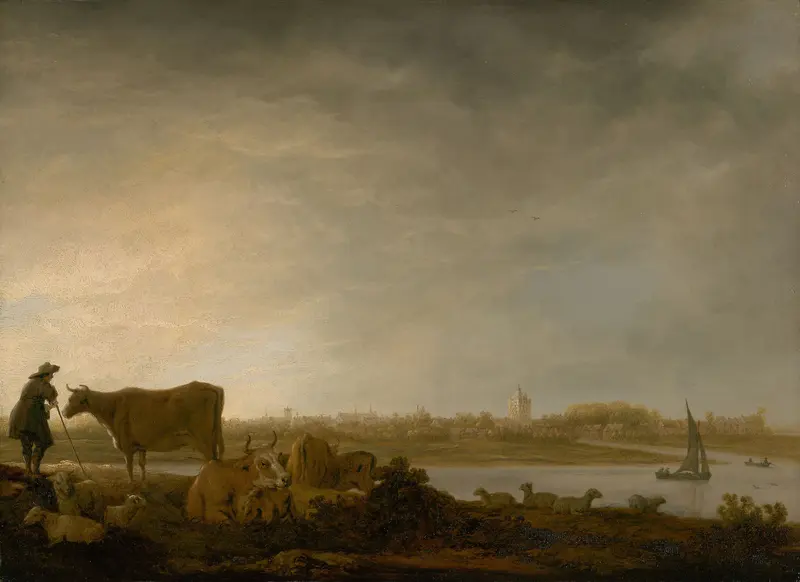
A View of Vianen with a Herdsman and Cattle by a River
Aelbert Cuyp
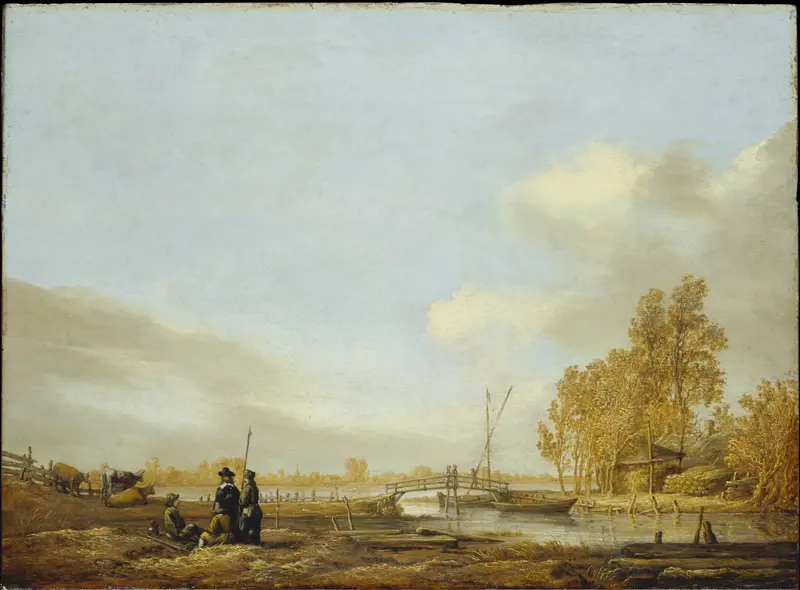
River Landscape with Footbridge
Aelbert Cuyp
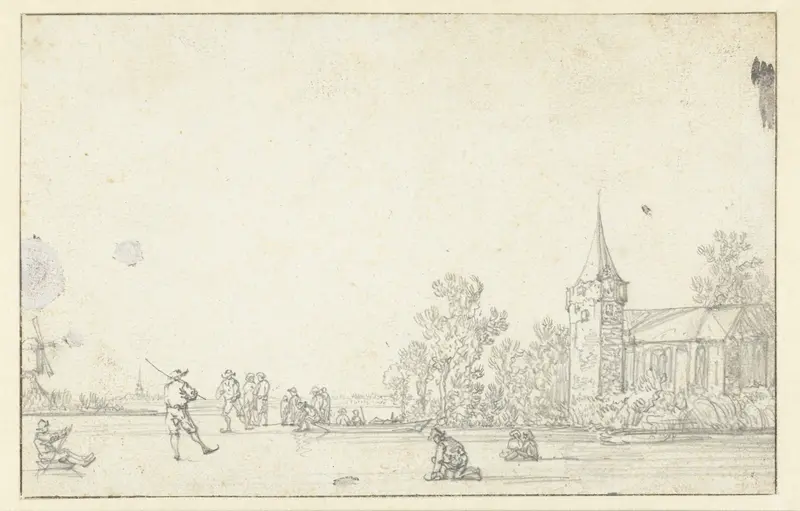
Bevroren rivier met schaatsers bij een kerk
Aelbert Cuyp

Cattle near a River
Aelbert Cuyp
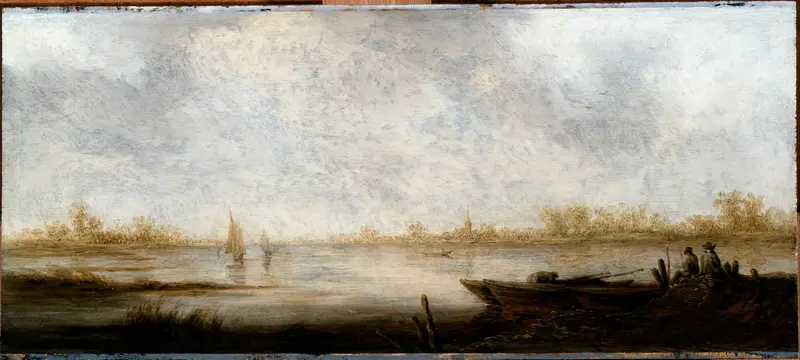
River Landscape
Aelbert Cuyp
More Genre Scene Art

Banquet of the Officers of the St George Civic Guard
Frans Hals

Rembrandt and Saskia in the Scene of the Prodigal Son
Rembrandt van Rijn

Bal du moulin de la Galette
Pierre-Auguste Renoir

Quadrille at the Moulin Rouge
Henri de Toulouse-Lautrec

A Burial at Ornans
Gustave Courbet

When Will You Marry?
Paul Gauguin