
Florizel and Perdita — History & Facts
When Albert Pinkham Ryder unveiled Florizel and Perdita, critics and admirers alike were captivated by his choice of subject: a Shakespearean romance rarely painted by American artists of his era. The painting draws its inspiration from The Winter's Tale, a play that had recently enjoyed a revival on the New York stage, and Ryder’s interpretation was noted for its dreamlike atmosphere. Unlike his contemporaries, who often favored grand mythological or biblical scenes, Ryder delved into English literature, bringing a unique, poetic sensibility to the American art scene.
The date and circumstances of the painting’s creation remain uncertain, adding to its mystique and inviting speculation about Ryder’s motivations and influences. In this scene, Florizel, the disguised prince, pledges his love to Perdita, the shepherdess who is secretly a princess, during a pastoral festival. Ryder captures the moment of their union with a palette of deep greens and dusky golds, the figures emerging from the shadows as if conjured from memory or dream. Perdita’s delicate gesture—her hand extended, flowers spilling from her grasp—echoes her role as both innocent and royal, while Florizel’s attentive posture signals devotion.
The painting’s soft, almost blurred contours set it apart from the crisp theatricality of, for example, John Everett Millais’s Pre-Raphaelite treatments of Shakespearean themes. Here, the mood is intimate, the boundaries between reality and fantasy gently dissolved. The physical history of Florizel and Perdita is as enigmatic as its imagery. No definitive records of its commission or early ownership survive, and scholars continue to debate its exact date and provenance.
It is typical of Ryder’s mature period, when he worked slowly and reworked canvases obsessively, sometimes for years, resulting in surfaces rich with texture and pentimenti. Today, the painting is held in a major American collection, where it stands as a testament to Ryder’s singular vision and his fascination with literary romance. Its elusive origins and haunting atmosphere ensure that it remains a subject of ongoing study and admiration.
More Artworks by Albert Pinkham Ryder

The Toilers of the Sea
Albert Pinkham Ryder
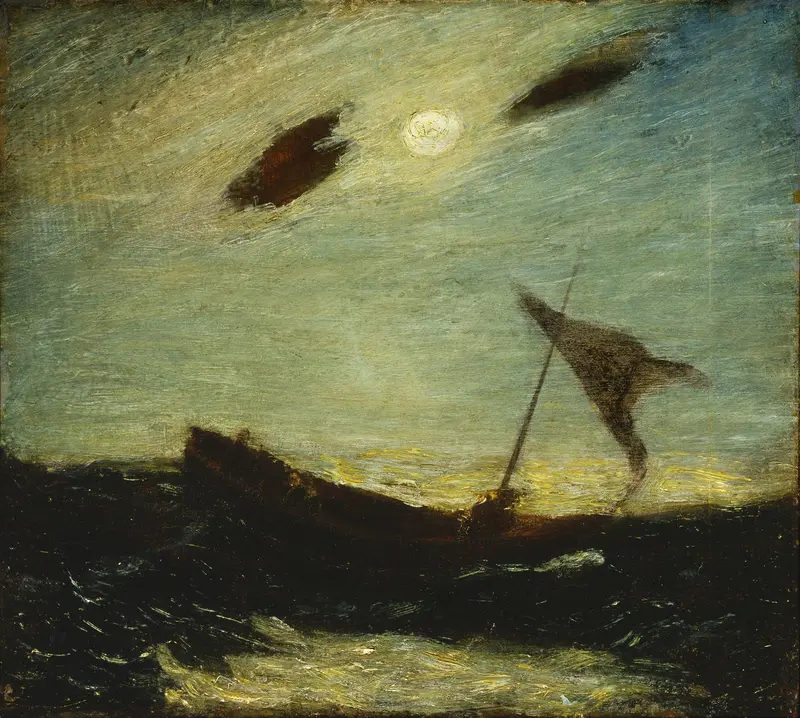
Moonlight
Albert Pinkham Ryder
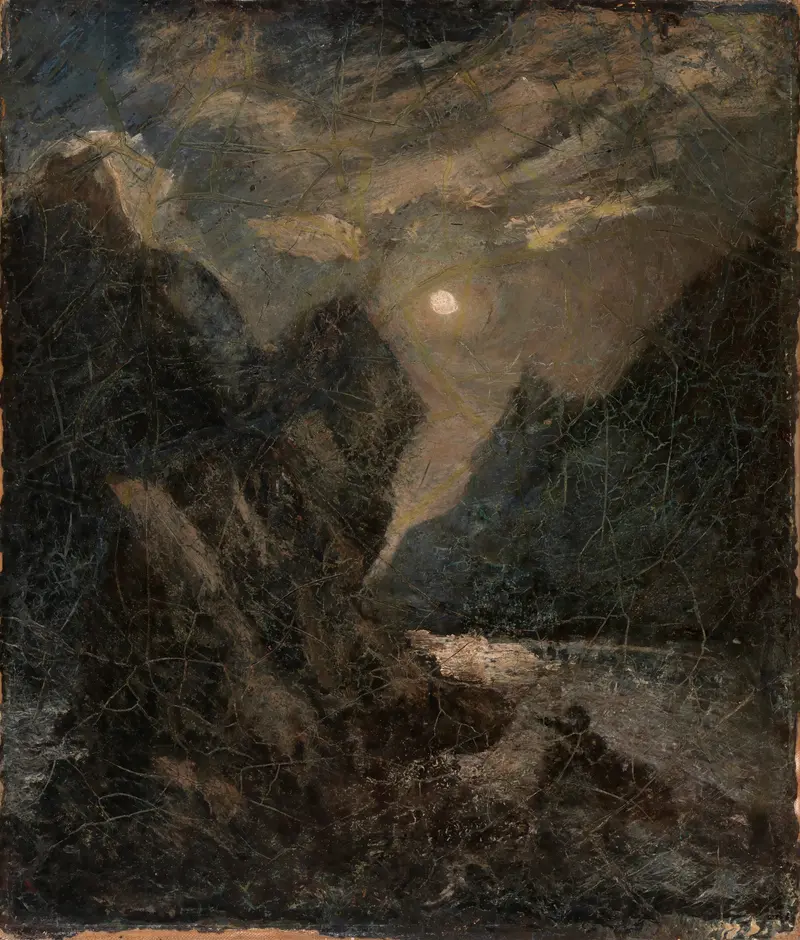
The Lorelei
Albert Pinkham Ryder
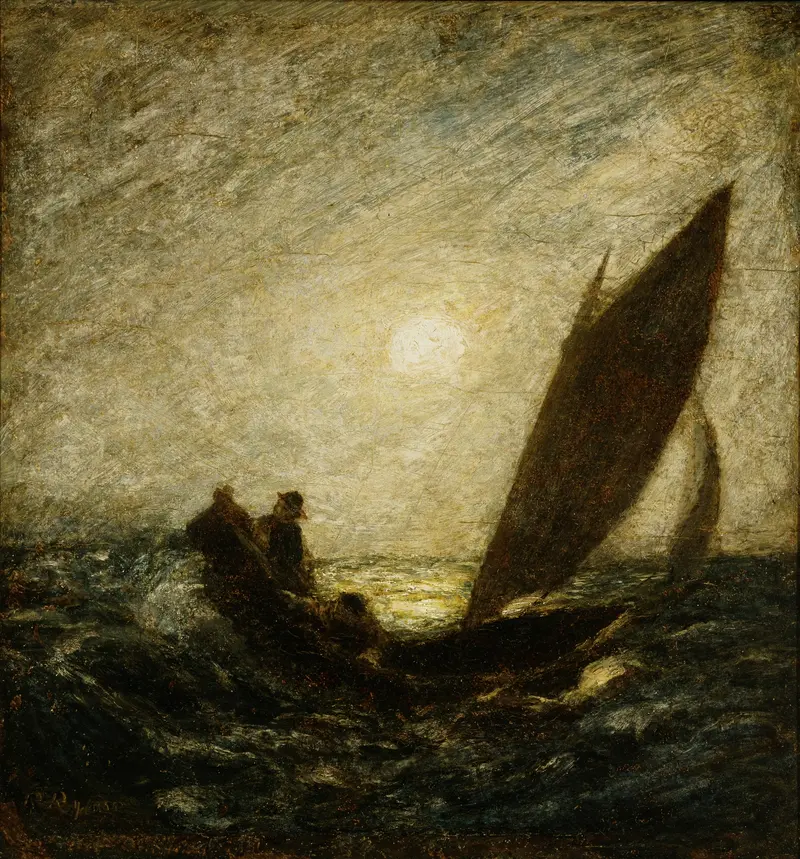
With Sloping Mast And Dipping Prow
Albert Pinkham Ryder
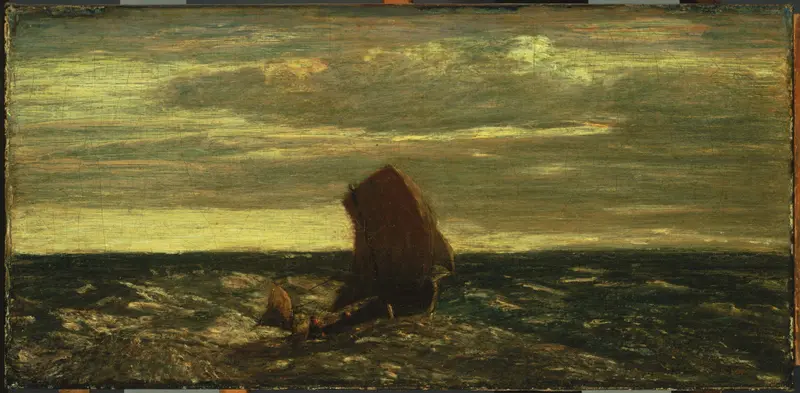
Homeward Bound
Albert Pinkham Ryder
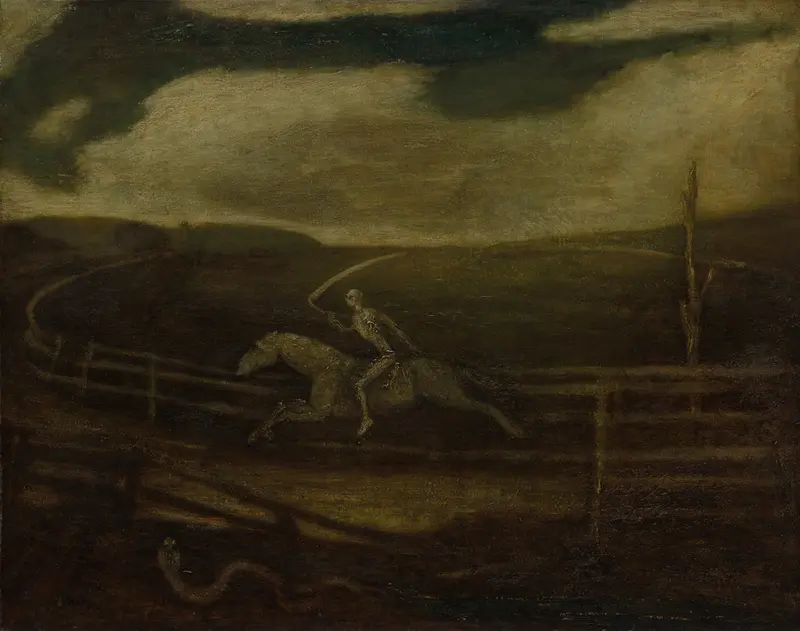
The Race Track (Death on a Pale Horse)
Albert Pinkham Ryder
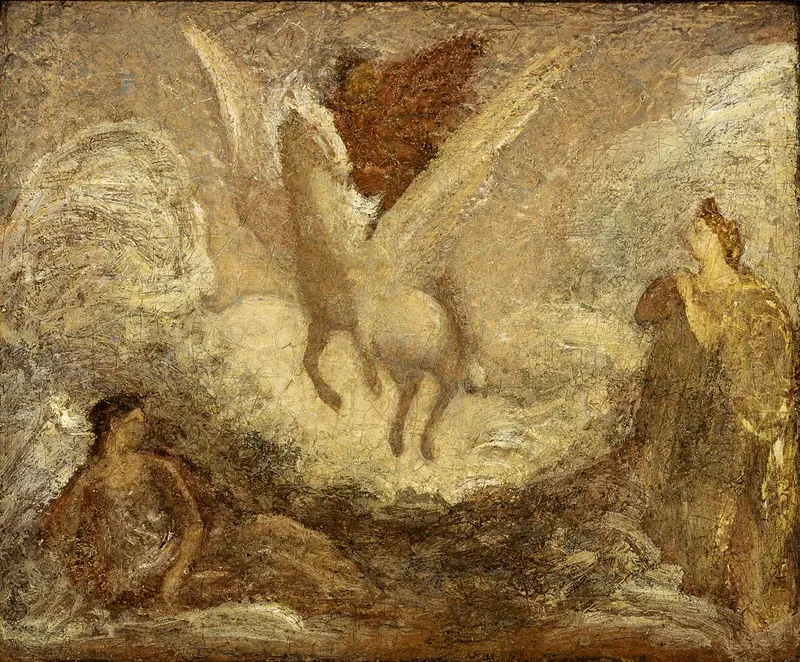
Pegasus Departing
Albert Pinkham Ryder
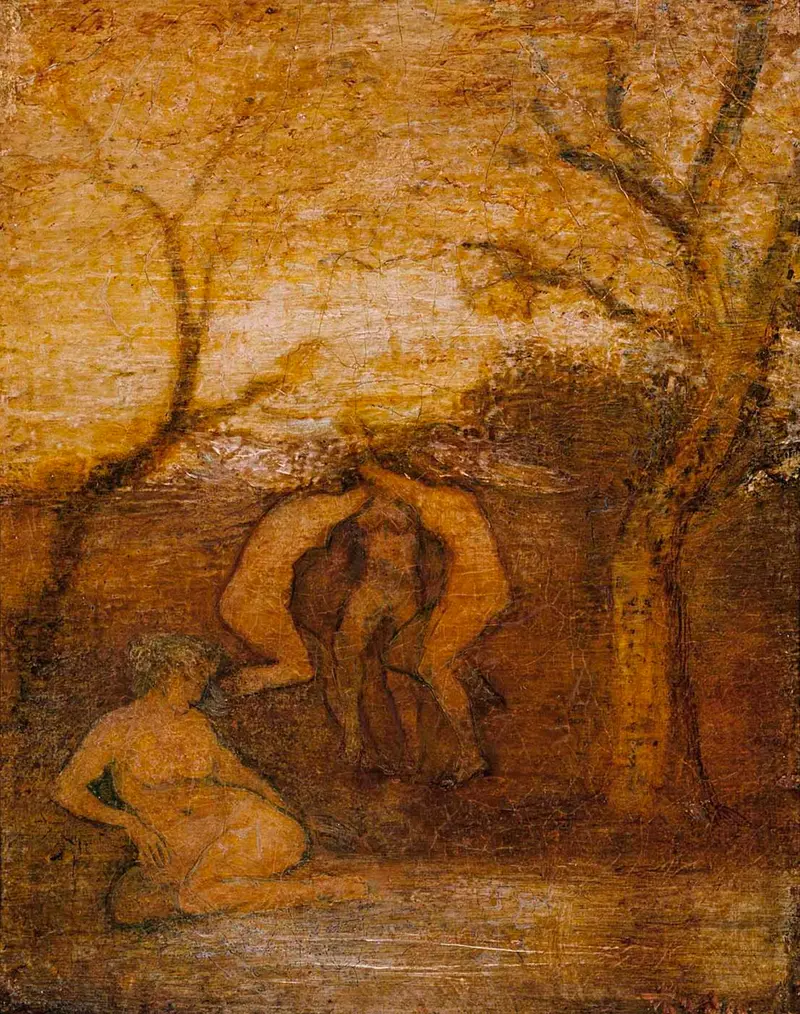
Dancing Dryads
Albert Pinkham Ryder
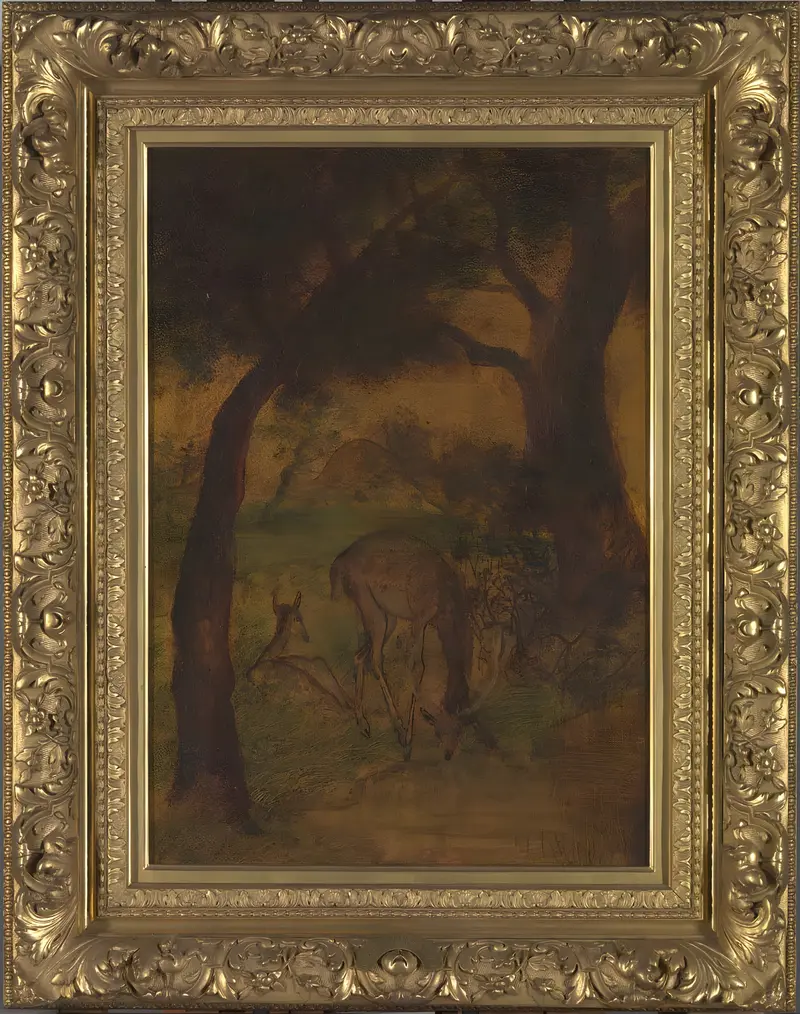
A Stag Drinking
Albert Pinkham Ryder
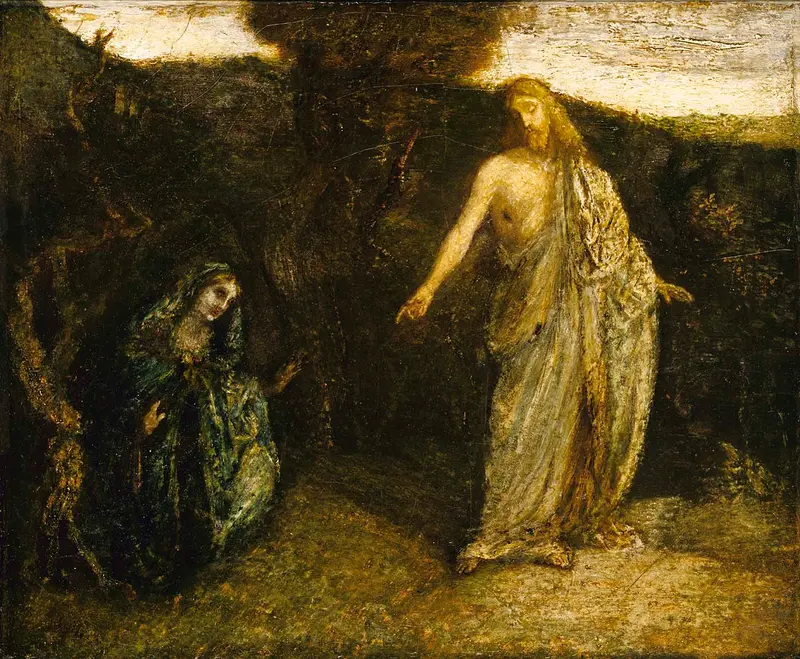
Christ Appearing to Mary
Albert Pinkham Ryder
More Genre Scene Art

Banquet of the Officers of the St George Civic Guard
Frans Hals

Rembrandt and Saskia in the Scene of the Prodigal Son
Rembrandt van Rijn

Bal du moulin de la Galette
Pierre-Auguste Renoir

Quadrille at the Moulin Rouge
Henri de Toulouse-Lautrec

A Burial at Ornans
Gustave Courbet

When Will You Marry?
Paul Gauguin