
Fort Samson, Grandcamp — History & Facts
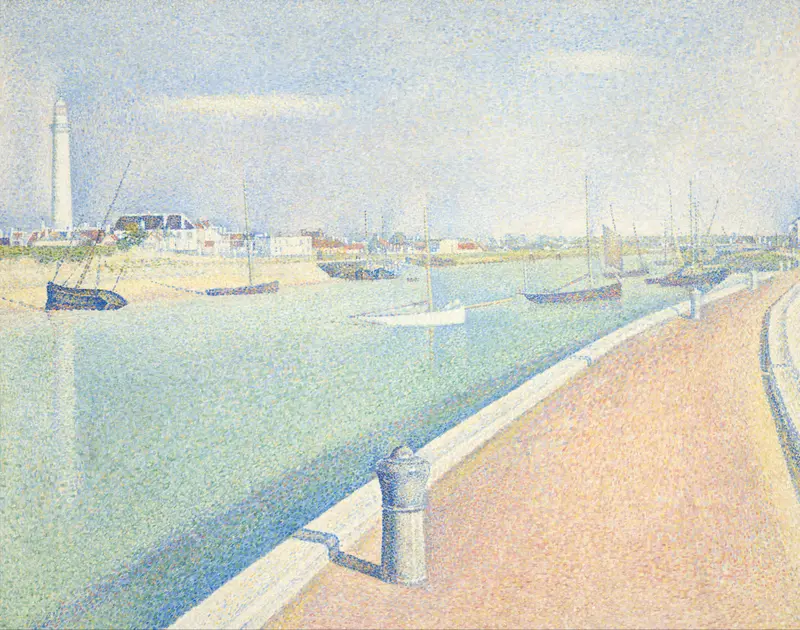
When Georges Seurat painted Fort Samson, Grandcamp in 1885, he was in the midst of a radical experiment that would soon change the course of painting: the development of Pointillism. This work belongs to the small group of seascapes Seurat completed during his stays along the Normandy coast, a period when he was meticulously testing how tiny, separated touches of color could create shimmering light effects. The painting is especially notable because it was made just before Seurat began his monumental A Sunday Afternoon on the Island of La Grande Jatte, and thus captures the artist on the cusp of his greatest innovation. The scene presents the low, rugged silhouette of Fort Samson, a coastal defense built to guard the bay near Grandcamp, set against a luminous sky and a calm, silvered sea.
Seurat captures a moment of stillness: the fort stands solitary, its blocky form anchoring the horizon while the tide laps gently at the shore. The artist’s technique—placing dabs of blue, green, and ochre side by side—creates a vibrating surface that mimics the shifting light of late afternoon. The absence of human figures focuses the viewer’s attention on the interaction between land, water, and sky, a contrast to the bustling scenes of leisure painted by his Impressionist contemporaries like Claude Monet in his Normandy coast views.
Here, Seurat’s scientific approach to color and form gives the landscape a quiet, contemplative presence. Fort Samson, Grandcamp was likely painted en plein air, a practice Seurat adopted from the Impressionists but transformed through his methodical touch. The painting’s early provenance is not fully documented, but it is typical of the small panels Seurat produced during his Normandy campaigns, many of which remained in his studio until his death in 1891. Today, the work is recognized as a key step in Seurat’s journey toward Neo-Impressionism, valued for its experimental brushwork and its role in bridging the gap between Impressionism and the new, systematic art of color.
It now hangs in the Museo Nacional Thyssen-Bornemisza in Madrid, where it invites viewers to reflect on the origins of modern painting.
More Artworks by Georges Seurat
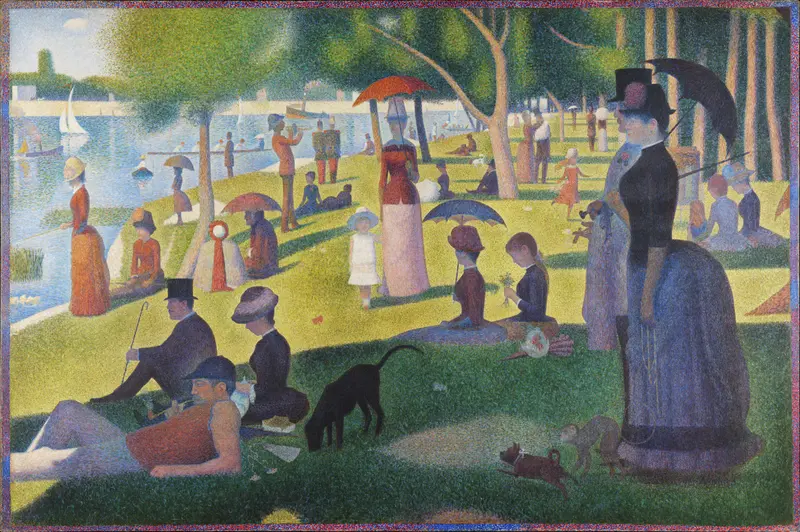
A Sunday Afternoon on the Island of La Grande Jatte
Georges Seurat
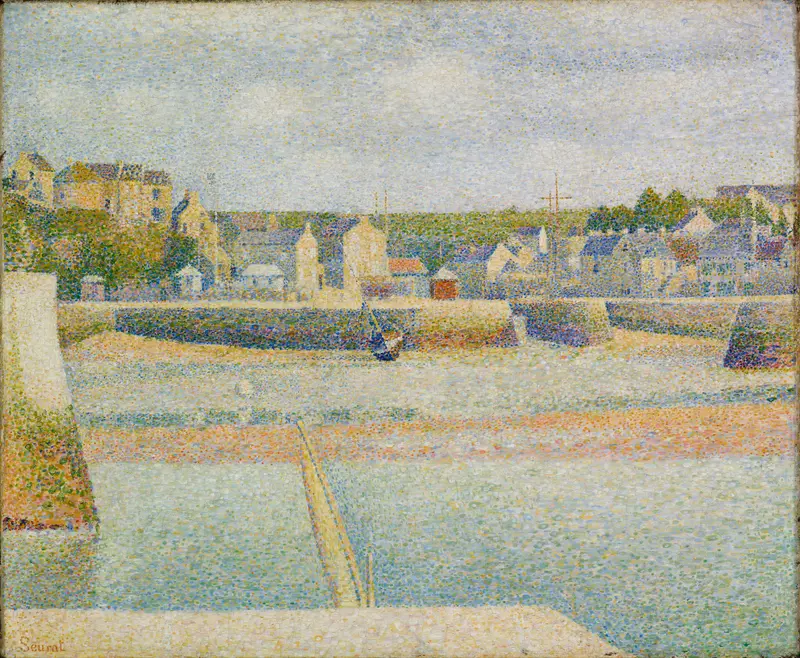
Port-en-Bessin, The Outer Harbor (Low Tide)
Georges Seurat
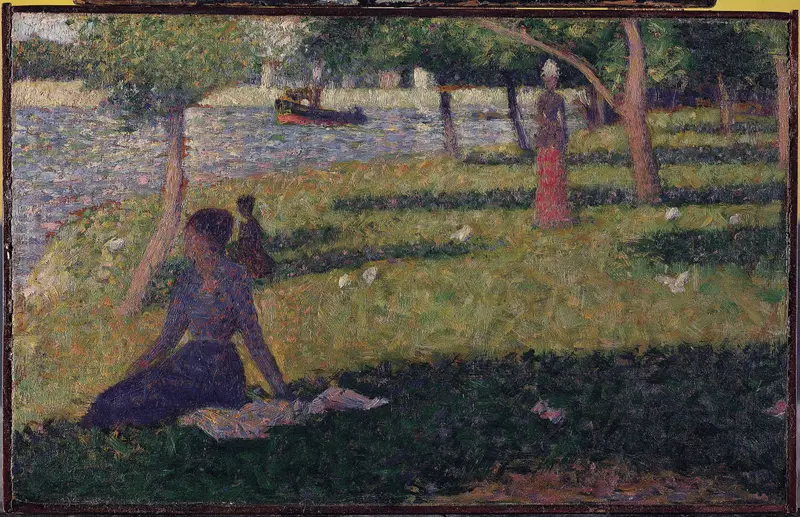
Étude pour ‘La Grande Jatte’ (Study for ‘La Grande Jatte’)
Georges Seurat
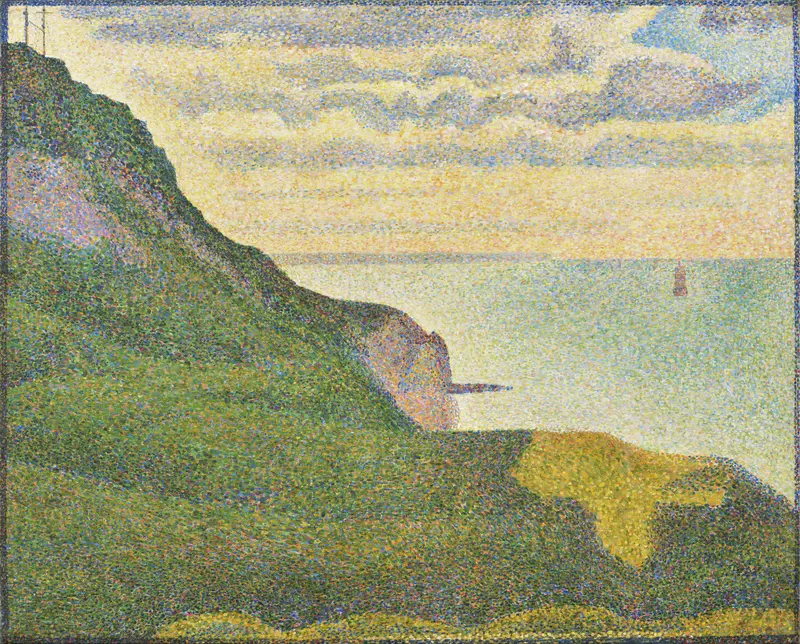
Seascape at Port-en-Bessin,Normandy
Georges Seurat
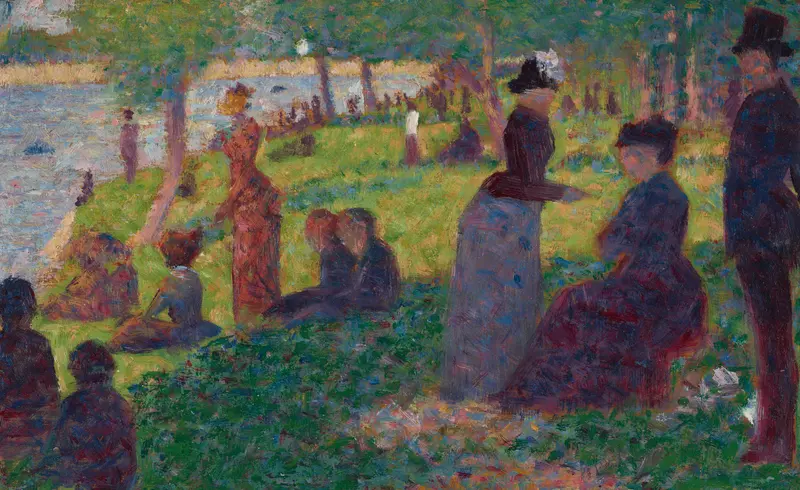
Oil Sketch for "A Sunday on La Grande Jatte — 1884"
Georges Seurat
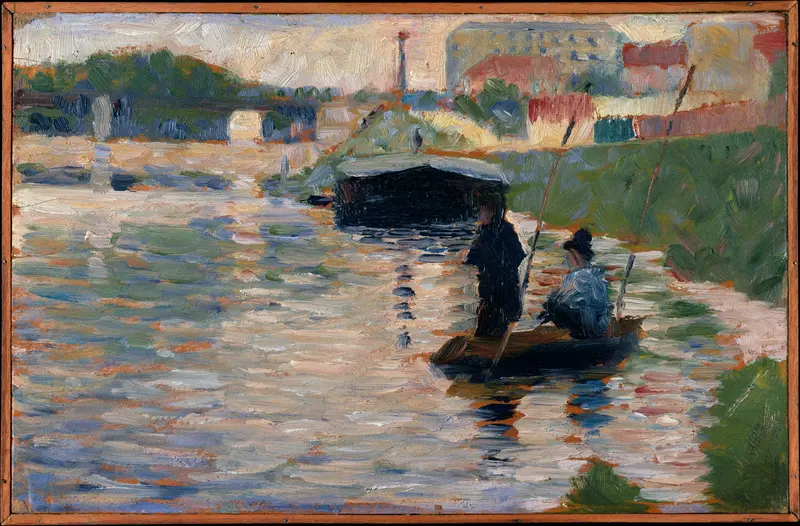
View of the Seine
Georges Seurat
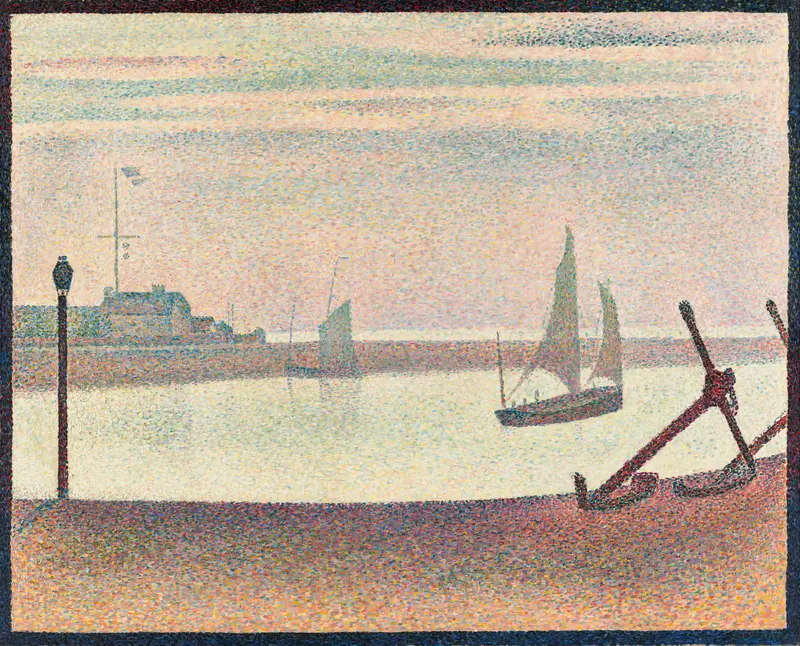
The Channel at Gravelines, Evening
Georges Seurat
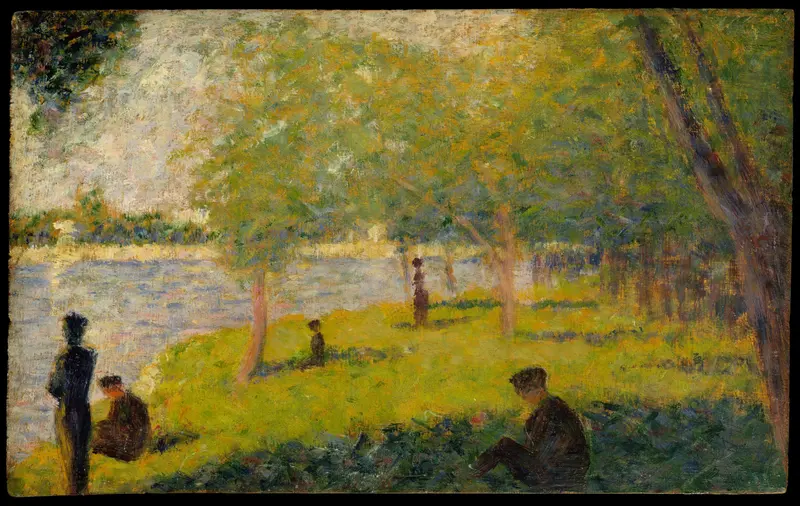
Study for ‘A Sunday on La Grande Jatte’
Georges Seurat
Study for A Sunday on La Grande Jatte
Georges Seurat
The Channel of Gravelines, Petit Fort Philippe
Georges Seurat





