
Fregio di san giovanni a parma — History & Facts
What first draws the eye in this fragment is the lively procession of putti—those plump, mischievous children who seem to animate so much of the Italian Renaissance. Here, they bustle through a shallow space, carrying garlands, torches, and incense, their gestures caught mid-action. The contrast of their glowing, rounded forms against a dark, receding background gives them a sculptural presence, as if they might tumble out of the frieze at any moment.
Each putto is absorbed in his own task: one steadies a garland, another raises a flaming torch, a third swings a censer. The play of light across their bodies, and the careful modeling of flesh and curls, speaks to the artist’s delight in the physicality and energy of youth. This work belongs to the early 16th century, a period when artists like Antonio da Correggio were transforming the decoration of sacred spaces in Italy. Painted around 1524, this frieze would have formed part of a larger decorative scheme—perhaps encircling a choir or chapel, as was common in Parma’s churches.
Such friezes were both ornament and narrative, linking the heavens above with the rituals below, and their playful putti often stood in for angels or the spirit of celebration. The fragmentary state of Fregio di san giovanni a parma reminds us how much Renaissance art was tied to its architectural setting, and how often time has left us only glimpses of the original splendor. The restless movement and luminous color still invite the viewer to imagine the music and ceremony these figures once accompanied.
More Artworks by Antonio da Correggio

Virgin and Child with the Young Saint John the Baptist
Antonio da Correggio
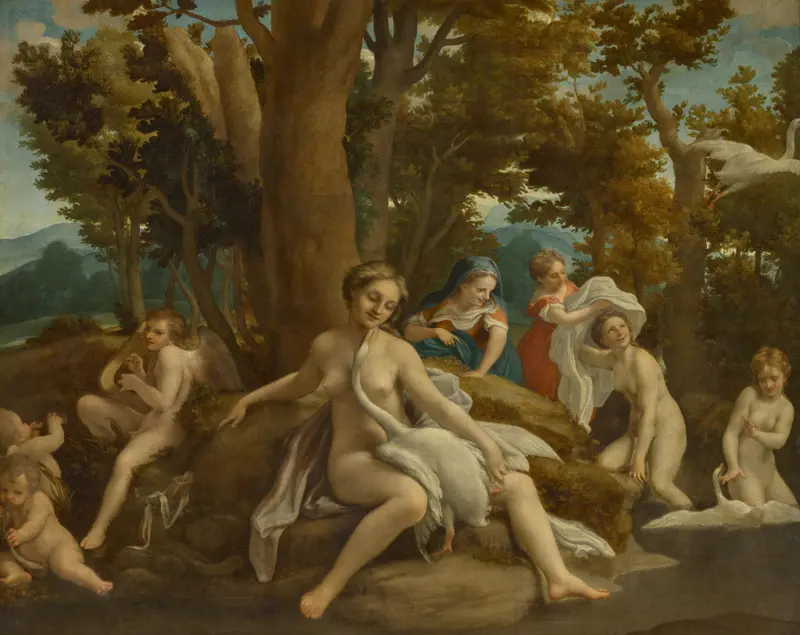
Leda and the Swan
Antonio da Correggio
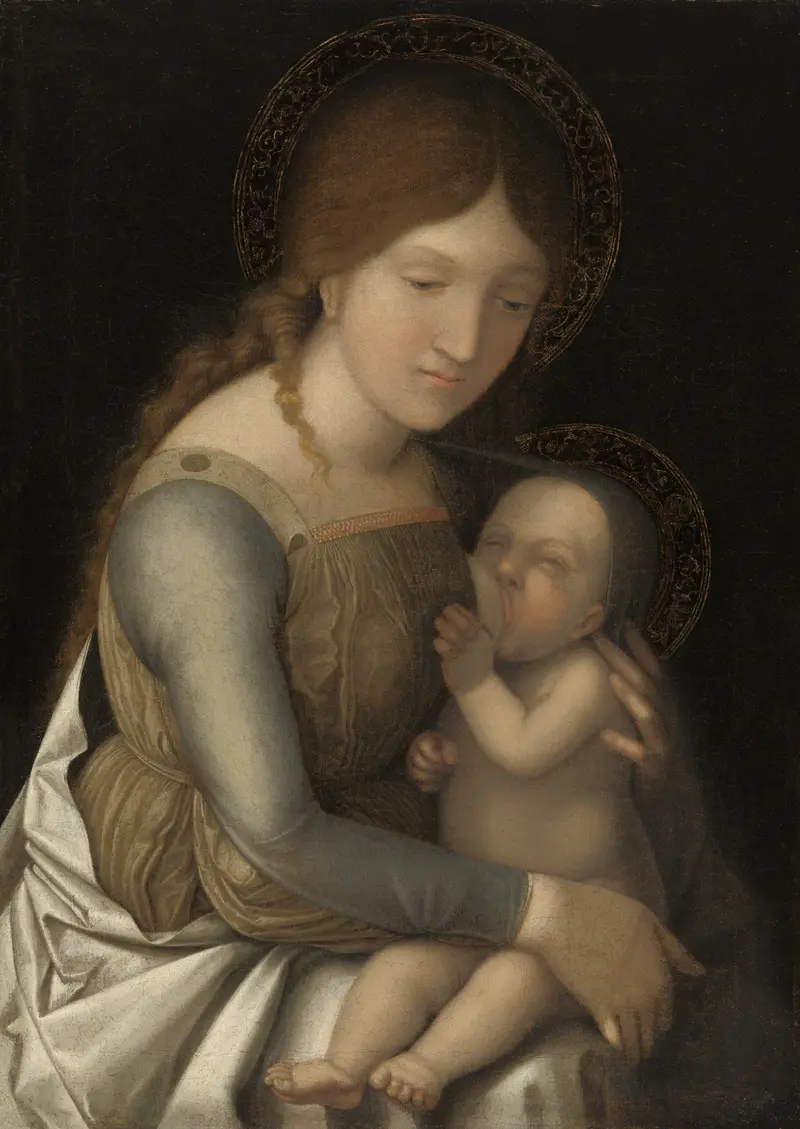
Madonna and Child
Antonio da Correggio
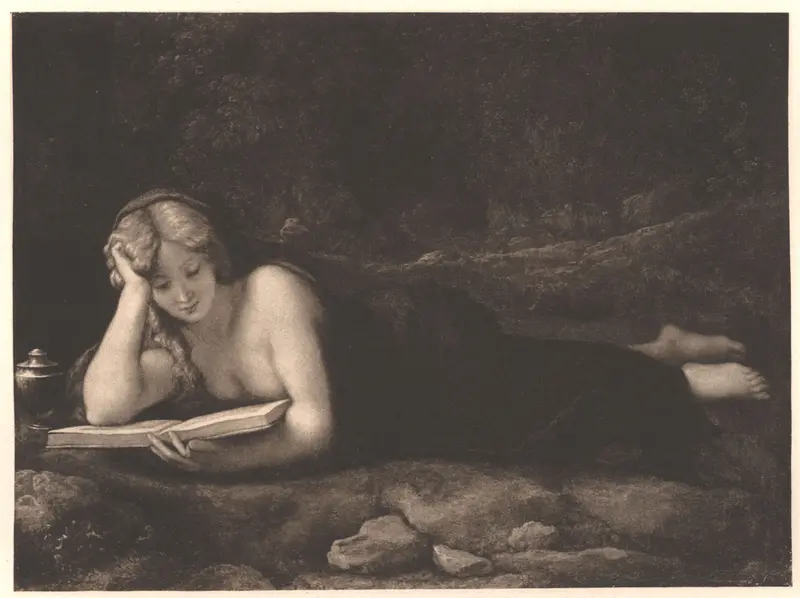
Penitent Magdalene
Antonio da Correggio
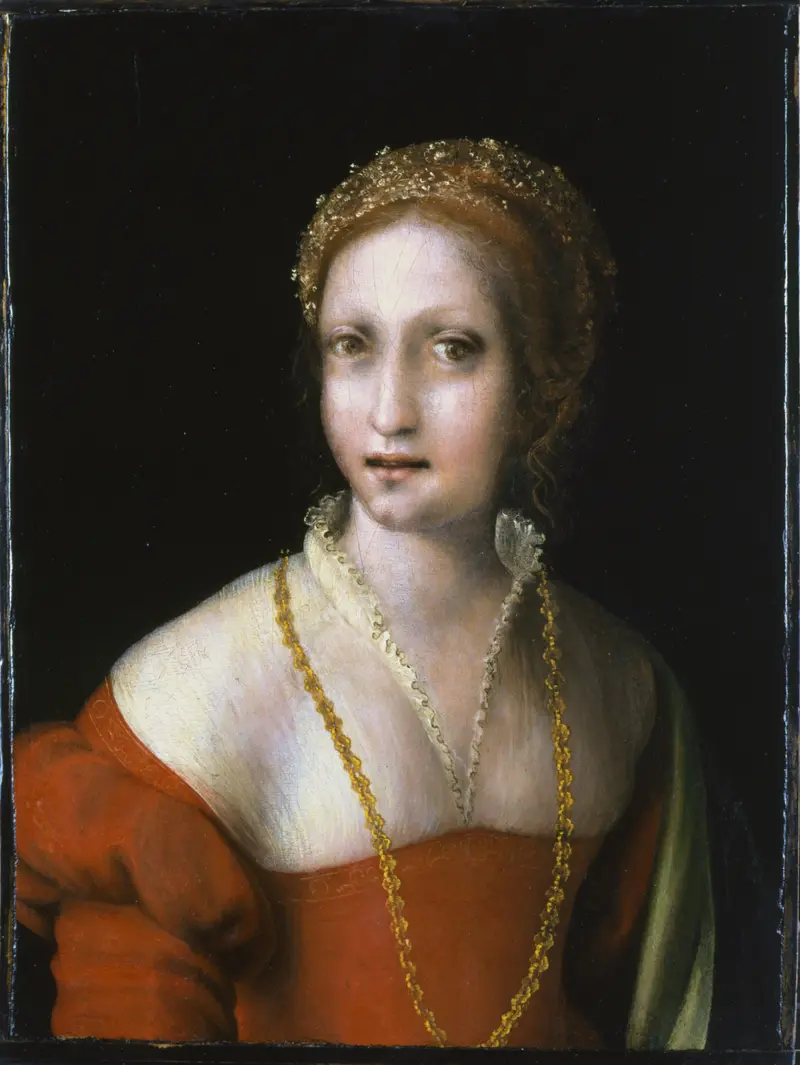
Portrait of a Young Girl
Antonio da Correggio
Christ in the Temple
Antonio da Correggio

Nativity
Antonio da Correggio
Saints Peter, Martha, Mary Magdalen, and Leonard
Antonio da Correggio
The Loves of Jupiter
Antonio da Correggio

Study for the "Madonna della Scodella" [recto]
Antonio da Correggio



