
From Sct. Jørgensbjerg near Roskilde. Grey Winter’s Day. — History & Facts
A hush seems to settle over the scene in From Sct. Jørgensbjerg near Roskilde. Grey Winter’s Day, as if the world itself has paused beneath the weight of the sky.
The viewer’s gaze is drawn first to the winding track, its muddy ruts leading the eye past a tumble of stones toward the cluster of houses huddled beneath bare, twisting trees. The roofs, heavy with snow, seem to sag under the season’s burden, while the trees—some still clutching a few stubborn leaves—stand as dark sentinels against the pale, clouded light. The palette is restrained, almost austere: muted browns, greys, and ochres, with only the faintest warmth in the sky and the last autumn leaves.
Every brushstroke is brisk, almost impatient, capturing the fleeting, unsettled mood of a winter’s day that is neither storm nor calm, but something quietly in-between. Painted in 1894, this work by Albert Gottschalk belongs to a period when Danish artists were turning their gaze from grand, historical subjects to the quiet poetry of everyday landscapes. Such paintings were rarely made for grand salons or royal patrons; instead, they found homes with collectors who cherished the honest, unvarnished beauty of their own countryside. The scene near Roskilde, now preserved in the collection of davidmus.dk, is a testament to that shift: history has kept few traces of its making, but the painting itself invites us to linger, to follow the muddy road, and to imagine the cold air and muffled sounds of a Danish winter afternoon.
More Artworks by Albert Gottschalk
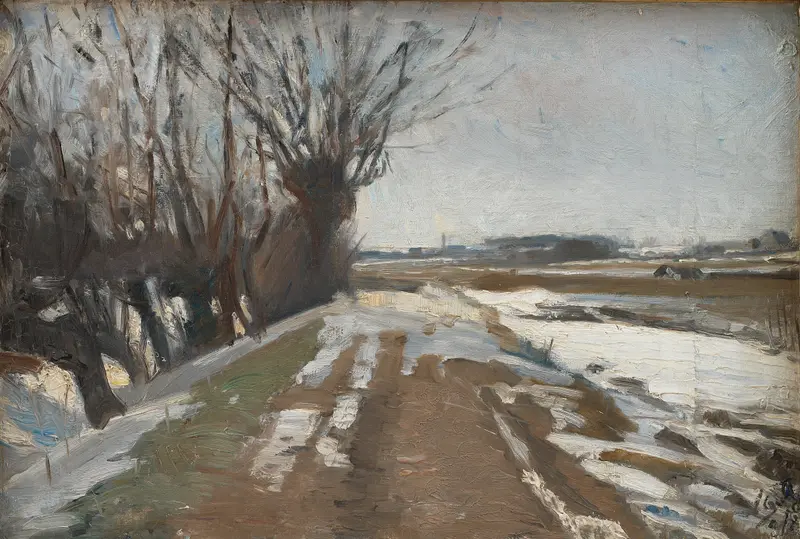
Winter Landscape. Utterslev near Copenhagen
Albert Gottschalk
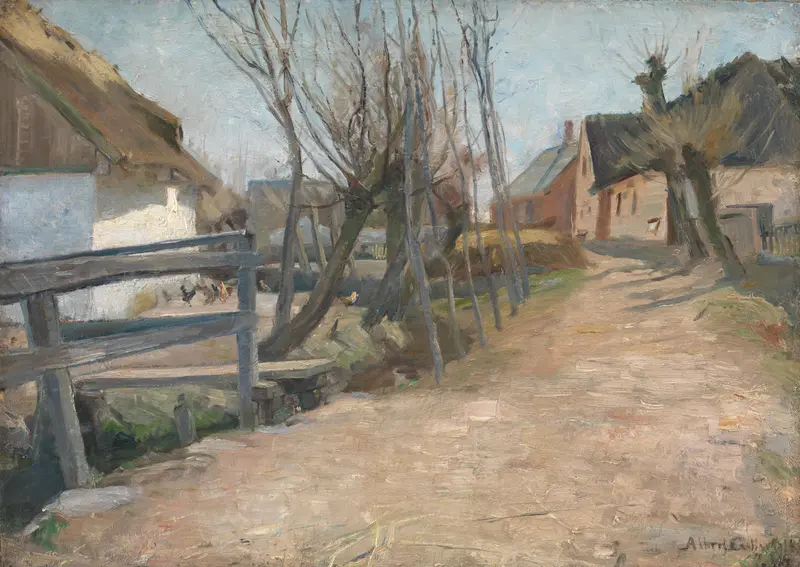
Tidlig forårsdag i Glostrup
Albert Gottschalk
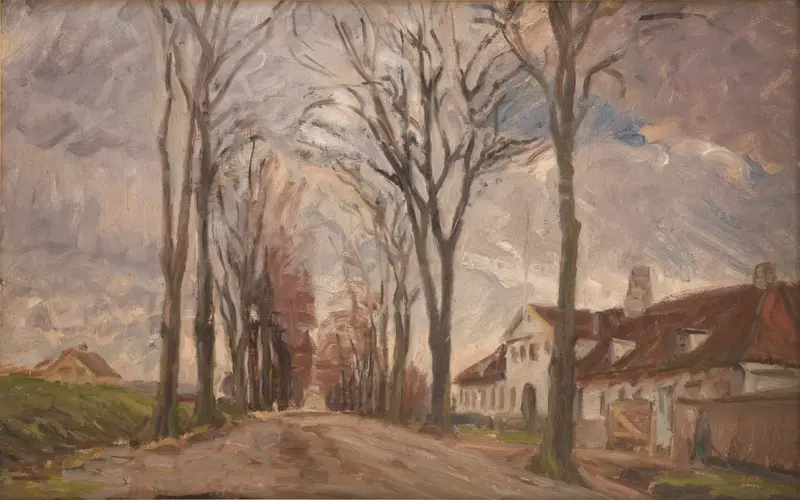
Lyngbyvejen ved Vintappergården
Albert Gottschalk
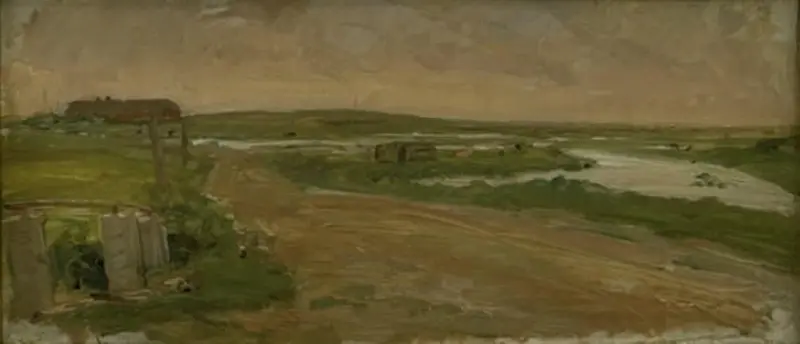
Vestjysk landskab. Holmsland
Albert Gottschalk
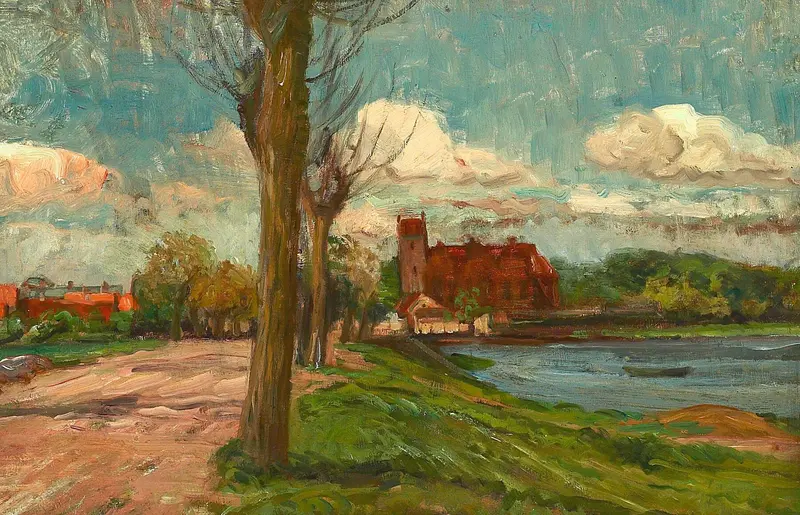
A road leading to a small town with a church.
Albert Gottschalk
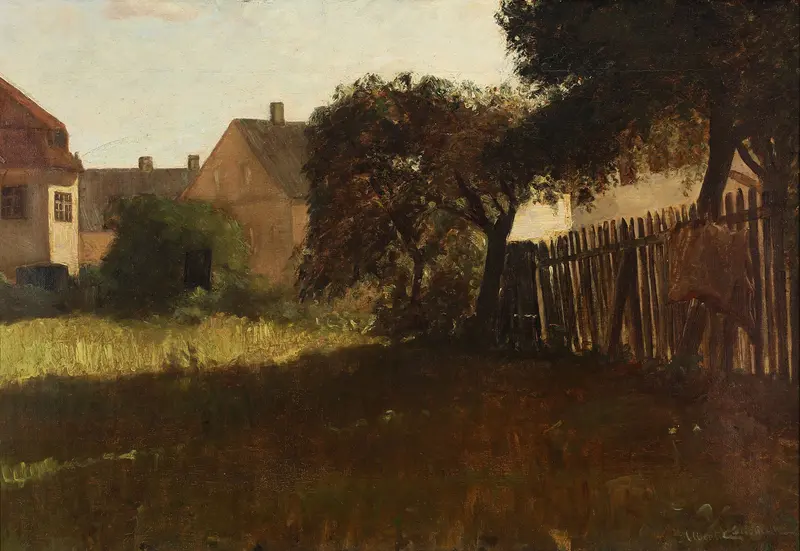
A summer day in a Garden in Vesterbro, Copenhagen
Albert Gottschalk
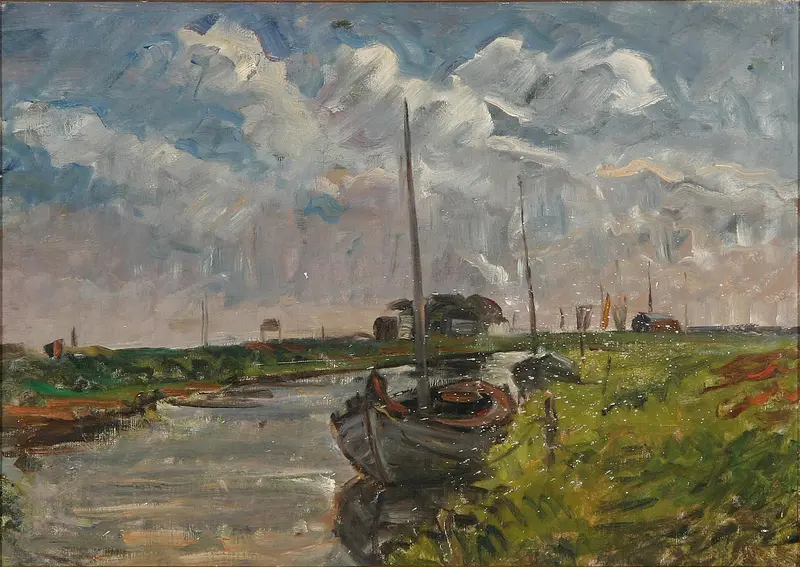
A canal with a boat.
Albert Gottschalk
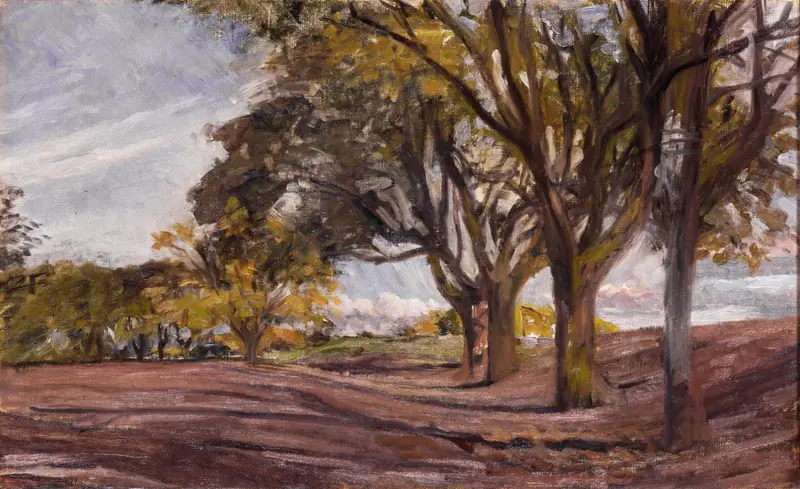
Chestnut Avenue at the Hermitage.
Albert Gottschalk
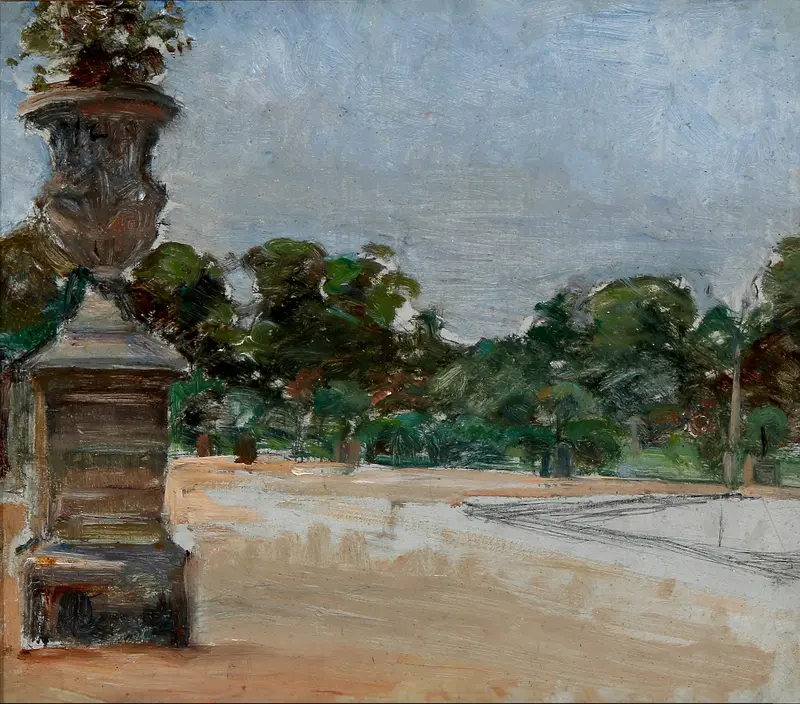
From the Tuileries Garden in Paris
Albert Gottschalk
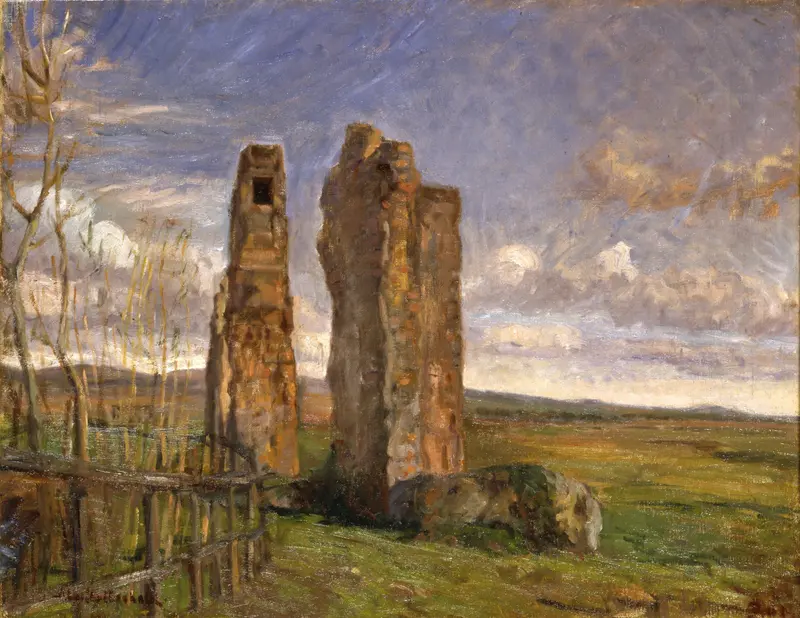
Ruins in Campagna
Albert Gottschalk
More Landscape Art

The Starry Night
Vincent van Gogh

View of Delft
Johannes Vermeer

Water Lilies
Claude Monet

The Grand Canal, Venice, looking north-west from the Ca' Corner to the Ca' Contarini degli Scrigni, with the campanile of Santa Maria della Carità
Canaletto

Windsor Castle
Canaletto

The Grand Canal looking North-East from the Palazzo Dolfin-Manin to the Rialto Bridge
Canaletto