
Futamigaura, the Wedded Rocks — History & Facts
Can paint confess what words never could? In Futamigaura, the Wedded Rocks, the silence of the landscape whispers the unspoken bonds of nature and tradition, inviting us to explore the legacy of both. Look to the left at the twin rocks, steadfast and entwined, rising from the tumultuous sea. The artist uses rich, textured brushstrokes to convey the ruggedness of the stones while softening the backdrop with gentle washes of color. Notice how the light cascades over the waves, shimmering in hues of blue and gold, creating a dance of reflection that captures the essence of the moment.
The composition centers around these enduring symbols of love and commitment, framed by a tranquil sky where clouds drift like whispered secrets. Beneath the surface, the work grapples with contrasts: the harshness of the rocky outcrops against the serenity of the surrounding water, the permanence of the rocks versus the fleeting nature of the waves. This duality evokes a deep sense of reverence for tradition amidst the ever-changing tides of life. The vibrant colors hint at the emotional weight of cultural heritage, illustrating how the natural world can embody our most cherished legacies. Created in 1896, during a time when Japan was navigating the complexities of modernization and the preservation of its cultural identity, this painting emerged from Kobayashi Kiyochika's desire to capture the essence of his homeland.
The artist, known for his mastery of ukiyo-e, embraced both traditional themes and contemporary influences, reflecting the tensions and transitions of his era.
More Artworks by Kobayashi Kiyochika
Browse all →
Thunder and Lightning at Oumaya Bridge
Kobayashi Kiyochika

Shinkyō, Sacred Bridge at Nikkō
Kobayashi Kiyochika

Daybreak at Shrine, Kanda
Kobayashi Kiyochika

The Great Fire at Ryōgoku Bridge, Viewed from Asakusa Bridge on the 26th of January, 1881
Kobayashi Kiyochika

The Moon At Shinagawa
Kobayashi Kiyochika
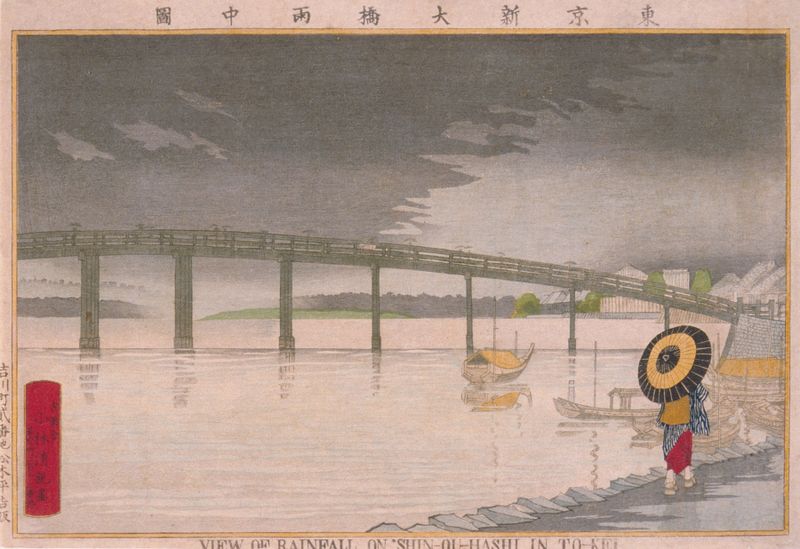
View of Rainfall on Shin-Ou-hashi in To-kei
Kobayashi Kiyochika

Evening at Tōshōgū Shrine, Ueno, Tokyo
Kobayashi Kiyochika

Snow at Ochanomizu
Kobayashi Kiyochika
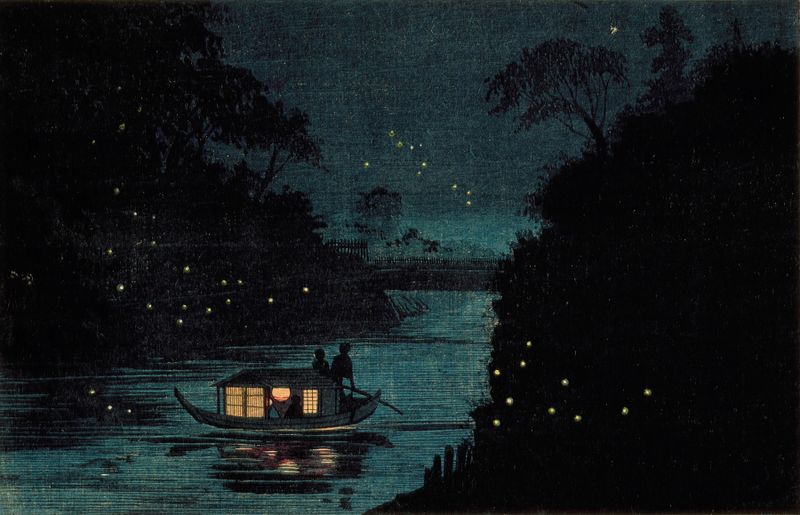
Fireflies at Ochanomizu
Kobayashi Kiyochika
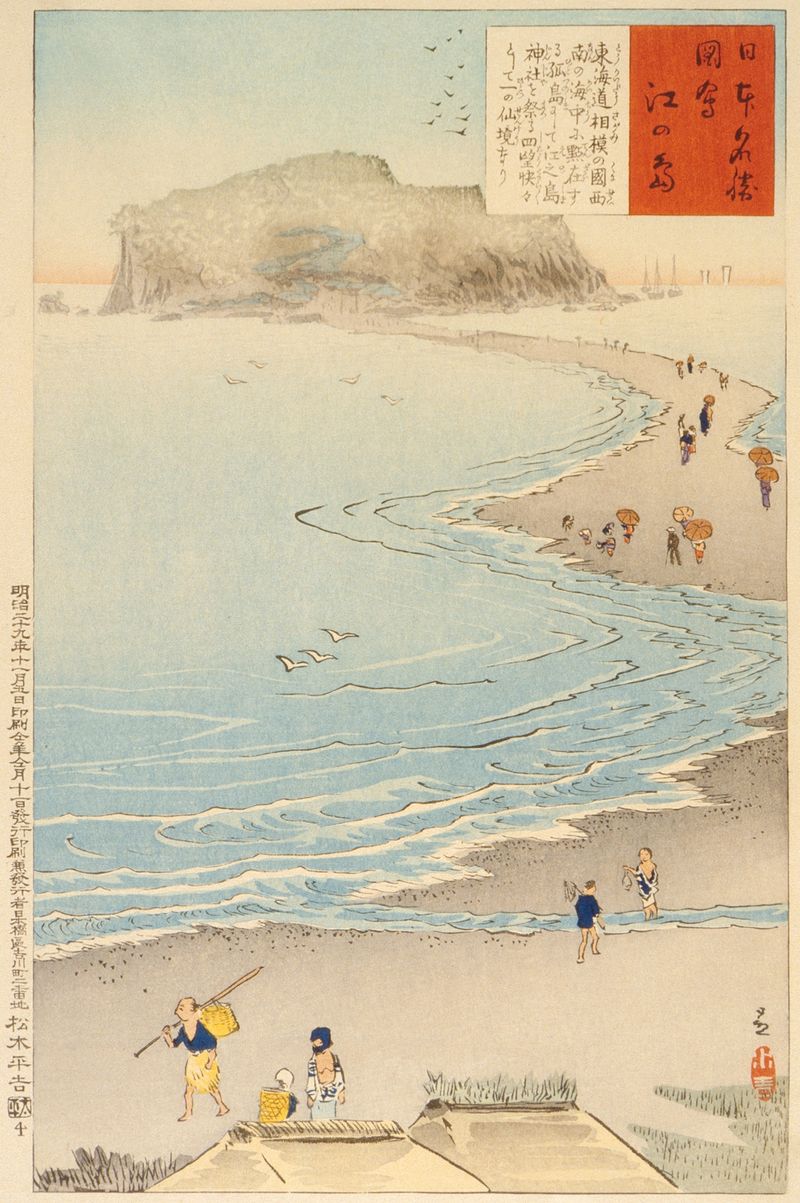
The Island Enoshima
Kobayashi Kiyochika





