
Giovanni-bellini-crucifixion-ca-1475-corsini-collection-florence — History & Facts
When Giovanni Bellini painted Crucifixion around 1475, he was entering a period of remarkable innovation, and this small panel is one of the earliest known treatments of the subject by the Venetian master. What makes this work particularly fascinating is that it marks a shift in Venetian painting: Bellini’s use of landscape and emotion would soon influence an entire generation, yet here we see him experimenting, still in dialogue with the traditions of his father, Jacopo, and brother-in-law, Andrea Mantegna. The painting’s provenance is also intriguing—long part of the Corsini collection in Florence, it has rarely left private hands, making public viewing a rarity. Bellini chooses the moment after Christ’s death, the sky darkened, the landscape stretching into a distant, melancholy horizon.
The cross stands stark against the pale sky, Christ’s body rendered with a delicacy that suggests both suffering and serenity. At the foot, the Virgin Mary collapses in grief, supported by Saint John, while Mary Magdalene kneels in desperate prayer. The rocky terrain and winding road draw the viewer’s eye into the background, where tiny figures and a walled city evoke Jerusalem.
Unlike the crowded drama of Mantegna’s versions, Bellini’s composition is spare, inviting contemplation rather than spectacle; the emptiness around the cross amplifies the sense of loss. The precise origins of Crucifixion are still debated—no commission documents survive, and its early history is obscure. It likely served as a private devotional image, intended for personal meditation rather than public display. Over centuries, the painting passed quietly through the hands of Florentine collectors, eventually becoming a highlight of the Corsini collection.
Today, it remains in Florence, a testament to Bellini’s early genius and a key work in understanding the evolution of Venetian painting in the late fifteenth century.
More Artworks by Giovanni Bellini
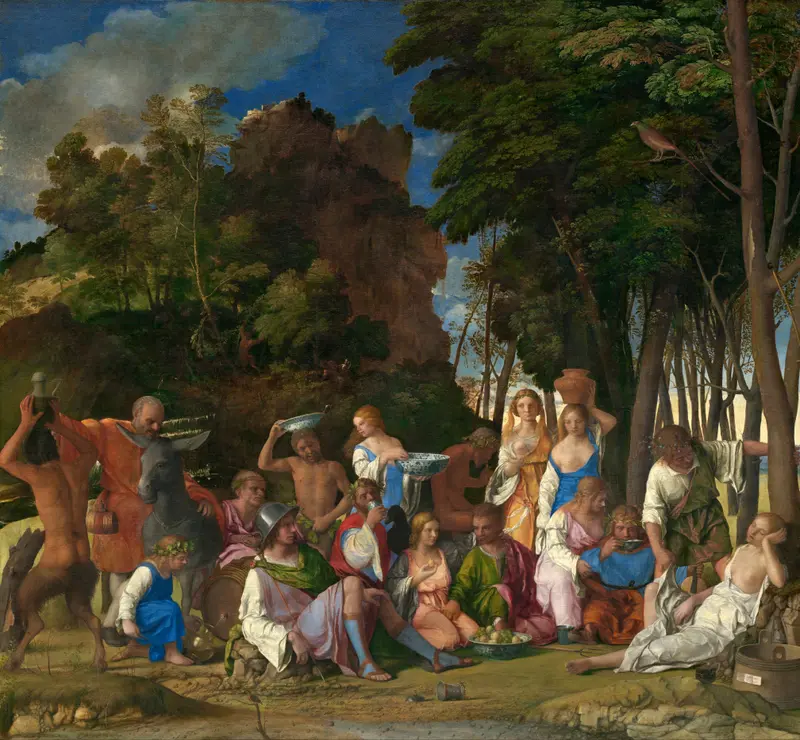
The Feast of the Gods
Giovanni Bellini

Madonna and Child enthroned with Saints and Angels
Giovanni Bellini
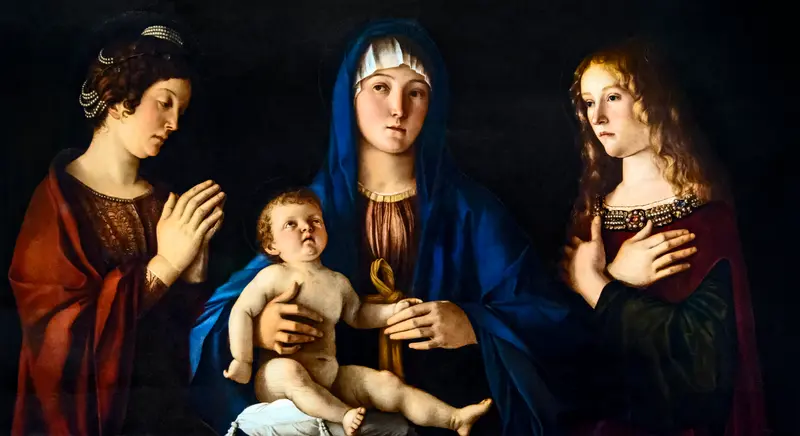
Madonna and Child between Saints Catherine and Mary Magdalene
Giovanni Bellini
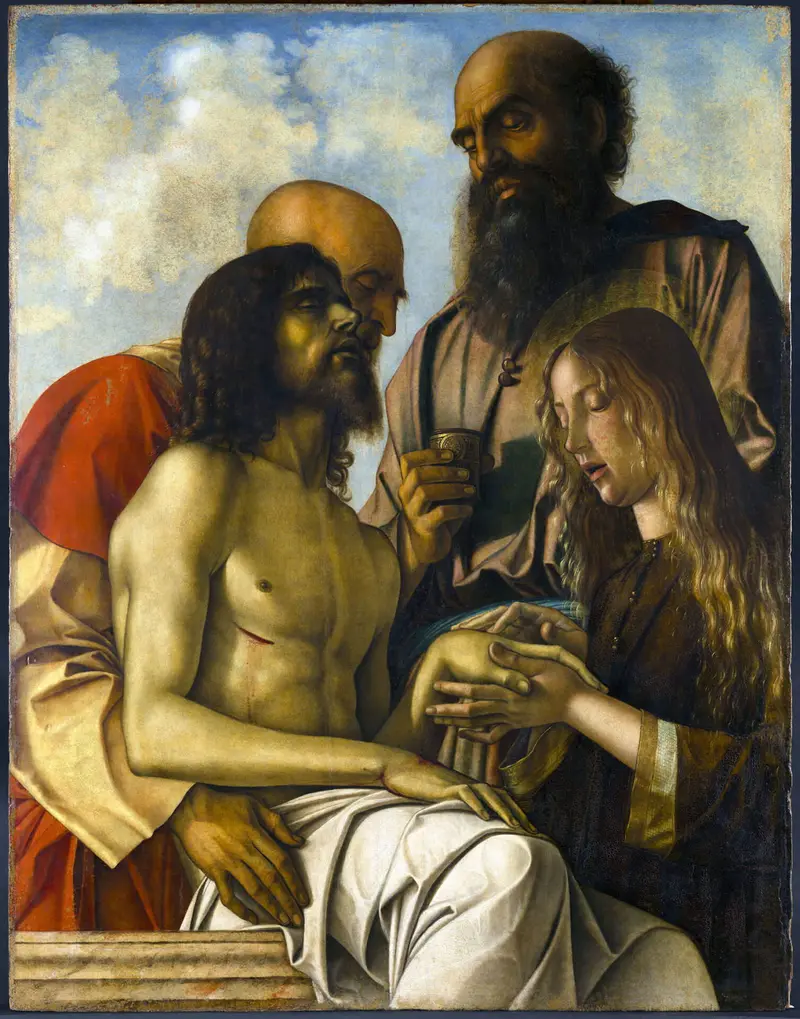
Lamentation over the Dead Christ
Giovanni Bellini
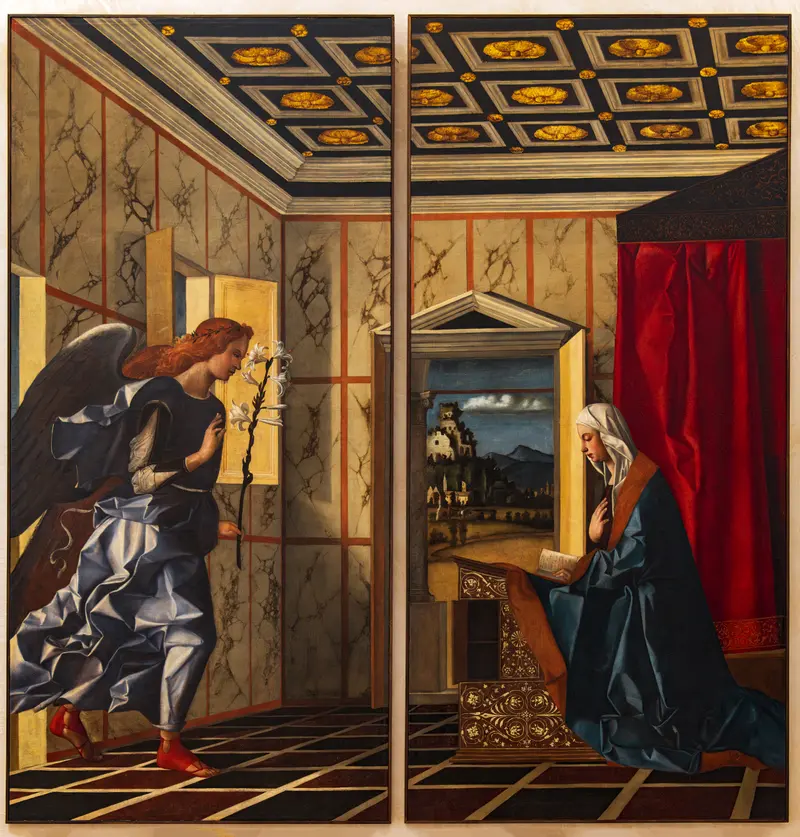
Annunciation
Giovanni Bellini
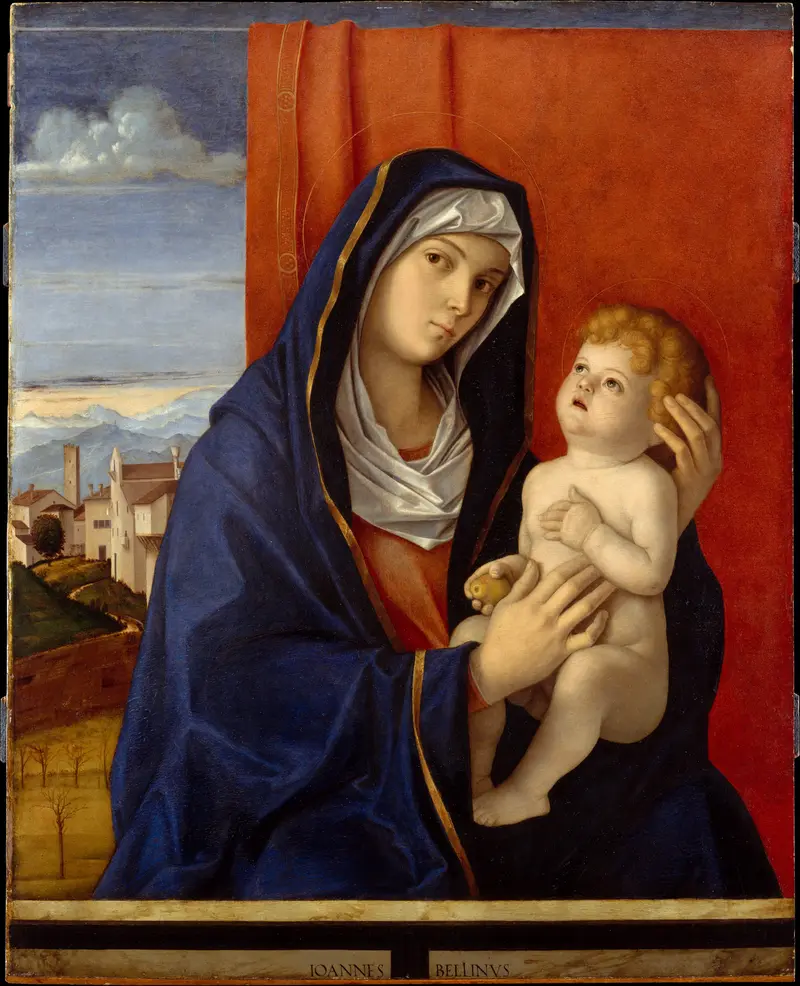
Madonna and Child
Giovanni Bellini
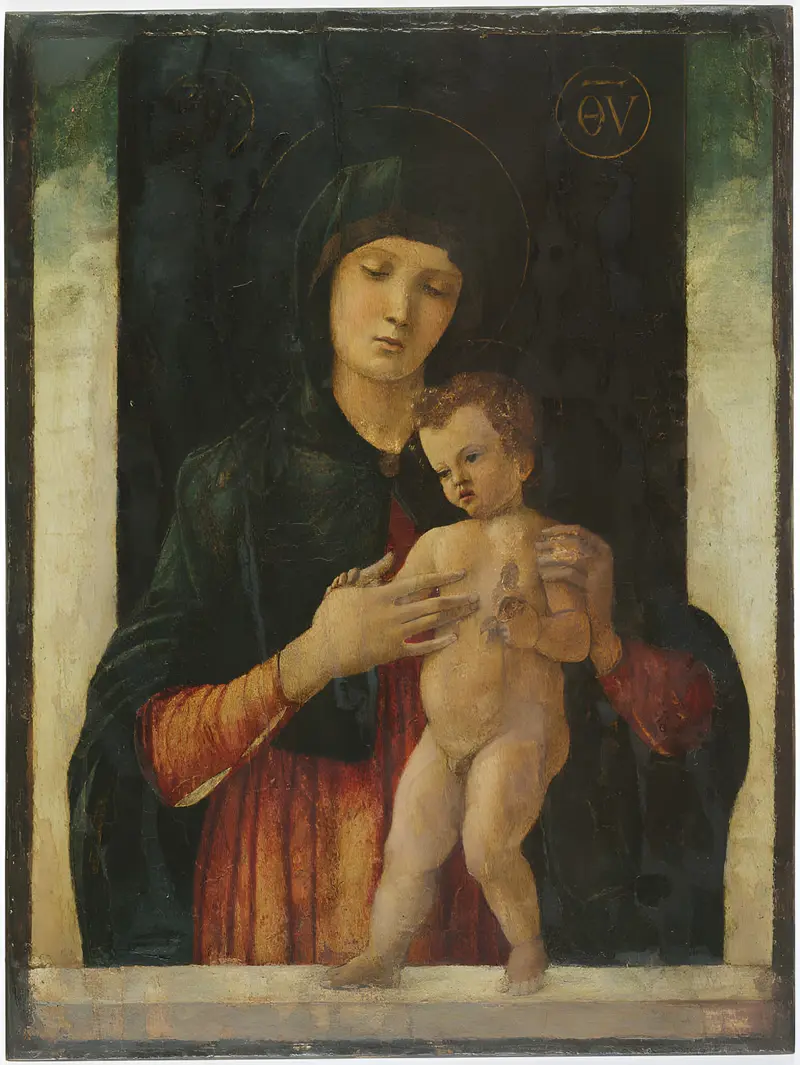
The Virgin and Child
Giovanni Bellini
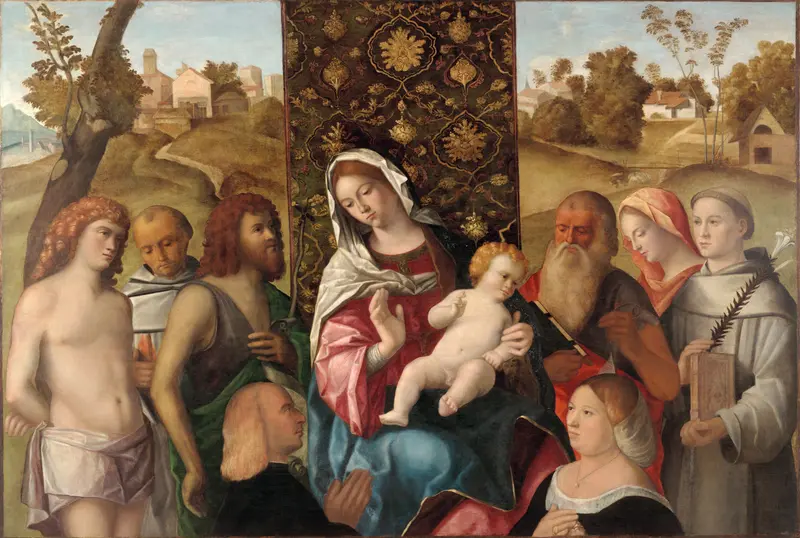
Virgin and Child with Saints Sebastian, Francis, John the Baptist, Jerome, an unidentified female saint, Saint Anthony of Padua and two donors
Giovanni Bellini
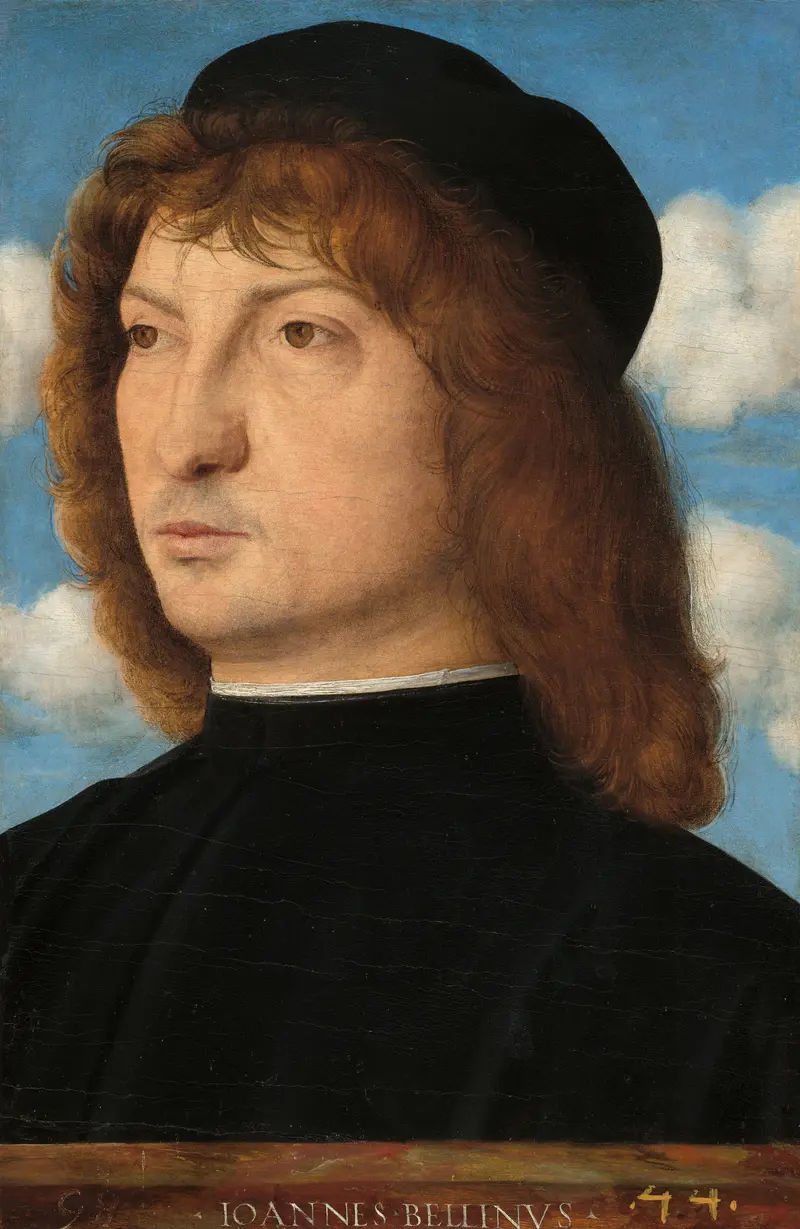
Portrait of a Venetian Gentleman
Giovanni Bellini
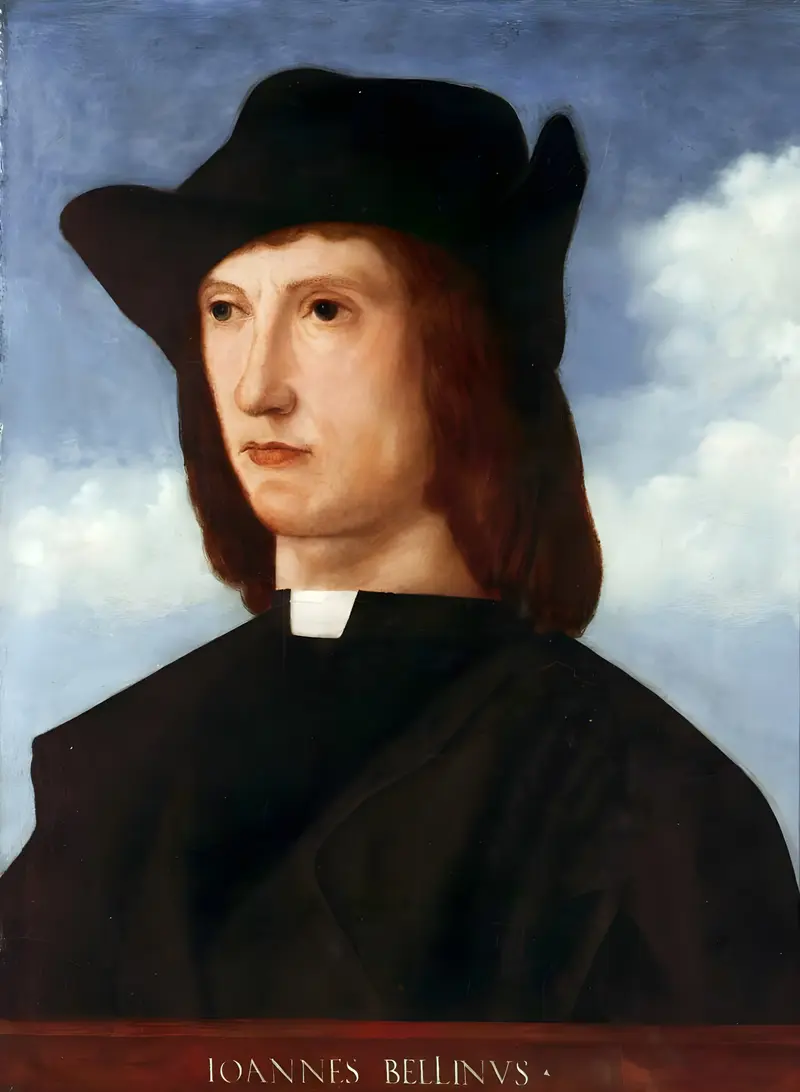
Portrait of a Young Man
Giovanni Bellini





