
Gorge of Royat — History & Facts
Could beauty survive in a century of chaos? In Gorge of Royat, the answer unfolds between the verdant cliffs and the gentle flow of water, capturing a fleeting moment of serenity within the tumult of existence. Look to the center of the canvas, where a meandering river glimmers under the soft caress of light. Notice how the artist employs a delicate palette of greens and blues, drawing your gaze into the lush foliage that embraces the waterway. The interplay of light and shadow creates depth, inviting you to wander along the river's banks, while the jagged cliffs rise majestically on either side, framing this tranquil scene.
Isabey's brushwork is both fluid and precise, evoking a sense of harmony amidst the drama of nature. As you explore the painting, the contrast between the serene water and the formidable cliffs reveals a profound tension—one of vulnerability and resilience. The deeper you look, the more you can sense the nostalgic yearning for an untouched landscape, untouched by the encroaching chaos of the modern world. Each stroke seems to echo the artist's contemplation of nature's beauty, not only as a refuge but also as a memory of what once was. In 1830, Eugène Isabey produced this work during a period marked by political upheaval and artistic exploration in France.
The Romantic movement, which sought to evoke emotion and celebrate the sublime, was flourishing. Isabey, who was known for his maritime and landscape paintings, sought to capture the essence of nature while navigating the complexities of life and art, revealing a world where beauty and nostalgia continue to intertwine.
More Artworks by Eugène Isabey
Browse all →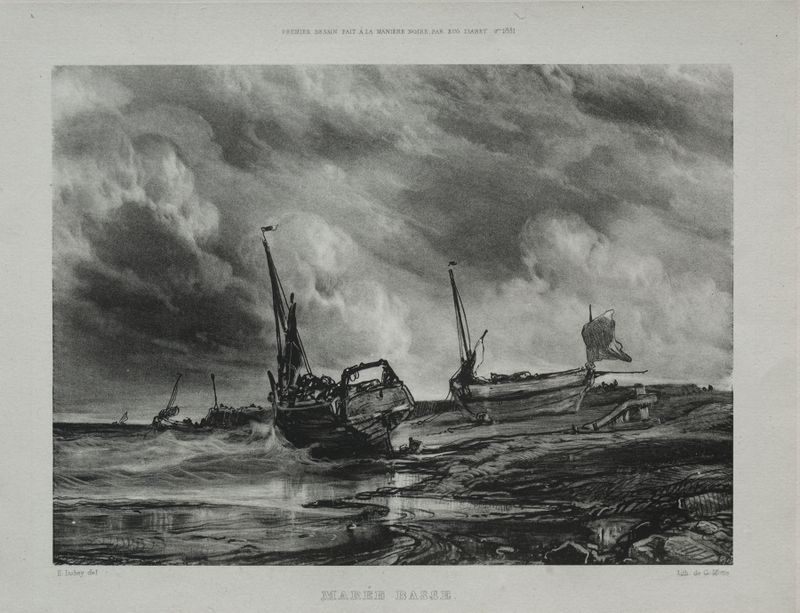
Marée basse
Eugène Isabey

Shipwreck
Eugène Isabey

Shipwreck
Eugène Isabey

The Wreck
Eugène Isabey
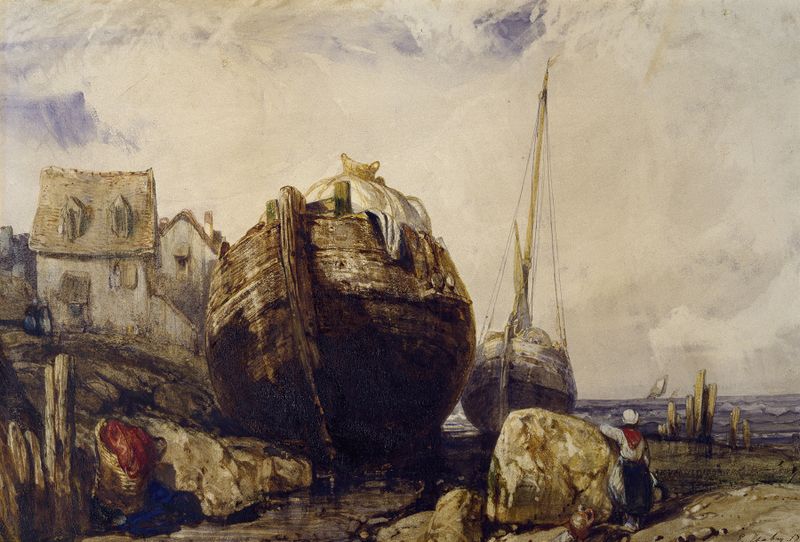
Fishing Boats
Eugène Isabey
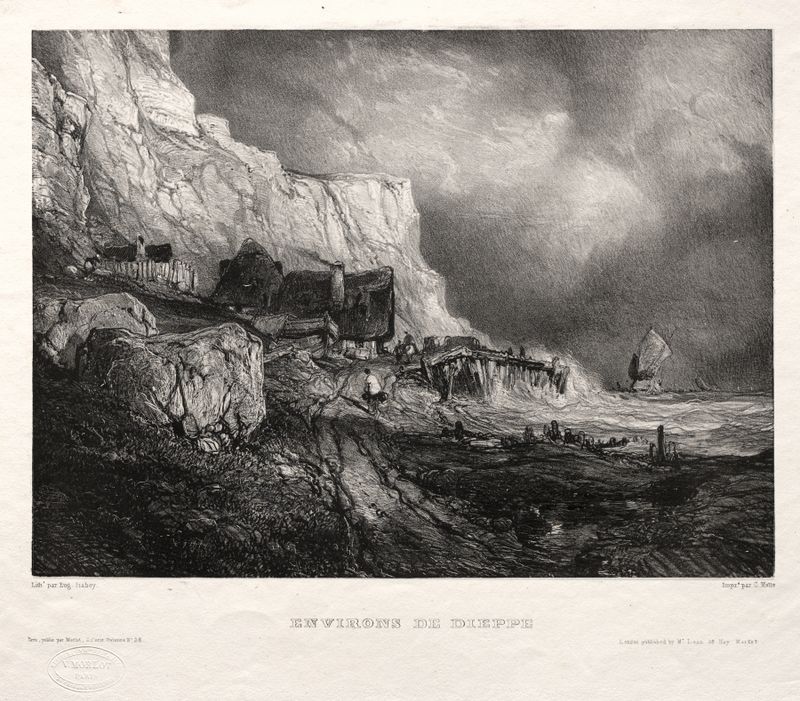
Environs de Dieppe
Eugène Isabey
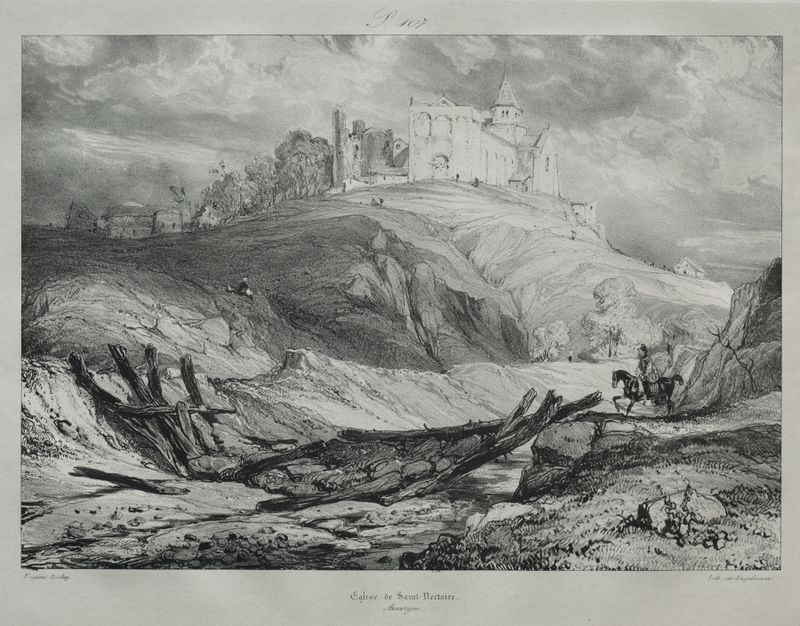
Église de St. Nectaire
Eugène Isabey

Fishing boat at the seaside
Eugène Isabey

Sunset on the Normandy Coast
Eugène Isabey
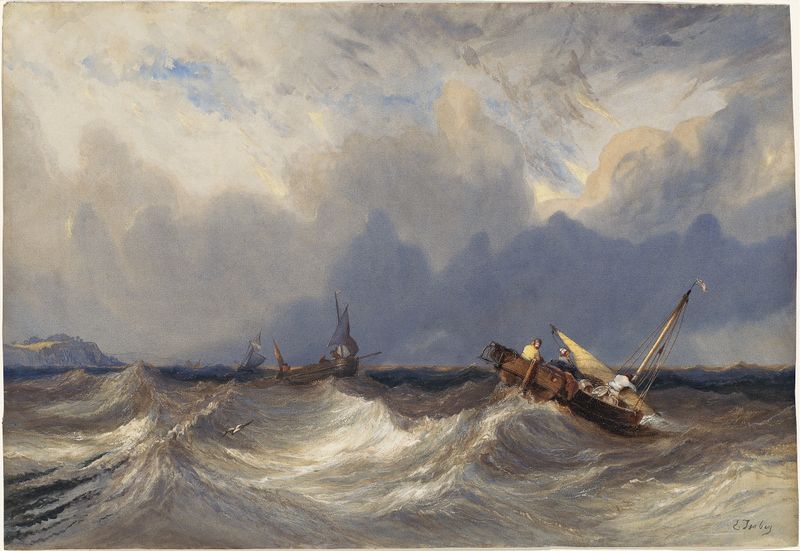
Fishing Boats Tossed before a Storm
Eugène Isabey





