
Group of characters — History & Facts
When Georges Seurat exhibited Group of characters in 1884, he was still a young and relatively unknown artist, but the work marked a crucial step in his journey toward the radical technique of pointillism. This painting belongs to the formative period just before Seurat unveiled his celebrated A Sunday Afternoon on the Island of La Grande Jatte. At the time, Parisian critics were divided: some dismissed his methodical approach as cold, while others sensed the promise of a new way of seeing.
The painting’s exact medium remains uncertain, adding an element of mystery to its story and inviting close scrutiny by art historians. In Group of characters, Seurat captures a fleeting moment of urban leisure, focusing on a cluster of figures gathered in a park or riverside setting. The characters are rendered with careful, almost mathematical precision, their outlines softened by the artist’s signature division of color. Each figure seems absorbed in their own world, yet their proximity suggests a quiet social connection.
The light, filtered and even, flattens the scene and draws attention to the subtle interactions between the figures. Unlike the lively brushwork of Renoir’s crowds, Seurat’s approach is restrained, emphasizing harmony and structure over spontaneity. Although the painting’s early provenance is not thoroughly documented, it is typical of the smaller studies and group scenes Seurat produced in the years leading up to his major works. Its journey through collections remains somewhat obscure, reflecting the uncertain status of many of Seurat’s early pieces before his posthumous fame.
Today, Group of characters is recognized as a key example of the artist’s transition from Impressionist influences to the disciplined innovations of Neo-Impressionism. It stands as a testament to Seurat’s meticulous vision and his enduring fascination with the rhythms of modern life.
More Artworks by Georges Seurat
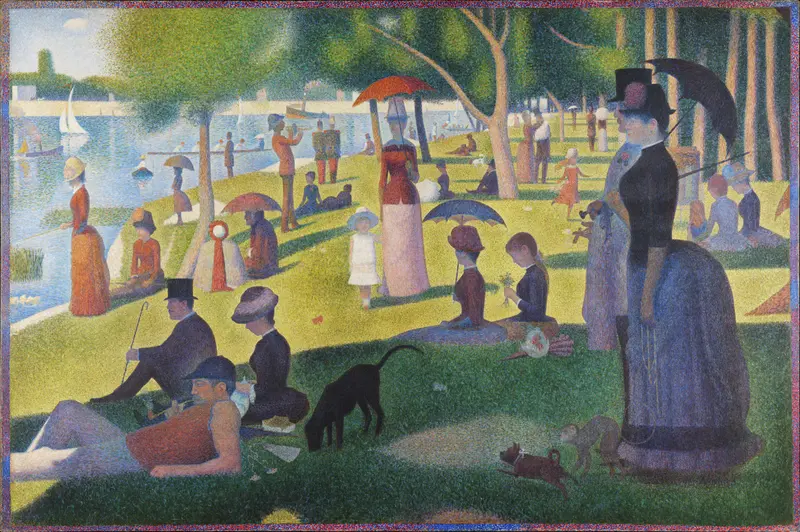
A Sunday Afternoon on the Island of La Grande Jatte
Georges Seurat
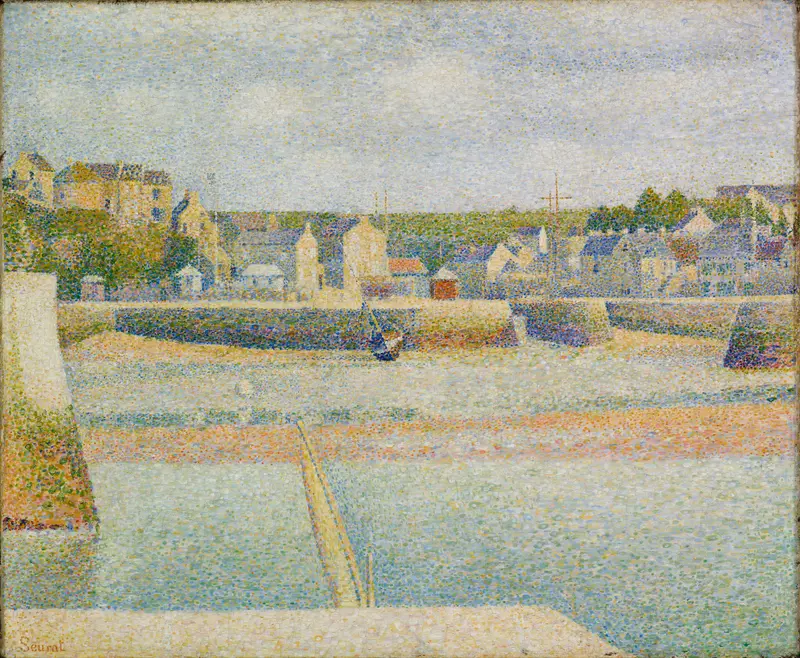
Port-en-Bessin, The Outer Harbor (Low Tide)
Georges Seurat
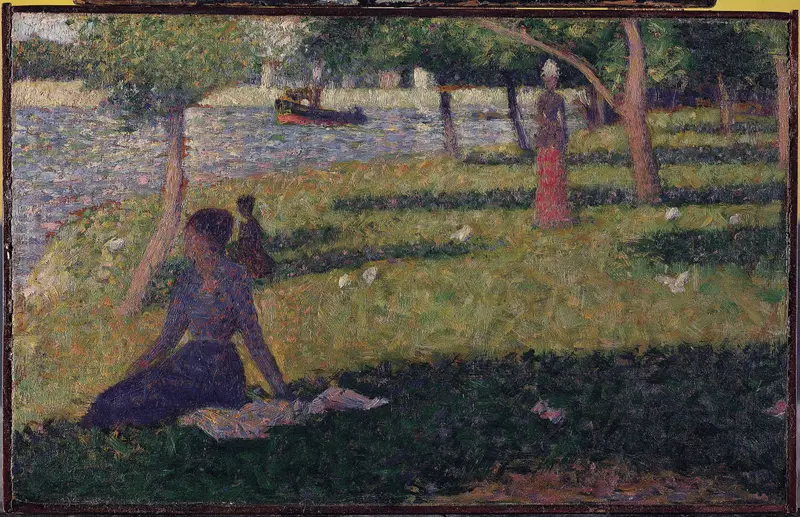
Étude pour ‘La Grande Jatte’ (Study for ‘La Grande Jatte’)
Georges Seurat
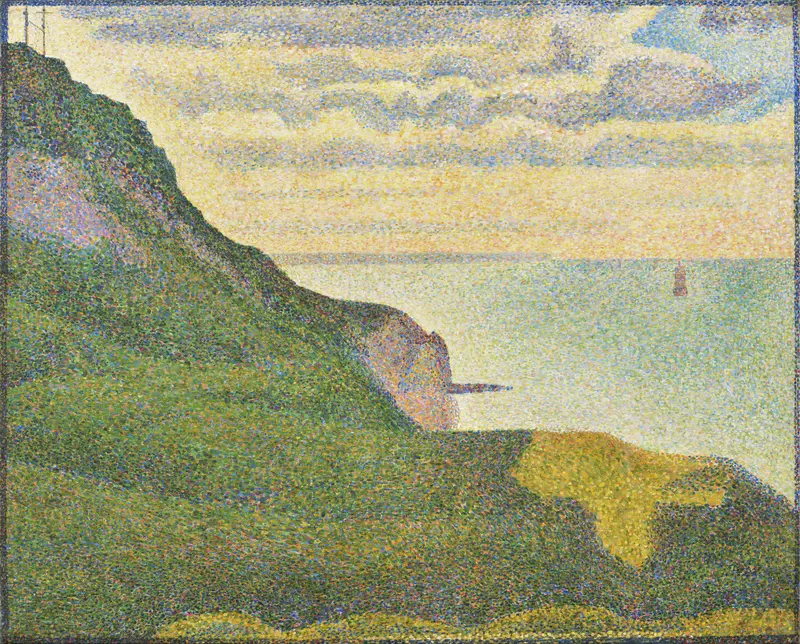
Seascape at Port-en-Bessin,Normandy
Georges Seurat
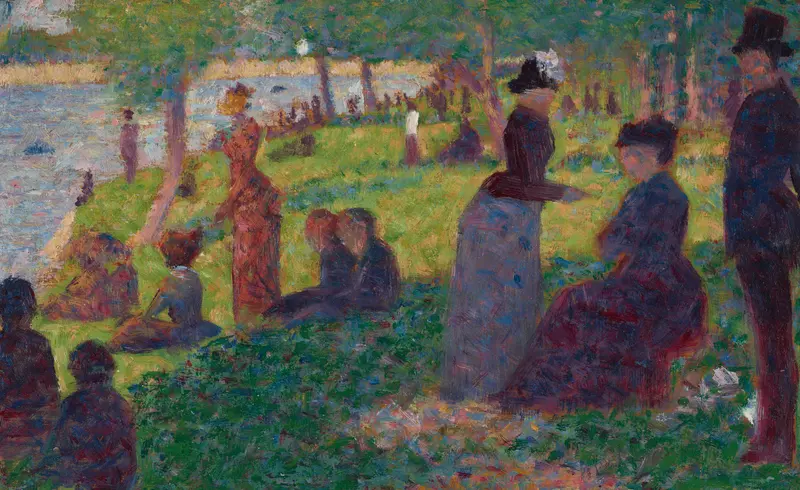
Oil Sketch for "A Sunday on La Grande Jatte — 1884"
Georges Seurat
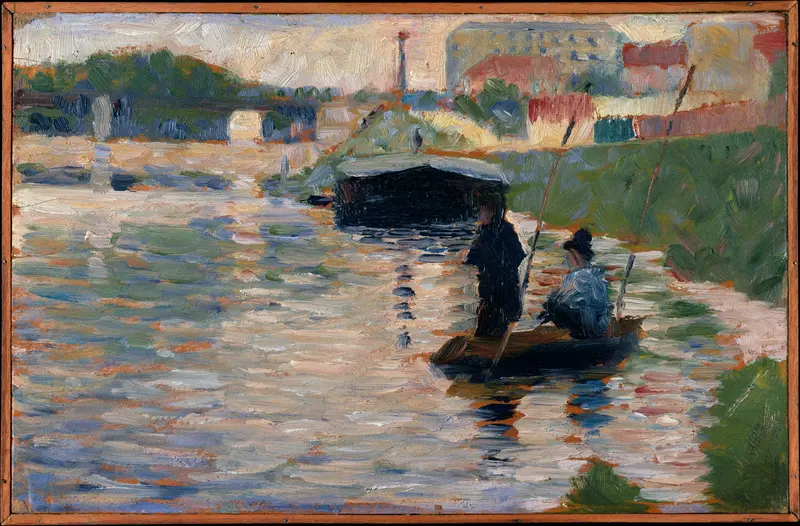
View of the Seine
Georges Seurat
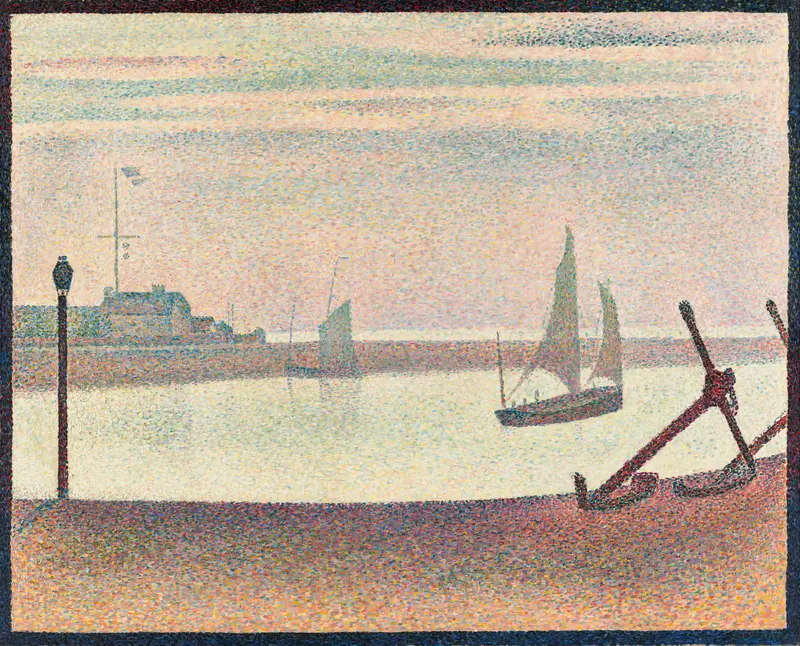
The Channel at Gravelines, Evening
Georges Seurat
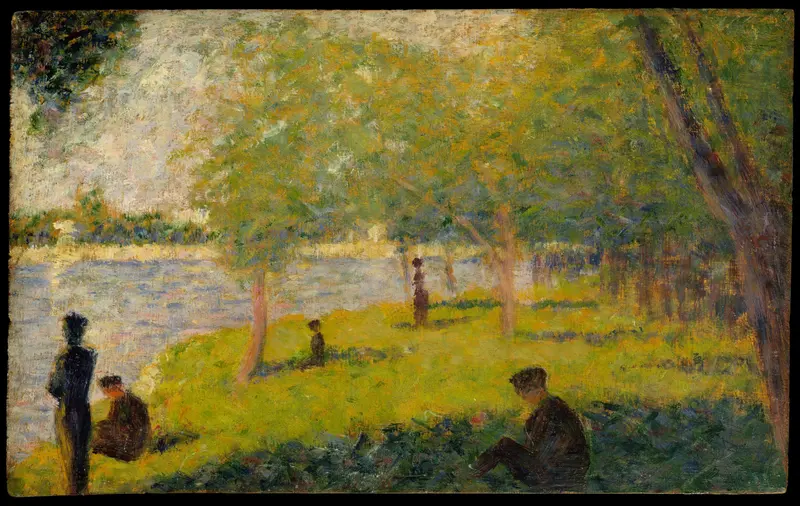
Study for ‘A Sunday on La Grande Jatte’
Georges Seurat
Study for A Sunday on La Grande Jatte
Georges Seurat
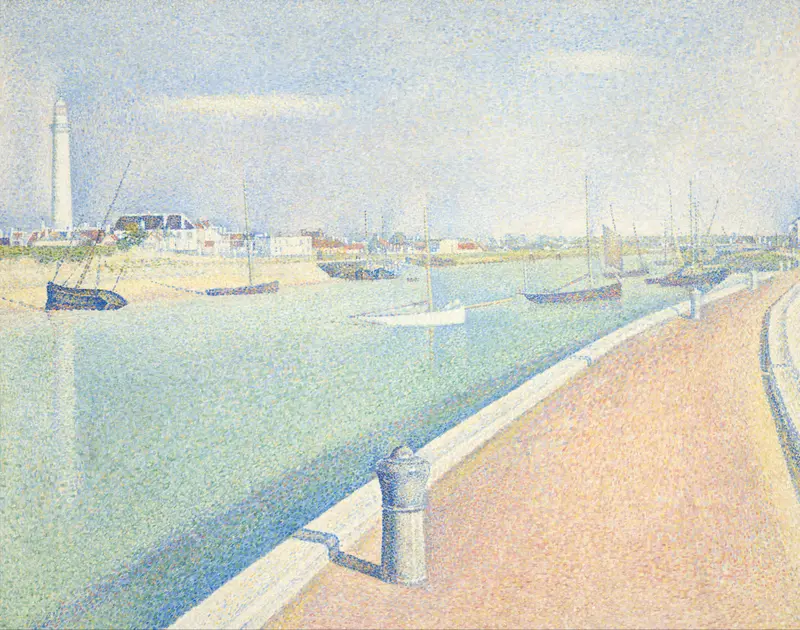
The Channel of Gravelines, Petit Fort Philippe
Georges Seurat
More Genre Scene Art

Banquet of the Officers of the St George Civic Guard
Frans Hals

Rembrandt and Saskia in the Scene of the Prodigal Son
Rembrandt van Rijn

Bal du moulin de la Galette
Pierre-Auguste Renoir

Quadrille at the Moulin Rouge
Henri de Toulouse-Lautrec

A Burial at Ornans
Gustave Courbet

When Will You Marry?
Paul Gauguin