
Hamlet in a Valley — History & Facts
What first draws the eye in Hamlet in a Valley is the sweep of space—an entire countryside unfurling beneath a sky that seems to hover, watchful and immense. The viewer is led from the shadowed foreground, where the lines are dense and textured, up and out into a patchwork of fields, trees, and distant church towers. The gentle slopes and scattered rooftops invite you to wander visually, discovering paths, fences, and the quiet presence of rural life.
Waterloo’s delicate handling of line and light creates a sense of air and distance; the horizon is low, giving the sky a commanding presence, while the valley below feels both intimate and expansive. Works like this, produced in the Dutch Golden Age, reflect a world newly attentive to the land itself—its productivity, its quiet rhythms, its subtle beauty. Landscape etchings by artists such as Antonie Waterloo were prized by collectors who saw in them both a celebration of local scenery and a meditation on the passage of time. Though little is recorded about this specific print—its date and medium remain uncertain—it now forms part of the National Gallery of Art’s collection, preserved through their open access initiative.
In this image, the viewer finds not just a valley, but an invitation to linger over the details of a world shaped by both nature and human hand.
More Artworks by Antonie Waterloo
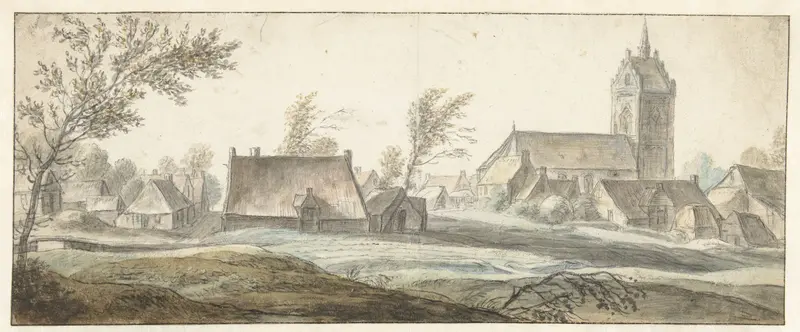
Gezicht op het dorp Soest
Antonie Waterloo
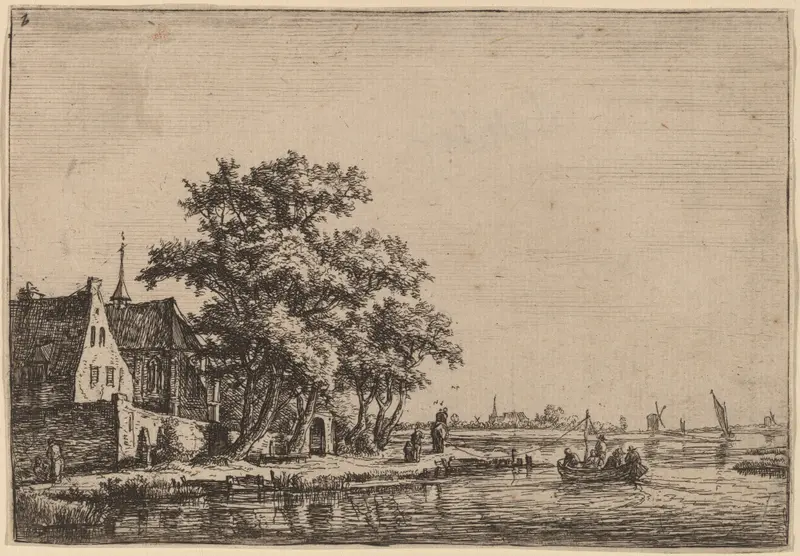
Churchyard at the Waterside
Antonie Waterloo
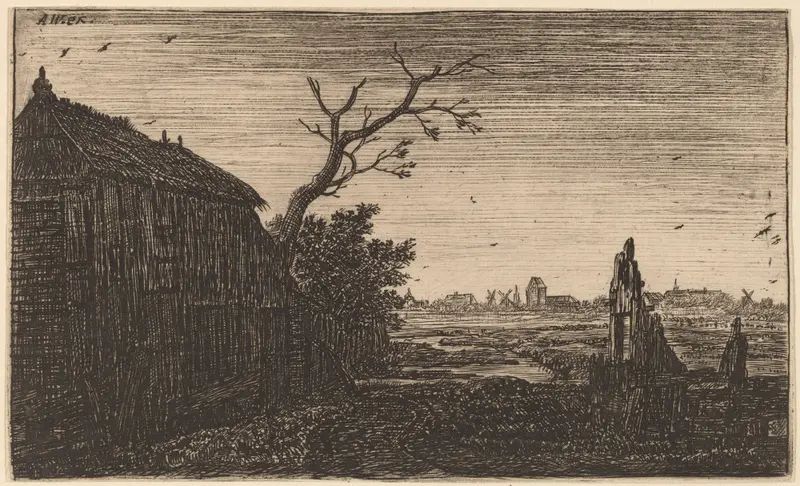
The Sluice
Antonie Waterloo
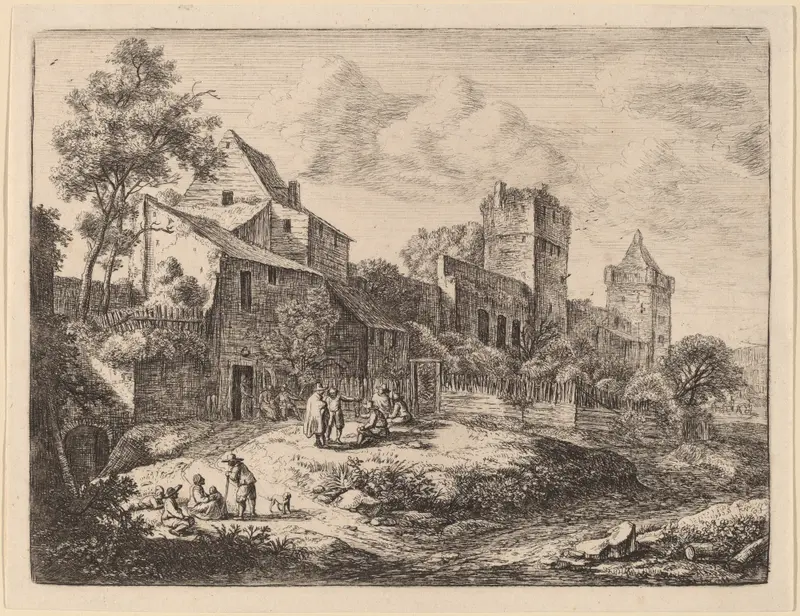
Square in Front of an Inn
Antonie Waterloo
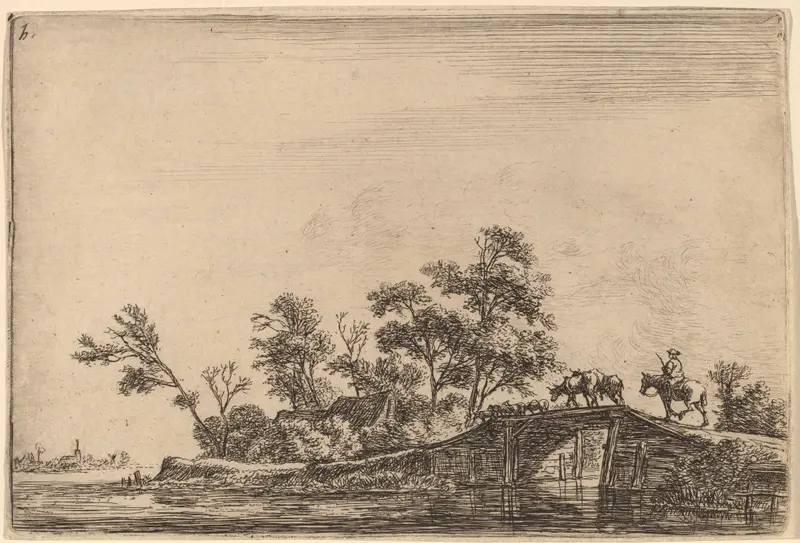
Rider and Flock on a Bridge
Antonie Waterloo
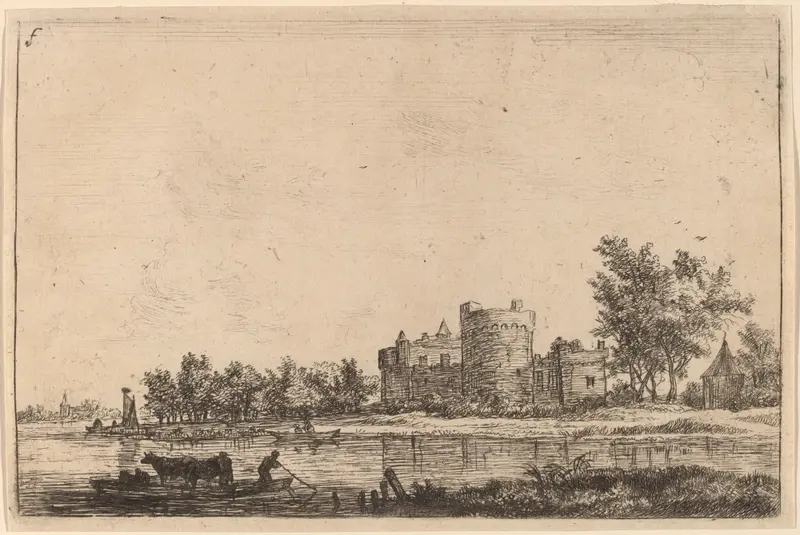
Two Cows on a Ferry
Antonie Waterloo
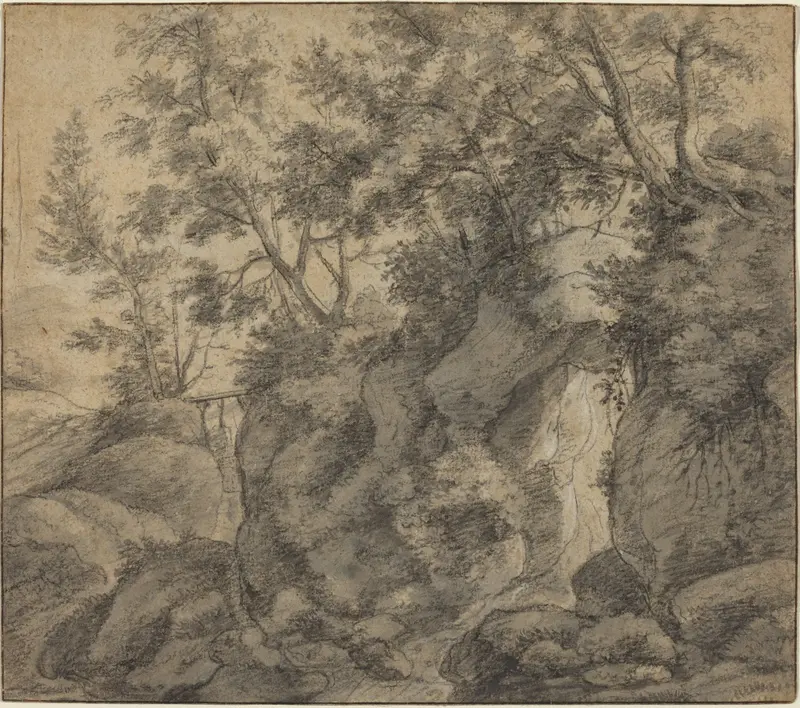
Landscape with a Wooded Ravine
Antonie Waterloo
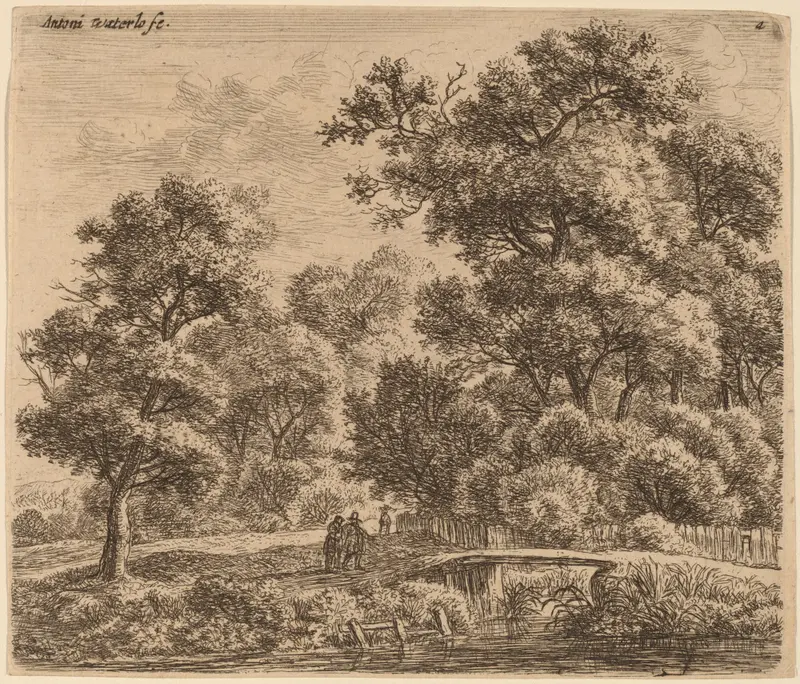
Wooded Landscape with a Bridge
Antonie Waterloo
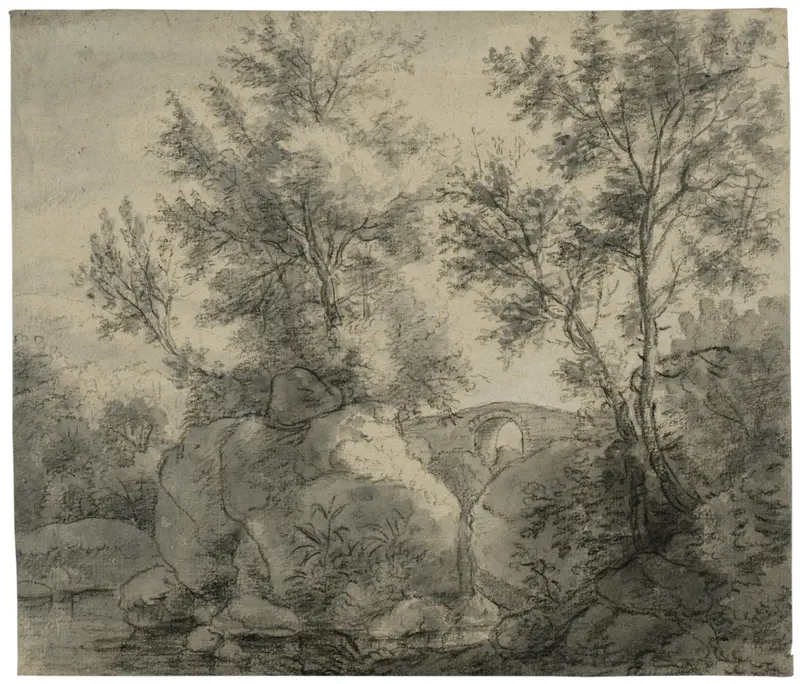
Rocky Landscape with a Stone Bridge
Antonie Waterloo
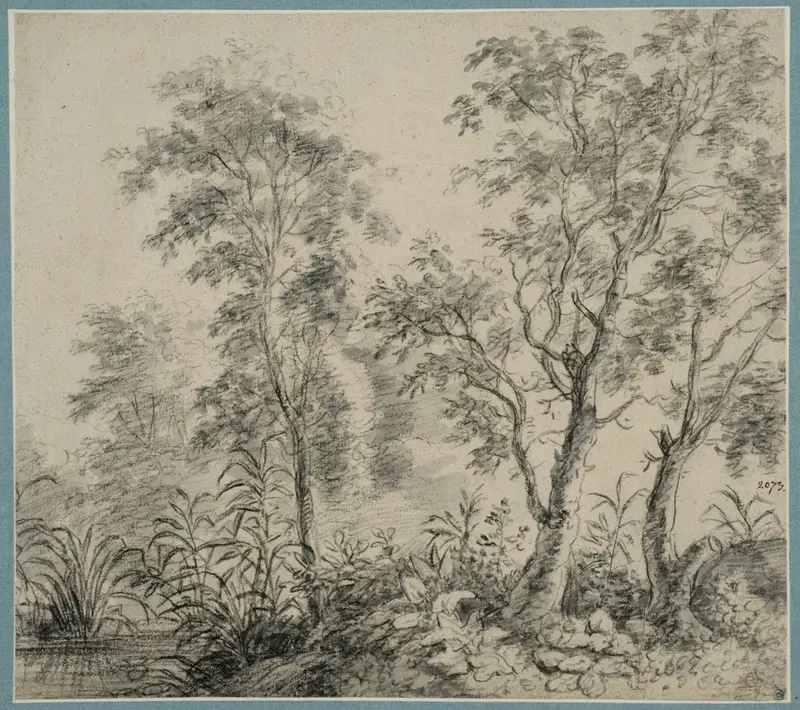
River Bank with a Row of Trees
Antonie Waterloo
More Landscape Art

The Starry Night
Vincent van Gogh

View of Delft
Johannes Vermeer

Water Lilies
Claude Monet

The Grand Canal, Venice, looking north-west from the Ca' Corner to the Ca' Contarini degli Scrigni, with the campanile of Santa Maria della Carità
Canaletto

Windsor Castle
Canaletto

The Grand Canal looking North-East from the Palazzo Dolfin-Manin to the Rialto Bridge
Canaletto