
Head of a Guillotined Man — History & Facts
Few works in European art history are as unsettling in their origins as Head of a Guillotined Man by Théodore Géricault. In 1818, while preparing for his monumental The Raft of the Medusa, Géricault haunted Parisian morgues and hospitals, seeking the raw truth of the human body in extremis. It is documented that he obtained severed heads from the guillotine, bringing them into his studio to study the effects of death with scientific precision.
This practice shocked his contemporaries, who were both horrified and fascinated by his commitment to realism. The resulting studies, including this one, blur the line between artistic inquiry and morbid obsession. The painting confronts viewers with the freshly severed head of an anonymous man, his features slackened by death, his mouth slightly open as if caught mid-breath. The flesh is rendered with almost clinical detachment, yet the careful modeling of light and shadow gives the subject a strange dignity.
There are no narrative clues—no background, no context—only the stark reality of mortality. Unlike Jacques-Louis David’s heroic depictions of martyrs, such as The Death of Marat, Géricault offers no moralizing or political message. Instead, he compels us to look unflinchingly at the human cost of violence, the individuality erased in an instant by the blade. The precise provenance of Head of a Guillotined Man remains uncertain, as many of Géricault’s anatomical studies were dispersed or lost after his early death in 1824.
Some were kept by friends or fellow artists, while others entered private collections, surfacing only sporadically at auction. Today, works from this haunting series are recognized as pivotal in Géricault’s development, marking his break from academic convention and his embrace of what would become the Romantic movement’s fascination with the extremes of human experience. The painting stands as a testament to the artist’s relentless pursuit of truth, no matter how disturbing its form.
More Artworks by Théodore Géricault
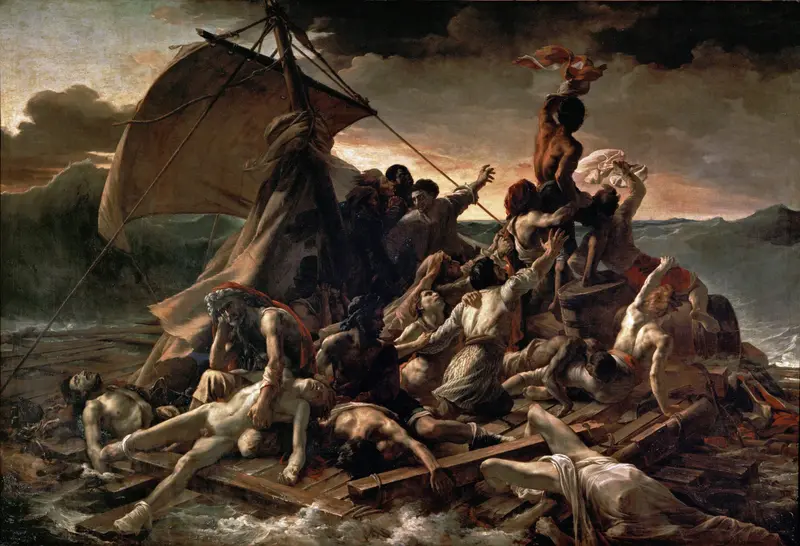
The Raft of the Medusa
Théodore Géricault

Géricault - Le naufrage du radeau de la Méduse, MBA 790
Théodore Géricault
Cattle Market
Théodore Géricault
Evening; Landscape with an Aqueduct
Théodore Géricault
Horse Race
Théodore Géricault

Horses Standing in a Mews
Théodore Géricault
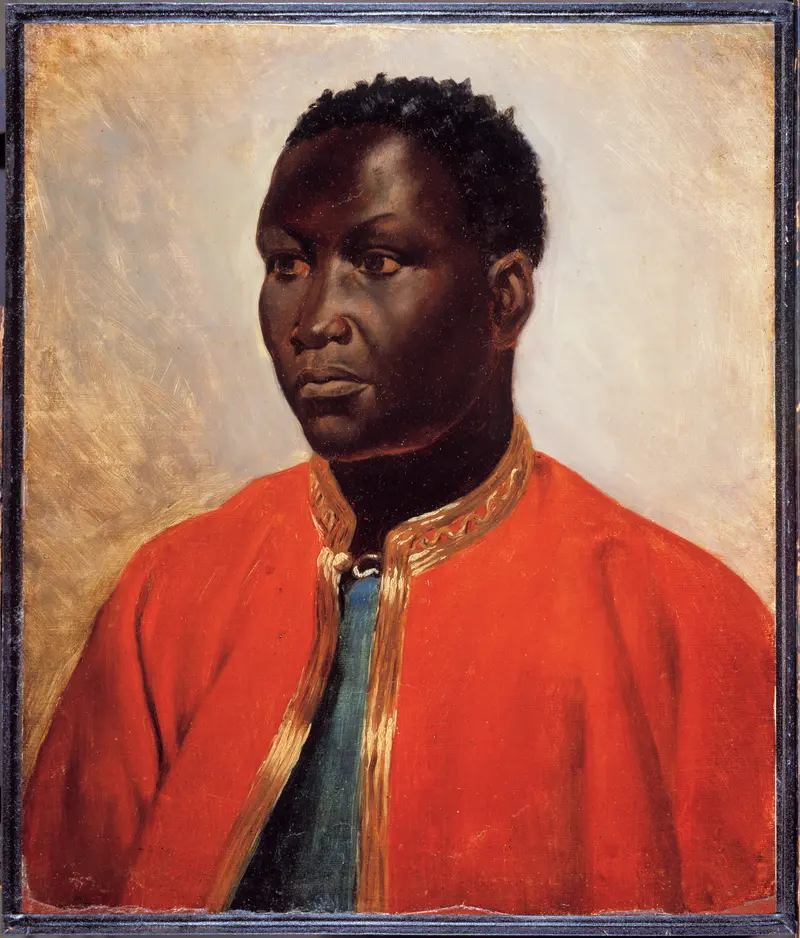
Portrait of a Negro
Théodore Géricault
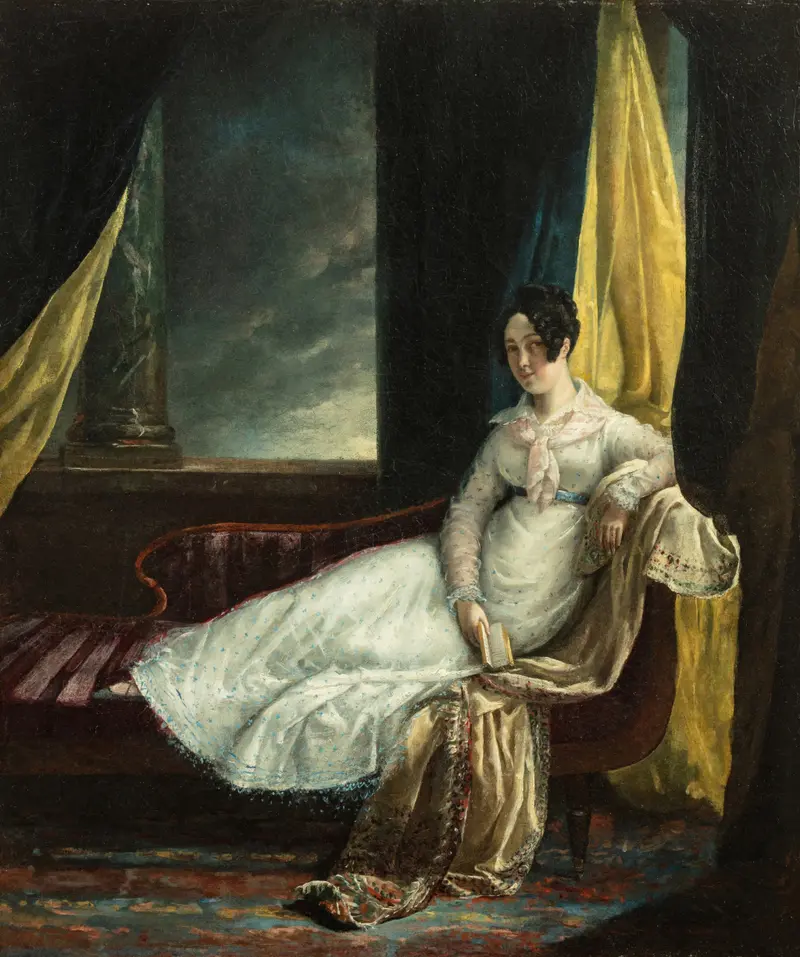
Portrait of Zoë Elmore
Théodore Géricault
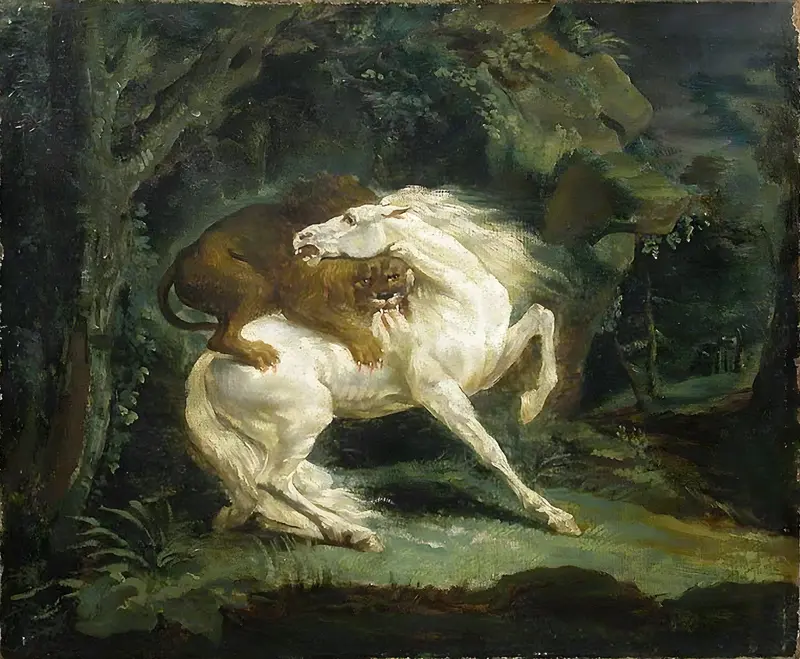
Cheval attaqué par un lion
Théodore Géricault
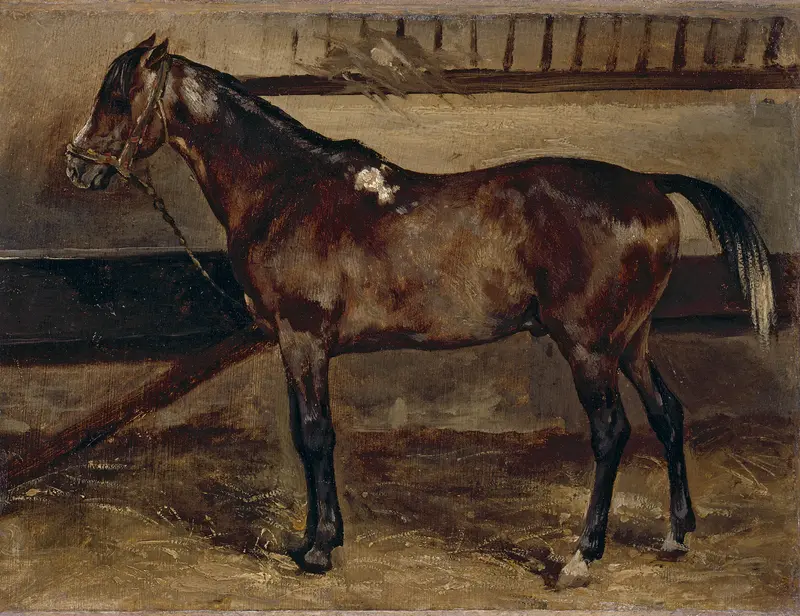
Cheval brun à l'écurie
Théodore Géricault





