
Heer en dame gezeten in een landschap — History & Facts
Could a single brushstroke hold eternity? In Heer en dame gezeten in een landschap, the quiet intimacy of two figures seated amidst a sprawling landscape reveals layers of emotion and reflection, inviting the viewer to contemplate their own narratives. Look to the left, where the nobleman and woman are framed by verdant foliage and a wide-open sky. The artist employs warm hues to illuminate the figures, contrasting with the cooler tones of the distant hills. Notice how the light falls upon the lady’s delicate gown, creating a gentle play of shadows that enhances her poised elegance.
The soft, sinuous lines of their clothing draw your gaze, leading you to appreciate the meticulous detail that reflects both their status and the serenity of the surrounding nature. Yet, beneath the surface beauty lies a poignant tension. The couple, while leisurely at rest, evoke a sense of isolation; their linked hands speak to a bond that whispers of longing amid the vastness of the landscape. The gentle undulation of the hills could symbolize the trials they face, while the expansive sky above suggests both freedom and the weight of societal expectations.
Each brushstroke seems to encapsulate a fleeting moment in time—a reminder of life’s transience. In 1520, Lucas van Leyden painted this work during a period marked by the early Renaissance in the Netherlands, a time of dynamic artistic exploration. He was establishing his reputation as a master engraver and painter, navigating the delicate balance between tradition and emerging humanist ideas. As the world around him began to shift towards new perspectives, his work captured the essence of personal connection amidst changing social landscapes.
More Artworks by Lucas van Leyden
Browse all →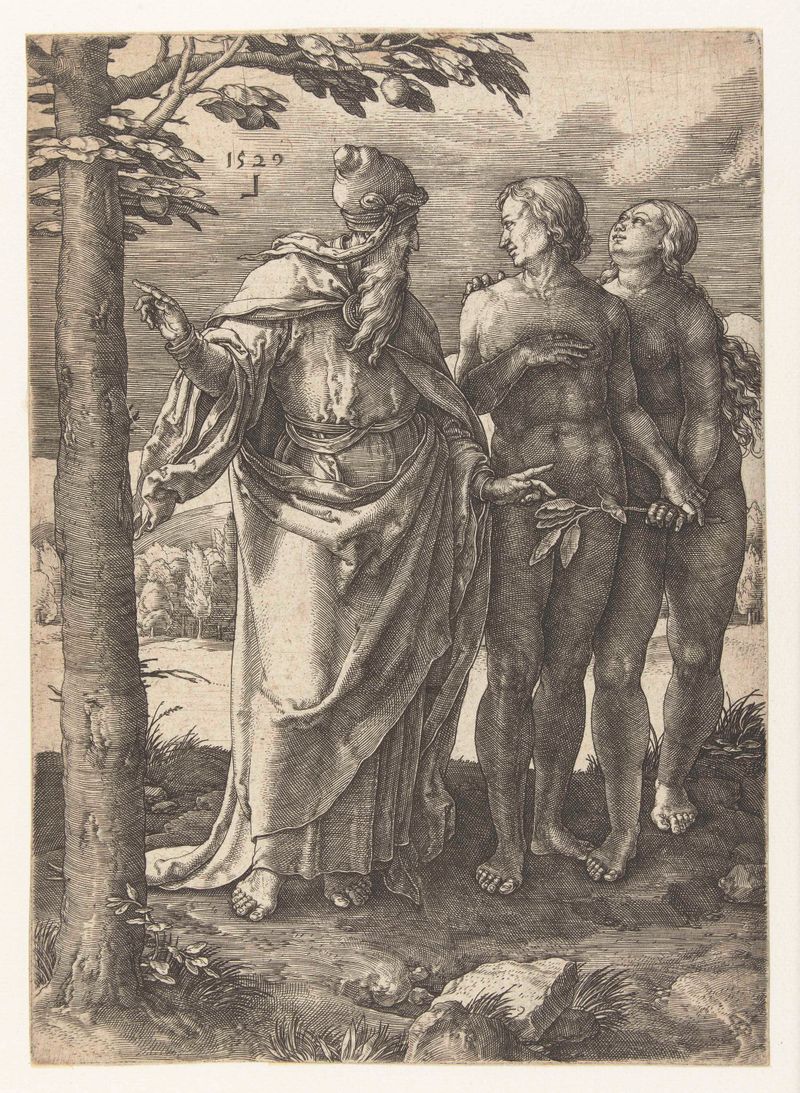
Het eerste verbod
Lucas van Leyden
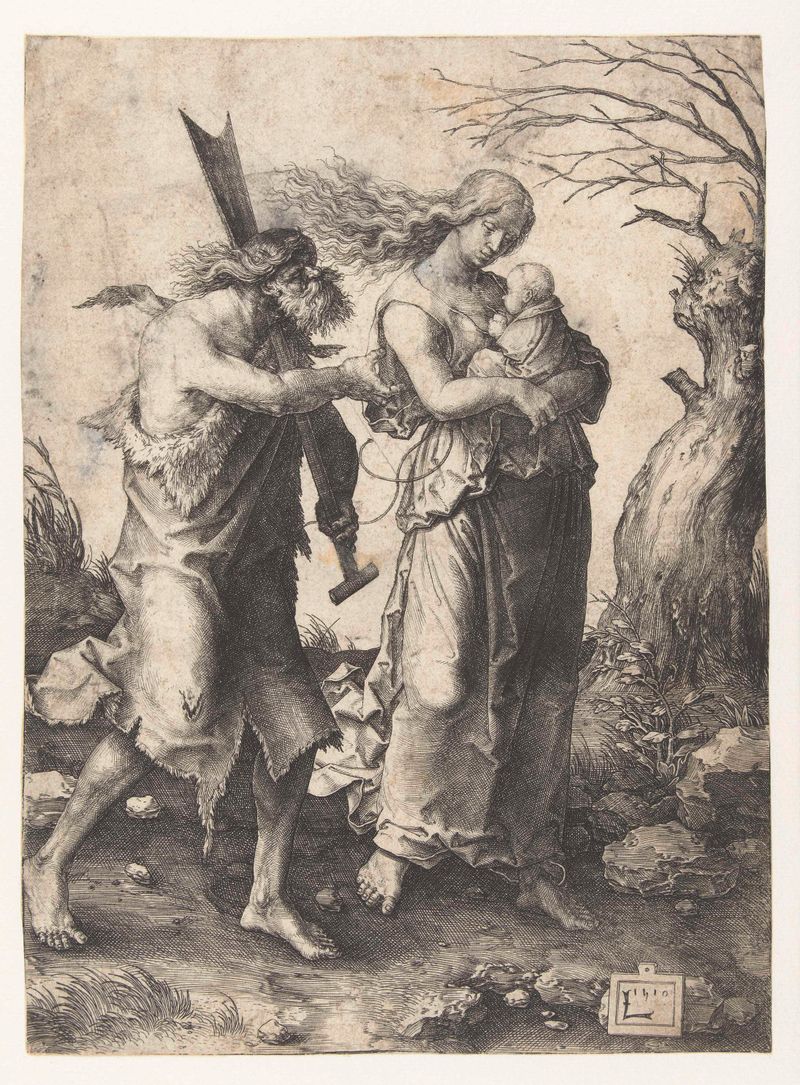
Adam en Eva na de verdrijving uit het paradijs
Lucas van Leyden
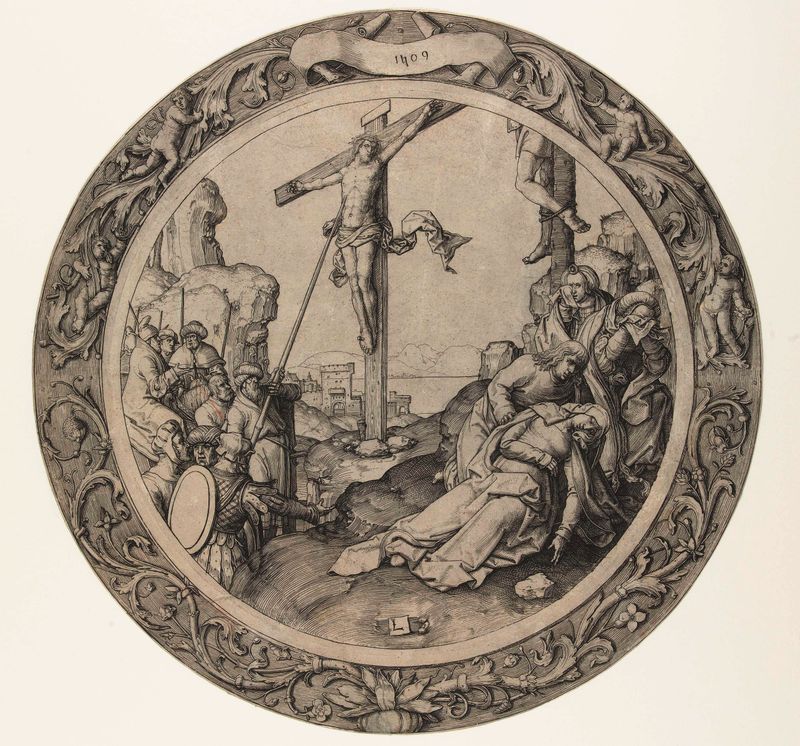
De kruisiging
Lucas van Leyden
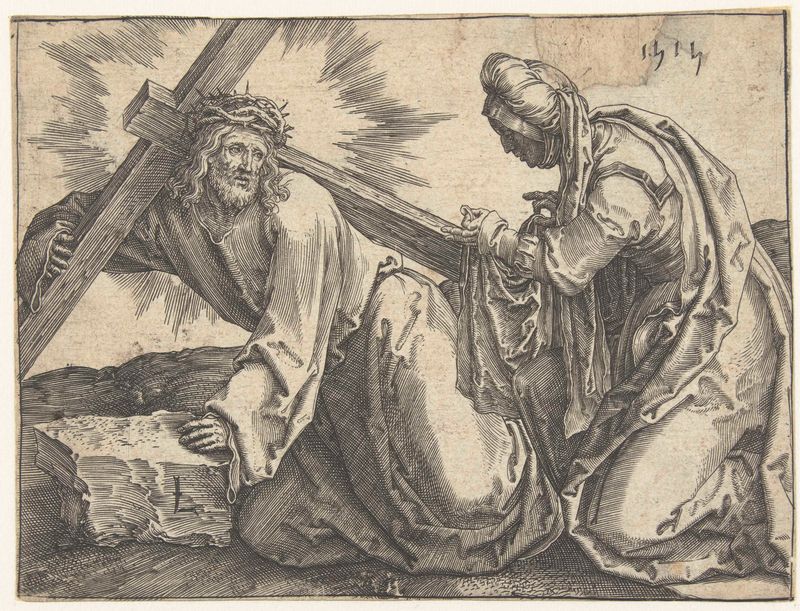
Kruisdraging
Lucas van Leyden
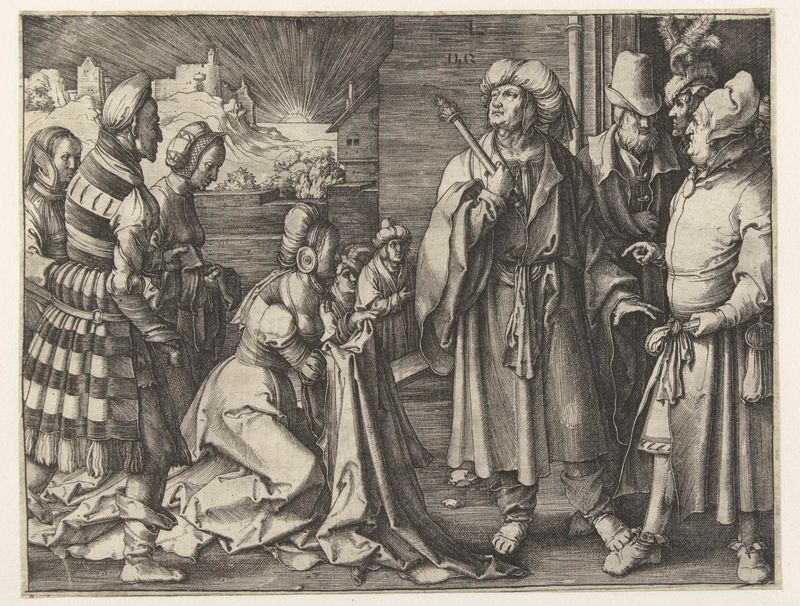
De vrouw van Potifar beschuldigt Jozef
Lucas van Leyden
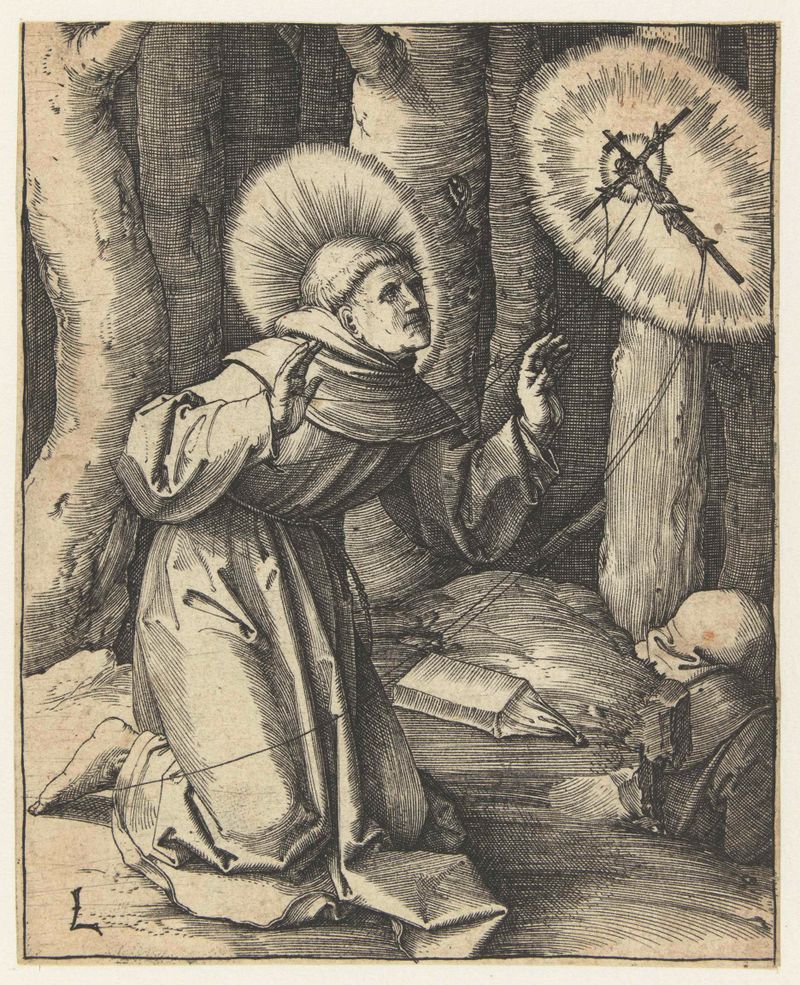
De stigmatisatie van de heilige Franciscus
Lucas van Leyden
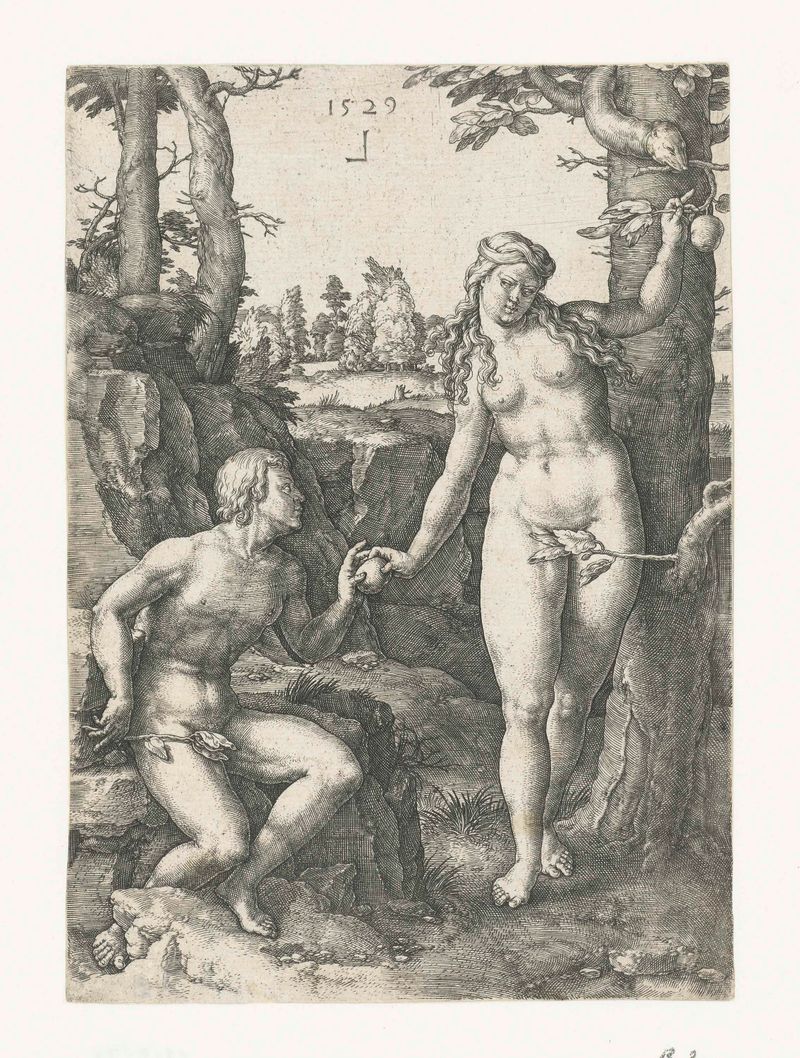
De zondeval
Lucas van Leyden
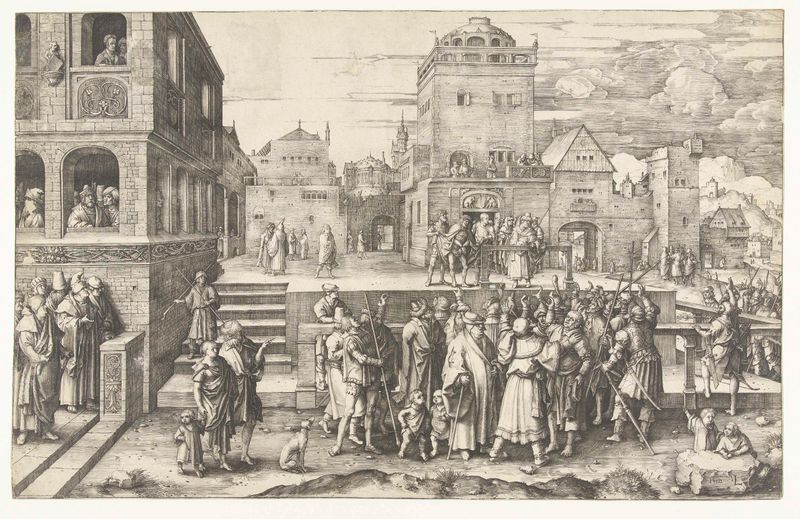
De grote Ecce Homo
Lucas van Leyden
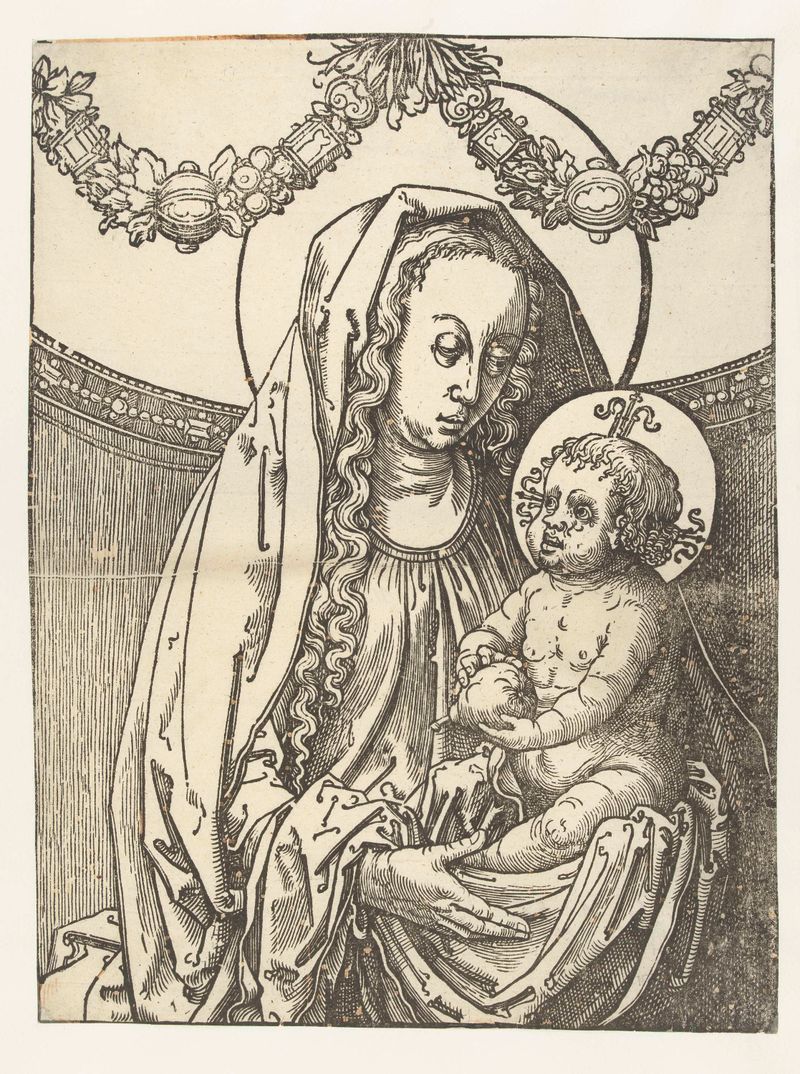
Maria met kind
Lucas van Leyden

Doornenkroning
Lucas van Leyden





