
Heraclitus — History & Facts
What draws the viewer in first is the philosopher’s gaze: heavy-lidded, rimmed with tears, the eyes of a man who has seen too much of the world’s folly. The artist, Abraham Janssens, chooses not the moment of action or revelation, but a rare, private pause—Heraclitus caught in the act of thinking, or perhaps mourning. The hand that props his head is rough and expressive, knuckles pressed deep into the cheek, while the other rests on a globe, as if the weight of the whole world is his burden to bear.
Light carves out every furrow and wrinkle, the palette rich with earth and ochre, hinting at a life spent wrestling with the limits of human wisdom. Even the drapery seems to echo the philosopher’s mood, falling in soft, shadowed folds that refuse to resolve into clarity. Painted between circa 1601 and 1602, this work belongs to a moment when the depiction of ancient sages was both a painter’s challenge and a collector’s prize. In the early seventeenth century, artists like Janssens found fertile ground in the stories of Greek philosophers, whose lives and ideas were revived by humanist scholars and patrons alike.
Such paintings were often intended for learned audiences—merchants, magistrates, or scholars—who recognized Heraclitus not only by his name, inscribed above, but by his legendary melancholy. The globe beneath his hand marks him as a thinker of universals, while the sorrow in his face reflects a world in flux, much like the Europe of Janssens’ day. History has left us few traces of this painting’s early journey, but its presence in a modern collection invites us to linger over the philosopher’s sorrow, and to wonder what truths he found in the spinning world beneath his hand.
Sources: Wikidata Q119483778 · Image source (Wikimedia Commons)
More Artworks by Abraham Janssens

Jupiter Rebuked by Venus
Abraham Janssens
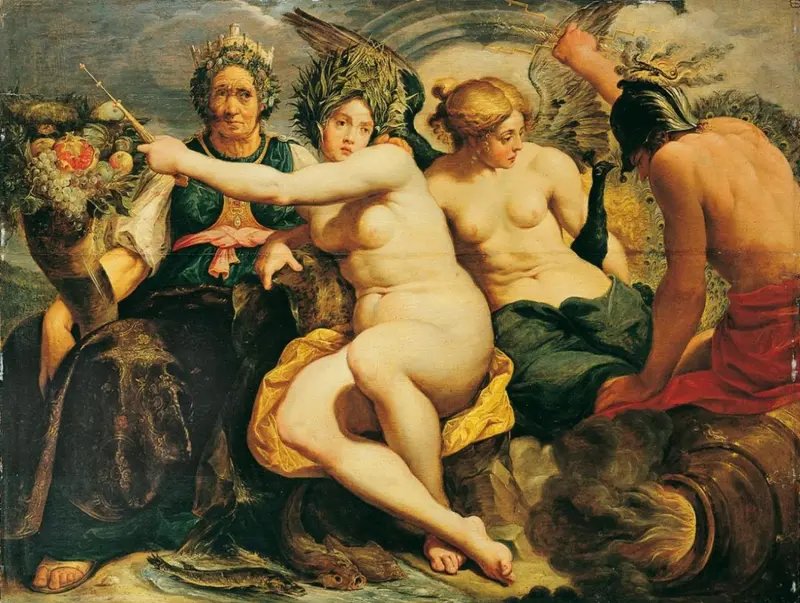
Allegorie der vier Elemente
Abraham Janssens
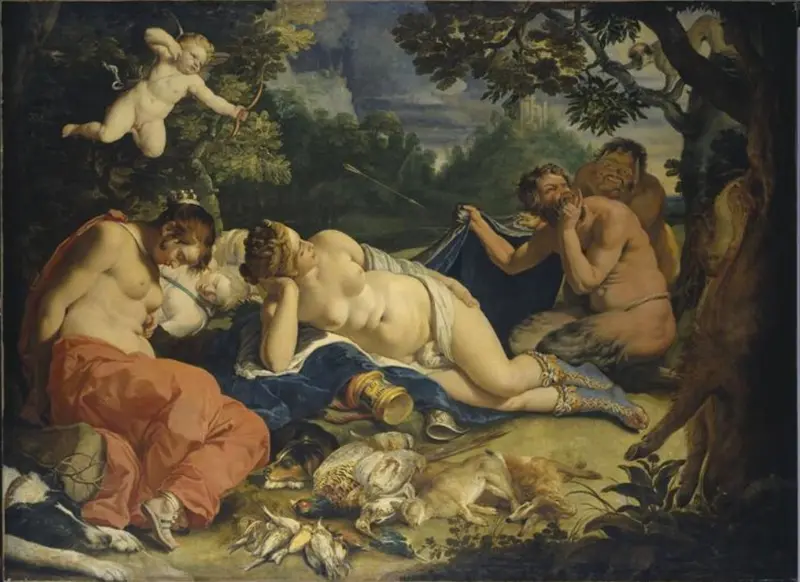
Diana and her nymphs spied on by satyrs
Abraham Janssens

Die Erweckung des Lazarus 153 Bavarian State Painting Collections
Abraham Janssens
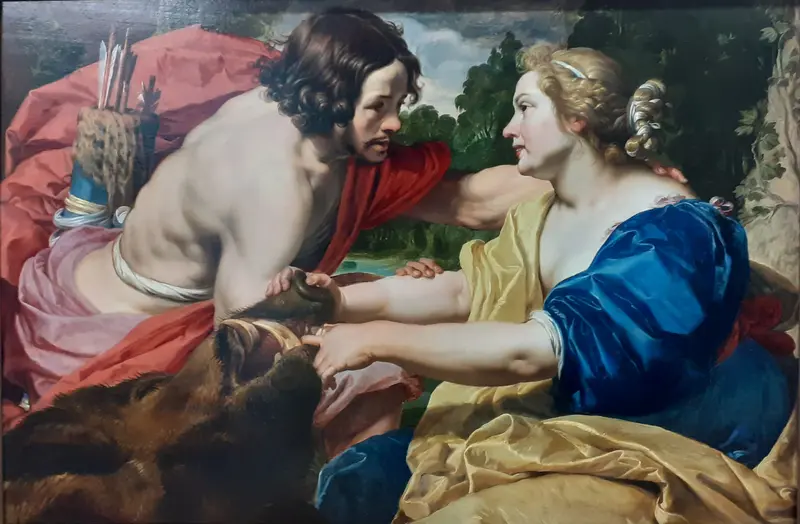
Meleager presents the head of the Calydonian Boar to Atalanta
Abraham Janssens
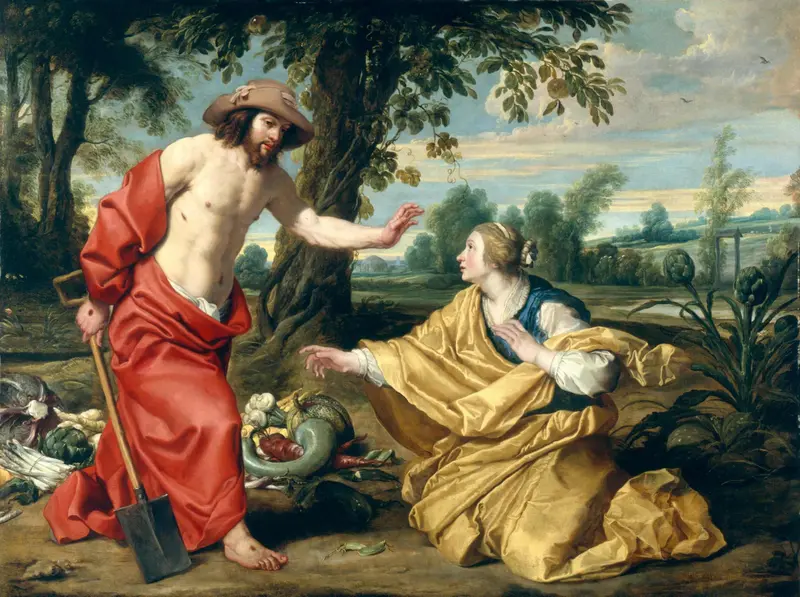
Noli me Tangere
Abraham Janssens
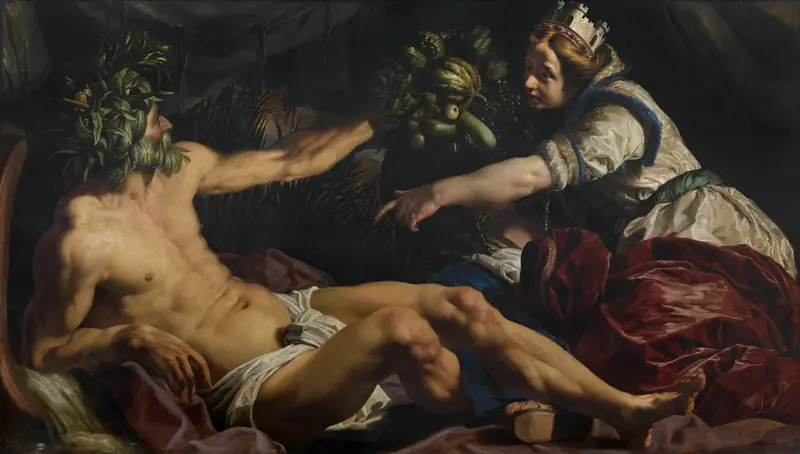
Scaldis and Antverpia
Abraham Janssens
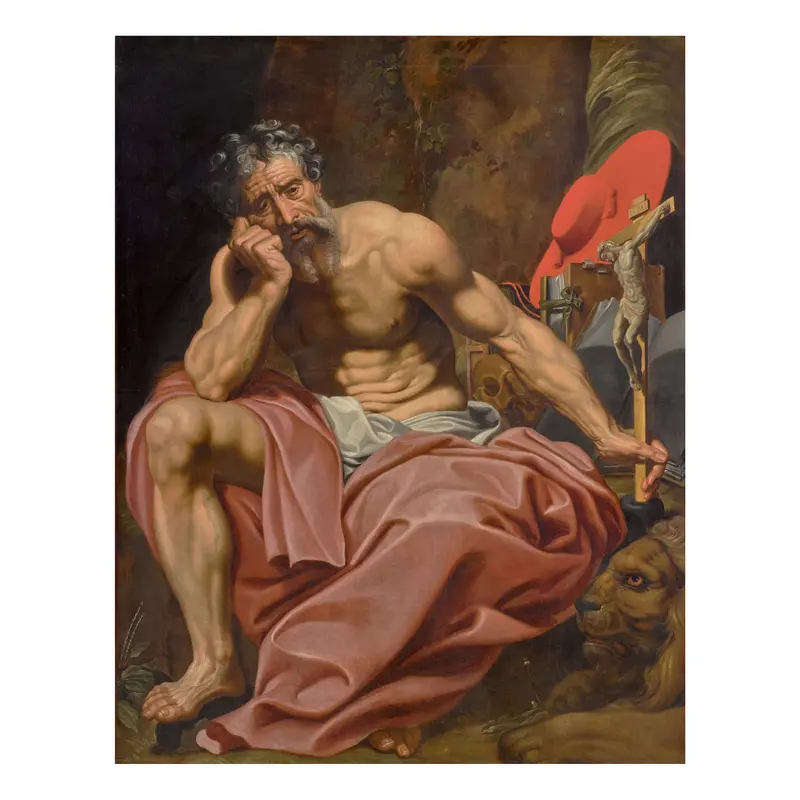
Saint Jerome
Abraham Janssens
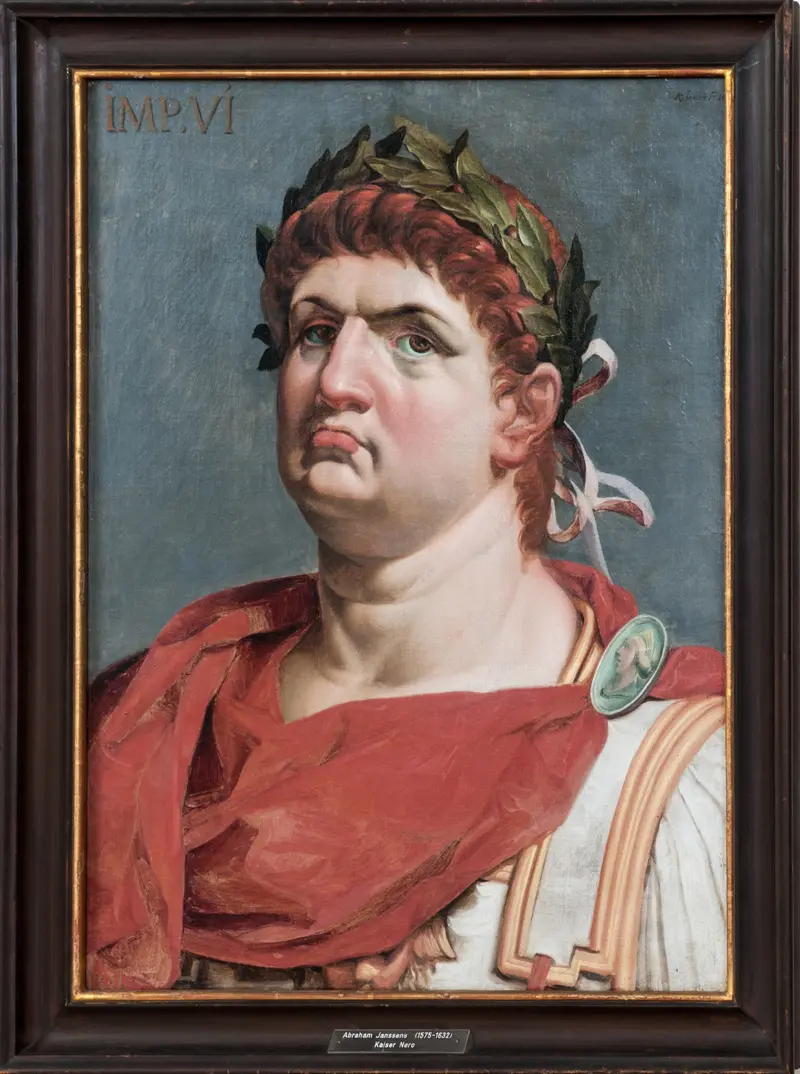
Nero
Abraham Janssens
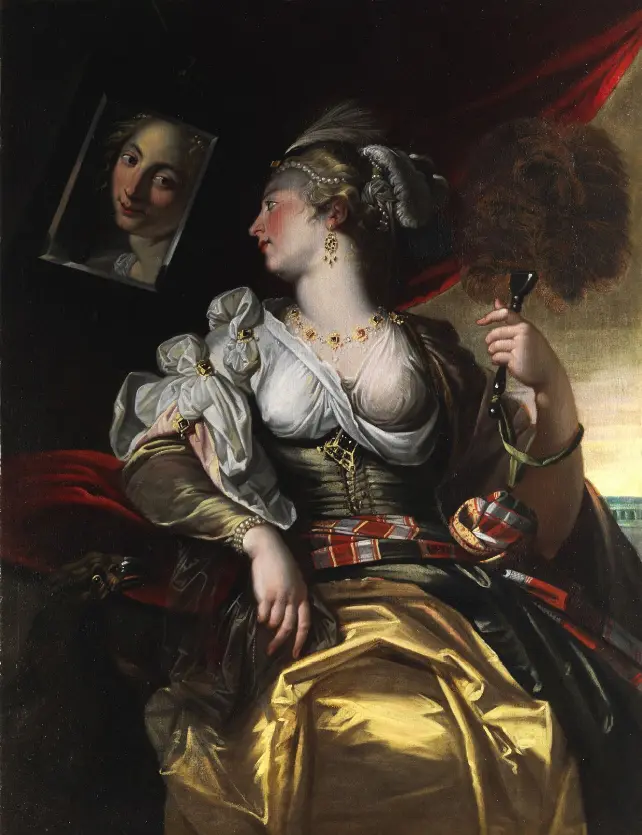
The Face
Abraham Janssens





