
Noli me Tangere — History & Facts
The eye is first caught by the sweep of golden drapery, as if sunlight itself had pooled at the feet of the kneeling woman. Her gaze is fixed upward, searching the face of the man who halts her with a gentle, open hand—a gesture at once commanding and tender. He is marked by a gardener’s hat and spade, yet his bare chest and red mantle hint at a deeper identity.
The space between their outstretched hands becomes the painting’s charged silence: a moment of recognition and restraint. The lush landscape, with its carefully rendered vegetables and fruit, roots the scene in the earth even as the figures seem poised between worlds. Painted in 1620, this Noli me Tangere belongs to the great tradition of Baroque religious painting, where artists sought to make the sacred immediate and tangible. Such works were often commissioned for private devotion or church altars, designed to draw the viewer into a story both familiar and mysterious.
The early seventeenth century saw a flourishing of this kind of narrative art in the Spanish Netherlands, where painters like Abraham Janssens responded to the era’s hunger for drama, color, and emotional clarity. History has kept few traces of this particular canvas’s journey, but its vivid palette and theatrical staging speak to a world in which faith and art were deeply entwined. Let your eyes linger on the hands, and consider what is withheld as much as what is revealed.
More Artworks by Abraham Janssens

Jupiter Rebuked by Venus
Abraham Janssens
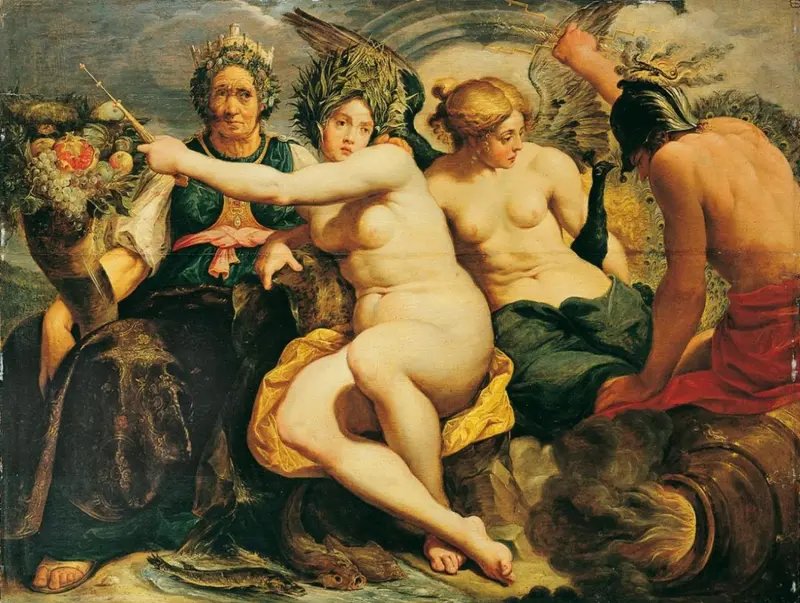
Allegorie der vier Elemente
Abraham Janssens
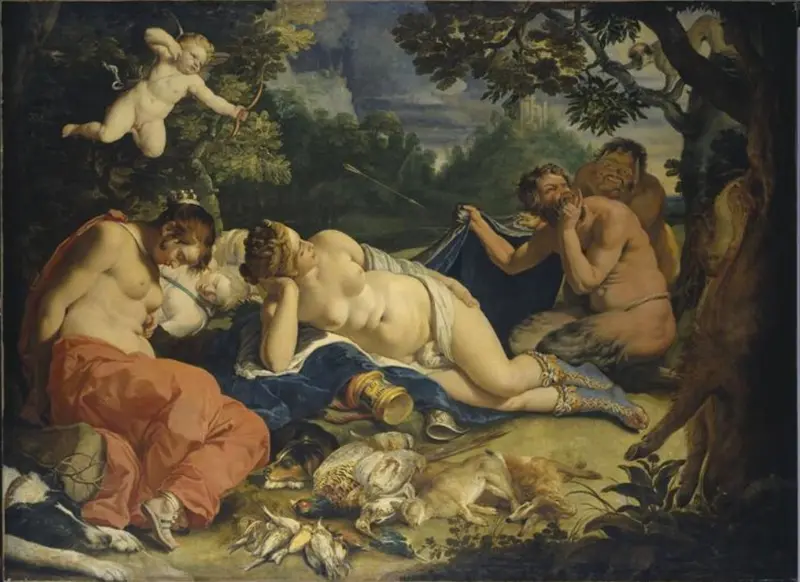
Diana and her nymphs spied on by satyrs
Abraham Janssens

Die Erweckung des Lazarus 153 Bavarian State Painting Collections
Abraham Janssens
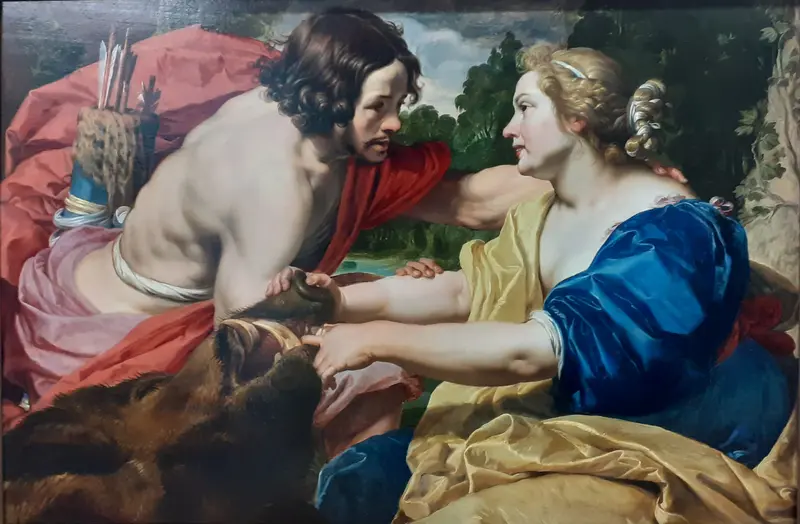
Meleager presents the head of the Calydonian Boar to Atalanta
Abraham Janssens
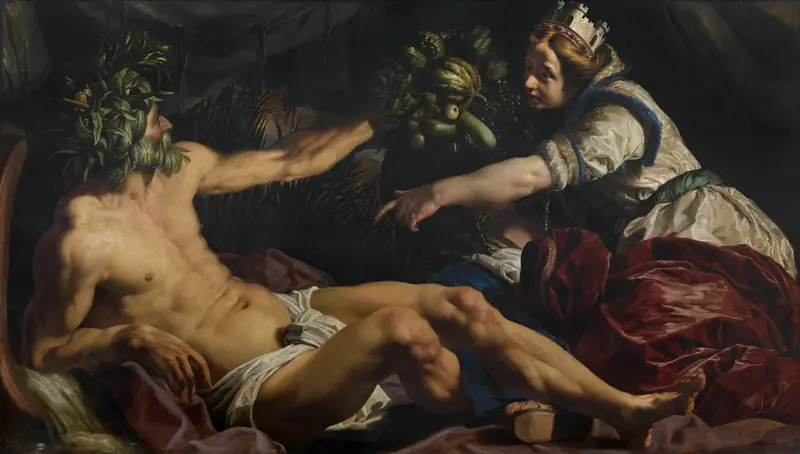
Scaldis and Antverpia
Abraham Janssens
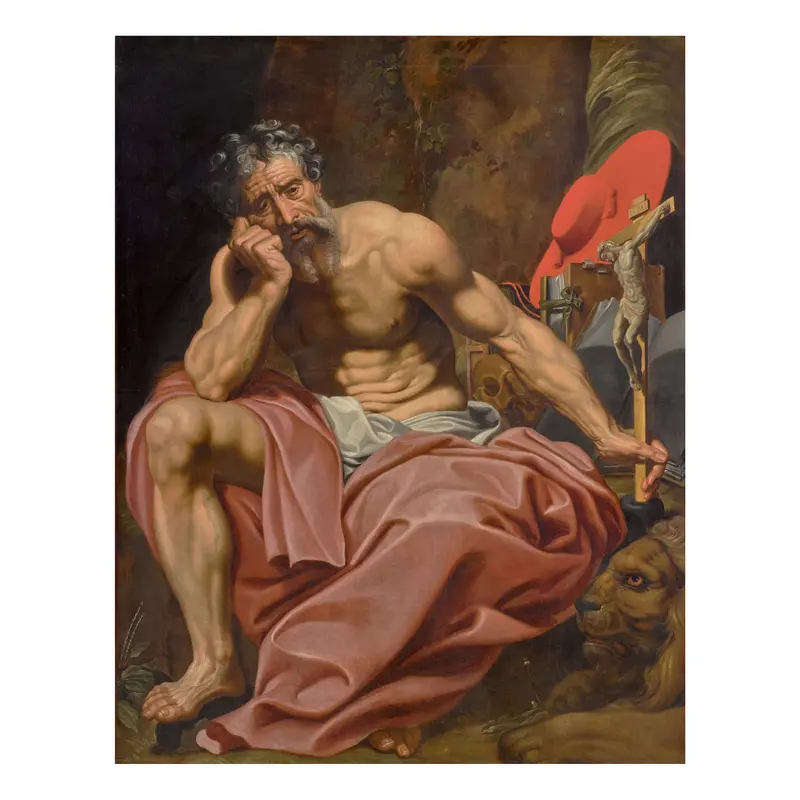
Saint Jerome
Abraham Janssens
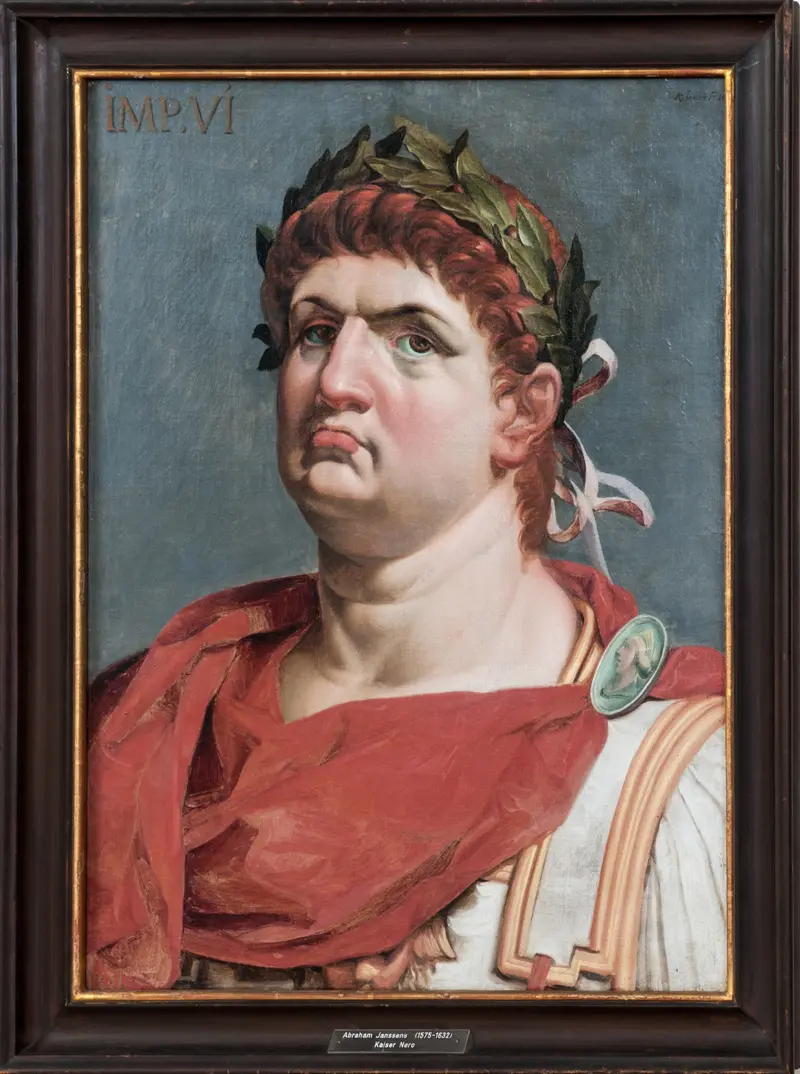
Nero
Abraham Janssens
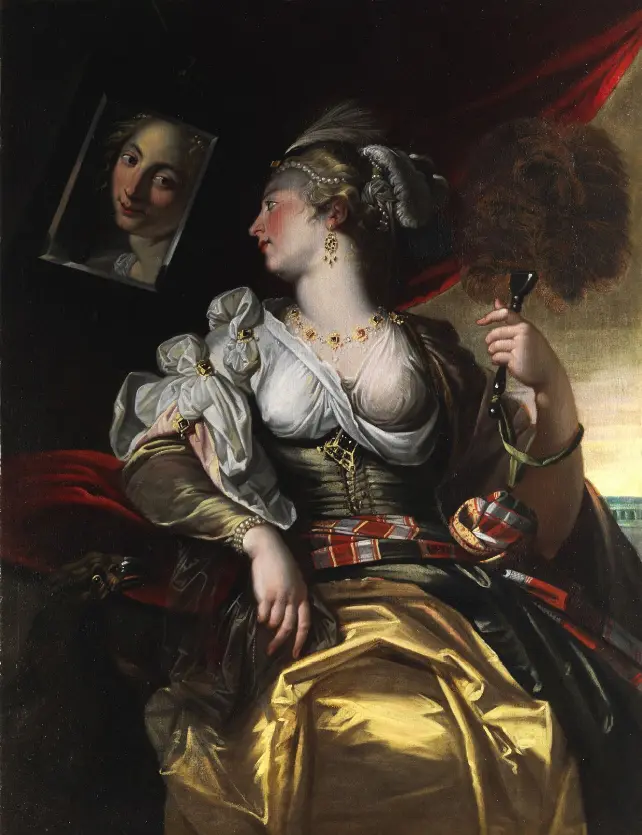
The Face
Abraham Janssens
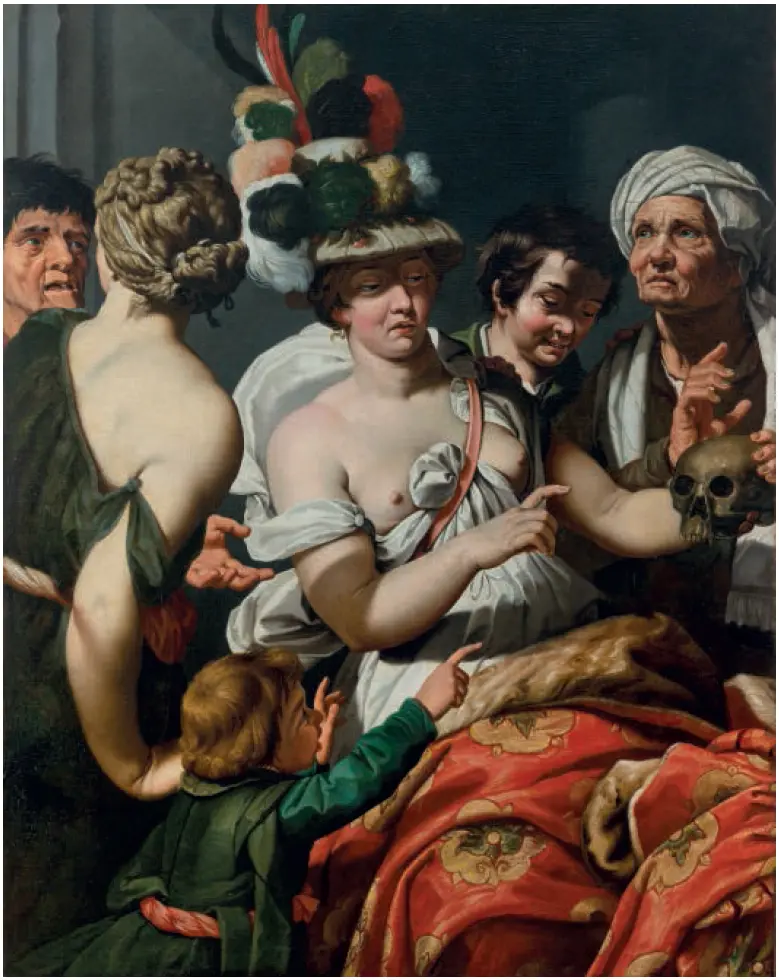
Vanitas
Abraham Janssens





