
Meleager presents the head of the Calydonian Boar to Atalanta — History & Facts
What draws the eye first in Meleager presents the head of the Calydonian Boar to Atalanta is the charged intimacy between the two figures, their bodies angled toward one another as if the world around them has faded away. The man’s bare back and quiver of arrows speak of recent action, but it is the exchange of gazes—his earnest, hers measured—that holds the moment in suspense. The boar’s head, gripped between them, is not just a trophy but a symbol of something unspoken: triumph, admiration, perhaps rivalry.
The lush folds of their garments—crimson, gold, and blue—catch the light in a way that heightens the drama, while the dark, wooded background presses in, making their encounter feel even more immediate. Painted between 1620 and 1625, this work by Abraham Janssens belongs to a world where mythological scenes were a favored stage for exploring human emotion and ambition. In the early seventeenth century, artists in the Southern Netherlands vied to impress patrons with their command of classical stories and their ability to render flesh, fabric, and feeling with equal conviction. Such paintings were destined for private collectors eager to display both their learning and their taste.
Little is recorded about the specific journey of this canvas, now in a Belgian collection, but its bold theatricality and rich palette are hallmarks of the era’s appetite for drama and psychological depth. The longer you look, the more the silent conversation between these mythic hunters draws you in.
More Artworks by Abraham Janssens

Jupiter Rebuked by Venus
Abraham Janssens
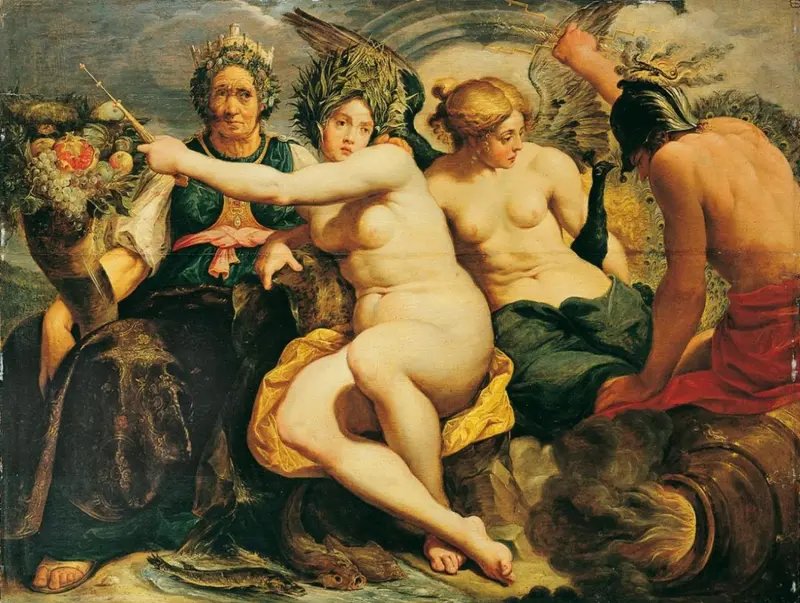
Allegorie der vier Elemente
Abraham Janssens
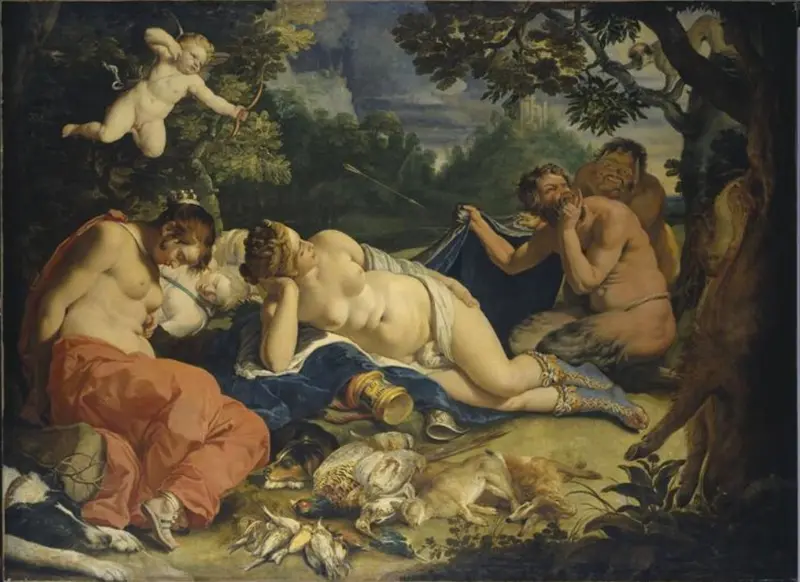
Diana and her nymphs spied on by satyrs
Abraham Janssens

Die Erweckung des Lazarus 153 Bavarian State Painting Collections
Abraham Janssens
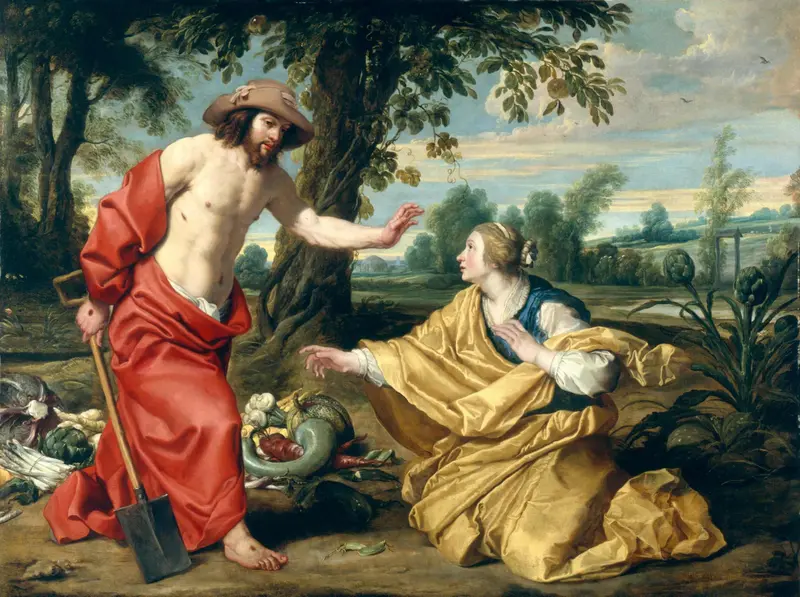
Noli me Tangere
Abraham Janssens
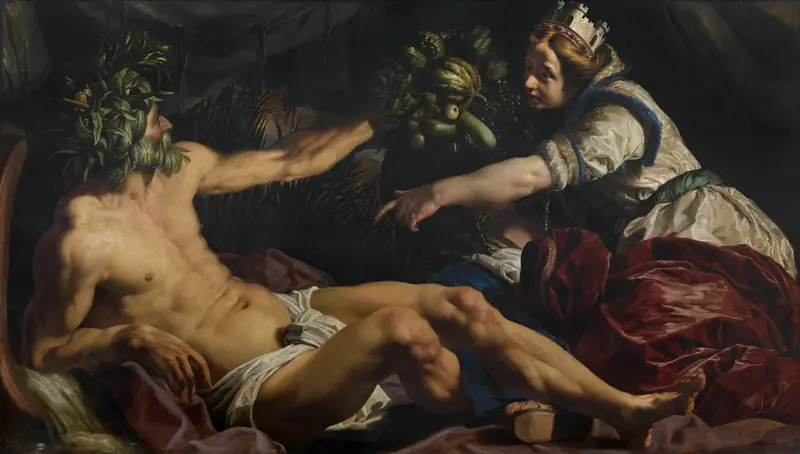
Scaldis and Antverpia
Abraham Janssens
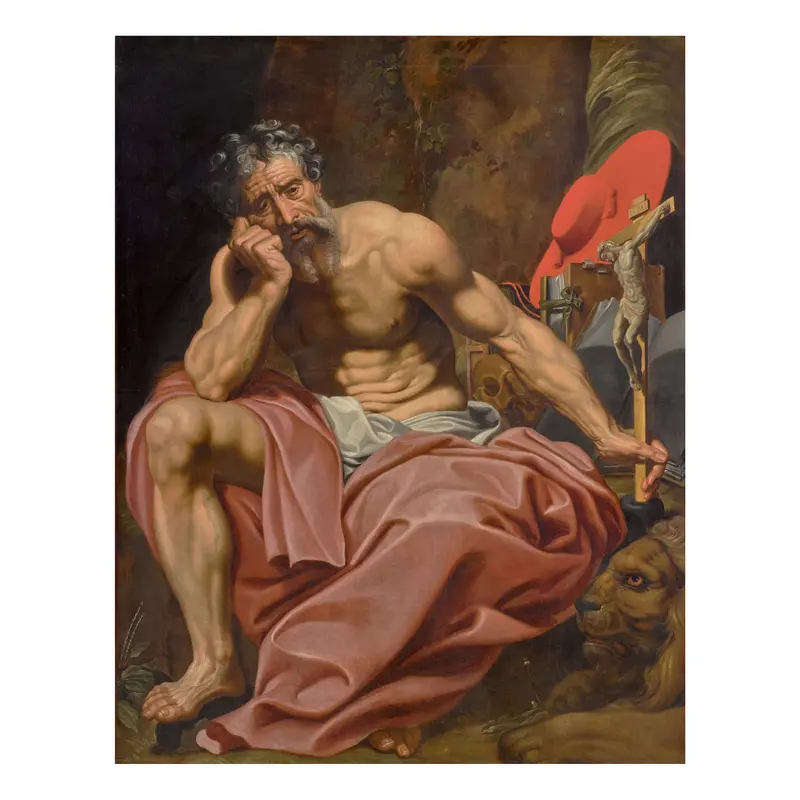
Saint Jerome
Abraham Janssens
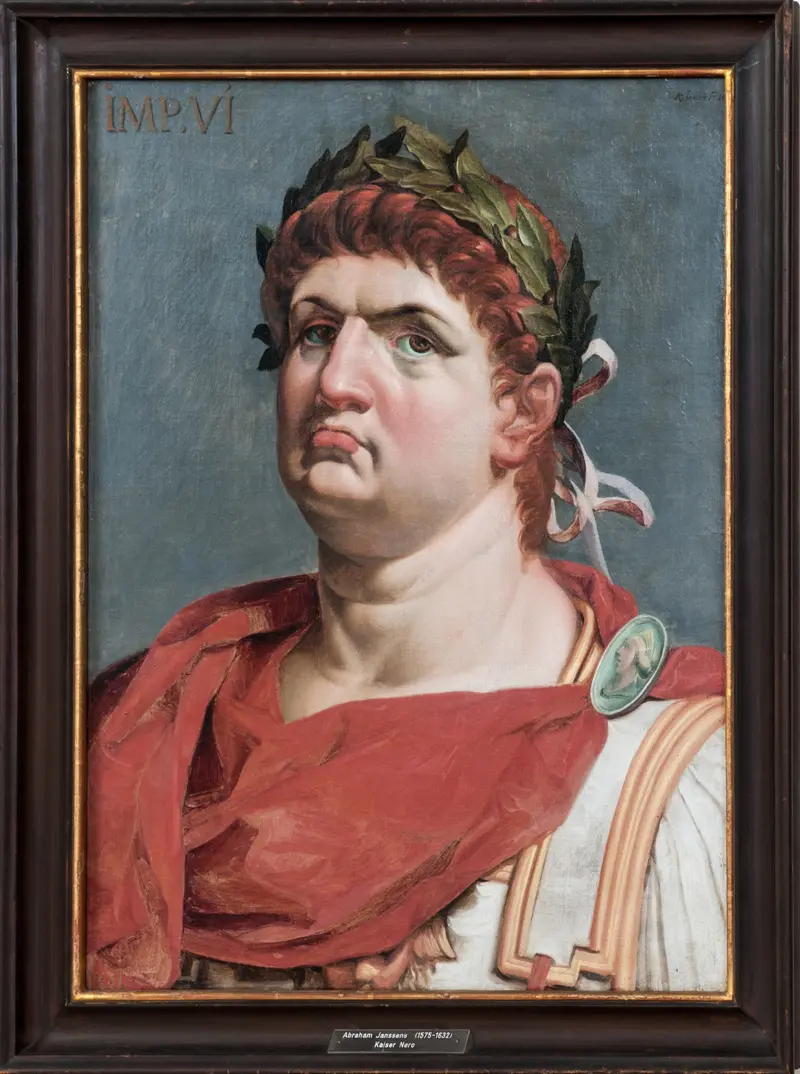
Nero
Abraham Janssens
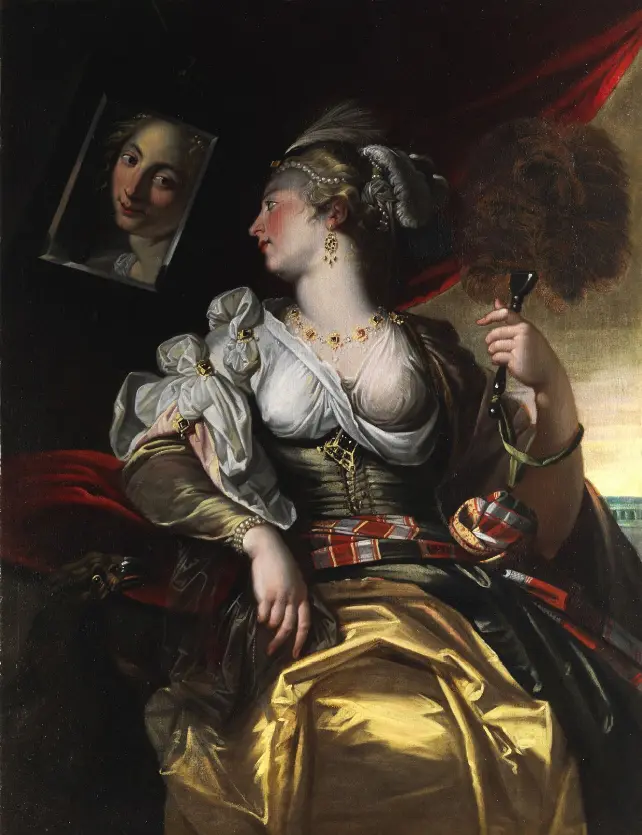
The Face
Abraham Janssens
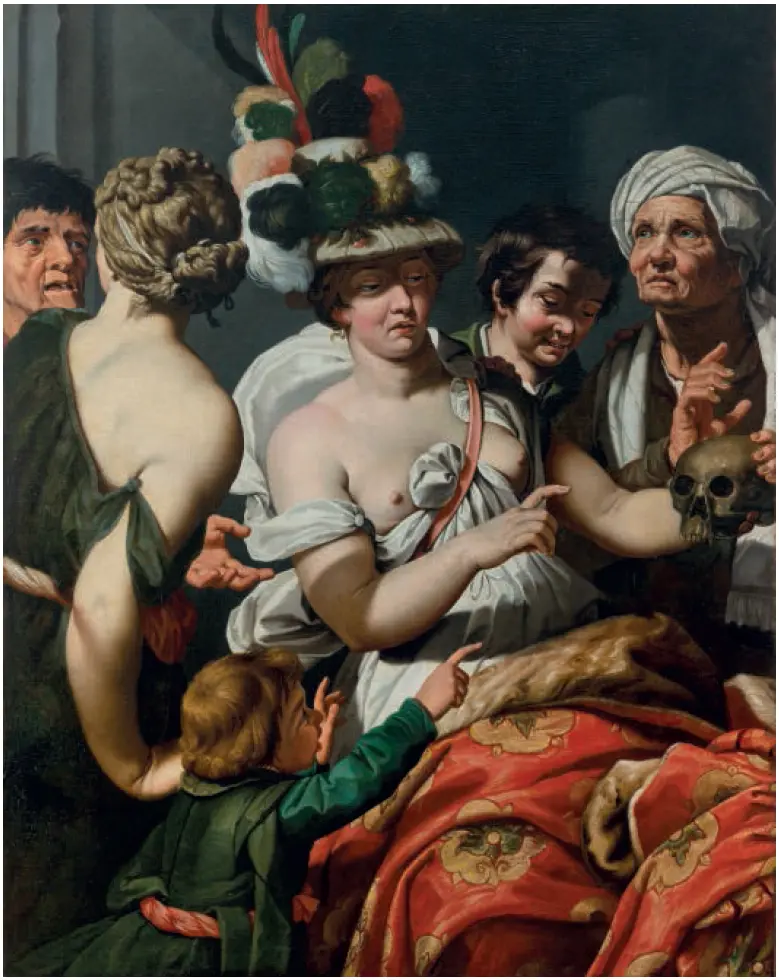
Vanitas
Abraham Janssens





