
Hermit with a Staff — History & Facts
No other artist in early nineteenth-century Japan was as fascinated by the figure of the wandering sage as Katsushika Hokusai. Hermit with a Staff, painted in 1804, stands among the earliest known works in which Hokusai explored the theme of the solitary ascetic. This subject was not only popular in Japanese folklore, but also resonated with Hokusai’s own restless spirit—he would later sign his works as “Gakyō Rōjin,” or “The Old Man Mad About Painting.” The painting’s date places it at a turning point in Hokusai’s career, as he was beginning to shift from ukiyo-e prints to more personal and experimental works. At the center of Hermit with a Staff, a lone figure pauses mid-step, his gnarled walking stick supporting a body bent by years of wandering.
The hermit’s gaze is fixed on the ground, suggesting meditation or perhaps a moment of revelation. His tattered robes and bare feet speak of a life lived outside society, while the sparse landscape—reduced to a few brushstrokes—heightens the sense of isolation. The staff itself, a recurring symbol in East Asian art, marks the figure as a spiritual seeker, much like the Taoist immortals or Buddhist monks depicted by earlier Chinese painters.
Unlike the more decorative approach of Maruyama Ōkyo, whose sages often appear in lush settings, Hokusai’s hermit is stripped to essentials, the emptiness around him echoing the Zen ideal of simplicity. The precise medium of Hermit with a Staff remains uncertain, though it is likely either ink on paper or silk, in keeping with Hokusai’s works from this period. The painting’s early provenance is unclear, as many of Hokusai’s smaller works circulated privately among collectors rather than through public exhibitions. Today, it stands as a testament to Hokusai’s lifelong fascination with the figure of the outsider and the spiritual journey.
Though less famous than his later Thirty-six Views of Mount Fuji, this painting offers a glimpse into the artist’s evolving style and his deep engagement with themes of solitude and enlightenment.
More Artworks by Katsushika Hokusai

The Great Wave off Kanagawa
Katsushika Hokusai
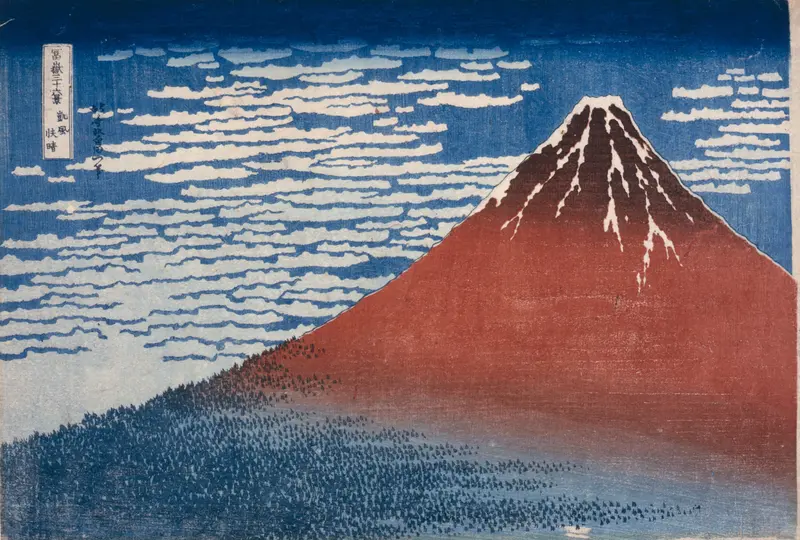
Fine Wind, Clear Morning (Red Fuji)
Katsushika Hokusai
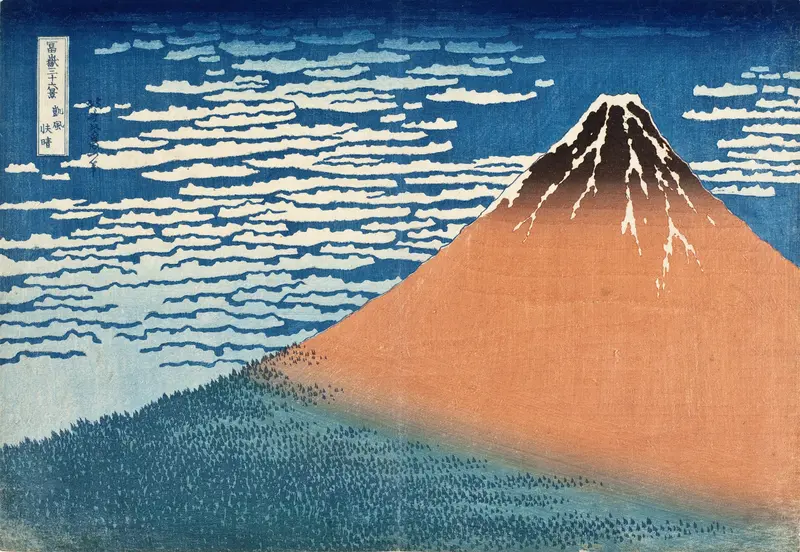
South Wind, Clear Dawn
Katsushika Hokusai
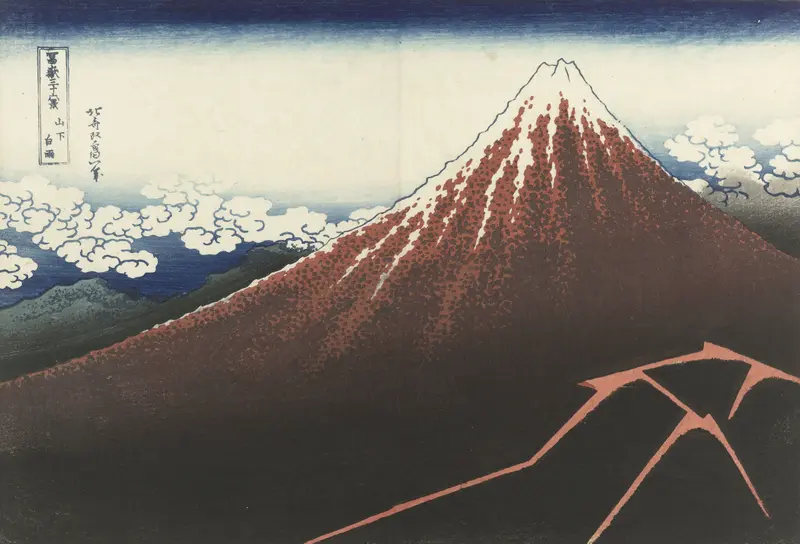
Rainstorm Beneath the Summit
Katsushika Hokusai
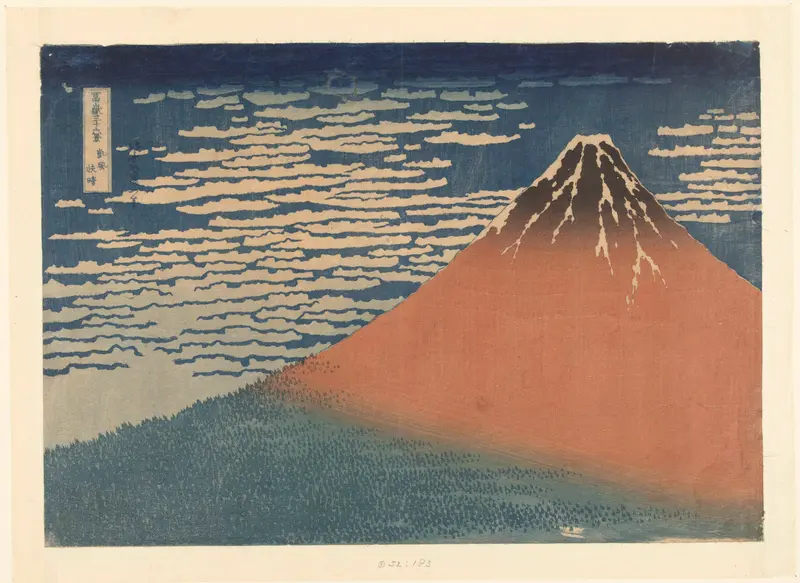
Clear Weather with a Southerly Wind
Katsushika Hokusai
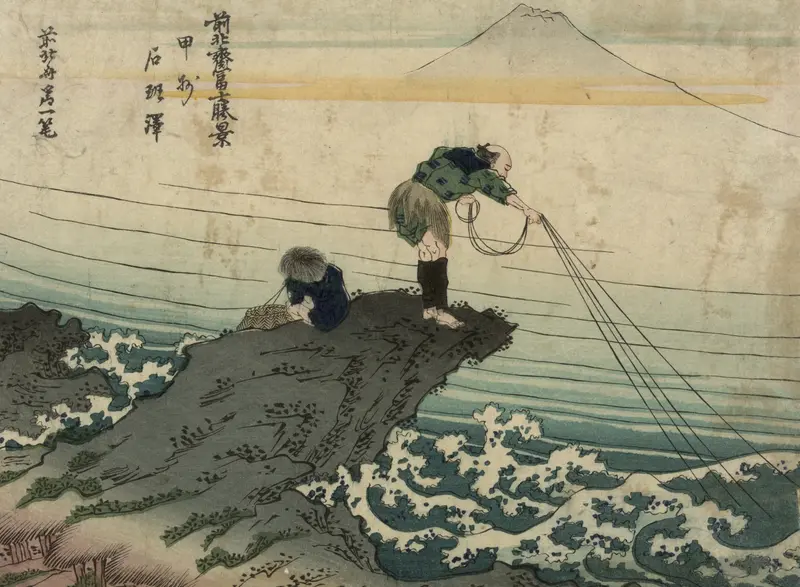
Kōshū kajikazawa
Katsushika Hokusai
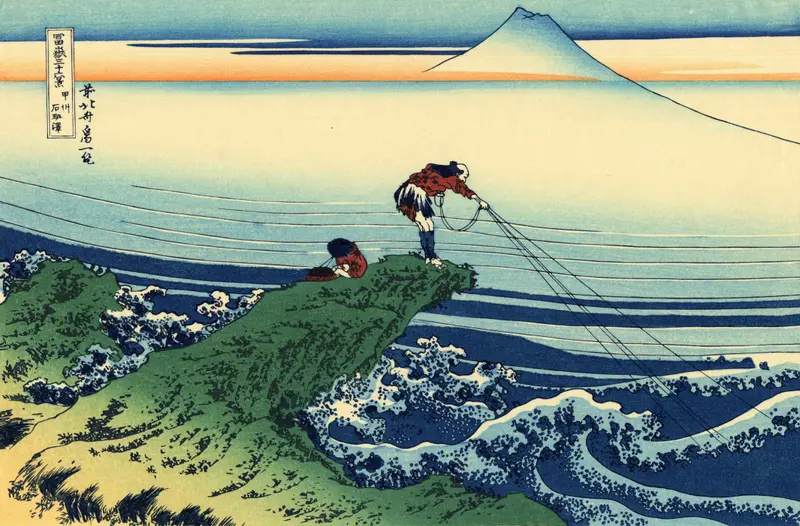
Kōshū kajikazawa 2
Katsushika Hokusai
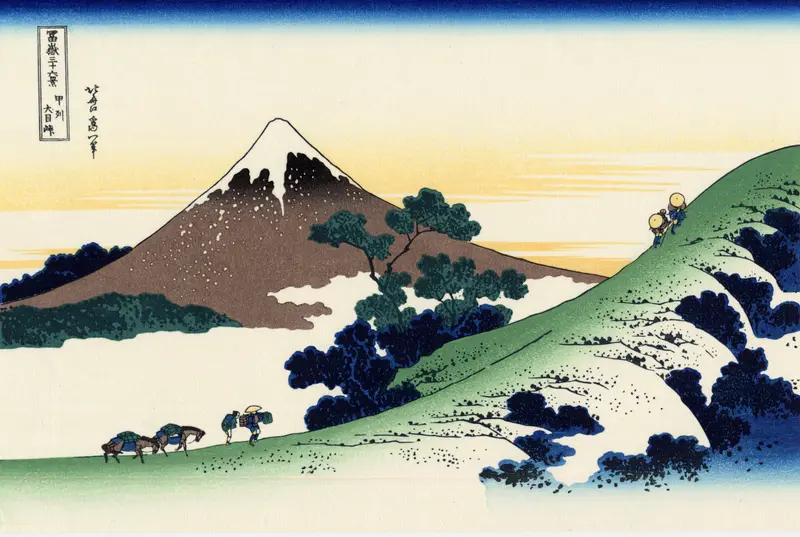
Inume Pass in Kai Province (Kôshû inume-tôge)
Katsushika Hokusai

Yoro Falls in Mino Province (Mino no Yoro no taki), from the series "A Tour of Waterfalls in Various Provinces (Shokoku taki meguri)"
Katsushika Hokusai
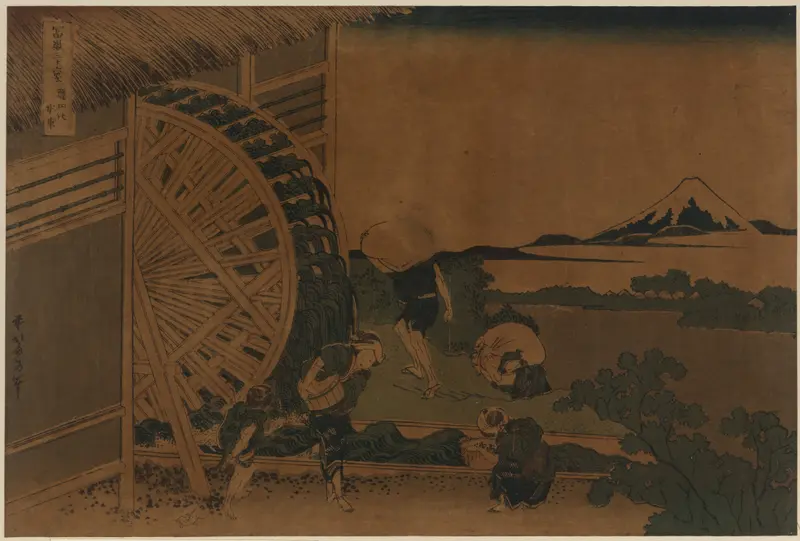
Onden no suisha
Katsushika Hokusai



