
House with dog — History & Facts
A figure stands sentinel before a house marked by bold, geometric color blocks, accompanied by a dark, alert dog—yet neither the person nor the animal is rendered with individual detail. Instead, Fernand Léger reduces them to sculptural forms, as if they too are part of the constructed environment. The eye is drawn first to the striking red letters on the house, then to the interplay of rectangles, circles, and lines that make up both the architecture and the landscape.
The palette is deliberate: warm creams and ochres set off by sharp black, purple, and orange, lending the scene a sense of both order and strangeness. There is a tension here between the organic curves of the trees and hills and the mechanical precision of the buildings—a world where nature and modernity meet, but do not blend. Painted in 1921, this work belongs to the period when Fernand Léger was exploring the visual language of Cubism and the machine age, a time when artists were fascinated by the possibilities of abstraction and the aesthetics of industry. The faceless figure and stylized dog speak to a new idea of humanity, one shaped by urbanization and technology, yet still rooted in familiar rituals of home and companionship.
Léger’s contemporaries, too, were reimagining the everyday: where Braque or Picasso might fragment a café scene, Léger gives us the clarity of a constructed world, almost like a stage set. History has kept few traces of this particular painting’s journey, but its presence today—marked simply as "own work"—invites us to linger over the puzzle of its forms and the future it once imagined.
More Artworks by Fernand Léger

The Tugboat Bridge
Fernand Léger
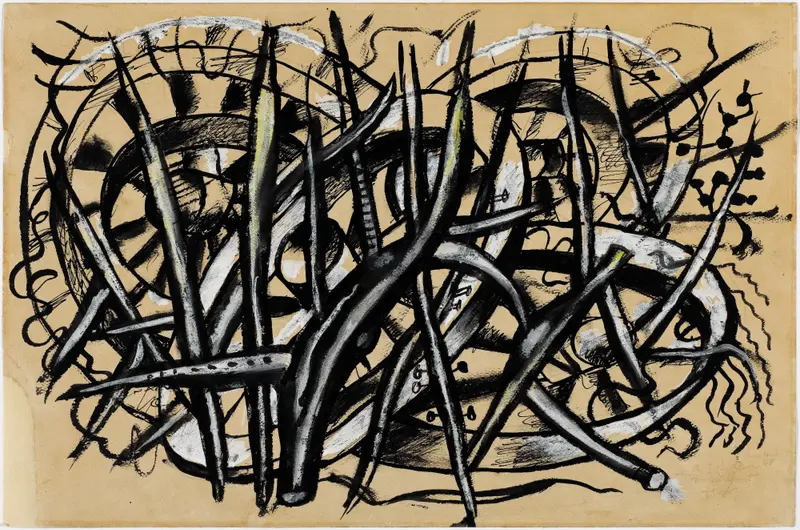
The Wheels
Fernand Léger

Le Cirque Médrano
Fernand Léger
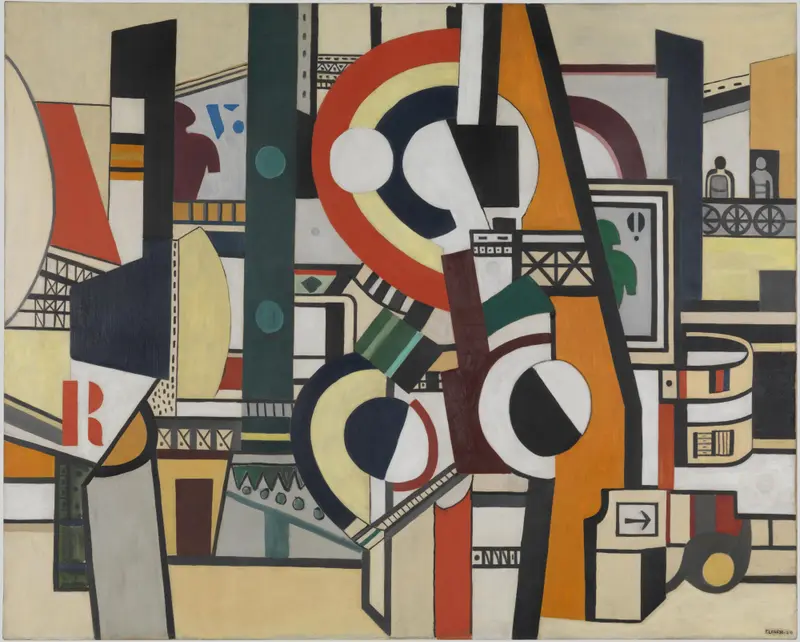
The Disks in the City
Fernand Léger
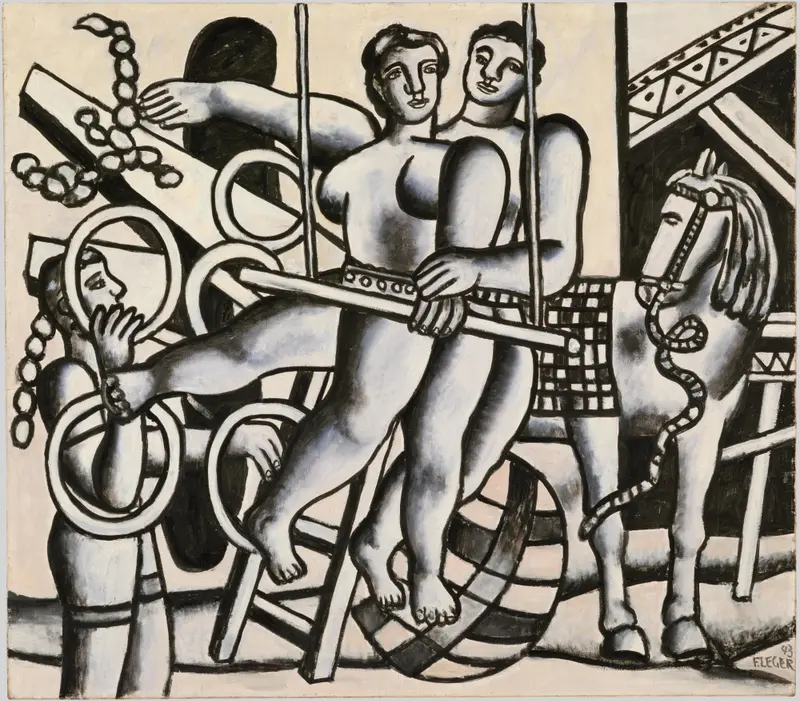
Le Jongleur et les acrobates
Fernand Léger
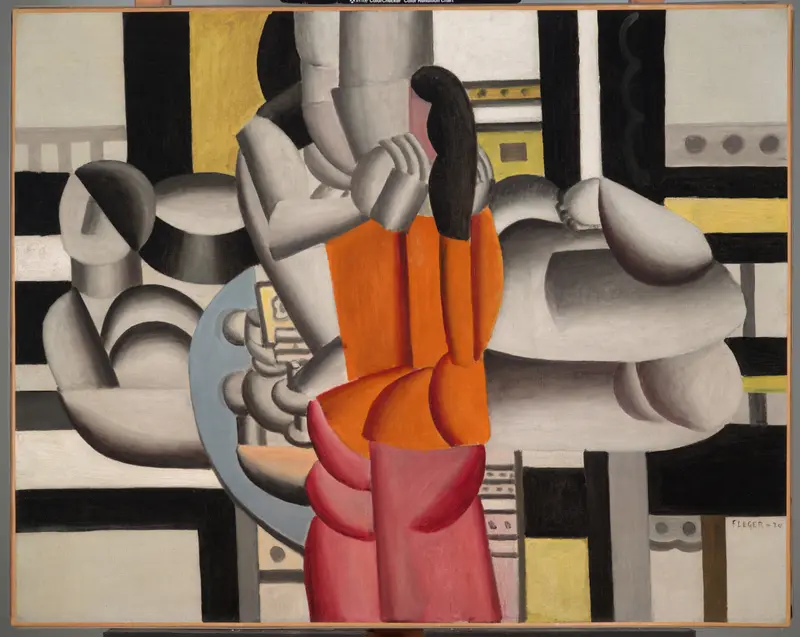
Three Women and Still Life (Déjeuner)
Fernand Léger
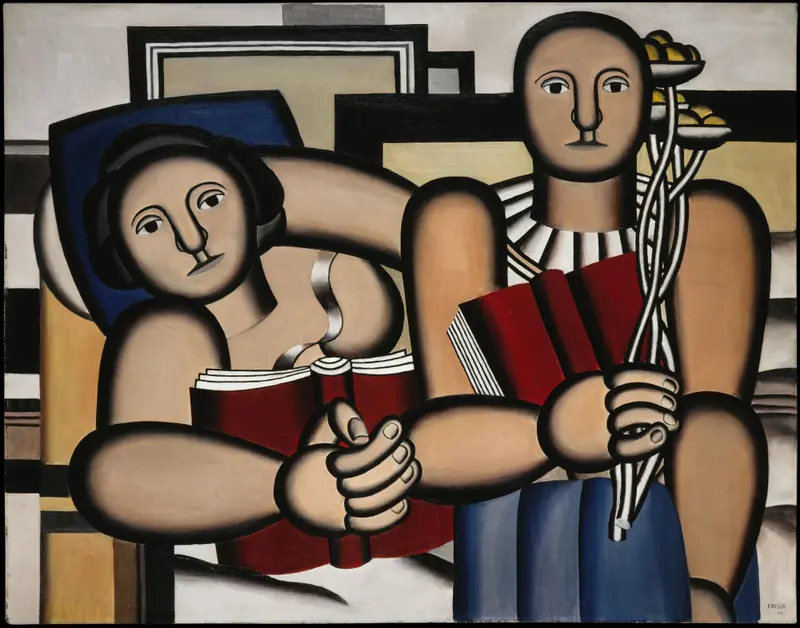
Reading
Fernand Léger
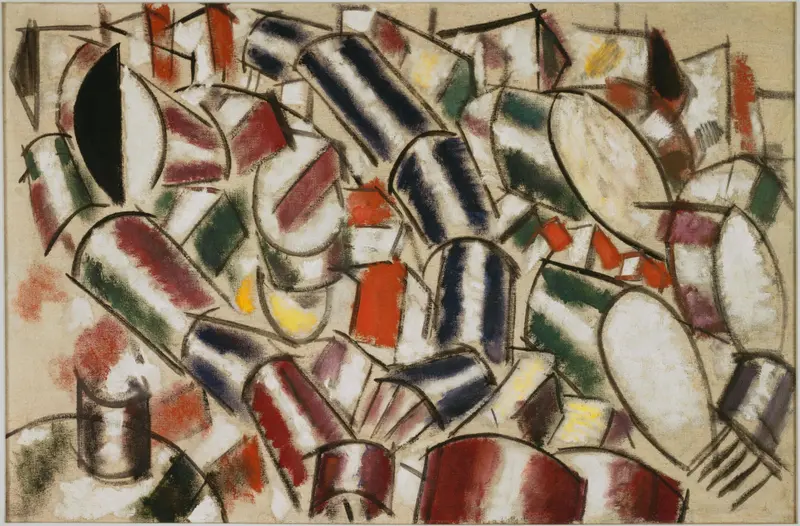
Femme couchée
Fernand Léger
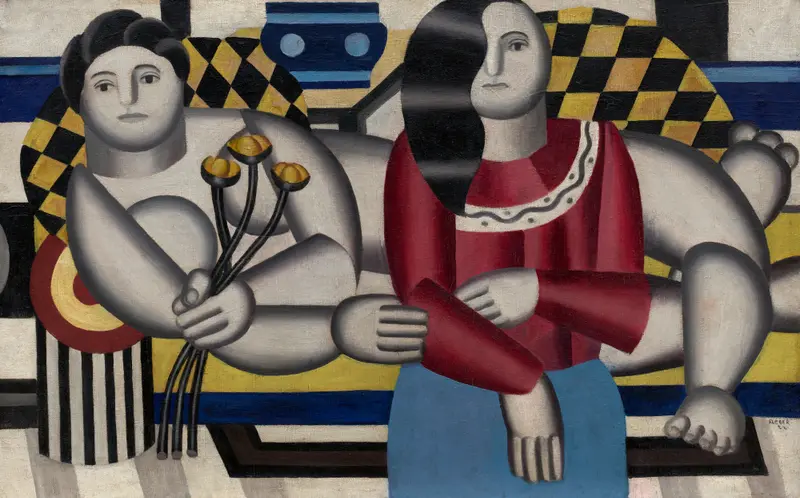
Woman holding flowers
Fernand Léger
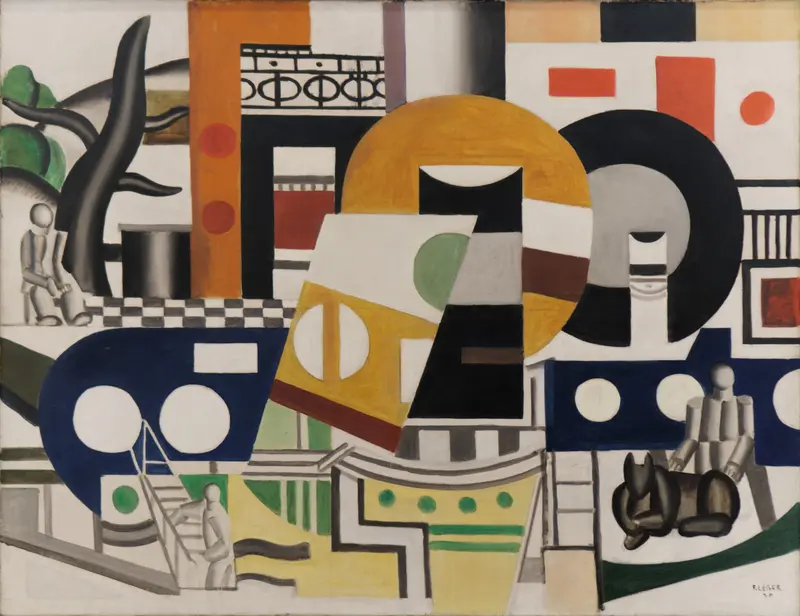
The Tug
Fernand Léger
More Landscape Art

The Starry Night
Vincent van Gogh

View of Delft
Johannes Vermeer

Water Lilies
Claude Monet

The Grand Canal, Venice, looking north-west from the Ca' Corner to the Ca' Contarini degli Scrigni, with the campanile of Santa Maria della Carità
Canaletto

Windsor Castle
Canaletto

The Grand Canal looking North-East from the Palazzo Dolfin-Manin to the Rialto Bridge
Canaletto