
Hunting Scene — History & Facts
What first draws the eye in Hunting Scene by Abraham Govaerts is the sheer abundance of life: a landscape teeming with animals, each caught in a moment of alertness or flight. The painter orchestrates a drama where the chase is both the subject and the setting, leading the viewer’s gaze from the shadowed foreground—where deer and boar pause at the water’s edge—into the sunlit middle distance, where a mounted hunter and his hounds press the pursuit. The light, cool and clear, pools in the center of the scene, illuminating the startled leap of a stag into the pond, while birds burst into the sky above.
Every detail, from the rippling water to the distant tower rising above the trees, is placed to heighten the sense of movement and suspense, inviting the viewer to follow the action deeper into the woods. Painted between 1600 and 1626, this work belongs to a period when Flemish artists like Govaerts specialized in lush, panoramic landscapes that doubled as showcases of nature’s variety and the rituals of aristocratic life. Such paintings were often commissioned by wealthy patrons eager to display their estates, their taste for hunting, or simply their appreciation for the orderly abundance of the countryside. The genre flourished in the Low Countries, where artists developed a language of light and foliage that could conjure entire worlds within a single frame.
Now housed in the Kunsthistorisches Museum, Hunting Scene stands as a window onto a world where the forest is both stage and actor, and where every glance reveals a new story unfolding in the undergrowth.
More Artworks by Abraham Govaerts

Forest landscape
Abraham Govaerts
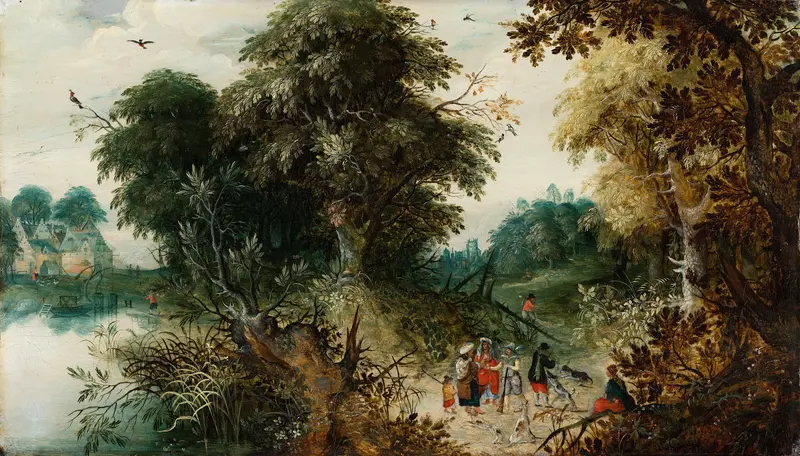
Forest View with Travellers
Abraham Govaerts
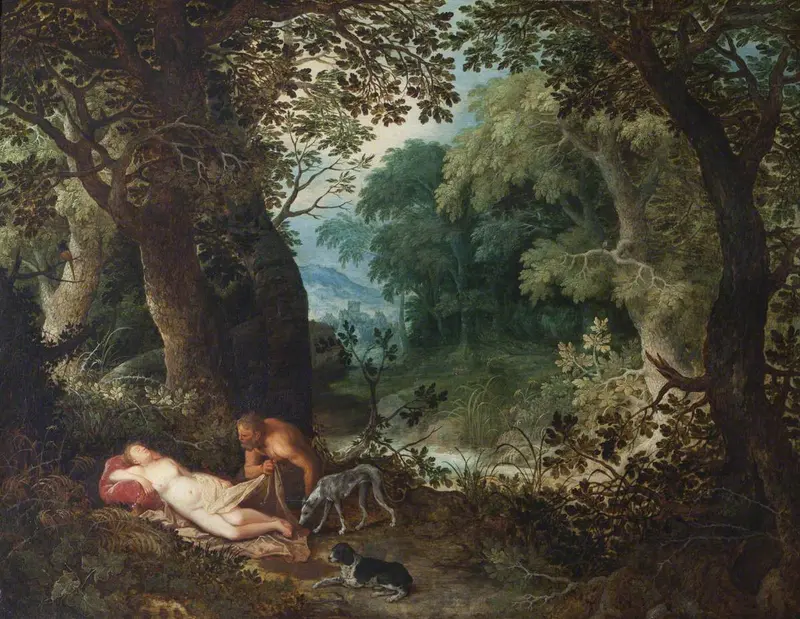
A Nymph and a Satyr
Abraham Govaerts
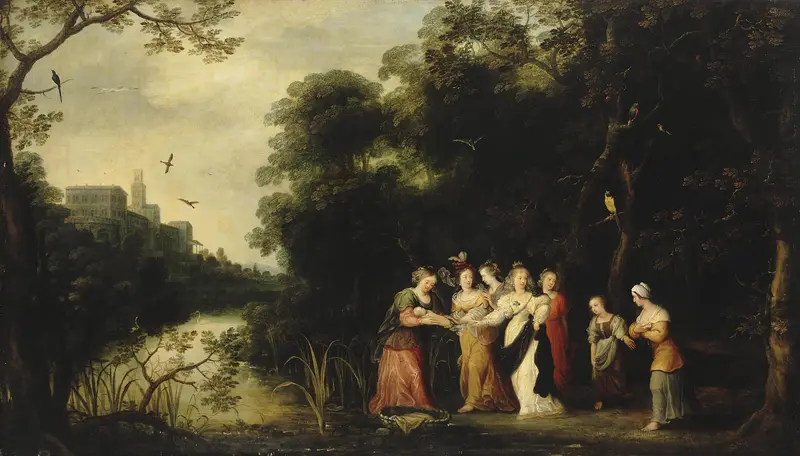
Finding of Moses
Abraham Govaerts
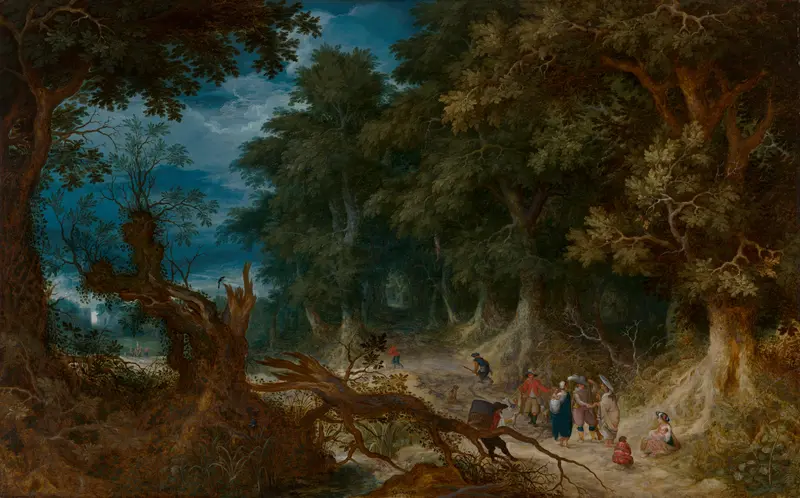
Wooded Landscape with Gipsy Women
Abraham Govaerts
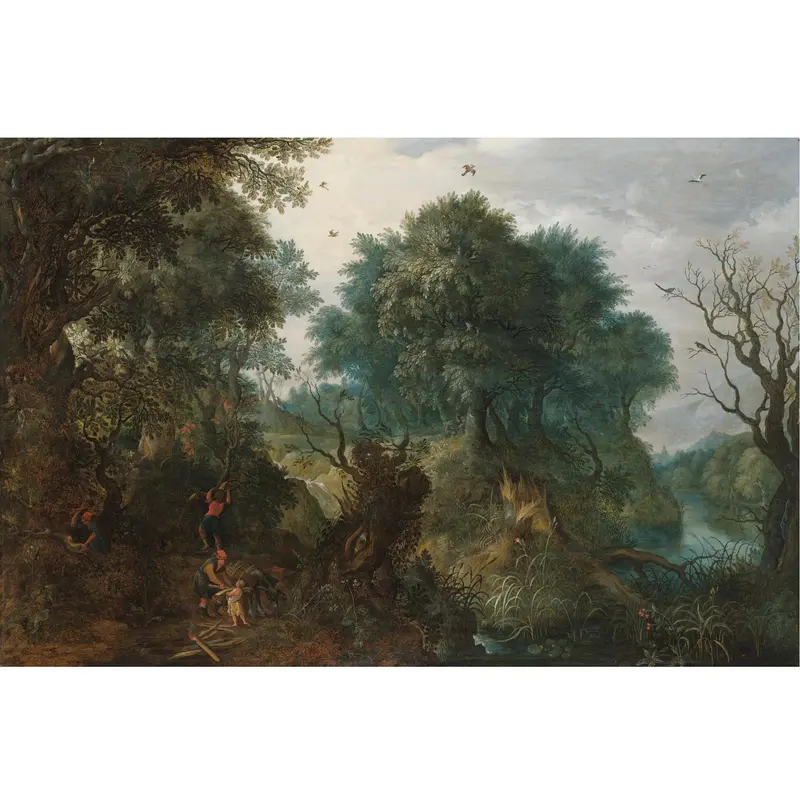
A Wooded Landscape with Woodcutters near a River
Abraham Govaerts
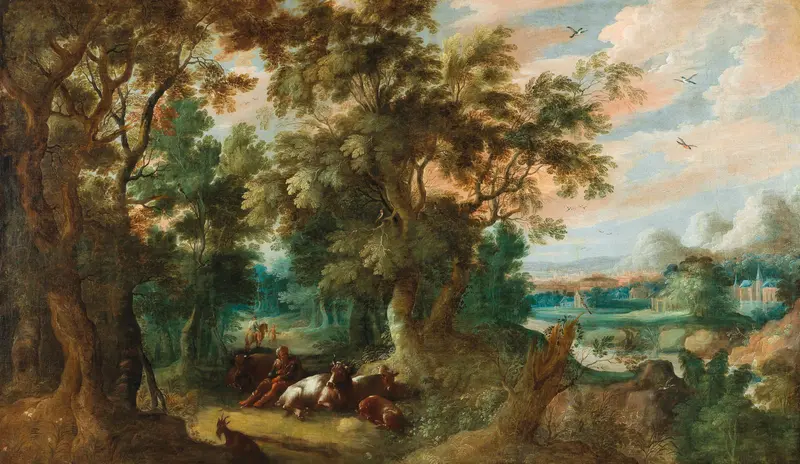
Wooded landscape with shepherds and their flock
Abraham Govaerts
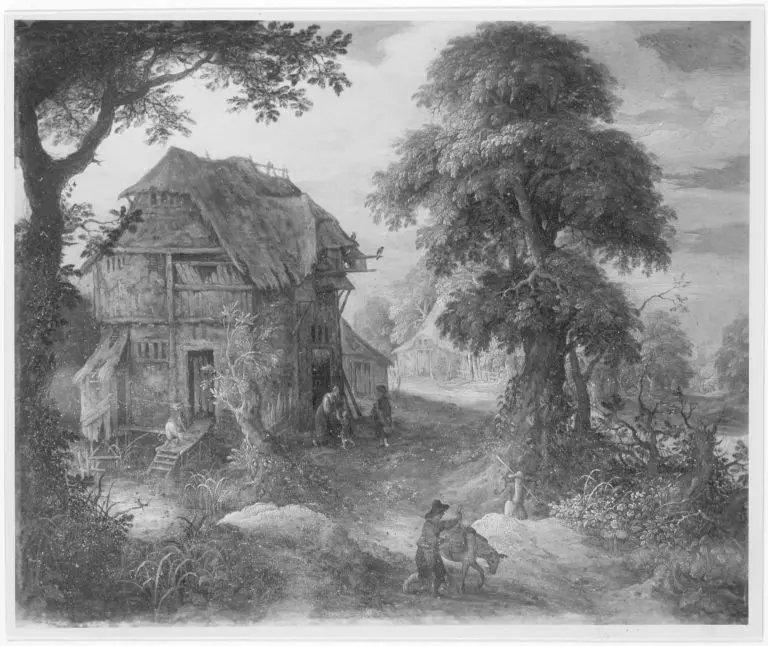
Dorf unter Bäumen
Abraham Govaerts
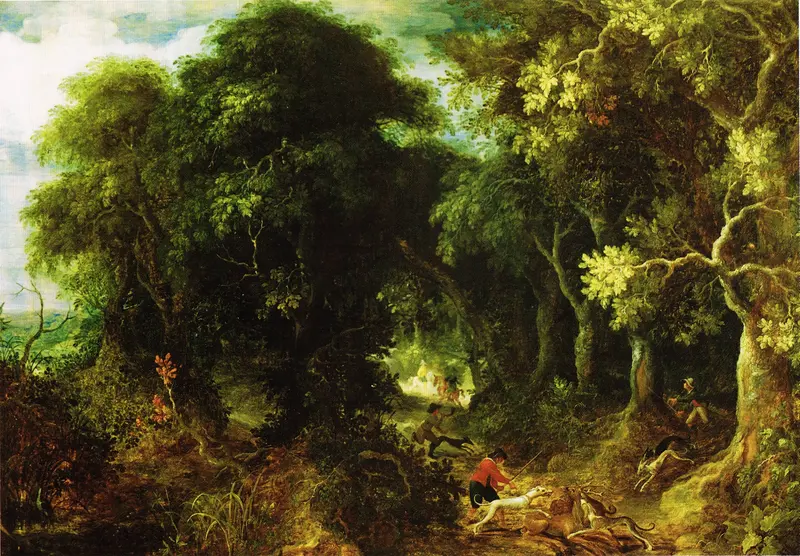
The Eternal Forest / Deer hunting
Abraham Govaerts
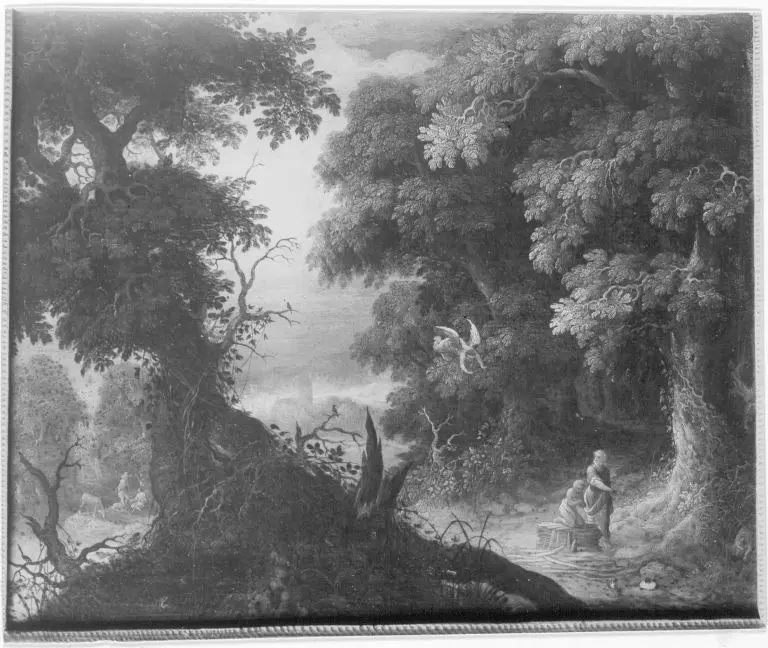
Wooded landscape with the sacrifice of Isaac (Genesis 22)
Abraham Govaerts
More Landscape Art

The Starry Night
Vincent van Gogh

View of Delft
Johannes Vermeer

Water Lilies
Claude Monet

The Grand Canal, Venice, looking north-west from the Ca' Corner to the Ca' Contarini degli Scrigni, with the campanile of Santa Maria della Carità
Canaletto

Windsor Castle
Canaletto

The Grand Canal looking North-East from the Palazzo Dolfin-Manin to the Rialto Bridge
Canaletto