Imatra Falls in Snow ; Imatra in Winter — History & Analysis
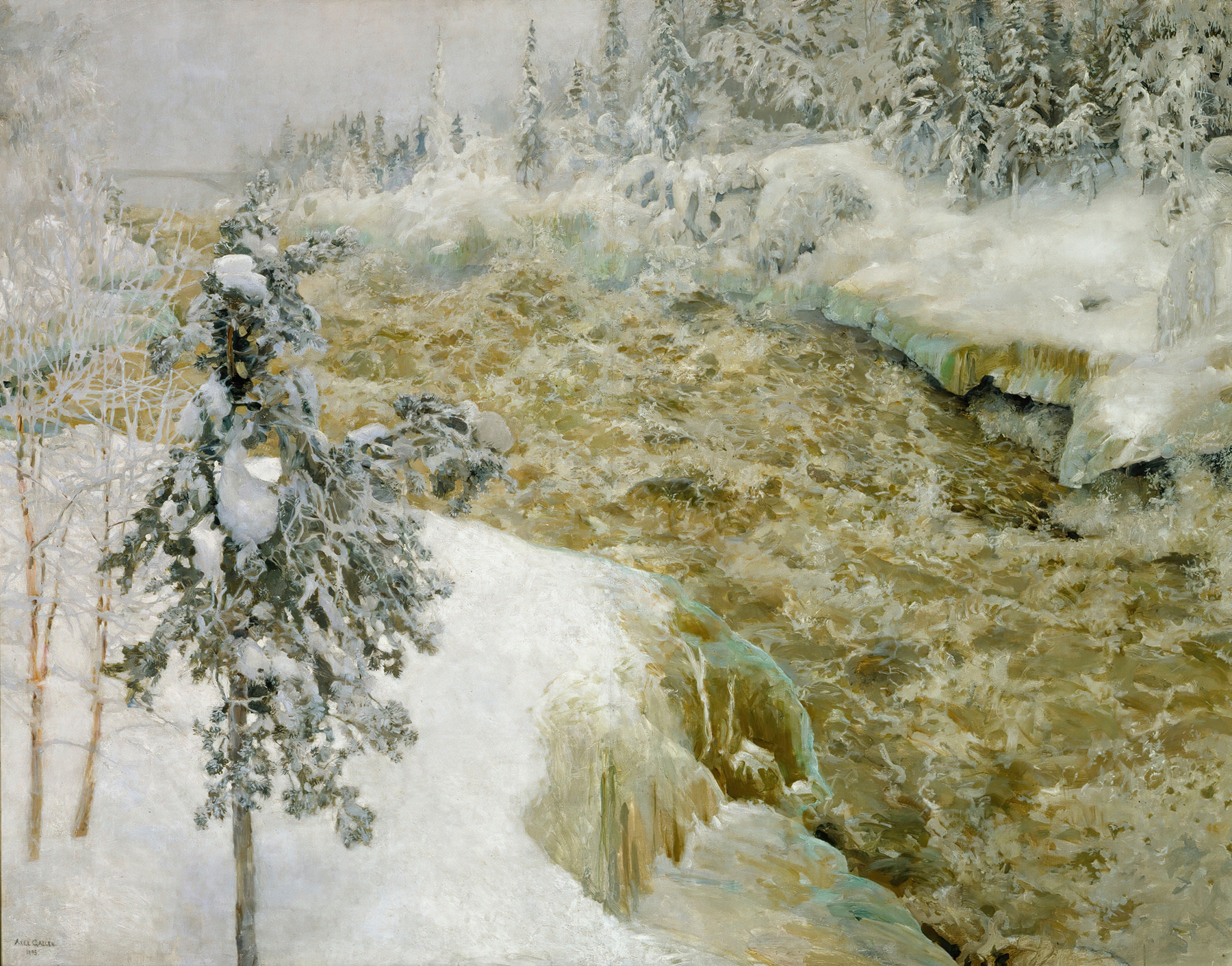
What if beauty was never meant to be finished? In Imatra Falls in Snow, the raw power of nature is captured in a perpetual state of movement, a frozen moment in time that invites endless contemplation. Look to the center of the canvas, where the tumultuous water cascades over the jagged rocks, appearing both fierce and serene. The artist employs a palette of icy blues and whites, harmoniously blending with hints of warm earth tones, which contrast beautifully against the stark winter landscape. Notice how the brushstrokes convey the fluidity of water, creating a dynamic tension that almost seems to vibrate with energy.
The heavy snow resting atop the rocks adds a layer of silence, a softening contrast to the rushing falls. Beneath this serene beauty lies a deeper narrative. The juxtaposition of the powerful water against the tranquil snow speaks to the duality of existence—the chaos and the calm coexisting in nature. The viewer's gaze is drawn to the way the water disrupts the stillness, embodying life's relentless movement and the inevitability of change.
This tension resonates with the viewer, inviting reflection on the fleeting nature of beauty and tranquility. In 1893, Akseli Gallen-Kallela painted this piece during a pivotal time in his career while living in Finland. Influenced by the national romanticism movement, he sought to capture the essence of Finnish landscapes and folklore. This period marked an exploration of identity and nature's grandeur in a rapidly modernizing world, reflecting both personal and collective sentiments in the face of change.