
In springtime — History & Facts
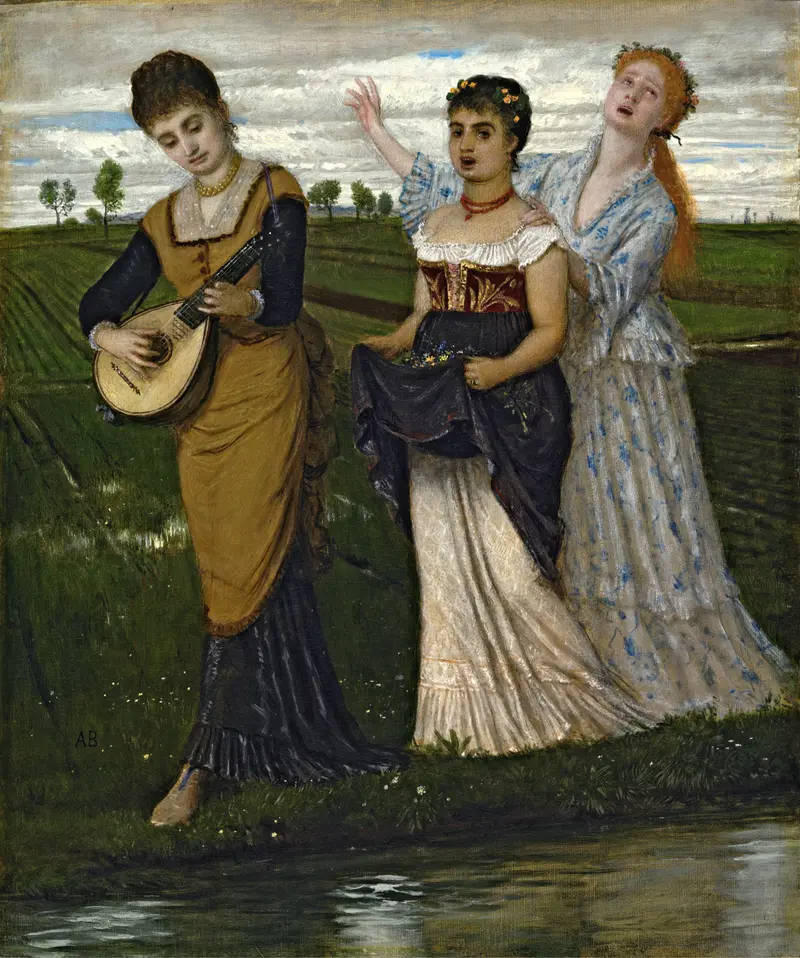
The first thing to catch the eye in In springtime is the quiet contrast between the two women: one gazes out, meeting the viewer with calm composure, while the other turns away, absorbed in her music. The woman in blue, hands full of delicate blossoms, stands as if pausing mid-thought, her embroidered bodice and layered jewelry suggesting a world of careful ritual and festivity. Next to her, the musician in red seems to animate the air itself, the curve of her lute echoing the gentle rise of the distant hills.
Sunlight picks out the intricate patterns of their garments, while the trees behind them lean in, framing the pair against a sky that shifts from blue to stormy grey. This is a scene that lingers in the moment before the music begins—or perhaps just after it has faded. Painted by Arnold Böcklin in 1873, this work belongs to a period when artists across Europe were reviving myth, legend, and pastoral fantasy, often for a growing bourgeois audience hungry for beauty and escape. Böcklin, known for his dreamlike landscapes and symbolic figures, here turns to a quieter, almost theatrical reverie—one that reflects both the nostalgia and the invention of the late nineteenth century.
The painting now resides in the National Gallery of Victoria, Melbourne, a reminder of how such images traveled far from their origins, carried by collectors and institutions eager to claim a piece of the era's imaginative world. Look again at the hands, the flowers, the attentive faces: all the clues of a story just beyond words, waiting to be read.
More Artworks by Arnold Böcklin

Die Toteninsel III
Arnold Böcklin
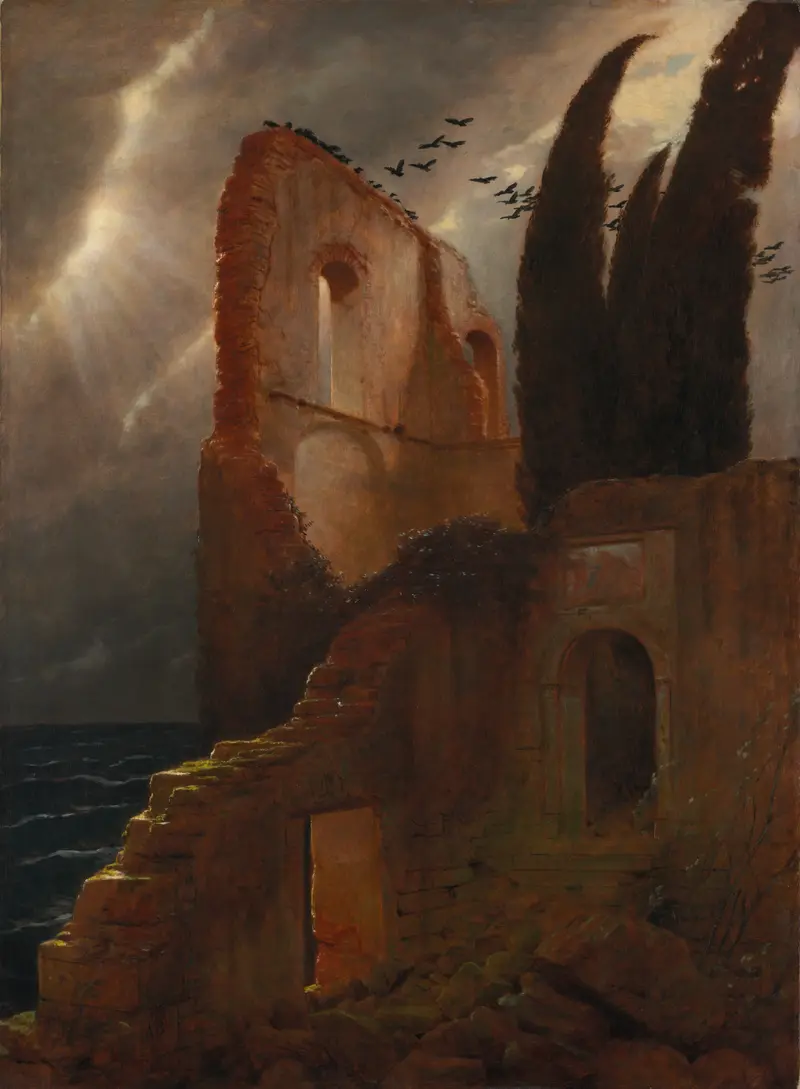
Ruin by the Sea
Arnold Böcklin
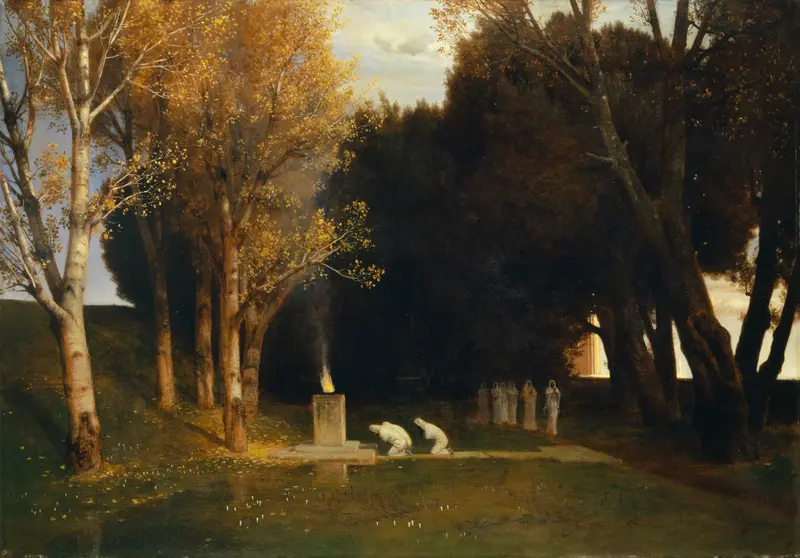
The Sacred Grove
Arnold Böcklin
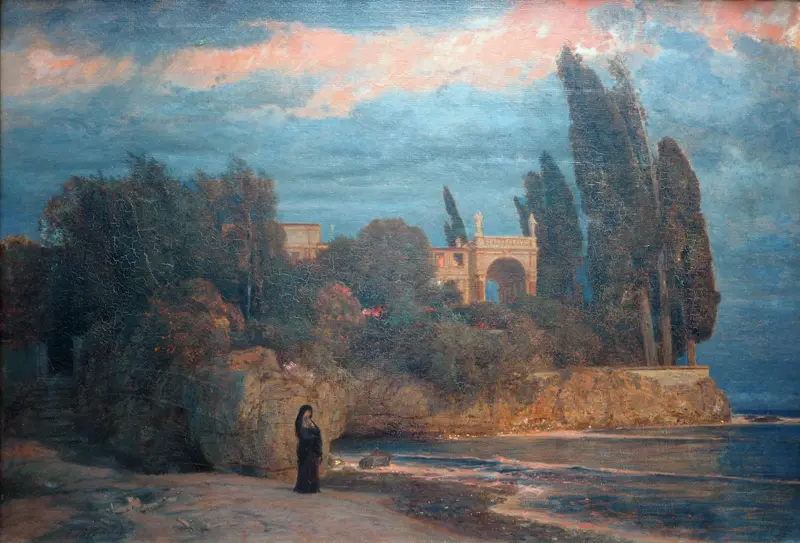
Villa by the Sea
Arnold Böcklin
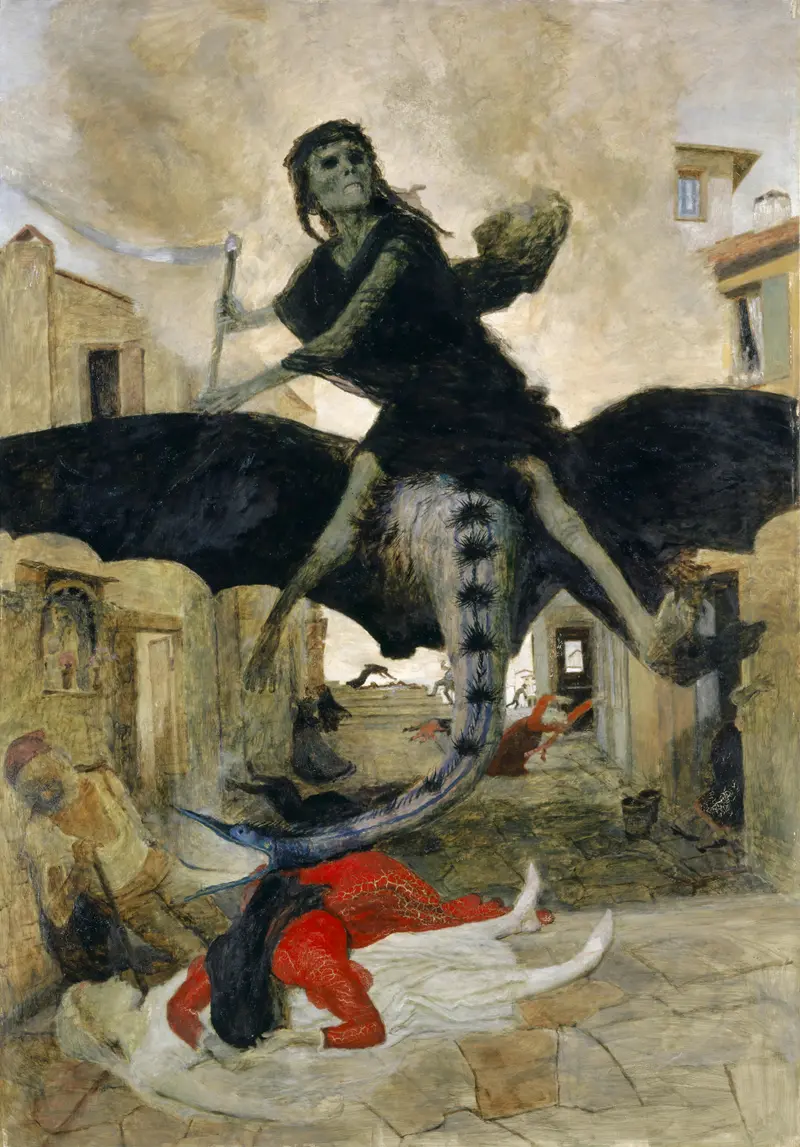
The Plague
Arnold Böcklin
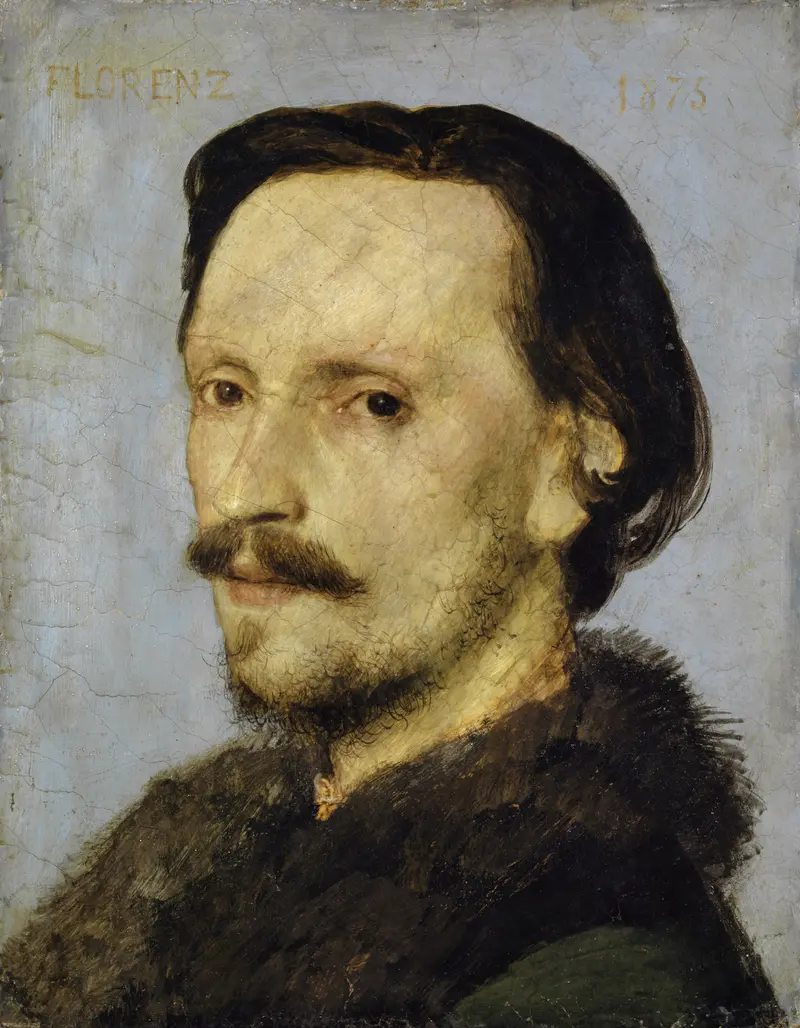
Böcklin Bildnis des Kunsthistorikers Adolph Bayersdorfer, 1875
Arnold Böcklin
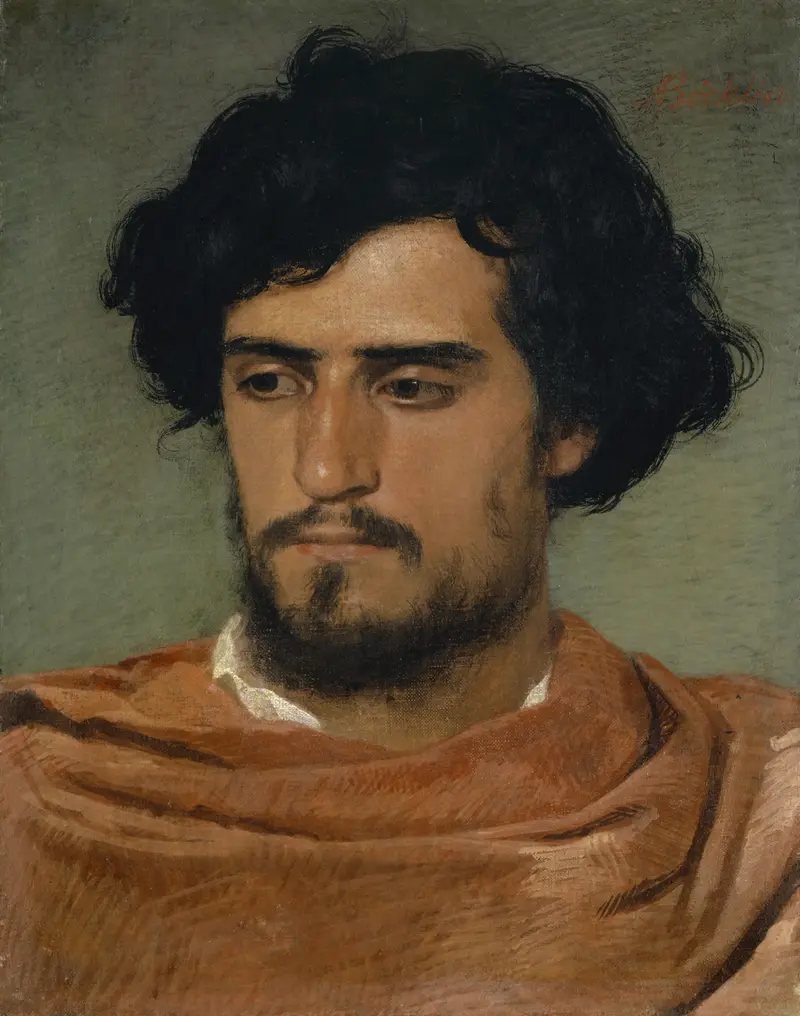
Head of a Roman
Arnold Böcklin
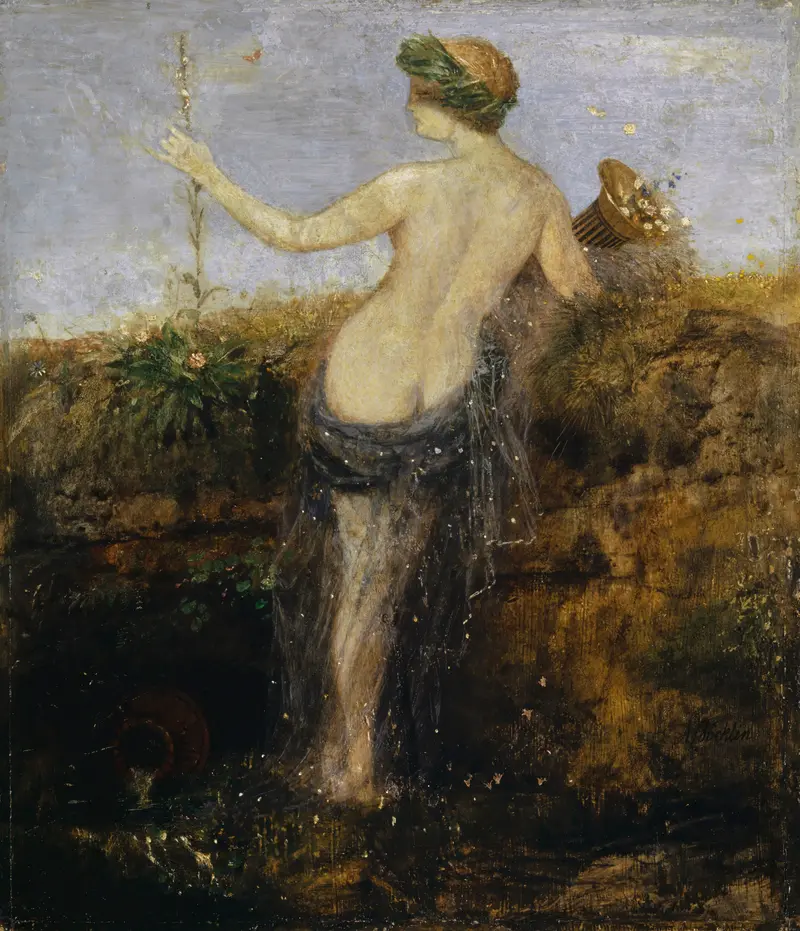
Nymphe with Horn of Plenty
Arnold Böcklin
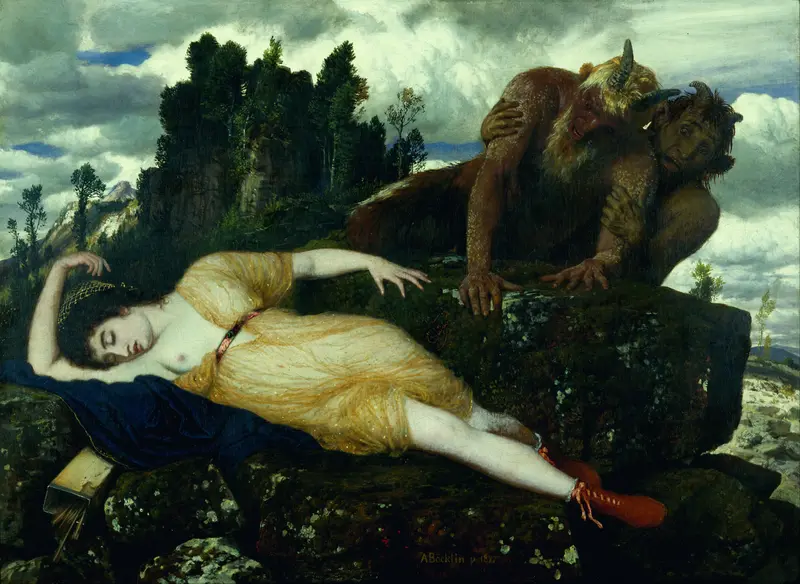
Sleeping Diana Watched by Two Fauns
Arnold Böcklin
Spring (Songs of Spring)
Arnold Böcklin
More Genre Scene Art

Banquet of the Officers of the St George Civic Guard
Frans Hals

Rembrandt and Saskia in the Scene of the Prodigal Son
Rembrandt van Rijn

Bal du moulin de la Galette
Pierre-Auguste Renoir

Quadrille at the Moulin Rouge
Henri de Toulouse-Lautrec

A Burial at Ornans
Gustave Courbet

When Will You Marry?
Paul Gauguin