
Infantin (Spanierin) — History & Facts
The first thing that seizes the eye in Infantin (Spanierin) is the mask-like face, both regal and impenetrable, set adrift in a sea of swirling blue and green. The sitter’s gaze is unwavering, almost challenging, her features carved in bold, decisive strokes of ochre, vermilion, and turquoise. The brushwork is thick and restless, as if the paint itself is alive, circling the head in a halo of color that hints at a crown or a headdress.
Every patch of pigment has its own energy: the red and pink shapes near the ears could be flowers, or perhaps echoes of Spanish costume, but they also work as pure color, drawing attention to the sitter’s alert expression. The palette is both hot and cool, the contours outlined in black, heightening the sense of drama and presence. Painted around 1912-1913, this work belongs to a moment when Alexej von Jawlensky was exploring the expressive power of the human face, stripping away detail to reach something elemental. At this time, artists across Europe were reimagining the portrait, moving away from likeness and toward inner life—Jawlensky’s contemporaries in the Expressionist movement, like Matisse and Kandinsky, were similarly drawn to bold color and simplified form, but Jawlensky’s faces are especially iconic, each one a kind of painted mask.
Works like this were rarely made for private clients; rather, they were statements for the new avant-garde exhibitions and collectors hungry for the shock of the new. The precise history of this painting is fragmentary—recorded in auction sales in London and New York, it has passed through hands as a vivid relic of a restless, searching era. The energy of its brushwork and the mystery of its gaze invite viewers to linger, searching for the person behind the paint.
More Artworks by Alexej von Jawlensky

Murnau
Alexej von Jawlensky
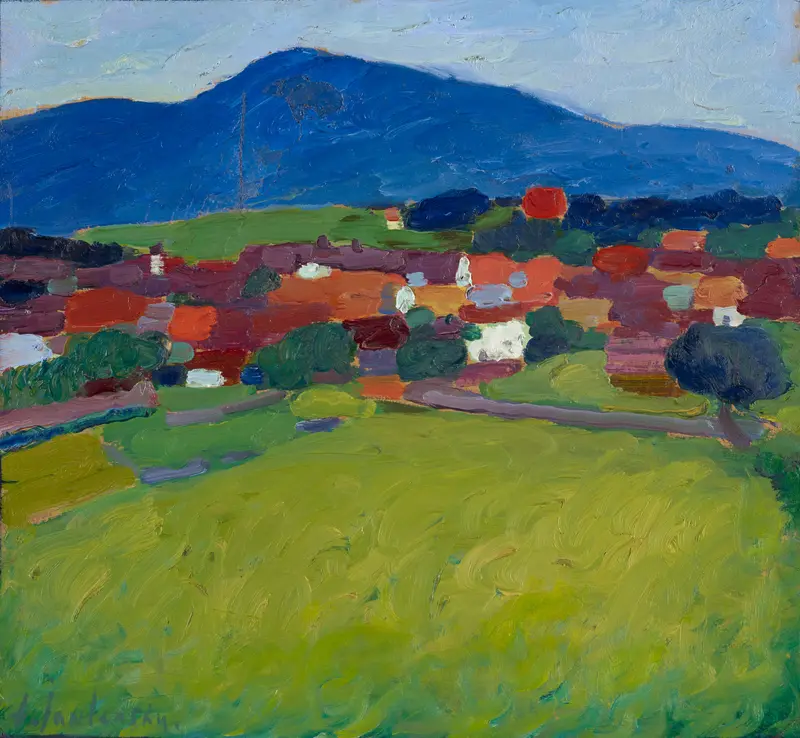
The Village Of Murnau
Alexej von Jawlensky
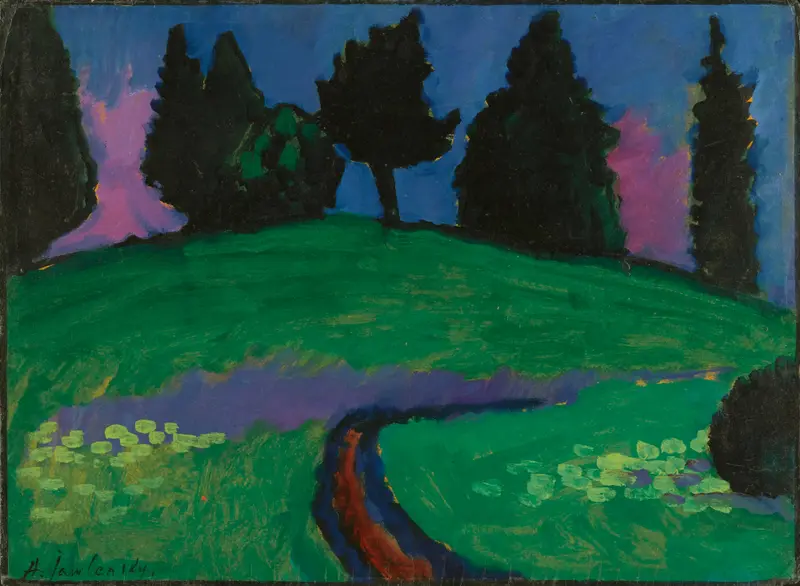
Dunkle Bäume über Grünem Hang (Dark Trees Over Green Slope)
Alexej von Jawlensky
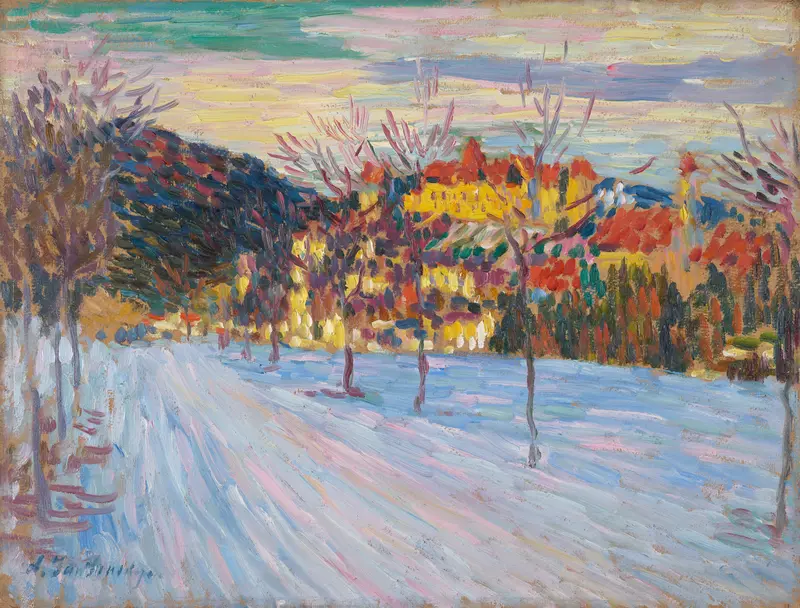
Füssen
Alexej von Jawlensky
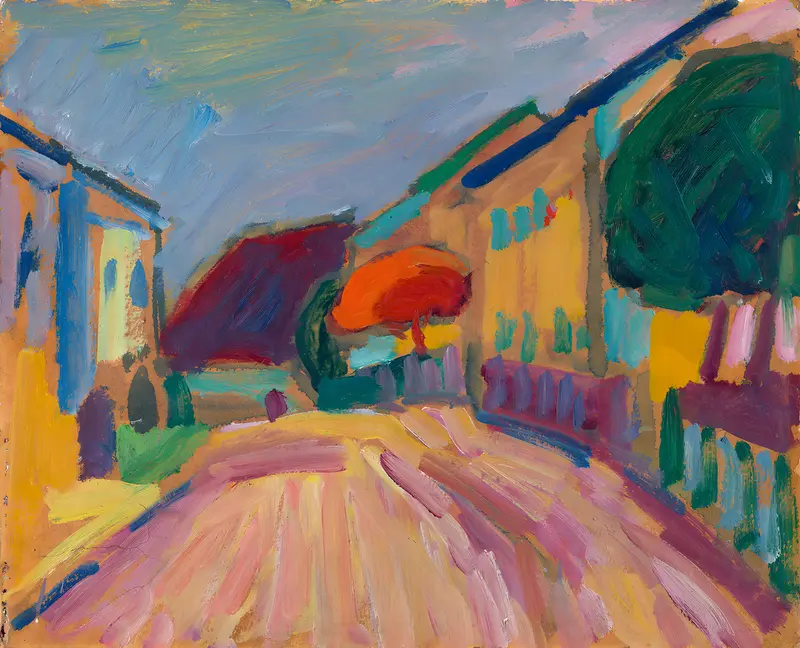
Sketch from Murnau
Alexej von Jawlensky
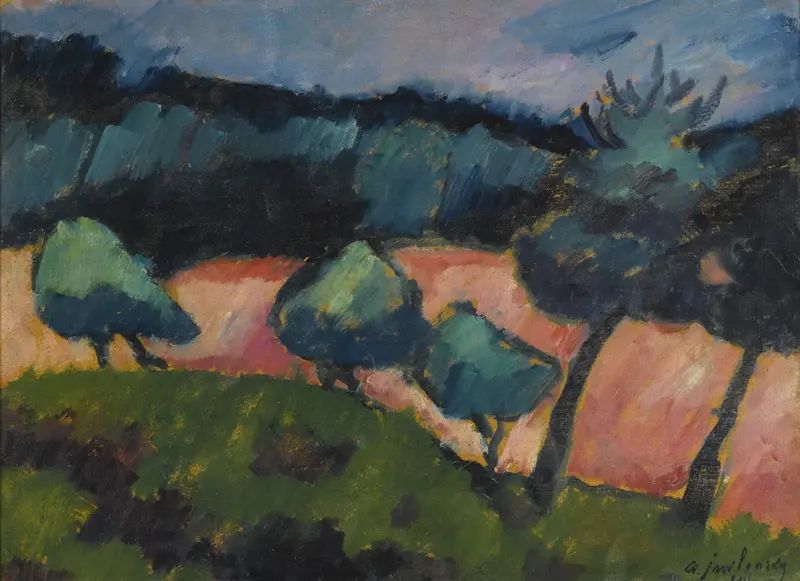
Bäume und Dünen in Prerow (Trees and dunes in Prerow)
Alexej von Jawlensky
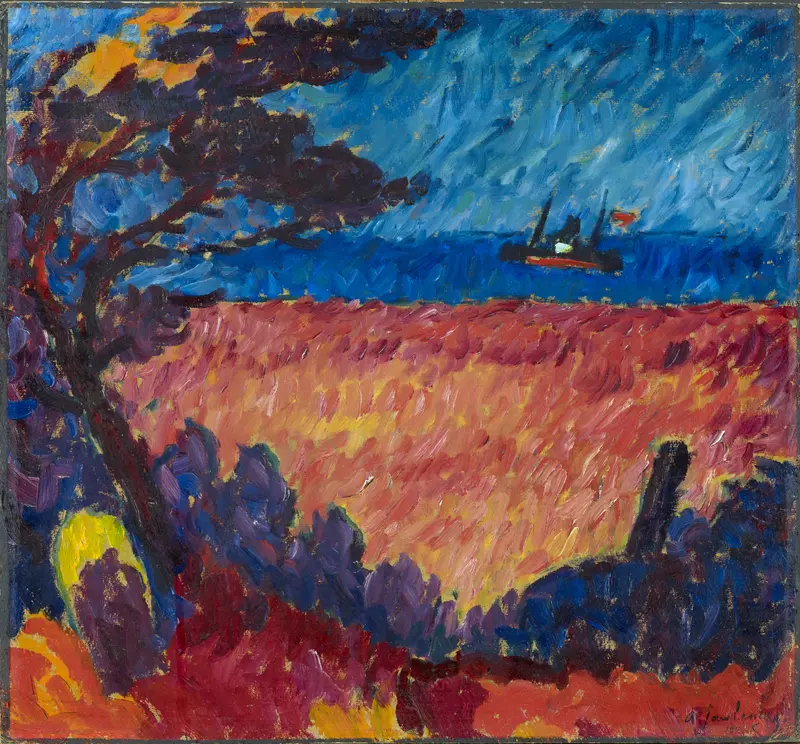
At The Baltic Sea
Alexej von Jawlensky
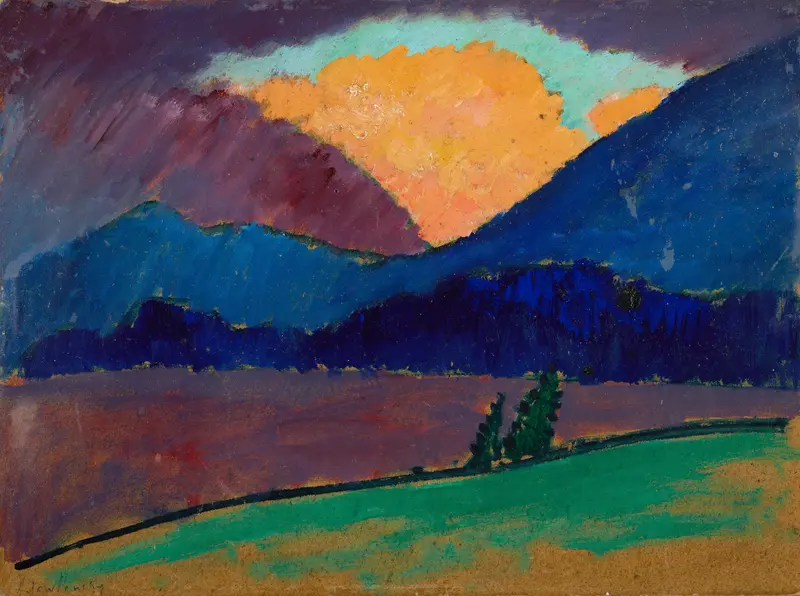
Summer evening in Murnau
Alexej von Jawlensky
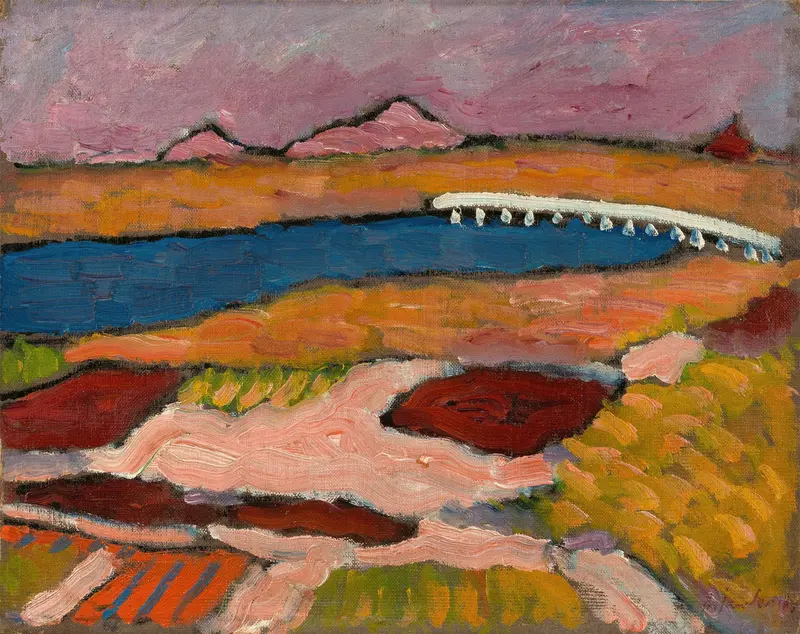
Prerow (Darß), Pommern
Alexej von Jawlensky
Landschaft mit Bäumen
Alexej von Jawlensky





