
Interior of a Stable — History & Facts
The first thing to catch the eye in Interior of a Stable is the hush of golden light that slips in from the open door, cutting across the shadowed timbers and settling on the woman at her work. She is caught mid-motion, her hands busy with a churn, yet her gaze meets the viewer’s as if interrupted by a quiet question. Around her, the stable is alive with detail: cows stand patiently in their stalls, a cat curls in the sunbeam, and an array of gleaming copper, vegetables, and fish are carefully arranged.
Every object seems chosen to tell us something about daily life—humble, industrious, and quietly abundant. The play of light and shadow draws us deeper, inviting us to notice how the outside world glows with promise while the interior brims with the fruits of labor. This painting belongs to the world of the Dutch Golden Age, when artists like Aelbert Cuyp found poetry in the everyday. In the 1650s, scenes of rural interiors and barnyard life were cherished for their ability to celebrate both the prosperity and the moral virtues of the countryside.
Such works were often purchased by the rising merchant class, eager to display the values of diligence and order in their homes. The Dordrechts Museum now houses this quietly luminous scene, a reminder that history has kept few traces of its journey but has preserved its gentle invitation: to pause, to look, and to find meaning in the ordinary.
More Artworks by Aelbert Cuyp

The Maas at Dordrecht
Aelbert Cuyp
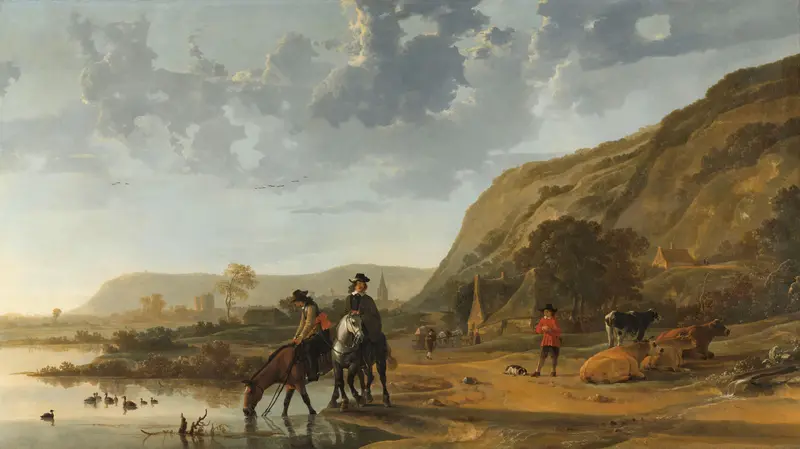
River Landscape with Riders
Aelbert Cuyp

The Maas at Dordrecht
Aelbert Cuyp
Gezicht op Dordrecht
Aelbert Cuyp
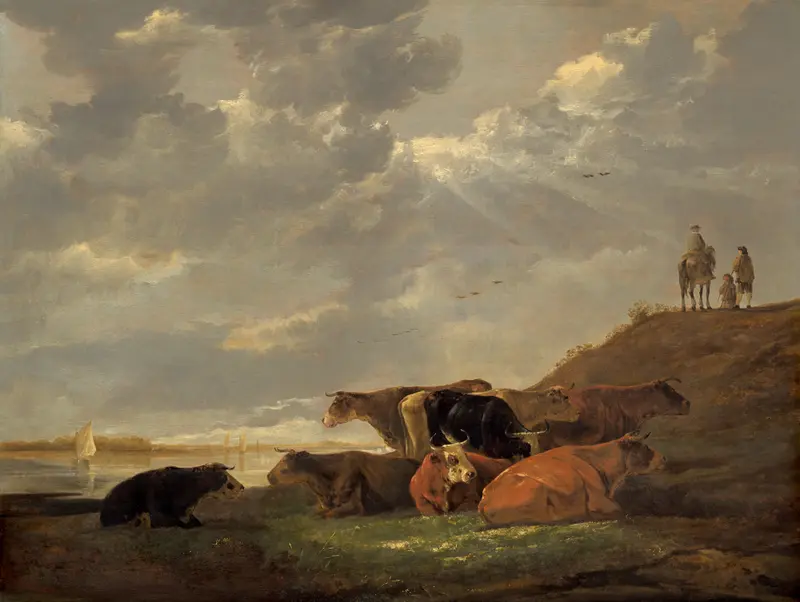
River Landscape with Cows
Aelbert Cuyp
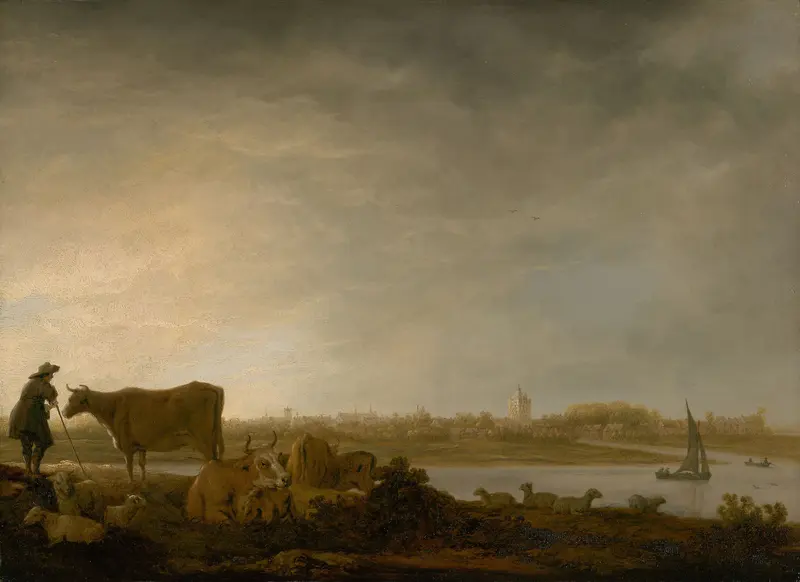
A View of Vianen with a Herdsman and Cattle by a River
Aelbert Cuyp
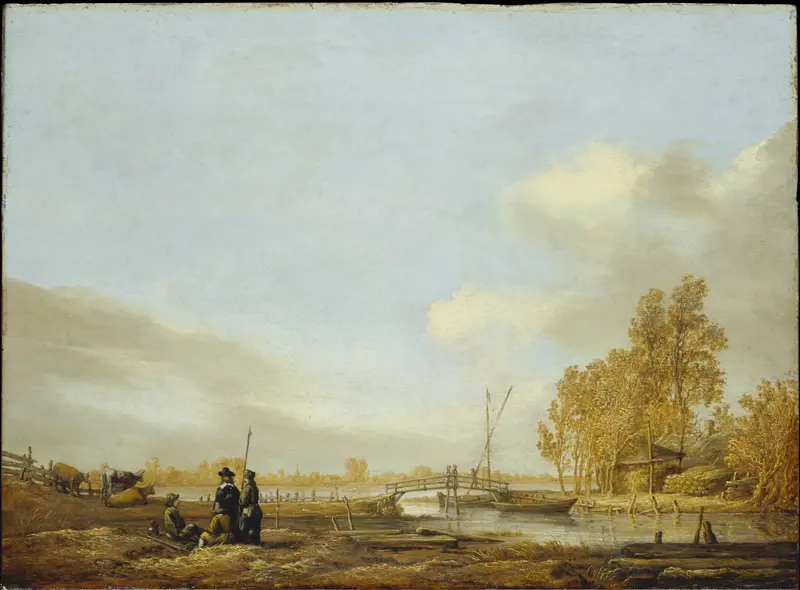
River Landscape with Footbridge
Aelbert Cuyp
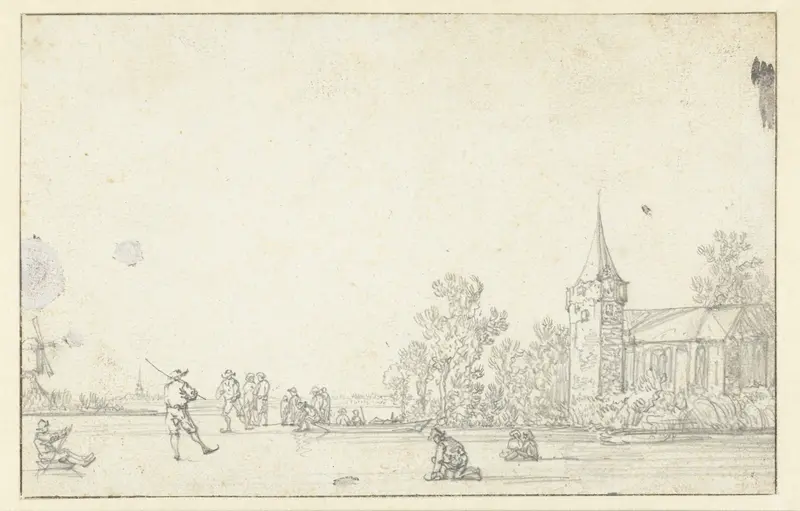
Bevroren rivier met schaatsers bij een kerk
Aelbert Cuyp

Cattle near a River
Aelbert Cuyp
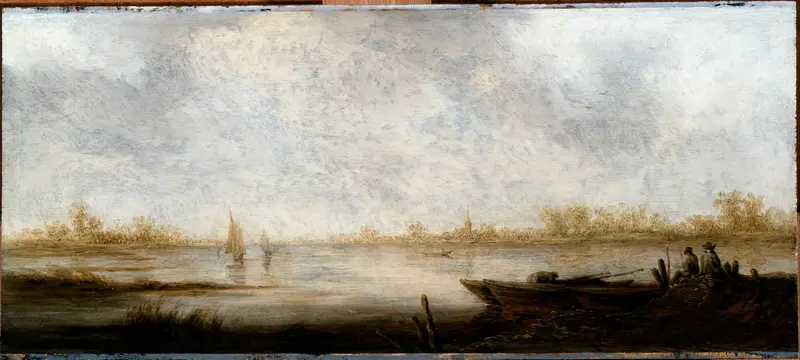
River Landscape
Aelbert Cuyp
More Genre Scene Art

Banquet of the Officers of the St George Civic Guard
Frans Hals

Rembrandt and Saskia in the Scene of the Prodigal Son
Rembrandt van Rijn

Bal du moulin de la Galette
Pierre-Auguste Renoir

Quadrille at the Moulin Rouge
Henri de Toulouse-Lautrec

A Burial at Ornans
Gustave Courbet

When Will You Marry?
Paul Gauguin