Isolated House — History & Facts
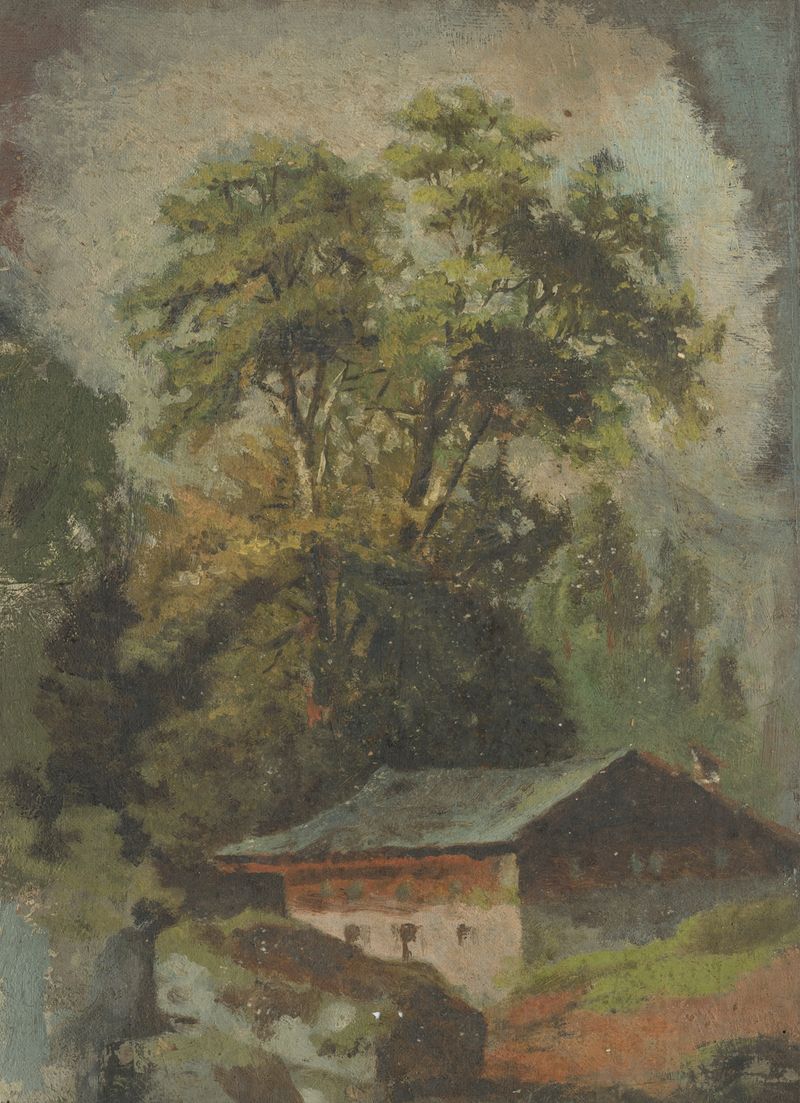
Is this a mirror — or a memory? In Isolated House, Jan Nowopacký invites viewers to ponder the fragile threads of destiny that weave our lives together, encapsulating both solitude and connection. Look to the center of the canvas, where a modest dwelling stands resolute against a backdrop of ravaging nature. The house, painted in muted earth tones, exudes a timeless quality, while soft strokes of green and fading blues create a sense of nostalgia. Notice how the light falls delicately upon the roof, illuminating it like a beacon of hope amidst encroaching shadows.
The artist's deft handling of color contrasts the sturdy structure with the surrounding wilderness, hinting at the delicate balance between human existence and the untamed world. Delve deeper into the composition, and you’ll find subtle narratives within the details. The overhanging branches appear both protective and threatening, symbolizing the duality of safety and isolation. The absence of any human figures evokes a profound sense of quiet contemplation, suggesting that the house—though alone—is steeped in the memories and echoes of those who may have once inhabited it.
This emptiness invites viewers to project their own experiences, transforming the scene into a mirror of their own destinies. During the mid-19th century, Nowopacký painted this work while navigating the evolution of Romanticism in art, which emphasized individual experience and emotion. Living in a time when Europe was marked by social changes and artistic exploration, he sought to capture the essence of solitary spaces and their significance in human life. His exploration of isolation not only reflects personal introspection but also embodies the broader artistic dialogue of his era.