
Juliet — History & Facts
What first holds the eye in Juliet by John William Waterhouse is the sense of inwardness: a young woman, profile turned to the light, her gaze distant and private, as if she listens for something only she can hear. The delicate hand at her throat, fingers lightly touching a string of blue beads, is a gesture of both uncertainty and resolve. Waterhouse sets her against a pale, softly rendered wall, the suggestion of water and Venetian architecture behind her, but all detail is subdued so that the figure’s inner world becomes the true subject.
The contrast of her vivid red sleeves against the cool, weathered stone draws us in, while the gentle modeling of her face and hair gives her an almost living presence. The palette is restrained, the brushwork loose yet precise where it matters, and the mood is one of quiet suspense—a moment just before something is spoken or decided. Painted in 1898, this work belongs to the late flowering of the Pre-Raphaelite tradition, when artists like Waterhouse sought to recapture the intensity and clarity of earlier art while exploring new psychological depths. Such paintings were often inspired by literature—here, the subject is Juliet, Shakespeare's tragic heroine, imagined in a moment of solitude rather than drama.
Works like this were favored by collectors at the turn of the century, eager for images that combined literary resonance with painterly beauty. While history has kept few traces of this particular canvas beyond its sale at Christie’s in London, its quiet power invites the viewer to linger, searching for the story behind that intent, luminous gaze.
More Artworks by John William Waterhouse
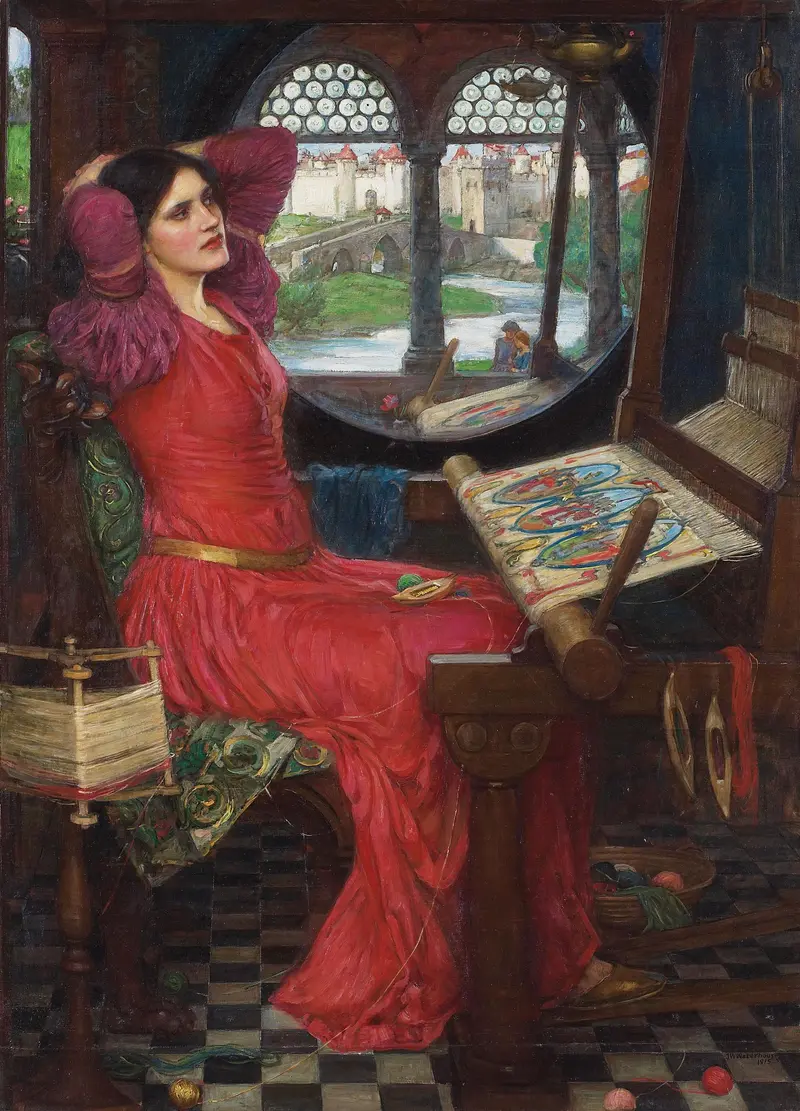
'I Am Half-Sick of Shadows,' Said the Lady of Shalott
John William Waterhouse

The Favourites of the Emperor Honorius, 1883
John William Waterhouse

The Lady of Shalott
John William Waterhouse

Boreas
John William Waterhouse
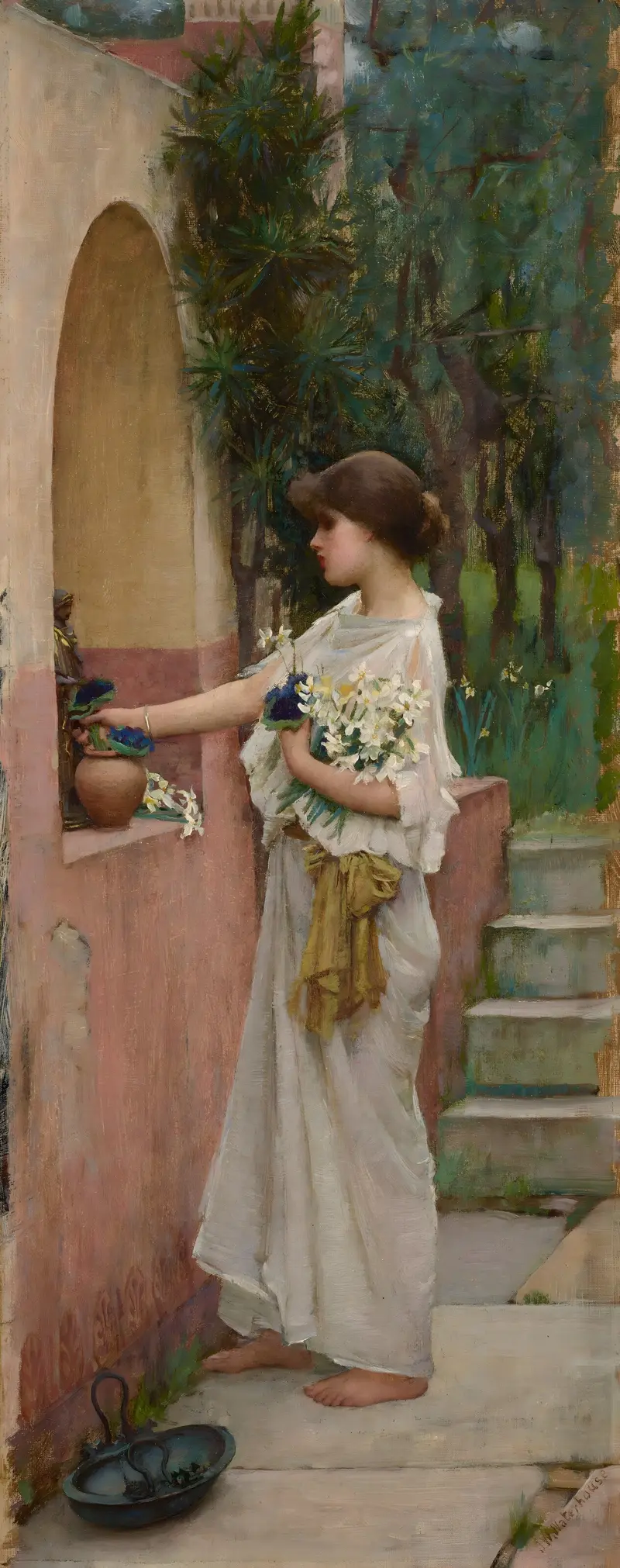
A Roman Offering
John William Waterhouse
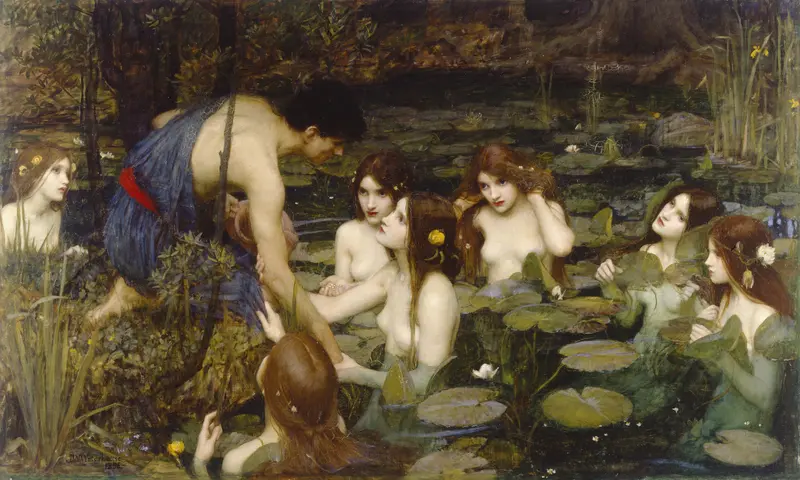
Hylas and the Nymphs
John William Waterhouse
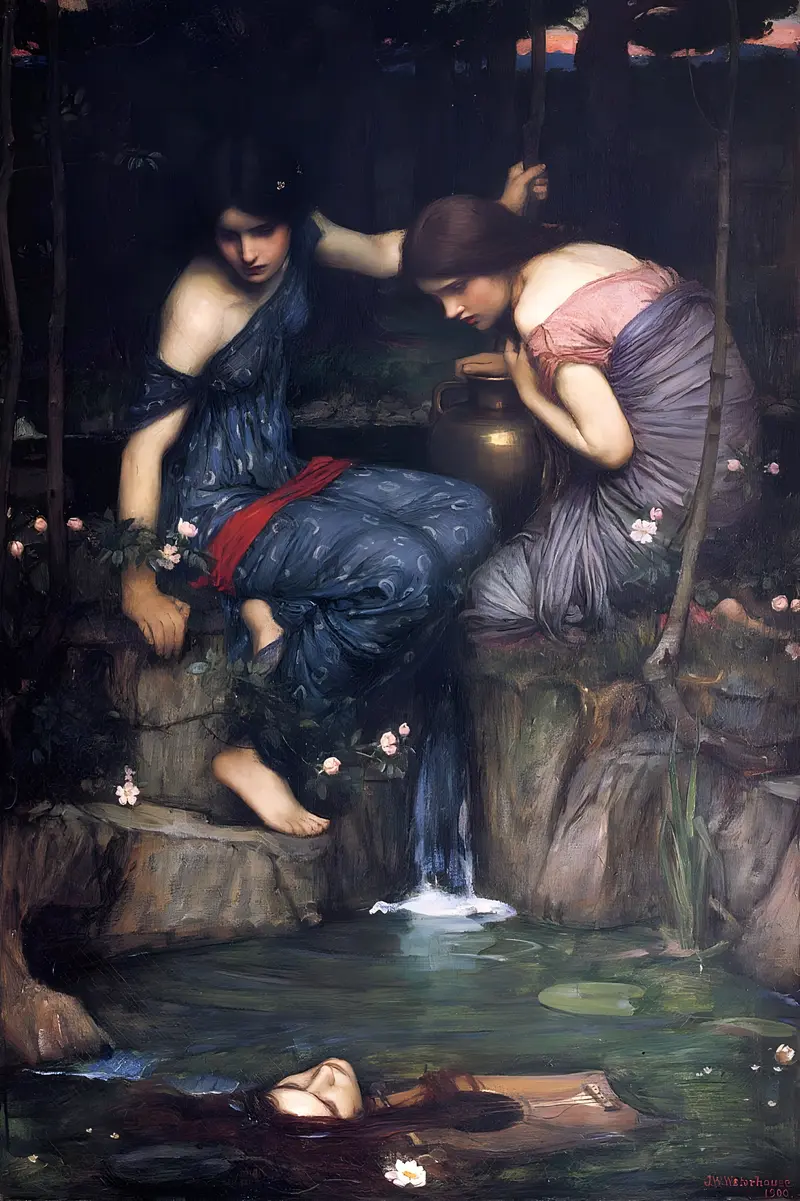
Nymphs Finding the Head of Orpheus
John William Waterhouse

The Crystal Ball
John William Waterhouse
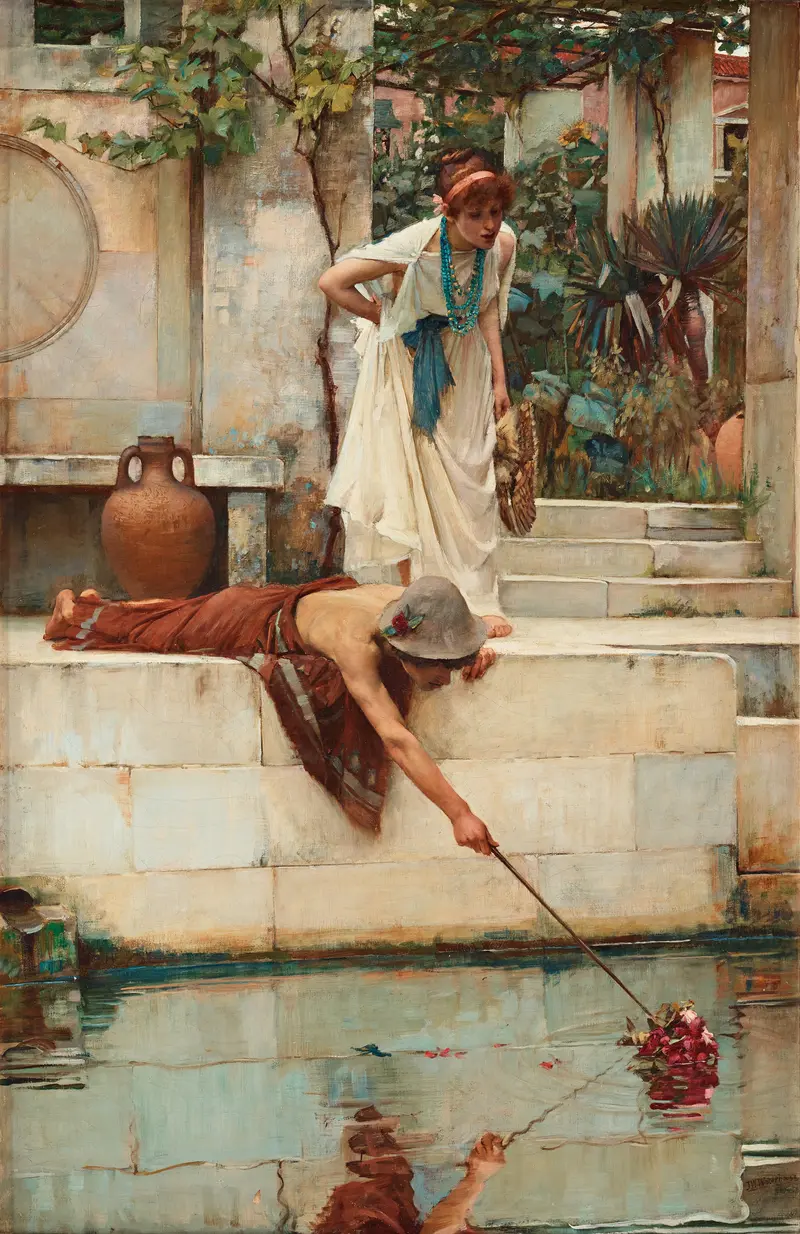
The Rescue
John William Waterhouse
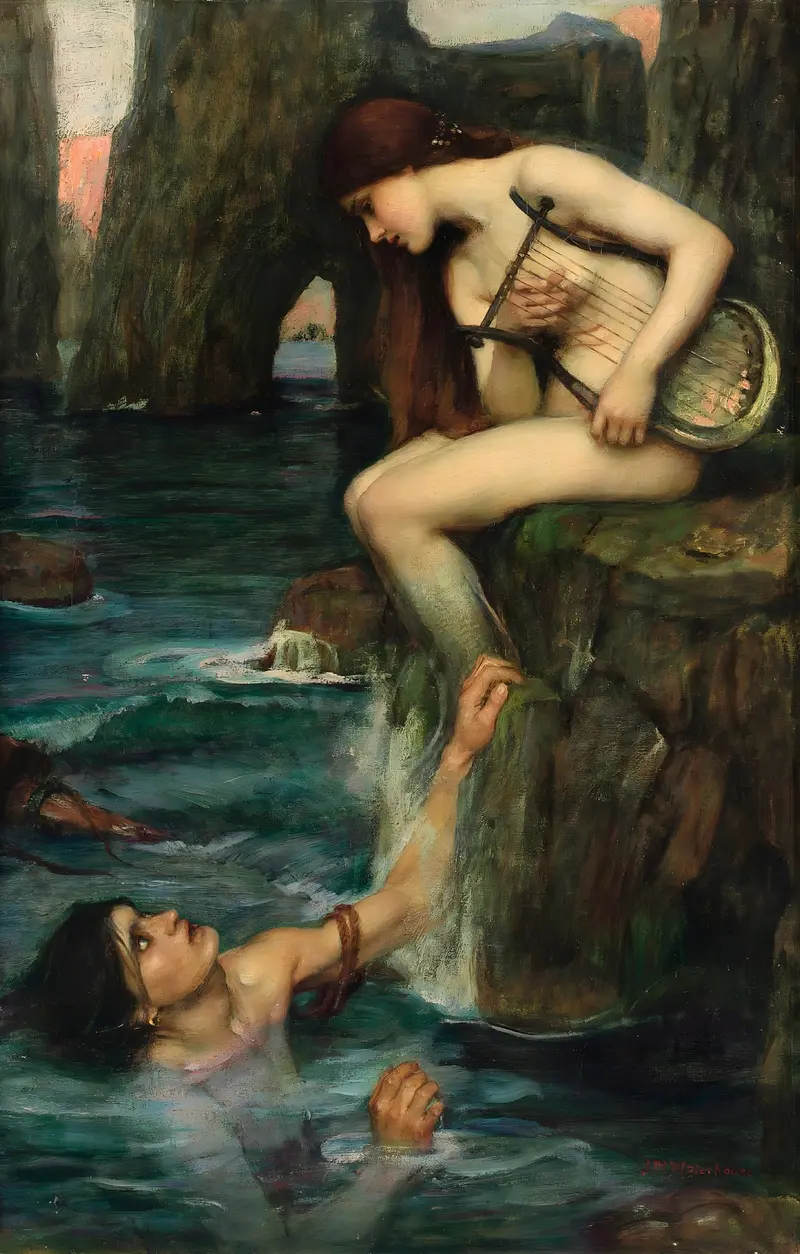
The Siren, 1900
John William Waterhouse





