
The Rescue — History & Facts
What draws the eye first in The Rescue is not the act of heroism the title suggests, but the quiet choreography of intent and observation. A young man, stretched perilously over the edge of a marble pool, reaches with a stick toward a cluster of flowers adrift on the water’s surface. Above him, a woman leans forward, her posture tense with anticipation, her hand clutching a fan and her gaze fixed on his careful maneuver.
The scene is awash in warm, Mediterranean light, which pools on the pale stone and dances in the water’s reflection, drawing attention to the delicate interplay between the figures and their environment. The lush greenery behind them, the classical urn, and the trailing vines all serve to root the moment in a world both ancient and imagined, where every gesture is heightened by the clarity of the setting. Painted circa 1890, this work belongs to the late nineteenth-century fascination with classical antiquity and the everyday dramas that might have unfolded in such sunlit courtyards. Artists like John William Waterhouse often found inspiration in the poetry and myth of Greece and Rome, but here, the drama is understated—a rescue not of life, but of beauty, as a lost bouquet is retrieved.
Such paintings were prized by Victorian collectors for their blend of narrative intrigue and archaeological detail, offering a window onto a world that was both distant and decorously staged. Though little is recorded about the specific history of this piece, its presence in a modern collection reminds us how the allure of a single, suspended moment can outlast the lives and fashions that first inspired it. Let your gaze linger on the water’s surface, where the story hovers between reflection and reality.
More Artworks by John William Waterhouse
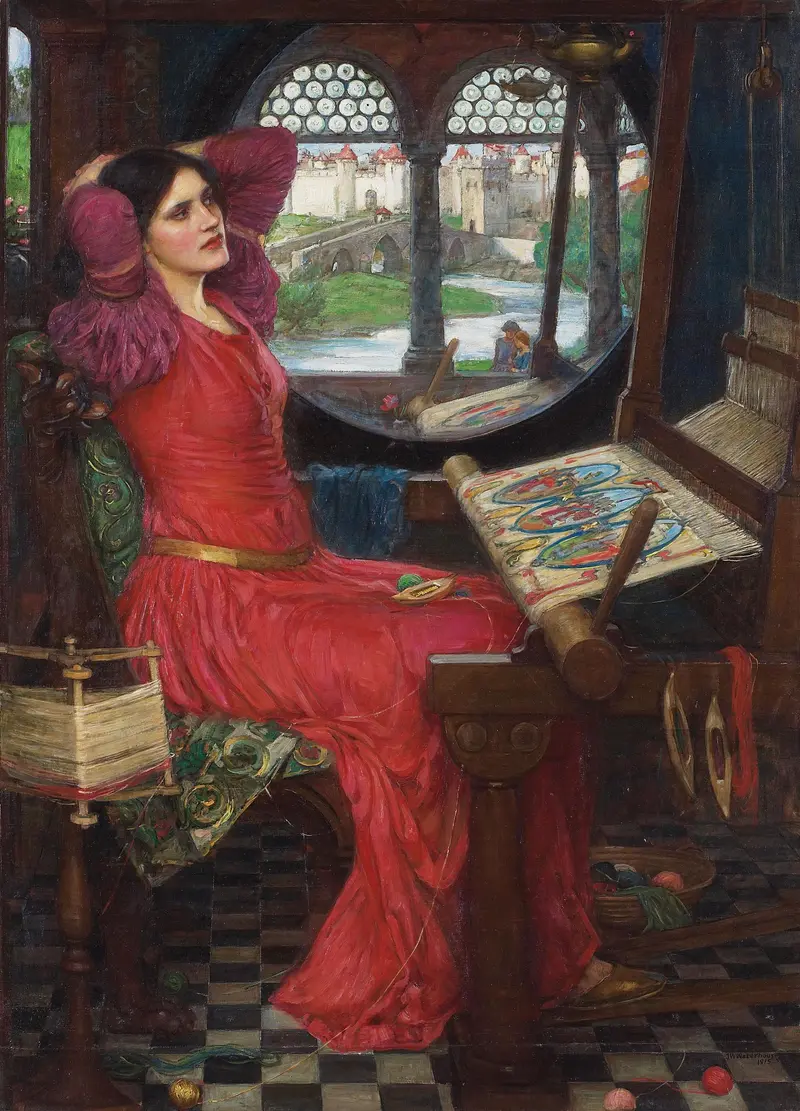
'I Am Half-Sick of Shadows,' Said the Lady of Shalott
John William Waterhouse

The Favourites of the Emperor Honorius, 1883
John William Waterhouse
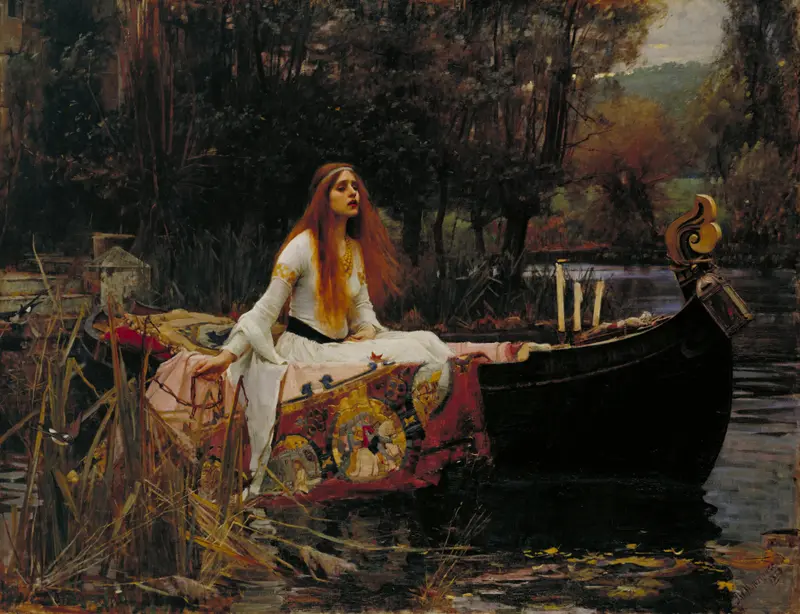
The Lady of Shalott
John William Waterhouse
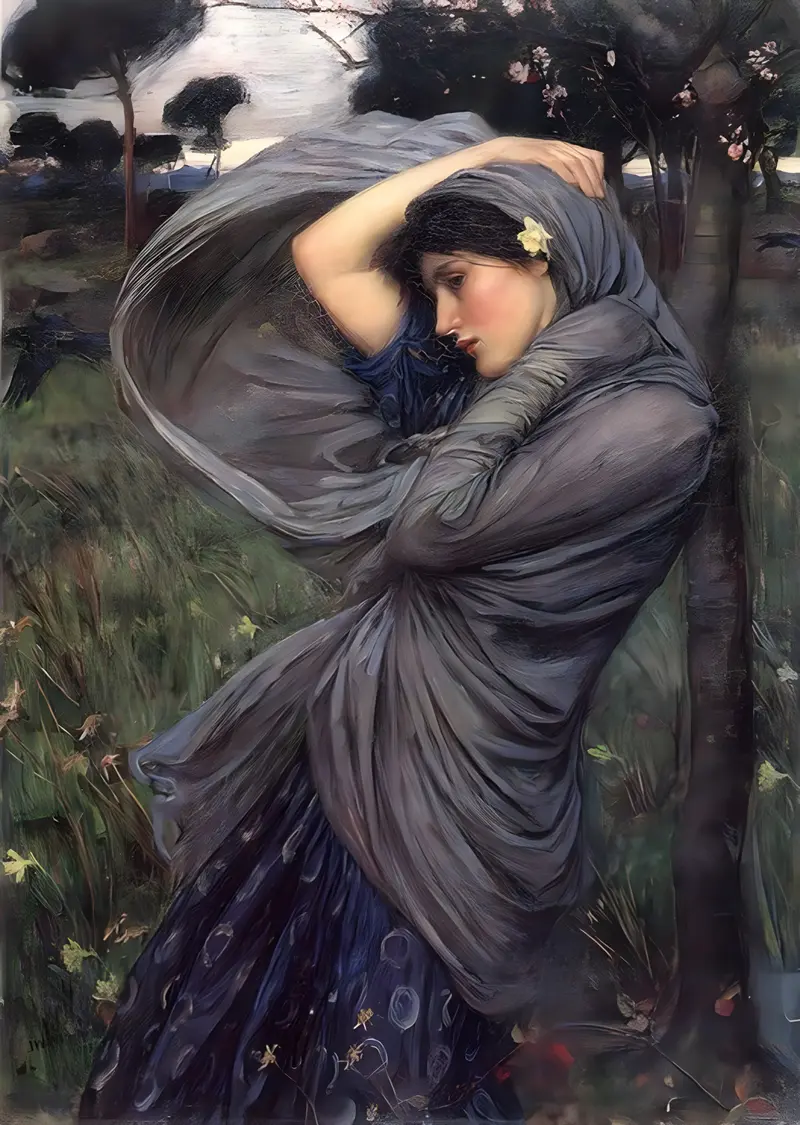
Boreas
John William Waterhouse
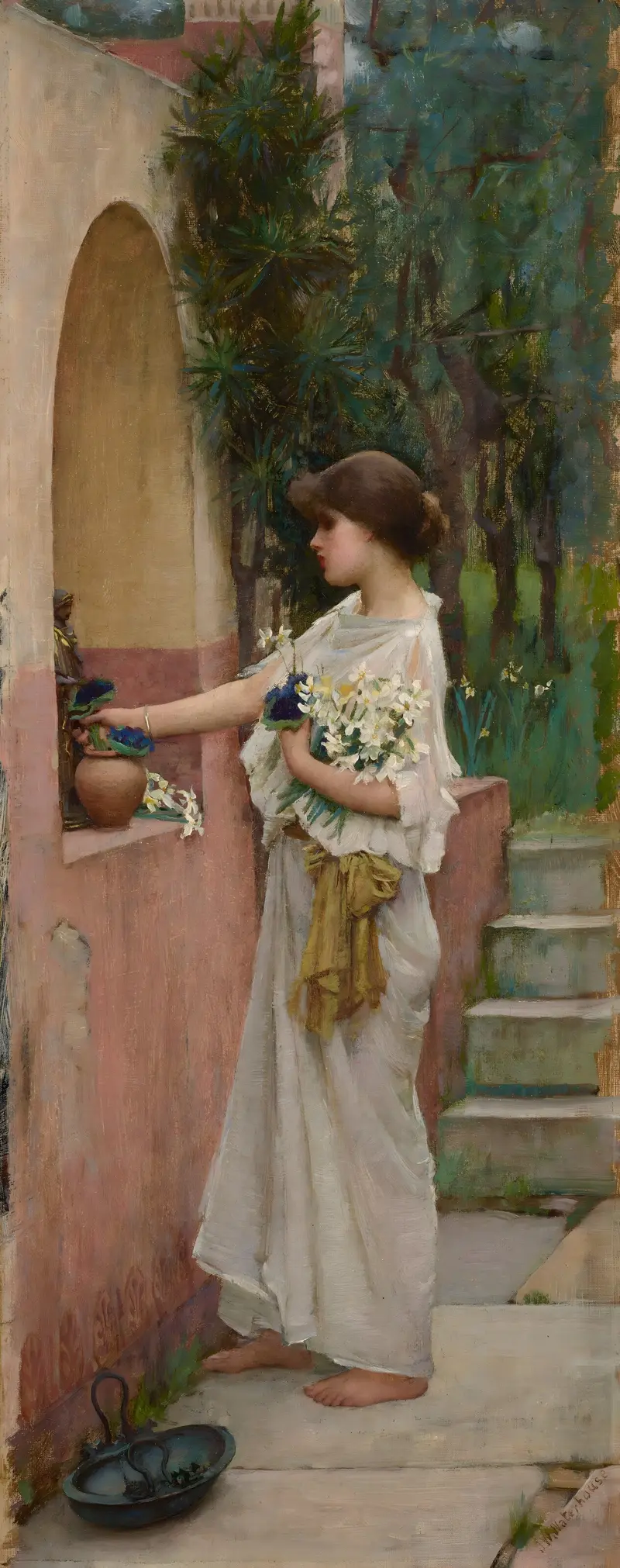
A Roman Offering
John William Waterhouse
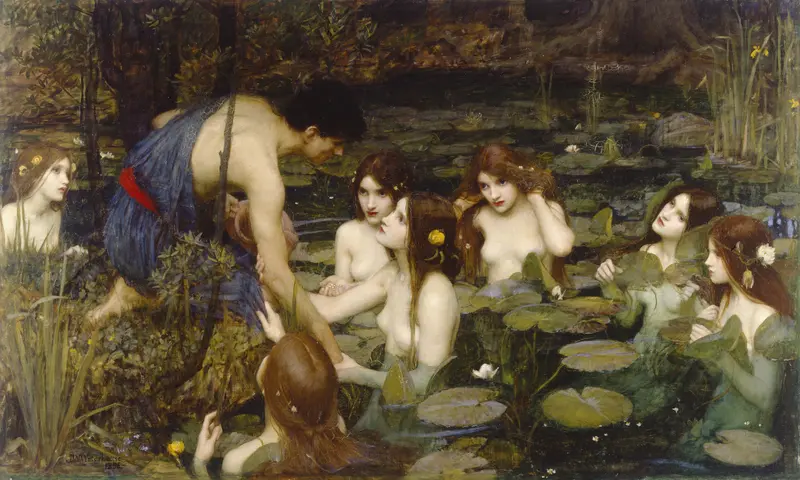
Hylas and the Nymphs
John William Waterhouse
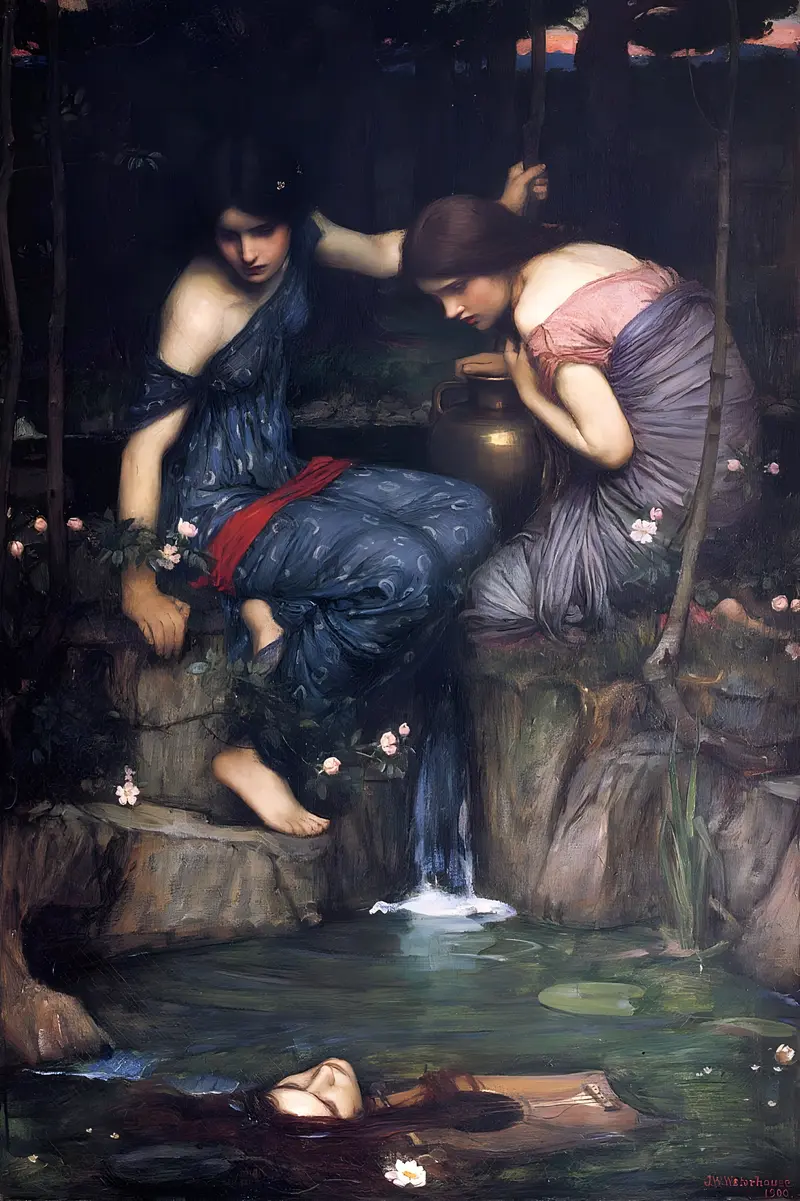
Nymphs Finding the Head of Orpheus
John William Waterhouse
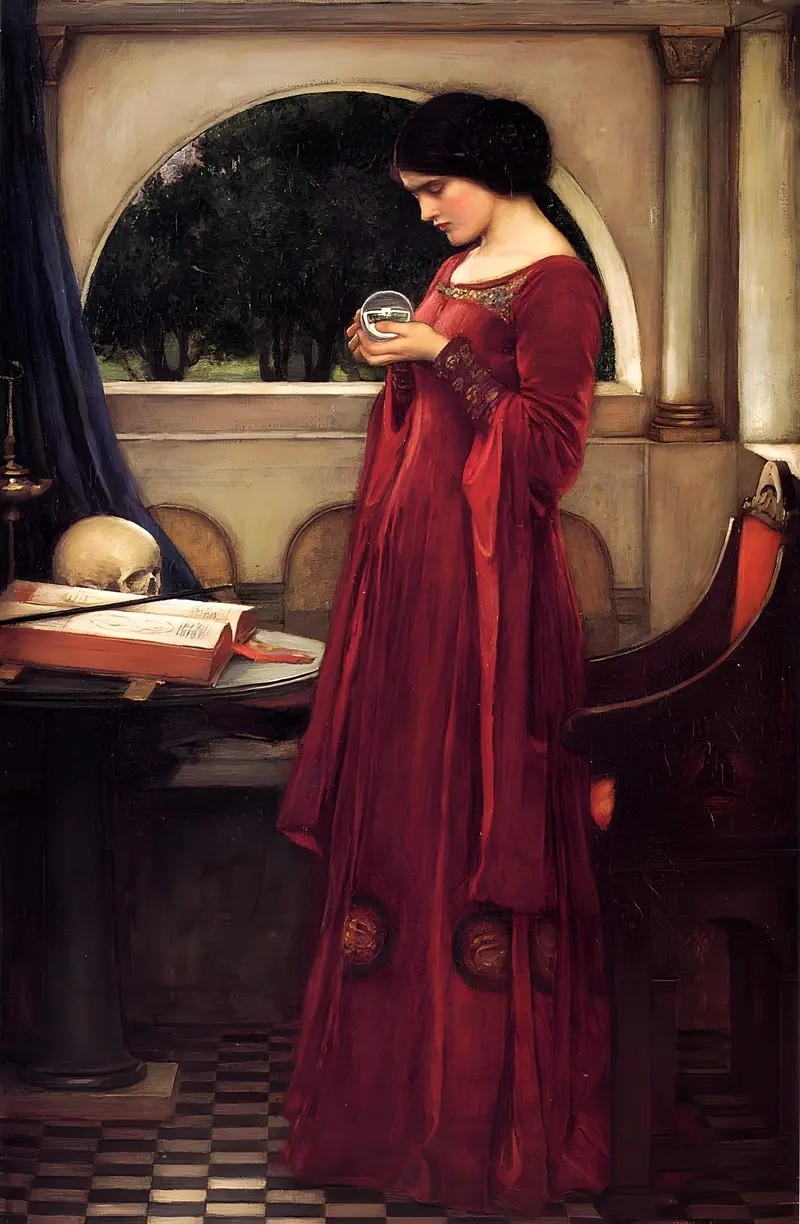
The Crystal Ball
John William Waterhouse
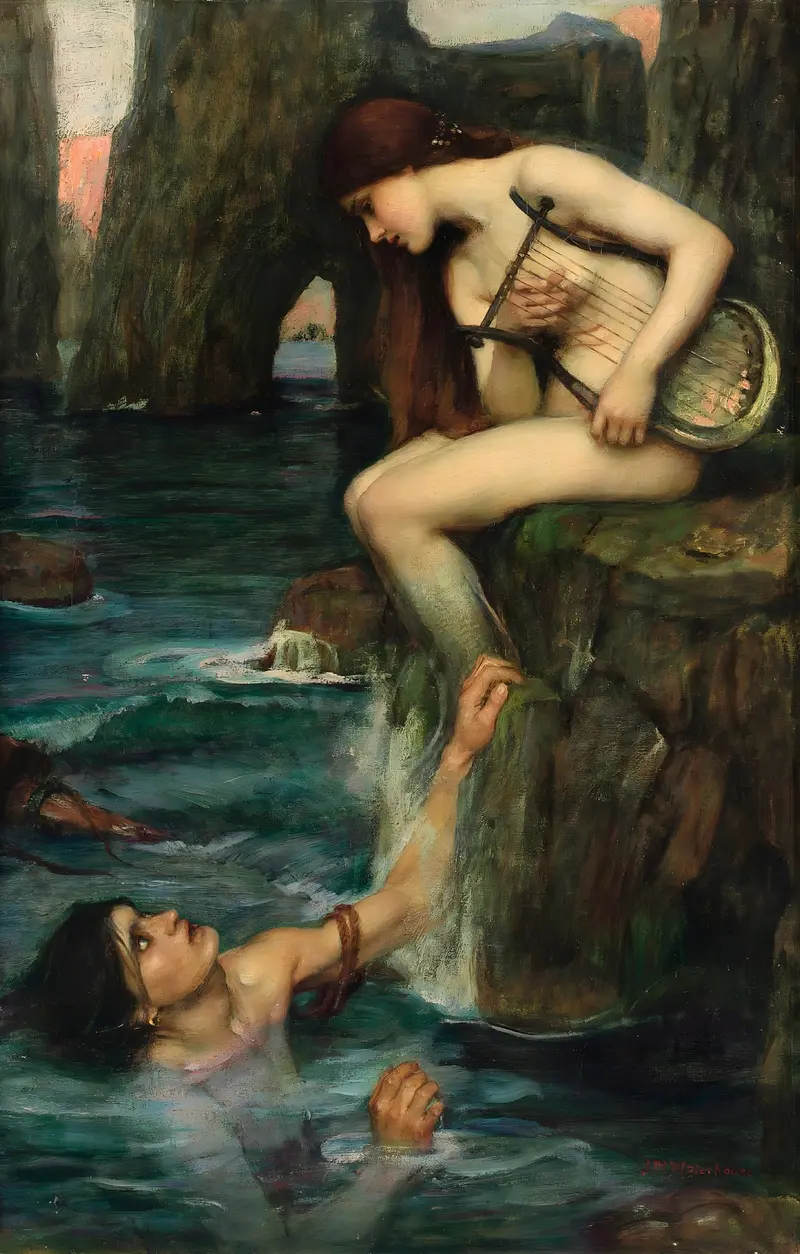
The Siren, 1900
John William Waterhouse
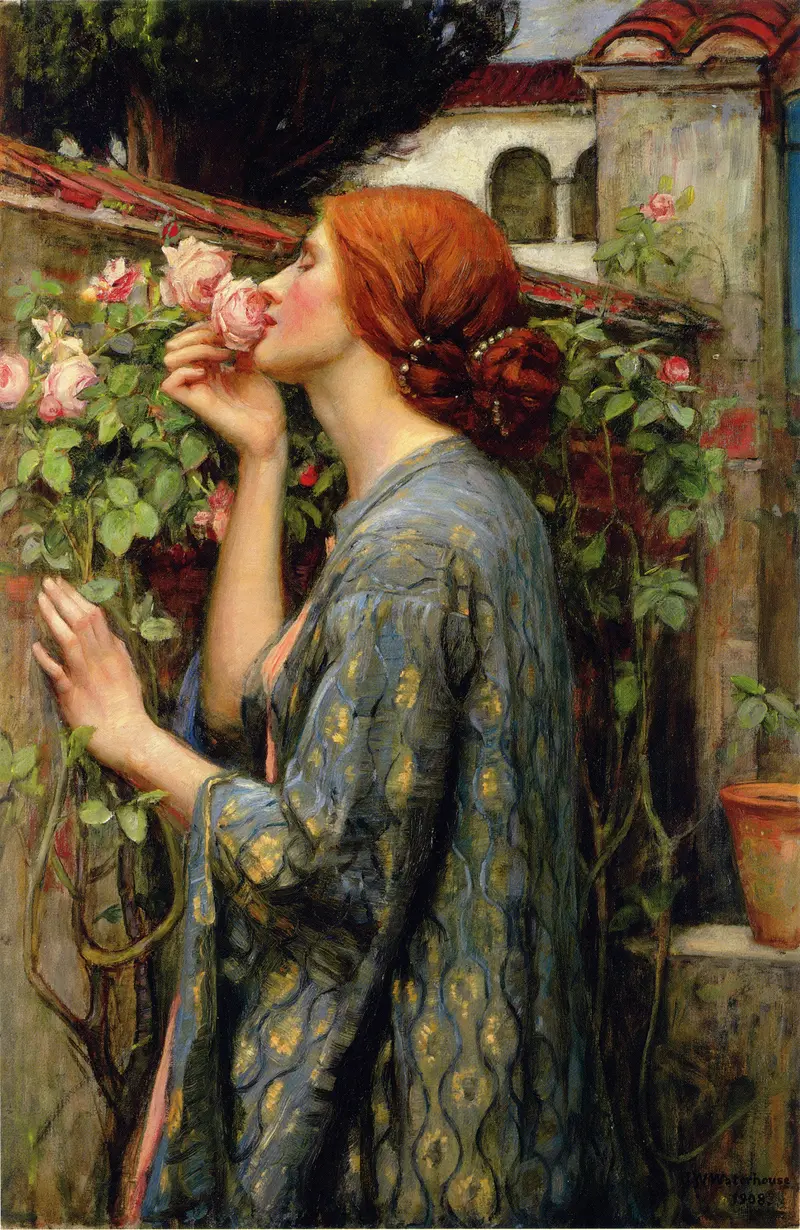
The Soul of the Rose
John William Waterhouse
More Genre Scene Art

Banquet of the Officers of the St George Civic Guard
Frans Hals

Rembrandt and Saskia in the Scene of the Prodigal Son
Rembrandt van Rijn

Bal du moulin de la Galette
Pierre-Auguste Renoir

Quadrille at the Moulin Rouge
Henri de Toulouse-Lautrec

A Burial at Ornans
Gustave Courbet

When Will You Marry?
Paul Gauguin