
La conversation interrompue — History & Facts
What first catches the eye in La conversation interrompue is not a face or a gesture, but the sheer energy of the paint itself—a surface alive with thick, swirling strokes that seem to vibrate with the tension of a moment cut short. The figures, grouped tightly together, are rendered with such bravura that their forms nearly dissolve into the surrounding darkness, yet the drama of their encounter is unmistakable. One stands, turned away, as if just startled or called elsewhere, while the others cluster in a pool of lamplight, their postures frozen mid-sentence.
The palette, dominated by molten golds and deep reds, draws the viewer’s gaze to the center, suggesting warmth and intimacy suddenly fractured. Works like this by Adolphe Joseph Thomas Monticelli belong to a world of late nineteenth-century France, when artists were pushing the boundaries of what paint could do and what stories it could tell. Monticelli’s technique—layering impasto so thick it nearly becomes sculpture—set him apart from his contemporaries and even inspired the young Van Gogh. The lack of a precise date or commission for this painting, now in the collection of Paris Musées, only adds to its sense of mystery: history has kept few traces of its origins, but its surface tells a story of a world in flux, where conversations—and the paintings that capture them—are always at risk of interruption.
Let your eye linger on those restless strokes, and imagine what words might have just hung in the air.
More Artworks by Adolphe Monticelli

Portrait of a Lady
Adolphe Monticelli
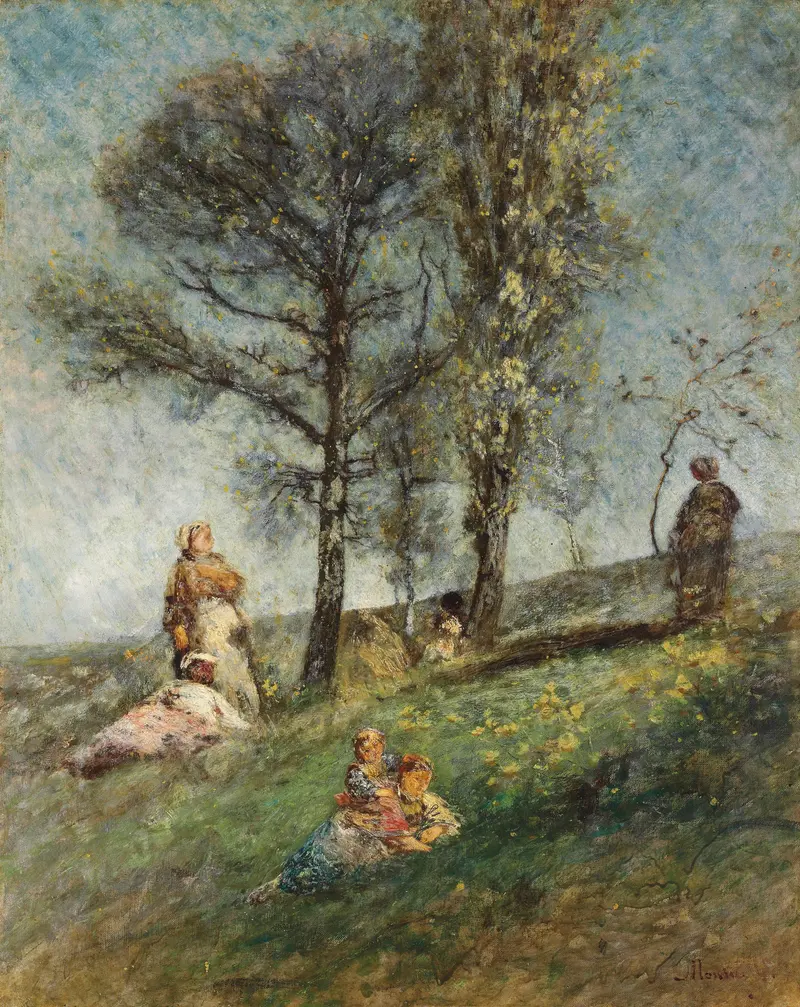
A Young Family Under Trees On A Hill
Adolphe Monticelli

Fête d'Après-Midi
Adolphe Monticelli
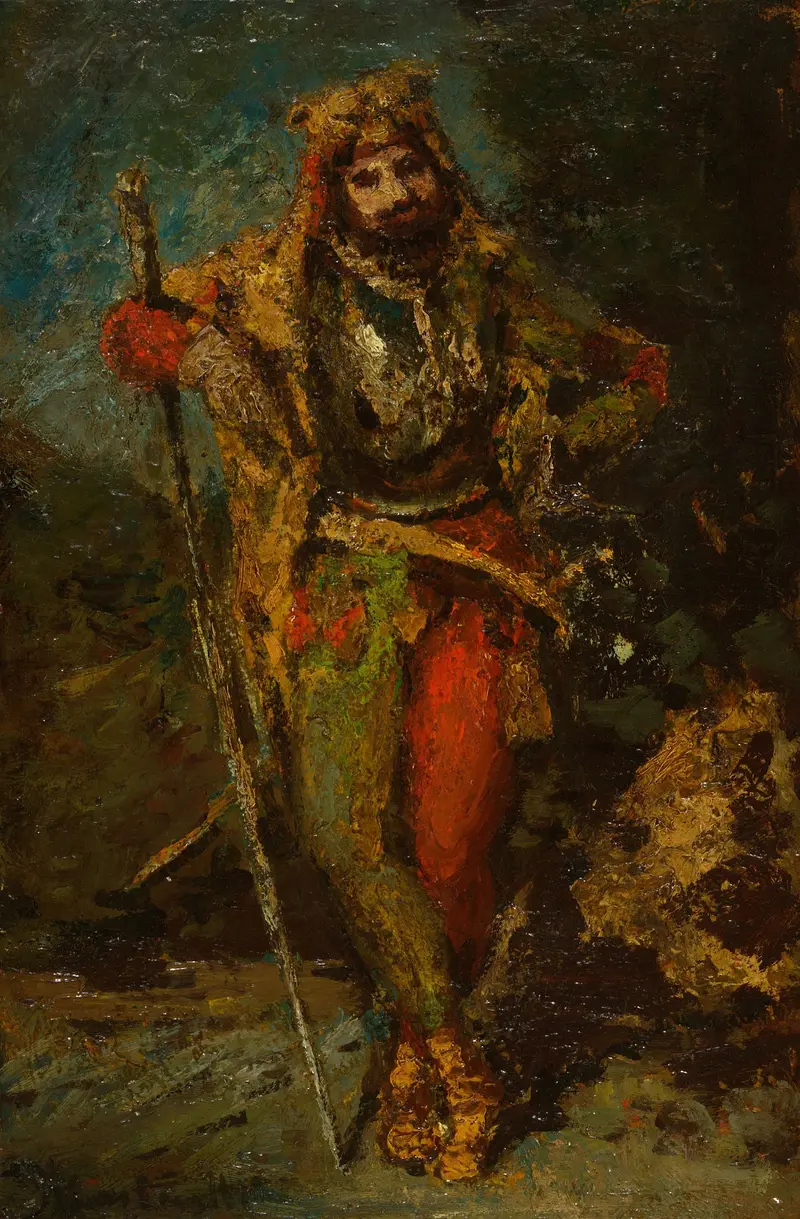
Mephisto from the Opera Faust
Adolphe Monticelli
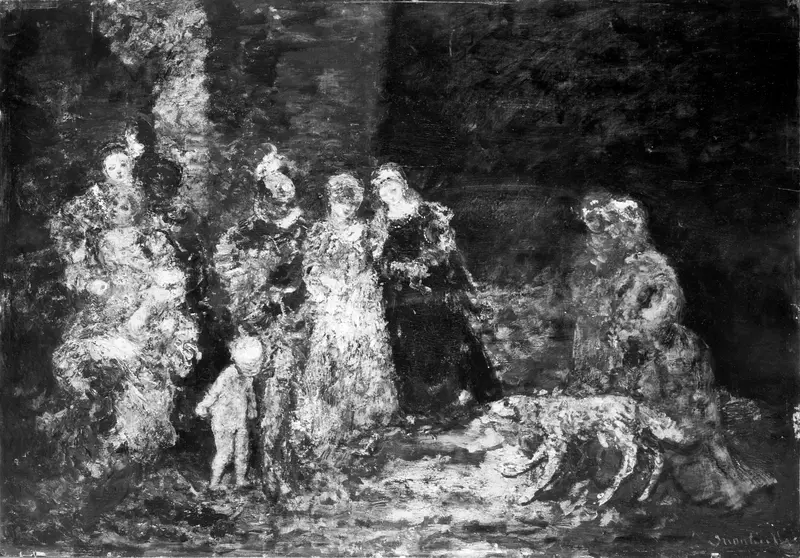
The Fairies
Adolphe Monticelli
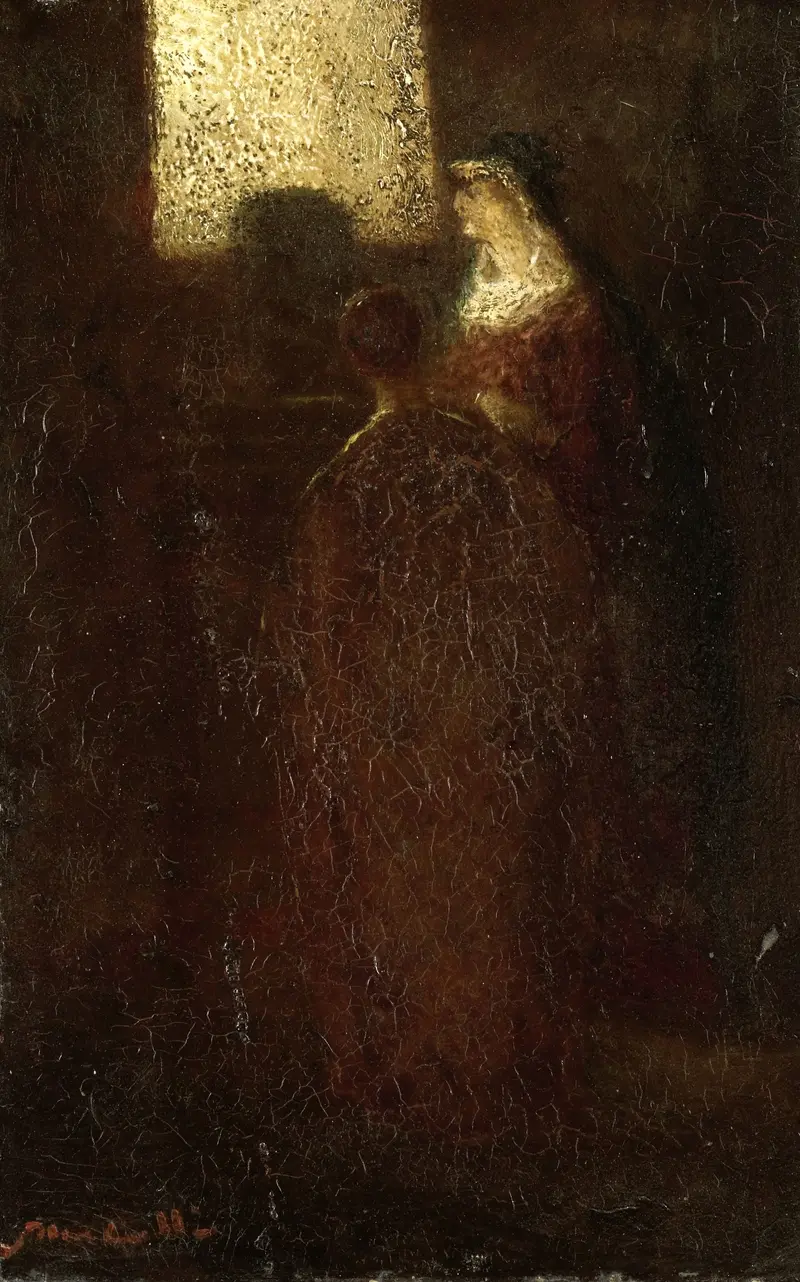
Aan het altaar
Adolphe Monticelli
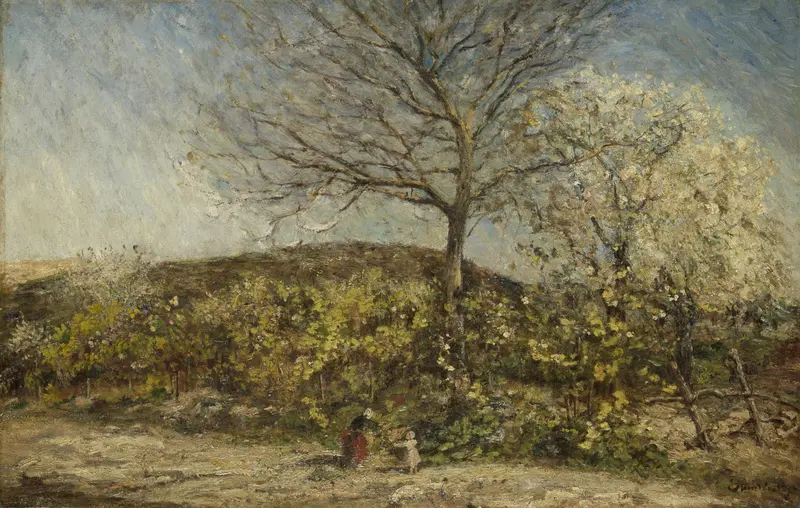
Landschap met bloeiende boomgaard
Adolphe Monticelli
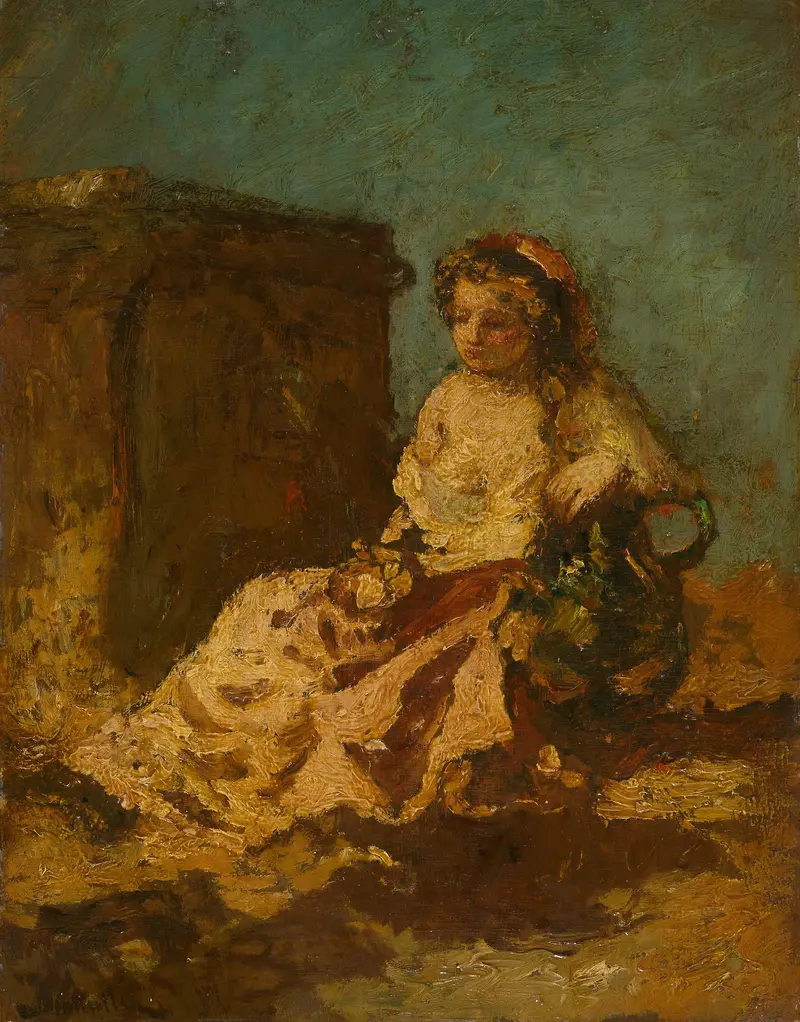
Meditation (Seated Woman)
Adolphe Monticelli
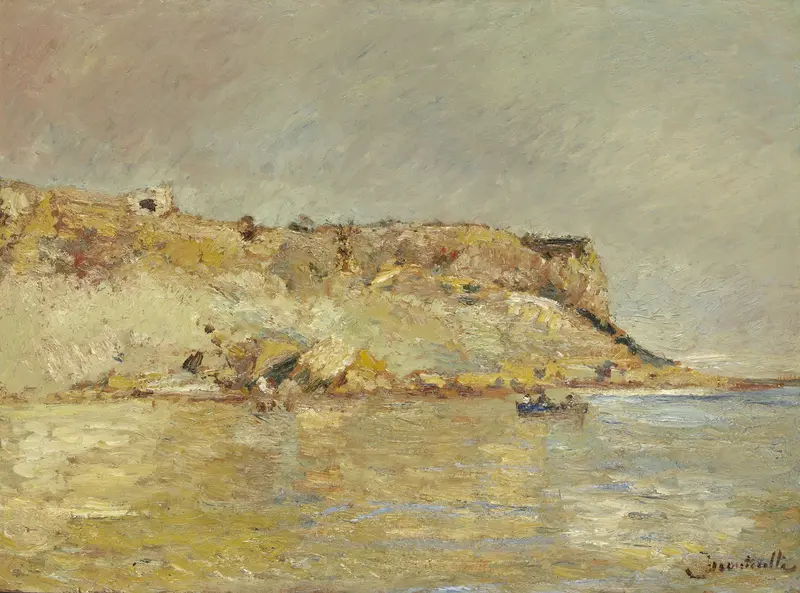
Coastal Mountains
Adolphe Monticelli
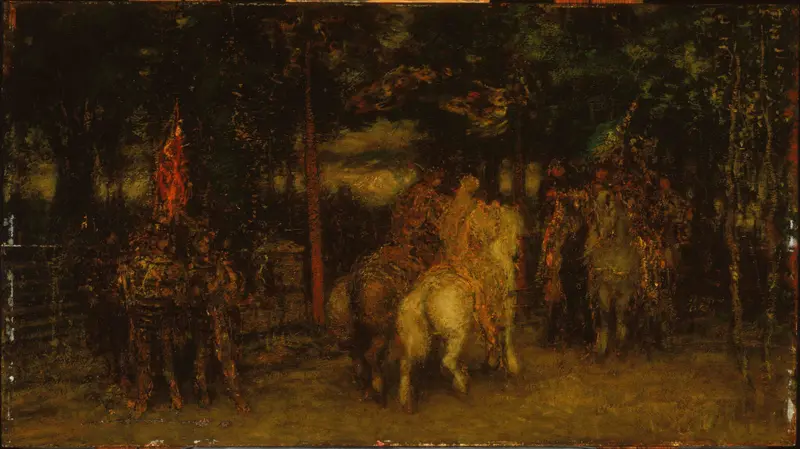
Landscape with Figures
Adolphe Monticelli
More Genre Scene Art

Banquet of the Officers of the St George Civic Guard
Frans Hals

Rembrandt and Saskia in the Scene of the Prodigal Son
Rembrandt van Rijn

Bal du moulin de la Galette
Pierre-Auguste Renoir

Quadrille at the Moulin Rouge
Henri de Toulouse-Lautrec

A Burial at Ornans
Gustave Courbet

When Will You Marry?
Paul Gauguin