La plage — History & Facts
In La plage, Eugène Boudin presents a lively beach scene filled with sunbathers and beachgoers. The colors are bright and cheerful, with shades of blue for the sea and sky, and warm tones for the sand. Figures are scattered across the canvas, some lounging while others engage in activities like walking or playing.
The overall atmosphere is one of leisure and enjoyment, typical of a summer day at the beach. The painting is created using oil on canvas, a common medium for Boudin's works. The brushwork is loose and fluid, characteristic of the Impressionism style, allowing for a sense of movement and spontaneity. The composition captures the essence of a bustling beach, with a focus on light and color rather than fine detail.
Viewers can appreciate the way Boudin captures the interplay of sunlight on water and sand. Eugène Boudin is often regarded as a precursor to the Impressionist movement, influencing artists like Claude Monet. La plage reflects Boudin's love for coastal scenes and his ability to depict the changing effects of light. An interesting fact about this work is that it showcases Boudin's skill in capturing the essence of leisure, which was a popular theme in 19th-century French art.
This painting is a testament to his dedication to painting en plein air, or outdoors.
More Artworks by Eugène Boudin

Vacationers on the Beach at Trouville
Eugène Boudin
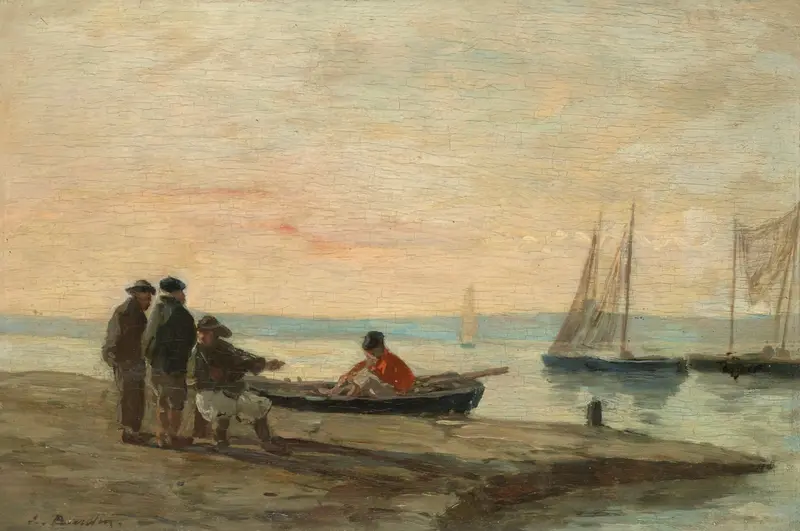
Port aux environs d’Honfleur
Eugène Boudin
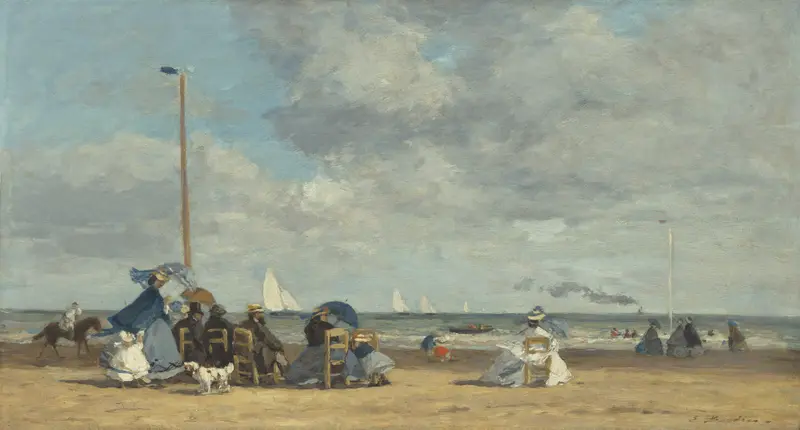
Beach at Trouville
Eugène Boudin
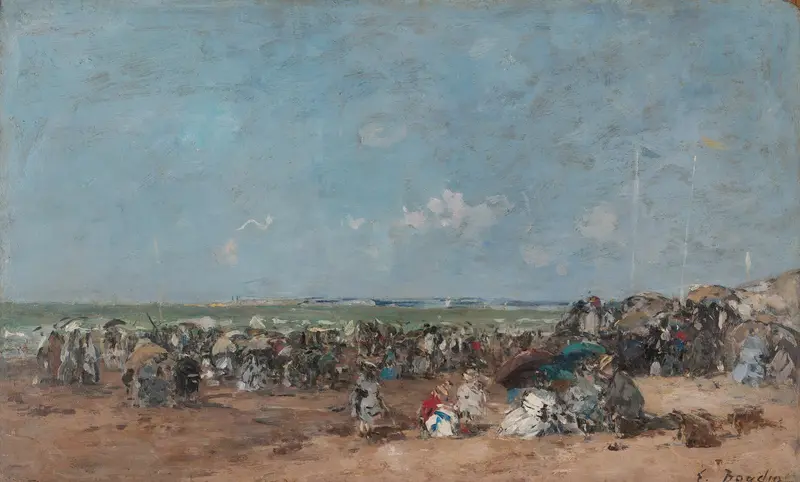
Beach Scene in Trouville
Eugène Boudin
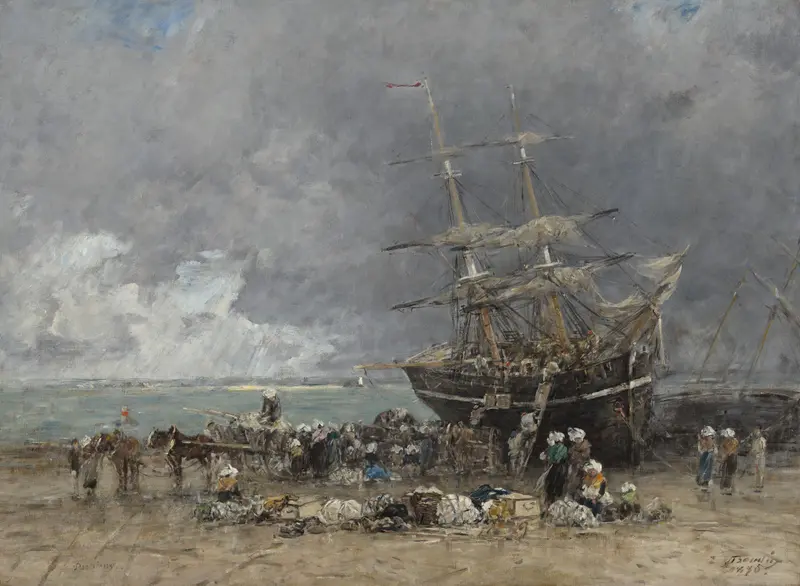
Return of the Terre-Neuvier
Eugène Boudin
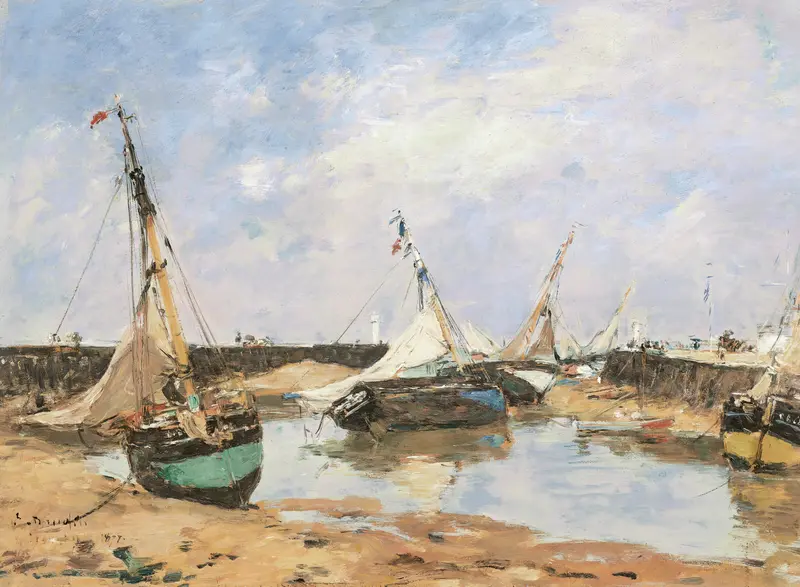
Trouville. Barques échouées entre les jetées
Eugène Boudin
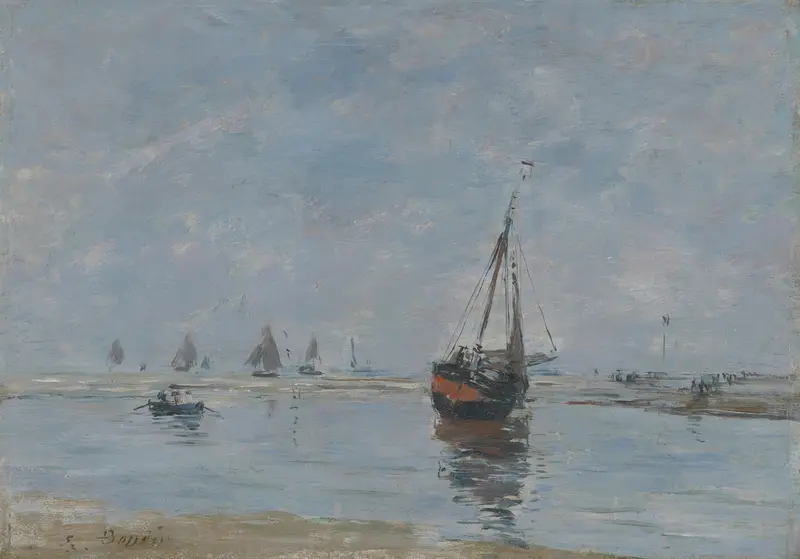
Trouville at Low Tide
Eugène Boudin
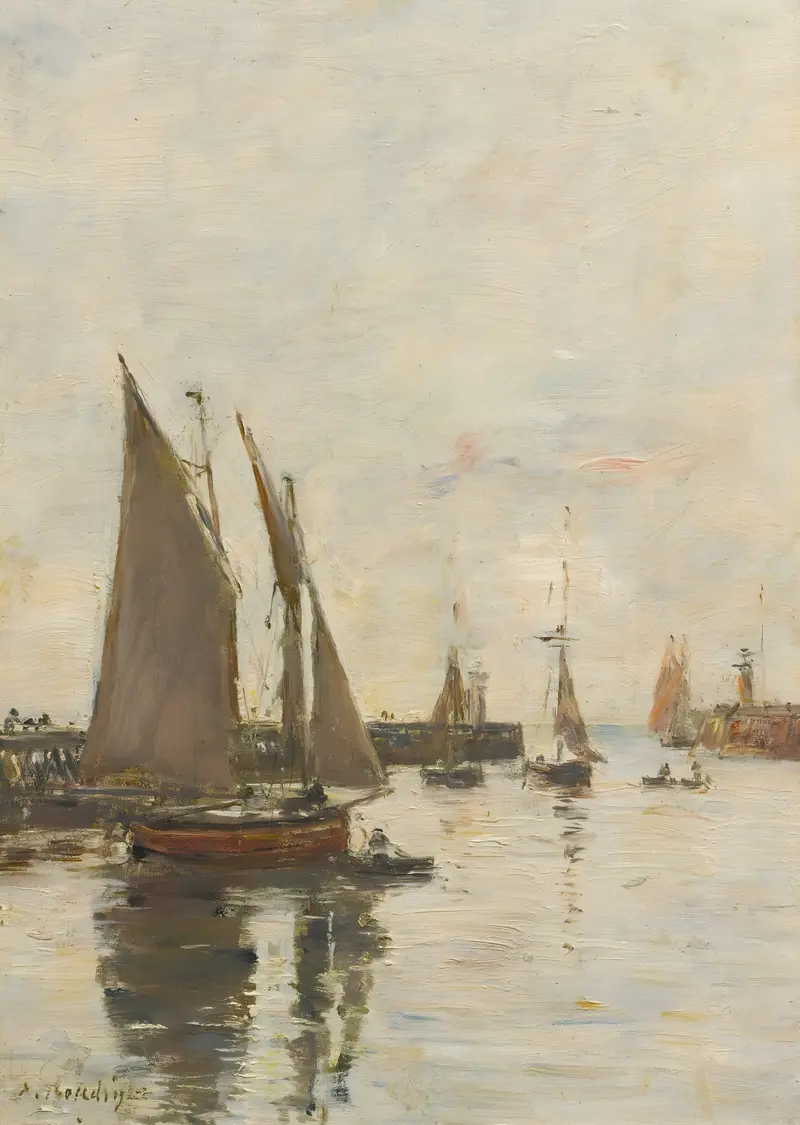
Trouville, Les Jetées Marée Haute
Eugène Boudin
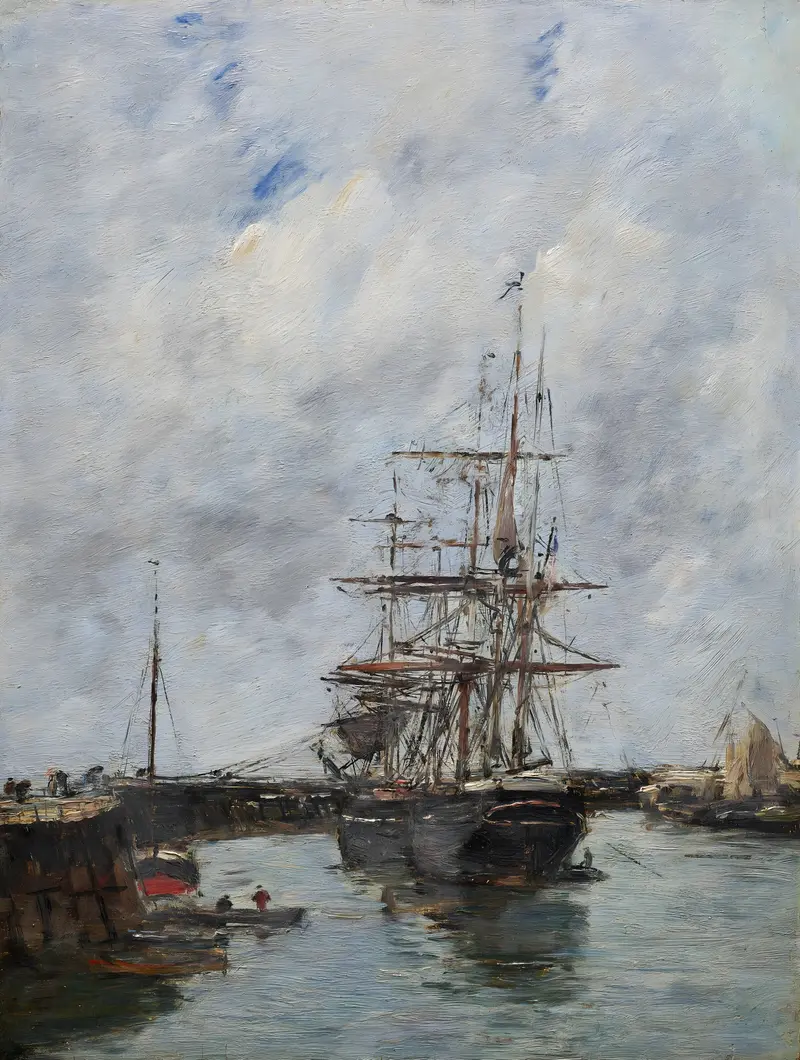
Trouville, Les jetées marée haute
Eugène Boudin
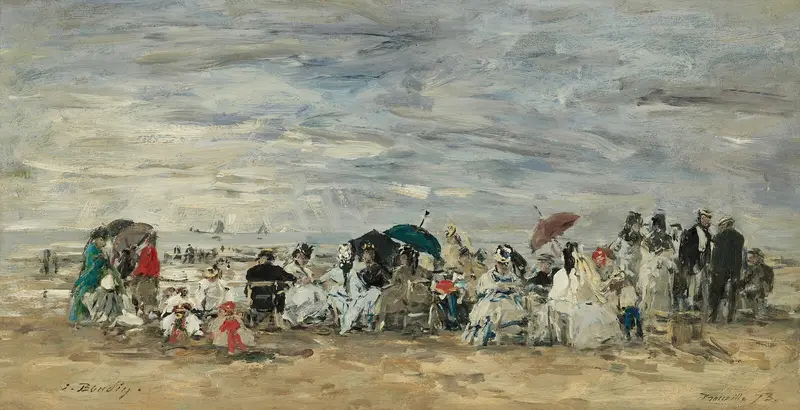
Trouville, Scène de plage
Eugène Boudin